

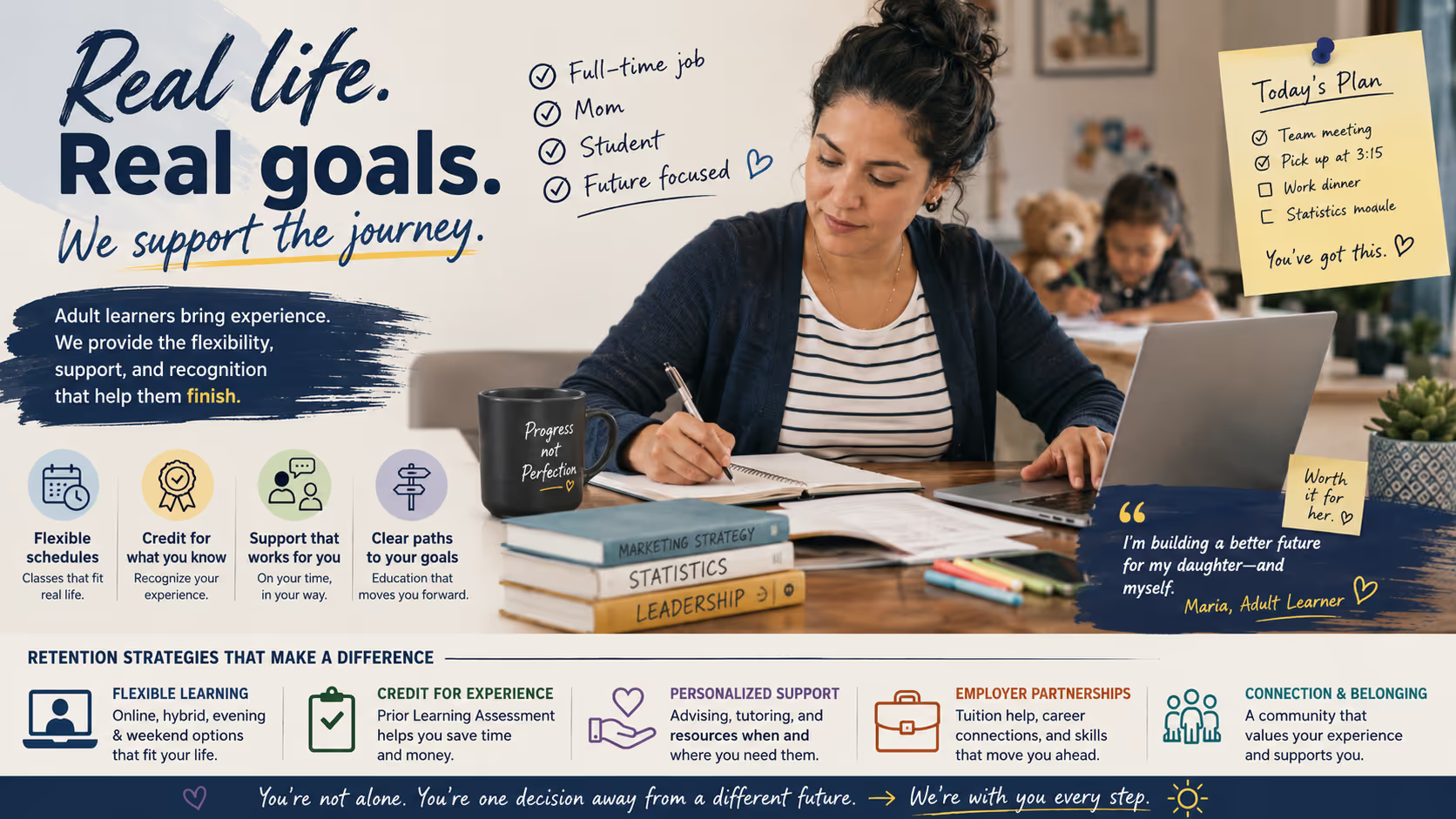
She's 34, works full-time, and just re-enrolled in college after a seven-year gap. She's motivated, capable, and statistically more likely to drop out again than her 19-year-old classmates.
This isn't a contradiction. It's a reality that higher education institutions face every day as they welcome growing numbers of adult learners back to campus—students who bring life experience, clear goals, and a complex web of responsibilities that traditional engagement strategies simply weren't designed to address.
Let's call her Maria. She's taking two evening classes while managing a customer service team during the day. Her daughter's school lets out at 3:15. Her employer's tuition reimbursement requires a B average. And last Tuesday, when her car broke down, she missed the only in-person session of her statistics course that week.
Maria represents approximately 43 million Americans who have some college credits but no degree. Many of these individuals hold tremendous potential for institutions willing to rethink how they support non-traditional students. The challenge isn't recruiting adult learners—it's keeping them enrolled long enough to complete their credentials.
Here's the truth: engaging adult learners requires understanding that their needs differ fundamentally from those of traditional-age students. Flexible scheduling, credit for prior experience, and support systems that acknowledge competing life demands aren't nice-to-haves. They're retention essentials.
Why Adult Learner Retention Demands a Different Approach
Traditional retention strategies assume students live on or near campus, have few work obligations, and can attend classes during standard daytime hours. Maria doesn't fit this profile. Neither do most adult learners.
Non-traditional students typically juggle employment, family responsibilities, and financial pressures that younger students haven't yet encountered. A single unexpected expense or scheduling conflict can derail progress that took months to build. These students don't need more orientation activities or residence hall programming. They need institutional systems that bend around their lives rather than requiring their lives to bend around institutional schedules.
Research consistently shows that adult learners succeed when institutions provide:
Flexible course delivery that accommodates work schedules
Recognition of prior learning through portfolio assessment and credit for experience
Streamlined administrative processes that respect limited time
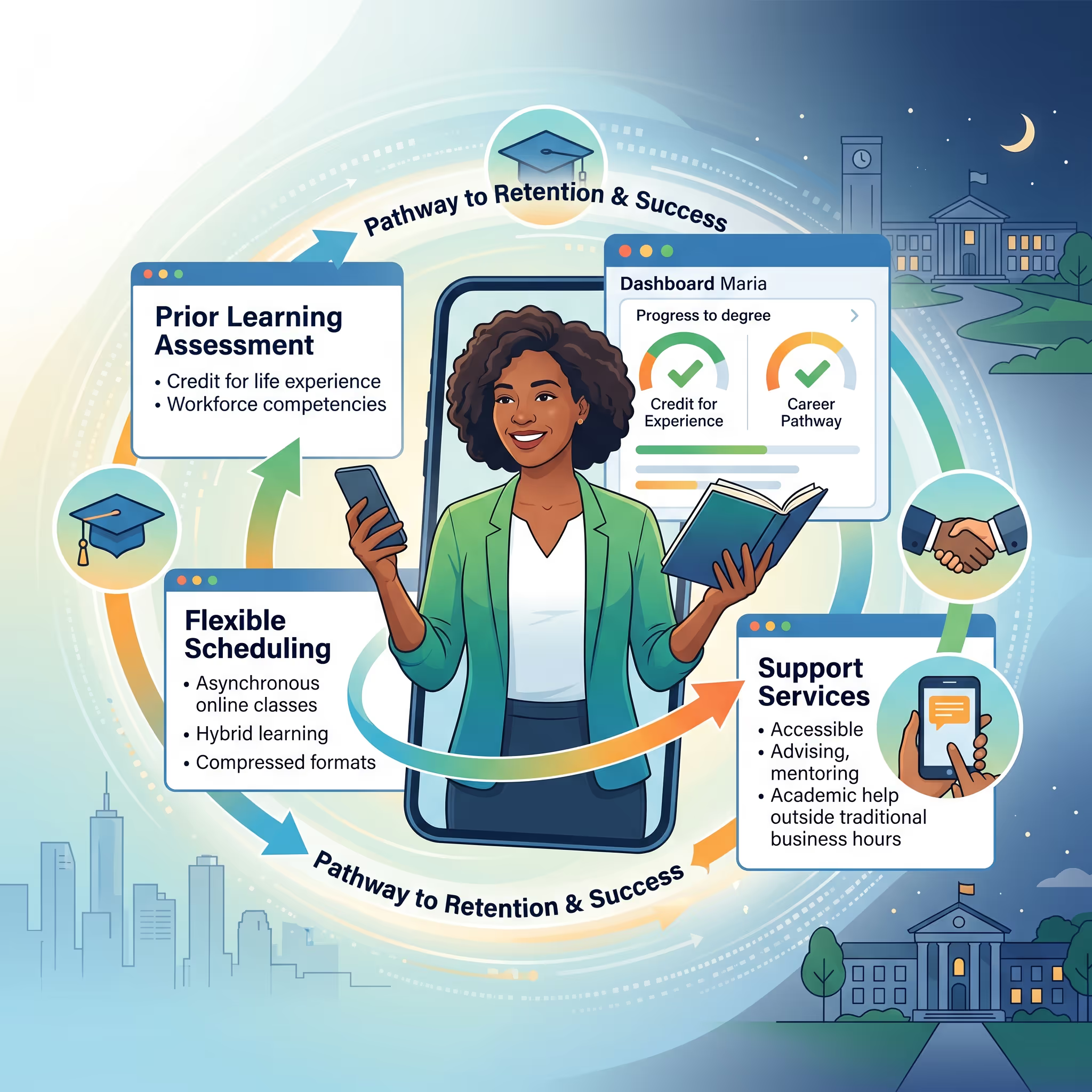
Support services available outside traditional business hours
Clear pathways connecting coursework to career outcomes
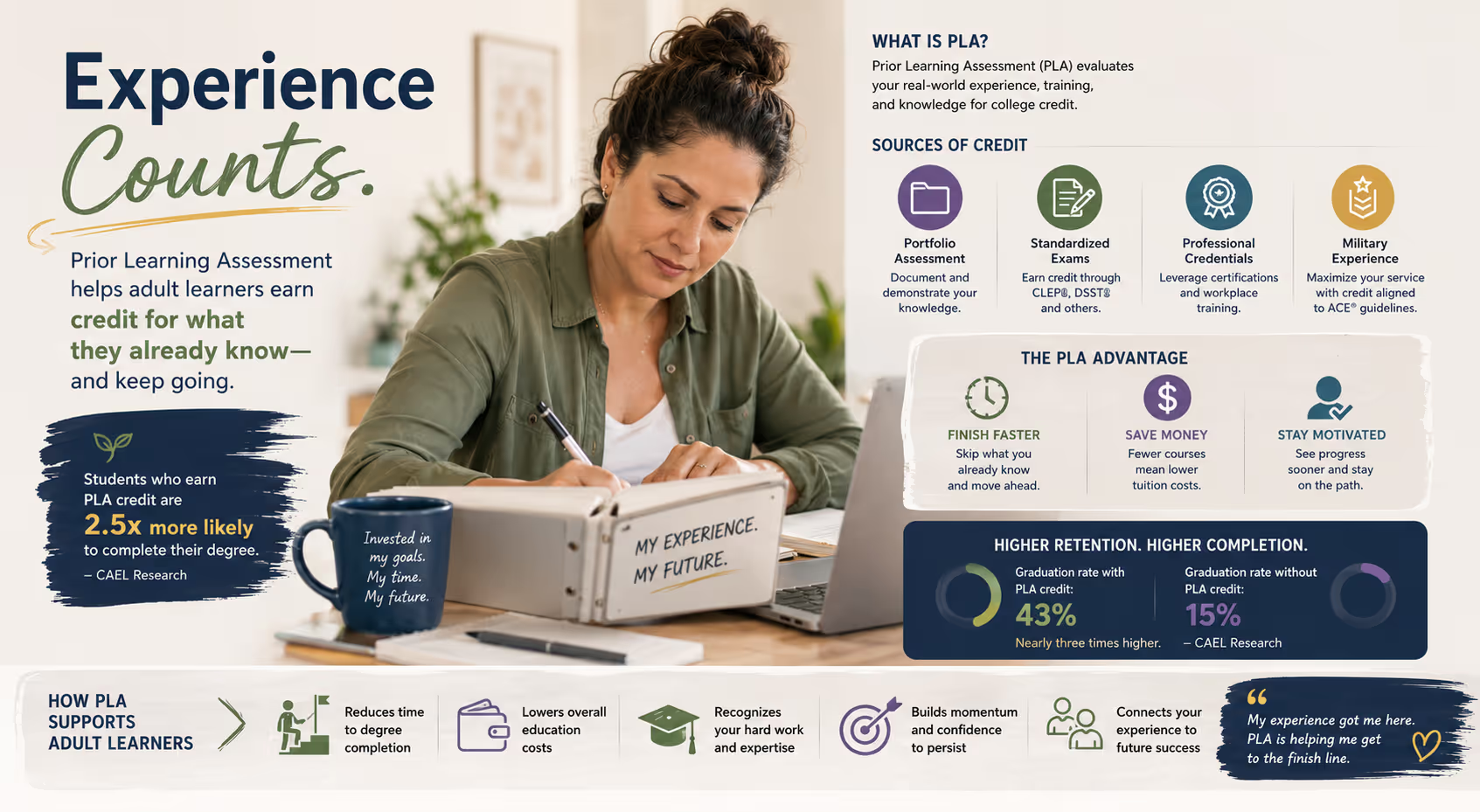
The Council for Adult and Experiential Learning (CAEL) has documented that institutions implementing comprehensive adult learner strategies see measurable improvements in persistence and completion rates. Their research on prior learning assessment found that adult students who earned PLA credit had a graduation rate of 43%, compared to 15% for similar students who did not participate in PLA programs—nearly three times higher. The framework isn't complicated, but it does require intentional design.
Recognizing Prior Learning: Credit for Life Experience
Adult learners don't arrive as blank slates. They bring professional certifications, military training, workplace competencies, and life experiences that often align with academic learning outcomes. Prior Learning Assessment (PLA) offers a structured way to evaluate and award credit for this knowledge.
Maria, for instance, has managed a team of twelve for five years. She's completed corporate training in conflict resolution, performance management, and workplace communication. Should she really sit through an introductory management course covering material she practices daily?
How PLA Benefits Both Students and Institutions
For students, PLA reduces time to degree completion, lowers tuition costs, and validates that their experience matters. For institutions, it increases retention by accelerating progress and demonstrating that the college values what students already know.
Effective PLA programs typically include:
Portfolio assessment where students document and demonstrate competencies
Standardized examinations like CLEP or DSST tests
Evaluation of professional credentials and workplace training
Military credit articulation aligned with American Council on Education recommendations
CAEL's multi-institution research found that PLA students earned degrees at 2.5 times the rate of non-PLA students, even when controlling for factors like age, prior academic performance, and enrollment intensity. This makes sense—reducing the path to completion by even one semester can be the difference between finishing and stopping out again.
Implementation Considerations
Building a robust PLA program requires faculty buy-in, clear assessment rubrics, and transparent policies. Students need guidance navigating the process, which means advisors must understand PLA options thoroughly.
Some institutions have created dedicated prior learning coordinators who work specifically with adult learners to identify creditable experience. Others have integrated PLA discussions into mandatory first-semester advising for all non-traditional students. The key is making sure Maria knows, during her first week back, that her five years of management experience might translate into academic credit—not discovering it two semesters later.
Flexible Scheduling and Asynchronous Learning Options
The most common barrier adult learners cite isn't academic difficulty—it's time. Work schedules shift. Children get sick. Cars break down. Life happens in ways that make rigid attendance policies untenable.
Building Flexibility Into Program Design
Institutions successfully retaining adult learners offer multiple pathways to course completion:
| Approach | Description | Best For |
| Fully asynchronous online | No required meeting times; students complete work on their own schedule | Students with unpredictable or rotating work schedules |
| Hybrid/blended | Reduced in-person sessions combined with online components | Students who value some face-to-face interaction but need flexibility |
| Compressed formats | Accelerated courses meeting intensively for shorter periods | Students who can commit fully for limited timeframes |
| Evening and weekend cohorts | Traditional instruction scheduled outside business hours | Students with predictable work schedules |
The key isn't choosing one format but offering enough variety that students can find options matching their constraints. When Maria's car broke down, a fully asynchronous option for that statistics course would have meant reviewing a recorded lecture at 10 PM instead of missing critical content entirely.
Asynchronous Engagement Challenges
Flexibility solves the scheduling problem but creates a new one: connection. Adult learners taking courses entirely online or on non-traditional schedules may never interact with peers or feel part of the campus community.
This isolation contributes to attrition. Students who don't feel connected to their institution or fellow learners are more likely to quietly stop enrolling when difficulties arise. They don't announce their departure—they simply don't register for the next semester.
Effective engagement strategies for asynchronous learners include:
Discussion forums with meaningful prompts that invite professional experience sharing
Virtual study groups scheduled at varied times to accommodate different schedules
Peer mentoring programs matching new adult learners with those further along
Mobile-accessible check-ins that don't require synchronous participation
Recognition systems acknowledging progress and participation
The goal is maintaining connection without demanding presence. Maria can't attend a 2 PM campus event, but she can respond to a discussion prompt at 11 PM that asks her to connect course concepts to her management experience—and feel valued when her classmates engage with her real-world perspective.
Employer Partnerships and Workforce Connections
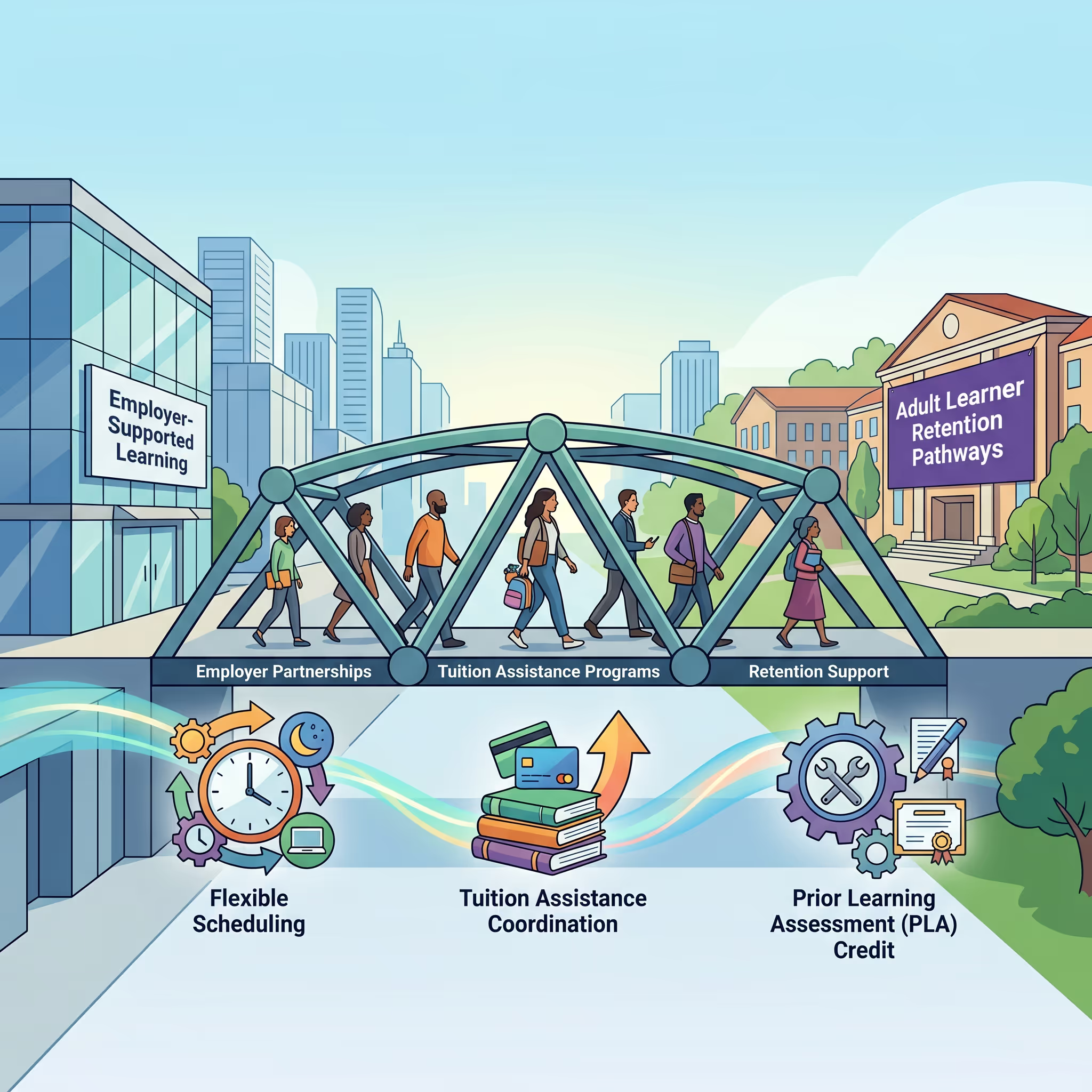
Adult learners typically return to college for career-related reasons. They want better jobs, higher salaries, or credentials required for advancement. Institutions that make these connections explicit—and that partner with employers to support student completion—see stronger retention.
Tuition Assistance Program Coordination
Many adult learners have access to employer tuition assistance, but navigating these programs adds complexity. Some employers require specific documentation. Others limit which programs qualify. Students may not know what benefits they have or how to access them.
Maria's employer offers up to $5,000 annually in tuition reimbursement, but the paperwork requires her academic advisor's signature, a grade report within 30 days of semester end, and documentation that the coursework relates to her current role. If the institution's financial aid office closes at 5 PM and her advisor doesn't respond to emails for a week, she might miss the reimbursement deadline and be out thousands of dollars.
Institutions can support students by:
Designating staff who understand major employer tuition programs in the region
Providing documentation in formats employers commonly require
Offering billing arrangements that align with reimbursement timelines
Proactively reaching out to major employers about partnership opportunities
Curriculum Relevance and Career Pathways
Adult learners scrutinize return on investment more carefully than traditional students. They want to know exactly how coursework connects to career outcomes. Every class that feels disconnected from their professional goals increases the temptation to stop out.
Programs that make these connections transparent—through industry advisory boards, embedded certifications, and clear competency mapping—help adult learners see the value of continuing when competing demands make stopping out tempting. Maria is more likely to push through a difficult semester if she can articulate precisely how her degree will qualify her for the operations director role she's targeting.
Support Services Designed for Adult Learner Schedules
A tutoring center open 9-to-5 on weekdays doesn't help a student who works those hours. A financial aid office requiring in-person appointments creates barriers for students who can't take time off work.
Rethinking Service Delivery
Institutions committed to adult learner success audit support services through a non-traditional student lens:
Are advising appointments available in evenings or on weekends?
Can students complete financial aid processes entirely online?
Is tutoring available virtually and asynchronously?
Do mental health services accommodate students who can't attend during traditional hours?
Are childcare options or resources available for student parents?
Addressing these questions often reveals gaps that create friction for adult learners—friction that accumulates into dropout decisions. Each barrier seems small in isolation. Together, they signal that the institution wasn't built for someone like Maria.
Childcare and Family Support
Student parents face unique challenges that institutions have historically been slow to address. Childcare costs can exceed tuition. Sick children mean missed classes. School schedules rarely align with college schedules.
Some institutions have responded with:
On-campus childcare centers with student-parent priority
Emergency childcare funds for unexpected situations
Family study spaces where children can be present
Academic calendars accounting for K-12 schedules when possible
These supports acknowledge that adult learners don't leave their families at the door when they enroll. Maria's daughter has a half-day on the third Wednesday of every month. An institution that recognizes this reality—perhaps by avoiding scheduling required sessions on those afternoons—demonstrates that it understands her life.
Early Intervention and Proactive Outreach
Adult learners often stop out quietly. By the time institutions notice, re-engagement requires significant effort.
Warning Signs Specific to Adult Learners
The indicators suggesting an adult learner may be struggling often differ from those flagging traditional student difficulties. A traditional early-alert system might catch declining grades or missed classes. For adult learners, the patterns are subtler:
Decreased participation in asynchronous discussions or activities
Requests for incomplete grades or extensions becoming frequent
Gaps in communication with advisors or instructors
Changes in enrollment patterns (dropping from full-time to part-time)
Missed financial aid or registration deadlines
Institutions using data-informed engagement tools can identify these patterns before students disappear entirely. The goal is intervention while re-engagement remains simple—a conversation, a schedule adjustment, a connected resource—rather than after students have mentally checked out.
If Maria's participation in online discussions drops from weekly to nonexistent over three weeks, a proactive check-in might reveal she's overwhelmed by a project at work that will end in two weeks. A brief extension or accommodation keeps her enrolled. Silence until she fails to register for next semester loses her entirely.
Re-Enrollment Support for Prior Stop-Outs
Adults returning after previous stop-outs need specific support. They may carry academic baggage—low GPAs from earlier attempts, financial aid issues, or emotional associations with past failures.
InsideTrack's research on student coaching demonstrates that coaching-based approaches focusing on goal clarity, motivation, and practical barrier removal can increase persistence rates by 10-15 percentage points among adult learners navigating re-enrollment. These students benefit from understanding what will be different this time and having concrete plans for navigating the obstacles that derailed them before.
Maria stopped out seven years ago when her daughter was born. She carries a 2.4 GPA from that earlier attempt and worry that she's "not college material." An effective re-enrollment program addresses both the practical challenges (can she repeat courses to improve her GPA?) and the emotional ones (does she believe she can succeed this time?).
Building Belonging for Non-Traditional Students
Sense of belonging matters for adult learners just as it does for traditional students—but what creates belonging differs.
Adult learners often report feeling out of place in campus environments designed for younger students. They may feel their life experiences aren't valued or that they don't fit the institution's mental model of a "real" student. Walking through a campus filled with 19-year-olds discussing dorm parties doesn't exactly signal "you belong here" to a 34-year-old with a mortgage.
Creating Adult Learner Community
Effective strategies include:
Cohort models where adult learners progress through programs together
Adult learner organizations with programming relevant to their interests and schedules
Faculty training on adult learner strengths and needs
Recognition ceremonies celebrating adult learner milestones
Alumni connections with successful adult learner graduates
When adult learners see others like themselves succeeding, the institution's implicit message shifts from "you're an exception" to "you belong here." Maria benefits from meeting another working mother who completed her degree while managing similar constraints—proof that it's possible, from someone who understands her reality.
Leveraging Professional Experience in the Classroom
Adult learners bring workplace knowledge that enriches classroom discussions. Faculty who intentionally invite this experience—asking students to connect concepts to professional contexts, valuing real-world examples alongside textbook theories—help adult learners feel their presence matters.
This isn't about lowering academic standards. It's about recognizing that learning happens in many contexts and that students who've spent years in professional environments bring legitimate expertise worth incorporating. When Maria's management experience becomes an asset in class discussions rather than irrelevant background noise, she's more likely to persist through difficult material.
Technology That Meets Adult Learners Where They Are
Adult learners live on their phones. They check email between meetings, watch lecture videos during lunch breaks, and complete assignments after children go to bed. Technology that requires them to be at a desktop computer during specific hours creates unnecessary barriers.
Mobile-First Engagement
Effective adult learner engagement platforms prioritize:
Mobile accessibility for all critical functions
Asynchronous communication that doesn't require real-time availability
Push notifications for deadlines and important updates
Streamlined interfaces that respect limited time
Integration with other systems students already use
Specific technology interventions showing promise include:
Two-way SMS nudging that allows students to respond to check-ins without logging into a portal
Mobile-responsive LMS features ensuring full functionality on phones, not just "mobile-compatible" afterthoughts
Predictive analytics dashboards helping advisors identify at-risk students before they disengage
Chatbot-assisted navigation providing 24/7 answers to common questions about deadlines, requirements, and resources
The goal is reducing friction at every touchpoint. Each additional login, each clunky interface, each process requiring multiple steps erodes the limited time and energy adult learners have available for their education. Maria has approximately 45 minutes of unscheduled time per day. An engagement system that captures her attention in that window—rather than demanding she carve out additional time—has a far better chance of success.
Measuring What Matters for Adult Learner Success
Institutions committed to adult learner retention need metrics that capture non-traditional student experiences specifically. Aggregated retention data that combines traditional and adult learners masks important patterns.
Key Metrics to Track
Adult learner persistence rates (semester-to-semester, year-to-year)
Time to completion for adult learner cohorts
PLA participation and credit awarded
Stop-out rates and timing patterns
Re-enrollment rates for prior stop-outs
Support service utilization by adult learners
Satisfaction scores disaggregated by student type
Tracking these metrics allows institutions to identify what's working, where gaps exist, and whether interventions are making meaningful differences. If adult learner stop-out rates spike in week eight of each semester, that's actionable information. If PLA participants persist at higher rates than non-participants, that's an argument for expanding the program.
Moving Forward: Practical Steps for Your Institution
Supporting adult learners isn't about adding one program or adjusting one policy. It requires examining institutional systems through a non-traditional student lens and committing to ongoing adaptation as adult learner needs evolve.
Maria represents 43 million Americans with some college and no degree—students who represent both tremendous need and tremendous opportunity. The institutions that will thrive as traditional-age enrollment declines are those building genuine capacity to serve learners like her.
The question isn't whether adult learners deserve better support. It's whether your institution is ready to provide it.
If your institution is exploring how technology can support adult learner engagement, personalized outreach, and early intervention for non-traditional students, schedule a conversation to discuss what that might look like for your campus. CampusMind's team combines expertise in student success research, behavioral science, and higher education technology to help institutions support all learners—including the growing population of adults returning to complete their degrees.
Frequently Asked Questions
What makes adult learners different from traditional students for retention purposes?
Adult learners typically balance employment, family responsibilities, and financial pressures alongside their studies. They're more likely to attend part-time, need flexible scheduling, and have prior college credits or professional experience that could count toward their degree. Retention strategies must account for these competing demands rather than assuming students can organize their lives around institutional schedules.
How does Prior Learning Assessment improve adult learner retention?
Prior Learning Assessment allows students to earn credit for knowledge gained through work, military service, or other experiences. This reduces time to completion, lowers overall costs, and validates that institutions value what students already know. CAEL research shows PLA students graduate at nearly three times the rate of non-PLA students, even when controlling for other factors—making PLA one of the most evidence-backed interventions for adult learner success.
What support services matter most for non-traditional student success?
Adult learners need services available outside traditional business hours—evening and weekend advising, virtual tutoring, online financial aid processes, and childcare support. The specific services matter less than ensuring they're accessible when students can actually use them, which often means rethinking delivery assumptions built around traditional-age student schedules.
How can institutions identify adult learners at risk of stopping out?
Warning signs include decreased participation in asynchronous activities, increasing requests for extensions or incomplete grades, gaps in advisor communication, and changes in enrollment intensity. Data-informed engagement tools that track these patterns can flag students for proactive outreach before they quietly stop enrolling.
What role do employer partnerships play in adult learner retention?
Many adult learners have access to employer tuition assistance, and most return to college for career-related reasons. Institutions that help students navigate employer benefits, connect coursework clearly to career outcomes, and partner with employers on relevant programming strengthen the value proposition that keeps adult learners enrolled through difficult semesters.
Works Cited
National Student Clearinghouse Research Center — "Some College, No Credential Student Outcomes." https://nscresearchcenter.org/some-college-no-credential/
Council for Adult and Experiential Learning (CAEL) — "Fueling the Race to Postsecondary Success: A 48-Institution Study of Prior Learning Assessment and Adult Student Outcomes." https://www.cael.org/
InsideTrack — "Research on Coaching and Student Persistence." https://www.insidetrack.org/