

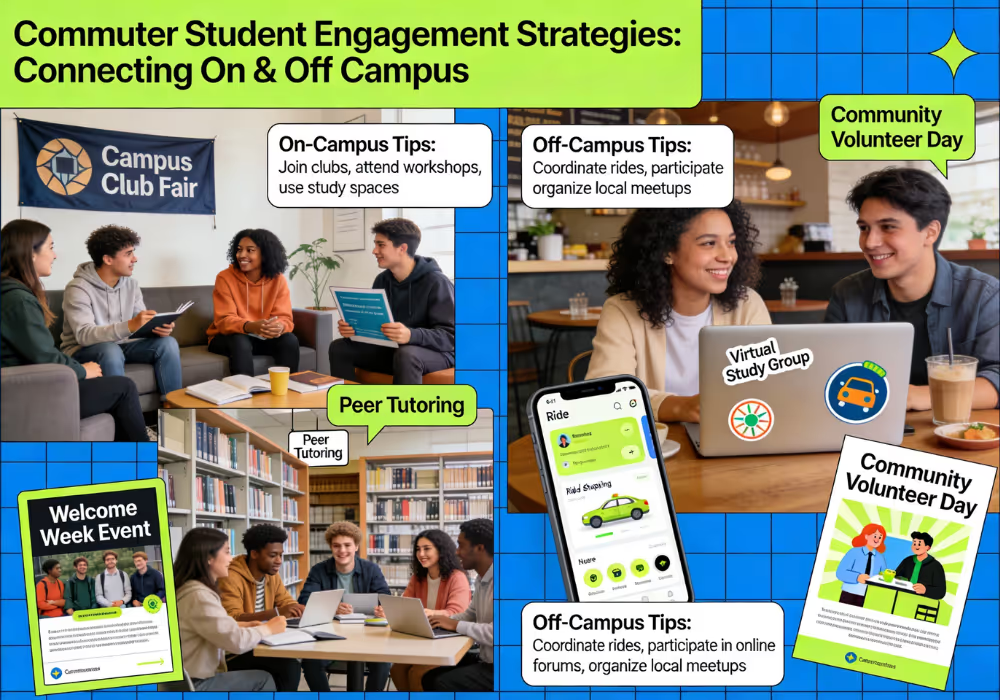
Key Takeaways
Commuter students represent approximately 84% of undergraduates, yet most campus engagement strategies assume students live in residence halls
Belonging—not grades—predicts persistence: research shows commuter students who feel connected to campus have significantly higher retention rates
Flexible scheduling, peer connections, and mobile-first outreach are the foundations of effective commuter engagement
Technology can bridge the physical presence gap when designed to meet students where they already are
Culture change matters most: institutions that succeed treat commuter engagement as a strategic priority, not an afterthought
A student finishes her 8 a.m. lecture, grabs coffee from the campus café, and heads to her car for a 45-minute drive to her part-time job. She won't return to campus until Thursday. By then, she's missed the club fair, the free wellness workshop, and three emails about advising deadlines buried under promotions and spam.
She's not disengaged. She's simply invisible to the systems designed for students who live in dorms.
Commuter students aren't a niche population. They're the majority. According to the National Center for Education Statistics, approximately 84% of undergraduates commute to campus [1]. Yet most engagement strategies—residence hall programming, late-night study sessions, walk-in advising hours—assume students live within walking distance of their classrooms.
That disconnect isn't just inconvenient. It's a retention problem that often goes unrecognized until students have already left.
Why Traditional Engagement Models Miss Commuter Students
The challenge isn't motivation. Commuter students frequently juggle more responsibilities than their residential peers: jobs, family obligations, long commutes, and the financial pressures that come with living independently [2]. They're resourceful by necessity.
The challenge is access.
Traditional student engagement models were built around physical presence. Office hours assume students can drop by between classes. Programming schedules assume evenings are free. Peer connections assume students share common spaces beyond the classroom.
For commuters, none of those assumptions hold.
Dr. Barbara Jacoby, a leading researcher on commuter student success, has documented this structural mismatch extensively. Her work demonstrates that commuter students experience campus differently—not as a home, but as a destination [3]. They arrive, complete their tasks, and leave. Without intentional design, they rarely access the social and support networks that residential students absorb almost by osmosis.
Research from the University of Illinois at Chicago, a commuter-heavy institution, found that belonging was the critical variable. Their studies revealed that commuter students who felt a sense of campus belonging had significantly higher persistence rates than those who didn't—even when controlling for academic performance [4].
The implication is clear: grades aren't the whole story. Connection matters, and for commuter students, connection requires deliberate institutional effort.
How Commuter Disengagement Affects Retention Rates
When commuter students don't connect, institutions see it in their retention data.
Students who engage with at least one campus resource beyond academics—whether that's counseling, career services, or student organizations—tend to persist at higher rates [5]. But commuters access these resources less frequently, not because they don't want to, but because the logistics don't work.
A student who drives 30 minutes each way isn't going to stay on campus for a 6 p.m. workshop when she has a 5:30 p.m. work shift. A first-generation student juggling coursework and family caregiving responsibilities can't attend weekly club meetings that assume unlimited schedule flexibility.
The result is that commuter students often describe feeling like "visitors" on their own campus [3]. That psychological distance translates into academic risk. When challenges arise—a failed exam, a financial emergency, a mental health crisis—commuters are less likely to know where to turn. They haven't built the informal networks that help residential students navigate setbacks.
The uncomfortable reality is that institutions often don't realize they're losing commuter students until those students are already gone. Without regular touchpoints, disengagement happens quietly.
Real-World Implementation: University of Maryland, Baltimore County
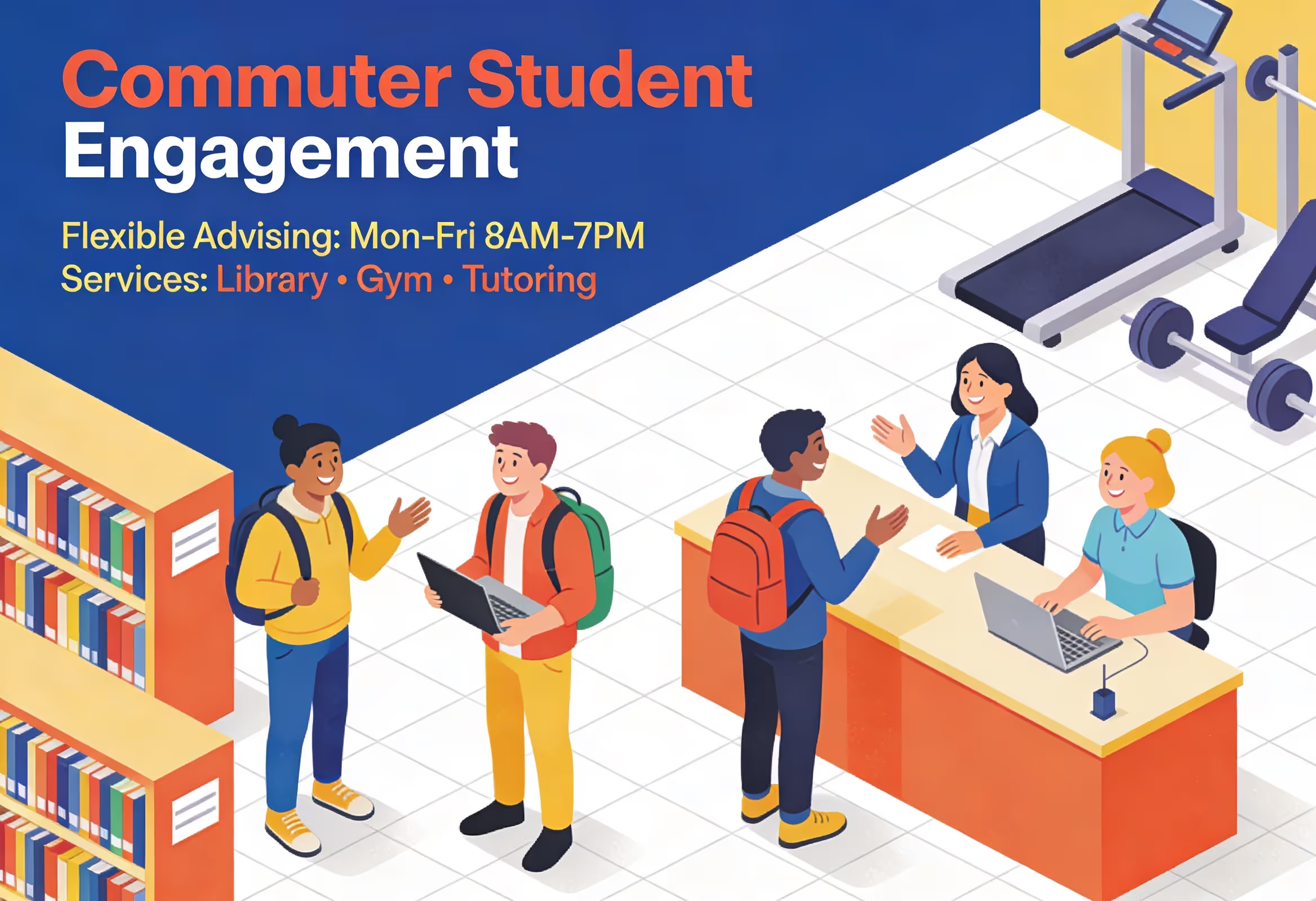
The University of Maryland, Baltimore County (UMBC) provides a useful example of commuter-focused programming. As an institution where a significant portion of students commute, UMBC developed dedicated commuter student initiatives including extended service hours, commuter-specific orientation programming, and physical spaces designed for students who need to study, rest, or store belongings between classes [6].
Their approach recognized that commuter students have fundamentally different needs than residential students—and that meeting those needs requires structural changes, not just additional programs layered onto existing residential frameworks.
Effective Engagement Strategies for Off-Campus Students
Effective commuter student engagement strategies start with one principle: meet students where they are.
That sounds straightforward. In practice, it requires rethinking assumptions about how, when, and where support happens.
Flexible Scheduling That Fits Real Lives
Commuters need options that accommodate work schedules, family responsibilities, and commute times. Practical approaches include:
Early morning and evening programming that fits around typical work schedules
Asynchronous resources students can access from home or during their commute
Drop-in formats that don't require advance registration or long time commitments
Some institutions have experimented with "commuter hours"—dedicated blocks of time when key offices (advising, financial aid, career services) extend availability specifically for non-residential students [6]. The goal isn't necessarily to add more programming. It's to make existing support accessible to students whose schedules don't align with traditional 9-to-5 operations.
Peer Connections That Don't Require Physical Presence
Belonging doesn't require a dorm room. But it does require intentional design.
Commuter students benefit from:
Cohort-based structures where they see the same faces across multiple classes
Online communities tied to their major, identity, or interests
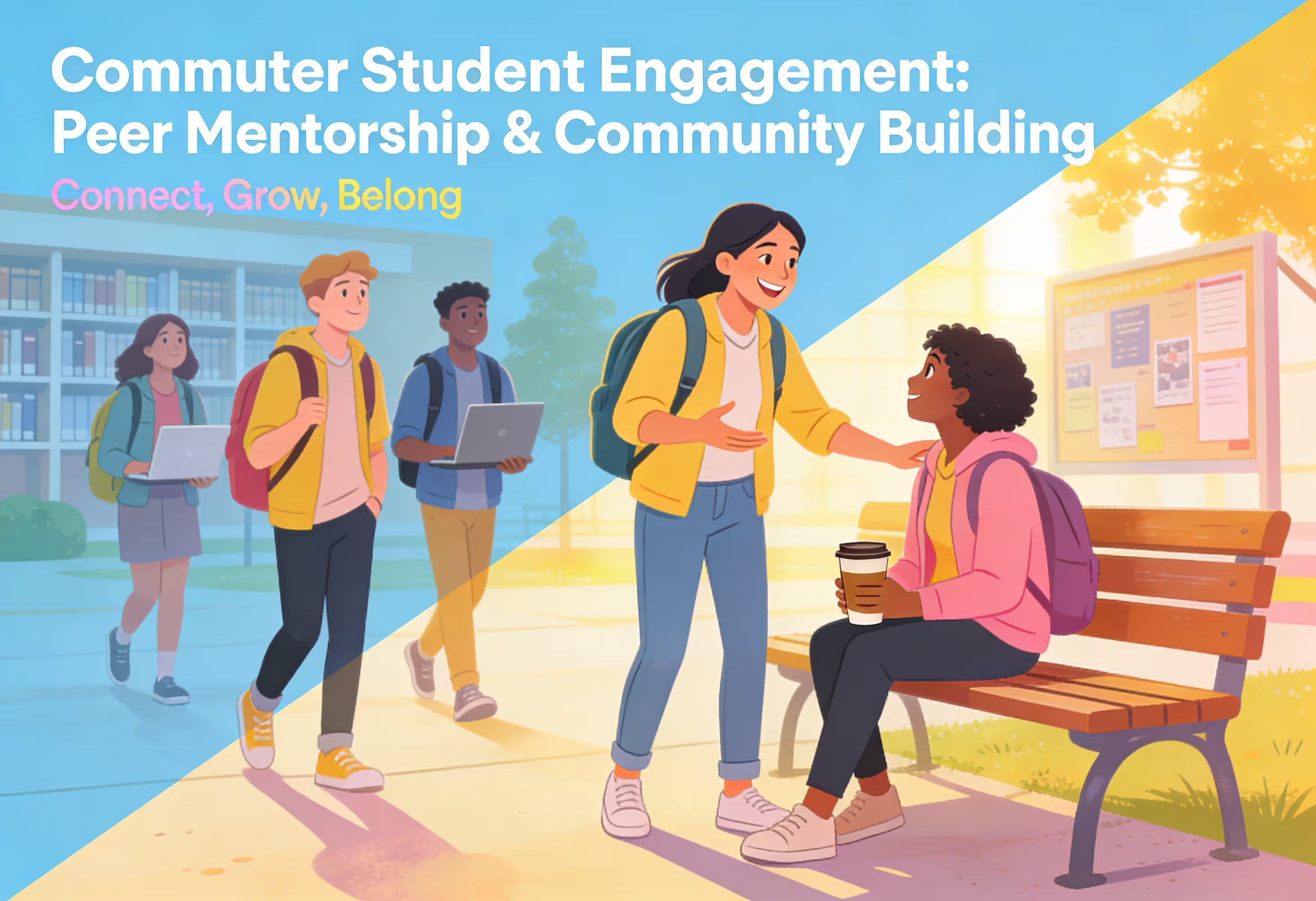
Peer mentorship programs that connect them with other commuters who've navigated similar challenges
The key is creating connection points that don't depend on spontaneous hallway encounters or late-night study sessions. For commuters, relationships need to be built into the structure of their experience rather than left to chance.
Proactive Communication That Respects Their Time
Mass emails don't work for commuters. They're already overwhelmed, and generic announcements about campus events they can't attend feel irrelevant—which trains them to ignore institutional communication entirely.
What tends to work better:
Personalized outreach based on their schedule, interests, and demonstrated needs
Mobile-first communication that reaches them during their commute or between obligations
Clear, actionable information rather than lengthy newsletters
The difference is between "Here are 47 things happening on campus this week" and "You mentioned interest in career preparation—here's a virtual workshop that fits your Tuesday schedule gap."
Integrating Support Into Natural Pathways
Rather than expecting commuters to seek out support across multiple offices and locations, effective strategies embed support into places they already go.
That might mean:
Faculty partnerships where instructors share relevant resources during class
Mobile tools that surface opportunities based on real-time context
One-stop service models that consolidate multiple needs into single visits [7]
When students have to navigate five different offices across campus to resolve one issue, commuters disproportionately give up. Streamlined, integrated support respects their constraints while still connecting them to the help they need.
How Mobile Technology Supports Commuter Student Engagement
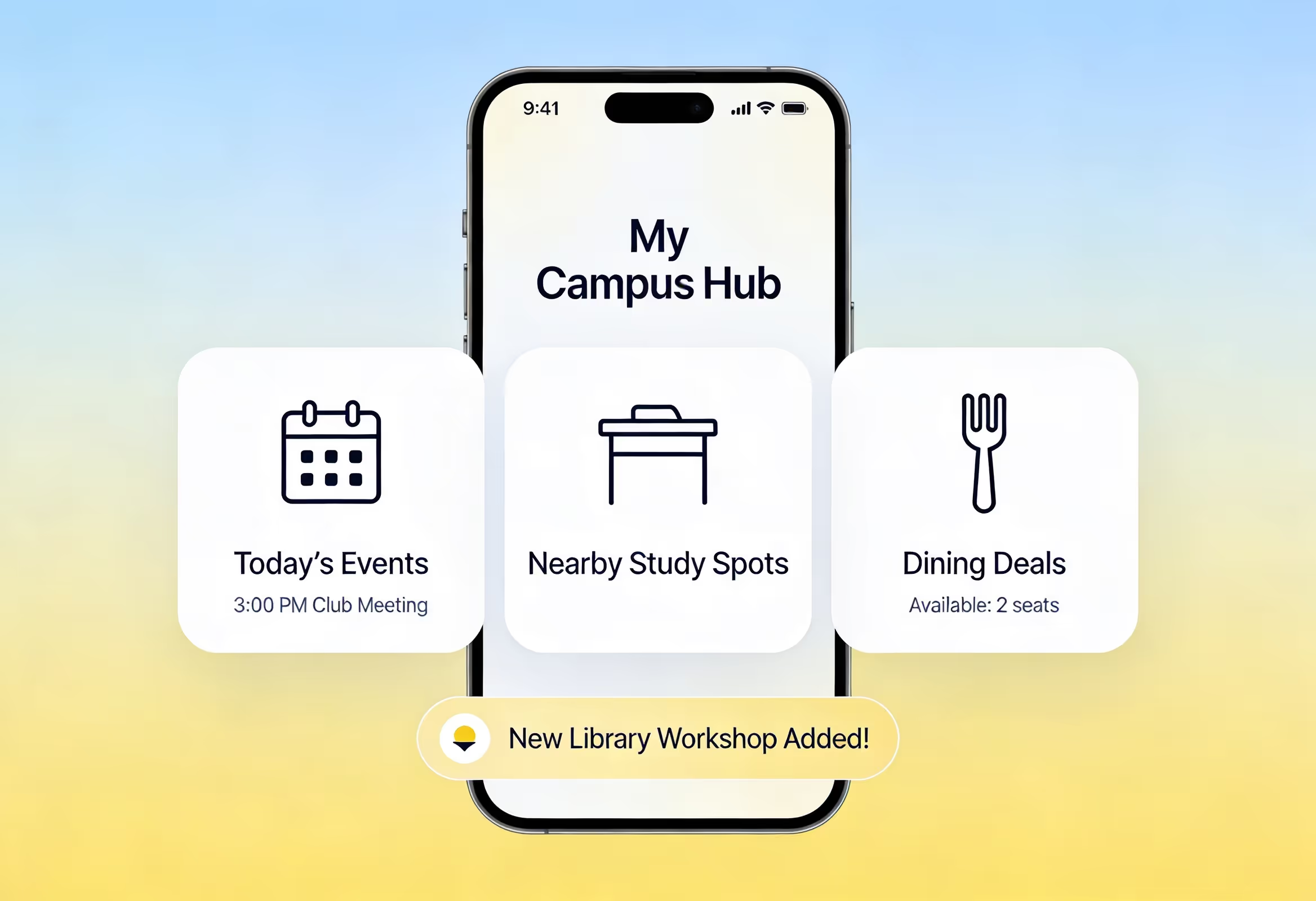
Commuter students already live on their phones. They check class schedules, respond to work texts, and manage their lives through mobile apps. That existing behavior pattern represents an opportunity, not an obstacle.
Mobile-first engagement tools can:
Deliver personalized resource recommendations based on student needs and context
Send timely nudges about deadlines, events, and support options
Create virtual spaces for peer connection that don't require physical presence
Surface engagement patterns that help staff identify students who may be struggling
The goal isn't surveillance. It's meeting students in the digital spaces they already occupy and providing value there.
Georgia State University demonstrated what's possible when institutions use data-informed tools to support students proactively. Their approach—combining analytics with human intervention—increased graduation rates significantly and generated substantial tuition savings for students [8]. While their model wasn't commuter-specific, the principle applies: proactive, personalized support can improve outcomes across student populations.
For commuter-heavy campuses, mobile engagement platforms offer a way to create belonging beyond physical presence. A student who receives a personalized recommendation, connects with a peer mentor online, and accesses resources through a single app is still engaging with campus—even if she never sets foot in the student union.
Building a Commuter-Inclusive Campus Culture
Technology matters. But culture matters more.
Institutions that successfully engage commuter students share a common trait: they've stopped treating commuters as an afterthought and started designing for them from the beginning.
That shift looks like:
Leadership acknowledging commuters in strategic plans and retention initiatives
Staff training on commuter-specific challenges and effective communication strategies
Assessment practices that measure commuter engagement separately from residential students
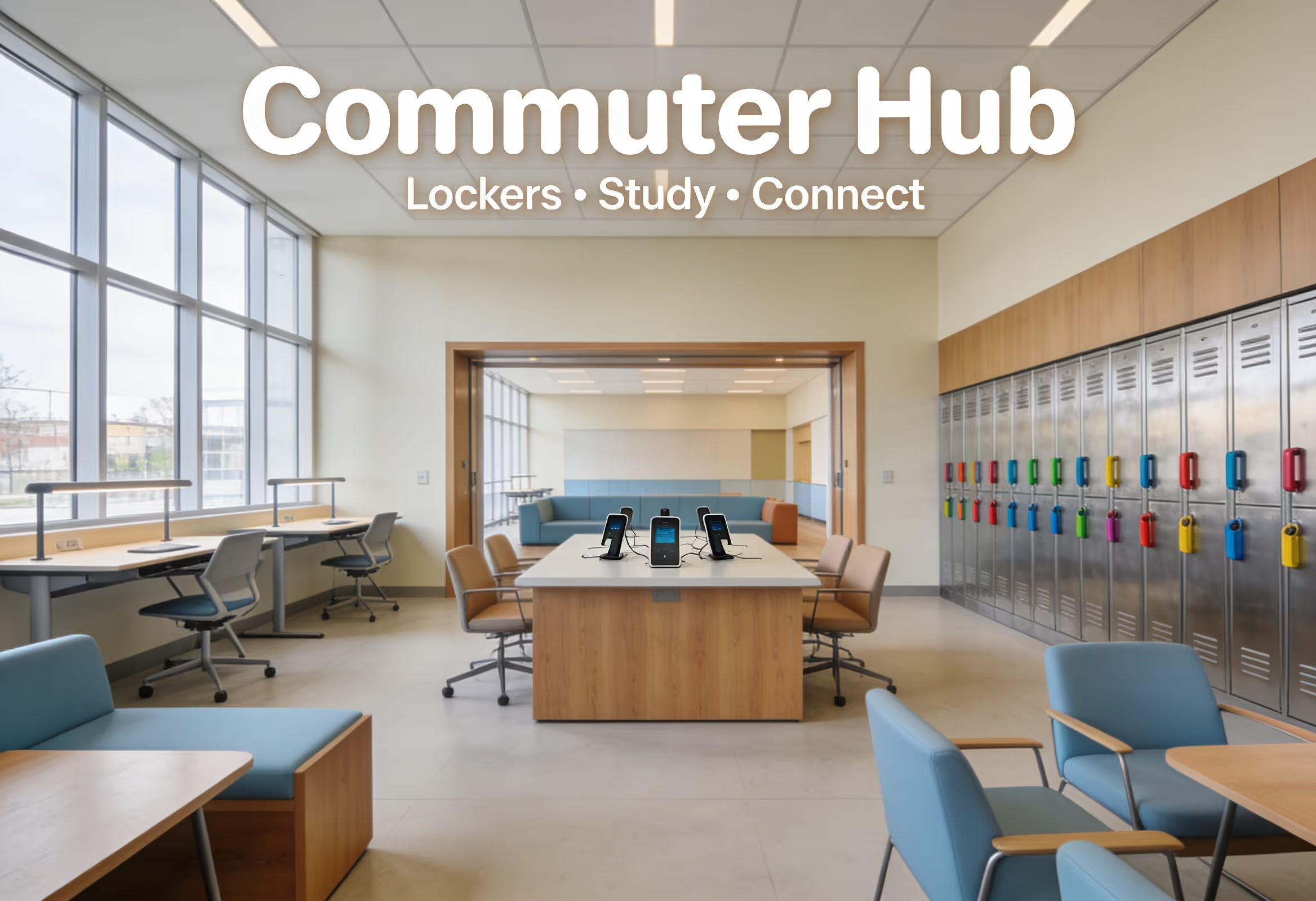
Physical spaces designed for commuters, including lockers, quiet study areas, and comfortable lounges where students can recharge between classes [6]
It also means recognizing that commuter students aren't a monolithic group. A 19-year-old living with parents has different needs than a 35-year-old balancing coursework with full-time employment and childcare. Effective strategies account for that diversity rather than treating all commuters as interchangeable.
Your Next Steps
If your institution serves commuter students—and statistically, most do—here's where to start:
Audit your current engagement touchpoints. How many assume physical presence? How many are accessible to someone who's on campus 10 hours a week?
Survey your commuter population directly. Ask them: What barriers do you face? What would help? Their answers will be more useful than any best-practice guide.
Identify one high-impact change. Maybe it's extending advising hours. Maybe it's launching a commuter-specific peer mentorship program. Maybe it's exploring mobile engagement tools that meet students where they are. Start somewhere concrete.
Measure what matters. Track commuter retention and engagement separately from residential students. If you can't see the problem in your data, you can't address it systematically.
Create feedback loops. Commuter needs evolve as student demographics and external pressures change. Build mechanisms for ongoing input rather than one-time assessments.
The institutions that thrive in the coming decade won't necessarily be the ones with the most impressive residence halls. They'll be the ones that recognize their largest student population—commuters—and design support systems that actually work for how those students experience college.
Interested in how mobile-first engagement can support your commuter students?
Book a call to explore how CampusMind helps institutions create belonging beyond physical presence.
Frequently Asked Questions
Why are commuter students harder to retain than residential students?
Commuter students aren't inherently harder to retain—they're harder to reach with traditional strategies. Most campus support systems assume physical presence, which disadvantages students who spend limited time on campus. When institutions design engagement strategies that accommodate commuter schedules and constraints, retention gaps often narrow. The key is recognizing that commuters need different approaches, not more of the same programming that works for residential students.
What's the most effective way to build community among commuter students?
Intentional structure works better than hoping for organic connections. Cohort-based courses, peer mentorship programs, and online communities create reliable touchpoints that don't depend on spontaneous encounters in residence halls or dining areas. Mobile engagement tools can also facilitate connections between students with shared interests or schedules, helping commuters find their people even when they're rarely on campus at the same time.
How can we reach commuter students who don't check email regularly?
Mobile-first communication tends to be more effective for this population. Text-based nudges, app notifications, and personalized alerts reach students during their commutes and between other obligations. The key is relevance: communications should feel useful and timely, not like spam. When students learn that messages from your institution actually matter to them, they're more likely to pay attention.
Should we create separate programming for commuter students?
Sometimes, but not always. Dedicated commuter programming can address specific needs and help build identity among this population. However, the larger goal should be making all programming accessible—through flexible scheduling, virtual options, and clear communication—rather than creating entirely parallel systems. The best approach often combines commuter-specific initiatives with broader accessibility improvements across existing programs.
How do we measure commuter student engagement effectively?
Traditional engagement metrics like event attendance and office visits tend to undercount commuter participation. Consider tracking digital engagement, resource utilization rates, peer connection patterns, and self-reported sense of belonging. Disaggregating your retention data by residential status reveals patterns that aggregate numbers hide—and helps you understand whether your commuter-focused interventions are actually working.
About CampusMind
CampusMind is a student engagement platform designed to help colleges improve retention through proactive, data-informed support. Our approach combines behavioral science, gamification, and real-time analytics to connect students with campus resources—wherever they are. We partner with institutions through pilot programs designed to demonstrate measurable impact on student success outcomes.
Works Cited
[1] National Center for Education Statistics — "Undergraduate Enrollment." https://nces.ed.gov/programs/coe/indicator/cha
[2] American Council on Education — "Nontraditional Undergraduates." https://www.acenet.edu/Research-Insights/Pages/Student-Support/Nontraditional-Students.aspx
[3] Jacoby, B. — "The Student as Commuter: Developing a Comprehensive Institutional Response." ASHE-ERIC Higher Education Report No. 7. https://eric.ed.gov/?id=ED347956
[4] University of Illinois at Chicago — "Creating a Sense of Belonging for Commuter Students." https://engagement.uic.edu/commuter-student-resources/
[5] Tinto, V. — "Leaving College: Rethinking the Causes and Cures of Student Attrition." University of Chicago Press.
[6] NASPA — "Supporting Commuter Student Success: Research and Practice." https://www.naspa.org/publications/books/supporting-commuter-student-success
[7] Corwin, D. & Cintron, R. — "One-Stop Student Services: Building on a Model." New Directions for Student Services. https://onlinelibrary.wiley.com/journal/15360695
[8] Georgia State University — "Student Success Programs." https://success.gsu.edu/approach/