

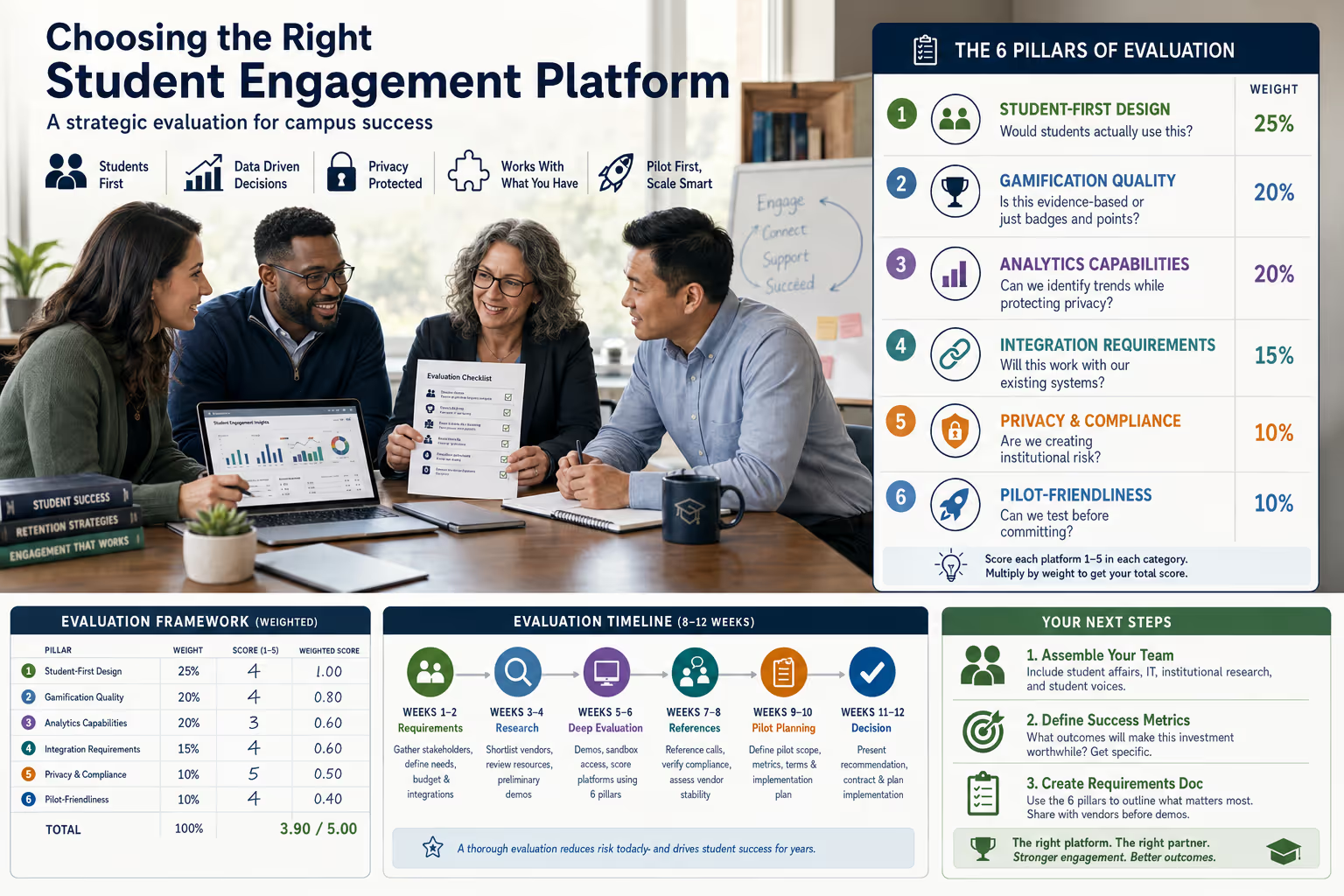
Finding a student engagement platform has landed on your desk. The reasons vary—retention numbers that dipped last year, a president who returned from a conference buzzing about gamification, or simply the frustration of watching students fall through cracks despite everyone's best efforts.
Now you're facing a crowded market where every vendor promises transformation. The challenge? Most comparison content comes from software review sites that rank platforms by features you may not need while ignoring the questions keeping you up at night. They treat "engagement" as a metric to report rather than an outcome to create.
This guide takes a different approach. It's built for campus leaders who need to make a defensible decision—one that serves students, satisfies your CFO, and doesn't create a privacy nightmare two years down the road.
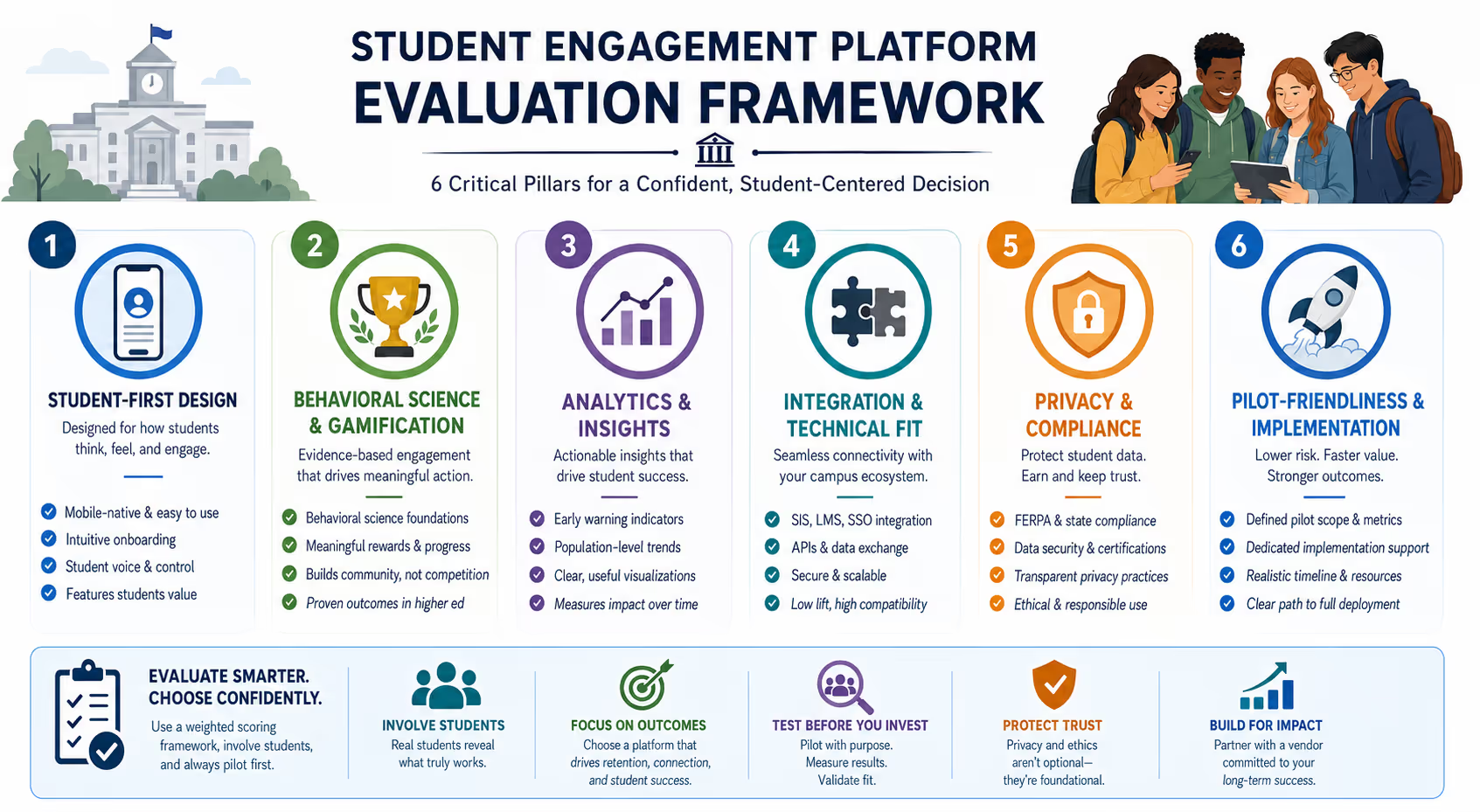
TL;DR: Choosing a student engagement platform requires evaluating six critical areas: student-first design, evidence-based gamification, analytics capabilities, integration requirements, privacy compliance, and pilot-friendliness. Use a weighted scoring framework, involve students in testing, and always pilot before committing to enterprise contracts.
Key Takeaways
Student-first design separates platforms that students actually use from expensive shelfware
Gamification features need behavioral science backing, not just badges and points
Analytics capabilities must balance institutional insight with student privacy
Integration requirements can make or break implementation success
Pilot-friendliness reduces risk and accelerates time to value
Including student voices in evaluation prevents costly adoption failures
Why Traditional Software Evaluations Fall Short in Higher Ed
Most enterprise software evaluation frameworks weren't built for education. They prioritize admin dashboards over student experience. They assume your users are employees who must use the tools they're given.
Students aren't employees.
They won't use platforms that feel like compliance tools. Staff can't sustain programs built on manual workarounds. And the retention software that looked impressive in the demo? It becomes expensive shelfware if students never open it twice.
A 2023 EDUCAUSE study found that technology adoption failures in higher education often stem from misalignment between tool capabilities and actual user needs [1]. The result? Institutions invest in platforms that look impressive in demos but collect dust after launch.
Before you evaluate any platform, you need evaluation criteria designed for your context—criteria that account for FERPA requirements, integration with existing SIS and LMS infrastructure, and the unique dynamics of student behavior in college settings.
The Six Pillars of Student Engagement Platform Evaluation
After reviewing industry frameworks and consulting with student success practitioners, six evaluation categories consistently emerge as critical. Weight these based on your institution's specific priorities, but don't skip any entirely.
Pillar 1: Student-First Design
This is where most evaluations go wrong. They start with admin features and treat student experience as an afterthought.
What to look for:
Mobile-native design (not a responsive web app forced onto phones)
Onboarding that takes minutes, not training sessions
Interface language that sounds like a helpful peer, not an institutional portal
Student control over their own data and privacy settings
Features students would actually choose to use, not just tolerate
Red flags:
Demo focuses entirely on admin dashboards
Student interface requires extensive training
No evidence of student input in product development
Features feel like surveillance dressed up as support
The evaluation question that matters most: Would a first-generation freshman—overwhelmed, uncertain, and checking their phone between classes—actually open this campus life app twice?
Student-first design isn't about flashy interfaces. It's about reducing friction at every step. Research consistently shows that students are more likely to persist when they feel connected to campus resources and communities [2]. A platform that creates friction instead of reducing it works against your retention goals.
Pillar 2: Behavioral Science and Gamification
Gamification has become a buzzword in EdTech. You'll encounter everything from thoughtful behavioral design to gimmicky badge systems slapped onto existing software.
Here's how to tell the difference.
What separates evidence-based gamification from marketing fluff:
Clear connection to behavioral science principles (variable rewards, progress visualization, social proof)
Rewards tied to meaningful engagement, not just logging in
Challenge systems that build over time rather than front-loading complexity
Community features that foster belonging rather than competition
Documented outcomes from similar higher education implementations
Questions to ask vendors:
What behavioral frameworks inform your gamification approach?
How do you prevent gaming the system (students chasing points without real engagement)?
Can you share outcome data from comparable institutions?
How do rewards connect to actual campus resources and opportunities?
A well-designed gamification system doesn't just make engagement "fun." It uses evidence-based nudges to help students take actions they already want to take—attending events, connecting with peers, accessing support services—but might otherwise procrastinate or forget.
Institutions implementing gamified engagement programs have shown promising results. Montclair State University reported retention improvements among participating first-year students, with over 20,000 engagement activities logged in a single semester through their gamified approach [3].
Pillar 3: Analytics and Insights Capabilities
This pillar reveals the tension between institutional needs and student privacy most acutely.
You need data to identify at-risk students and measure program effectiveness. Students need assurance that their struggles won't be weaponized against them. Getting this balance right is what separates effective student success metrics from surveillance systems.
Essential analytics features:
Population-level trend identification (not just individual tracking)
Early warning indicators based on engagement patterns
Integration with existing institutional data for comprehensive views
Clear visualization that non-technical staff can interpret
Longitudinal tracking to measure intervention effectiveness
Privacy-protective design elements:
Aggregate reporting as the default
Clear policies about what individual data administrators can access
Student transparency about how their data is used
Compliance documentation for FERPA and state privacy requirements
Ethical AI principles if machine learning is involved
The goal isn't to create a surveillance system. It's to identify patterns—like declining engagement in the first six weeks—that help you intervene before students disappear. The best platforms accomplish this while maintaining student trust.
Ask yourself: If students understood exactly how their data would be used, would they still feel comfortable using this platform?
Pillar 4: Integration and Technical Requirements
The most feature-rich platform in the world becomes shelfware if it can't communicate with your existing systems.
Integration capability isn't glamorous, but it's often the difference between successful implementation and expensive failure. I've seen institutions abandon otherwise excellent retention software because the integration burden overwhelmed their IT teams.
Core integration requirements:
Student Information System (SIS) connectivity for enrollment and demographic data
Learning Management System (LMS) integration for academic engagement signals
Single Sign-On (SSO) compatibility for reduced friction
API availability for custom integrations
Data export capabilities for institutional research
Implementation considerations:
Required IT resources for initial setup
Ongoing maintenance burden
Vendor support during integration
Timeline from contract to launch
Customization flexibility versus complexity trade-offs
Before any vendor demo, involve your IT team. Ask them: What would make this integration straightforward? What technical debt might this create? How does this fit with our broader technology roadmap?
EDUCAUSE guidance on evaluating educational technology emphasizes that integration capabilities should be assessed early in the evaluation process, not treated as an afterthought [4].
Pillar 5: Privacy and Compliance
FERPA compliance isn't optional—but it's also not sufficient.
The regulatory landscape for student data is evolving, and platforms built with privacy as an afterthought create institutional risk. More importantly, they undermine the student trust that makes engagement possible in the first place.
Non-negotiable compliance elements:
FERPA compliance documentation
Clear data processing agreements
Defined data retention and deletion policies
Security certifications (SOC 2, or equivalent)
Incident response procedures
Beyond compliance—ethical data practices:
Student consent mechanisms for data sharing
Transparency about third-party data access
Limitations on data commercialization
Regular privacy audits
Published privacy principles
Here's the question that should guide your evaluation: If your institution faced a data breach or privacy complaint involving this platform, would you be confident defending your vendor selection?
Privacy isn't just about avoiding lawsuits. It's about maintaining student trust. Students who believe their data might be used against them—shared with parents without consent, flagged to professors, or sold to advertisers—won't engage authentically with any platform, no matter how well-designed.
Pillar 6: Pilot-Friendliness and Implementation Support
The best predictor of platform success isn't features—it's implementation quality.
A simpler platform well-implemented will outperform a sophisticated platform poorly launched. Every time.
What pilot-friendly looks like:
Defined pilot scope (specific cohorts, timeframes, success metrics)
Realistic timeline expectations
Dedicated implementation support
Clear decision criteria for expansion
Honest conversation about what pilots typically reveal
Warning signs:
Pressure to commit to institution-wide contracts immediately
Vague promises about "white glove" support without specifics
No documented pilot methodology
Unwillingness to define success metrics upfront
Previous pilots that never expanded (ask for references)
Questions to ask:
What does a typical pilot look like at institutions similar to ours?
What are the most common reasons pilots don't expand to full deployment?
Can we speak with an institution that completed a pilot in the last year?
What internal resources will we need to commit during the pilot period?
A vendor confident in their product should welcome a structured pilot. If they're pushing for immediate enterprise contracts without proof of concept, that's information worth having.
The Buy vs. Build Question
Before diving deep into vendor evaluation, some IT departments raise a reasonable question: Should we build this ourselves?
The appeal is understandable. You control the roadmap, avoid vendor lock-in, and can customize everything to your specific needs.
When building in-house might make sense:
You have dedicated development resources with higher-ed experience
Your requirements are genuinely unique
You're willing to commit to years of ongoing development and maintenance
The timeline allows for iterative development
When buying typically wins:
Speed to deployment matters (most in-house projects take 2-3x longer than projected)
You need proven behavioral science frameworks, not just technology
Vendor R&D investment exceeds what you could dedicate internally
You want to benefit from lessons learned across multiple institutions
Ongoing innovation and updates are important
The hidden cost of building is maintenance. Student engagement platforms require continuous iteration based on usage data, behavioral research, and changing student expectations. Few institutions have the resources to sustain that investment long-term.
For most campuses, the smarter question isn't "build or buy" but "which vendor shares our values and can prove results at institutions like ours?"
Weighted Evaluation Checklist
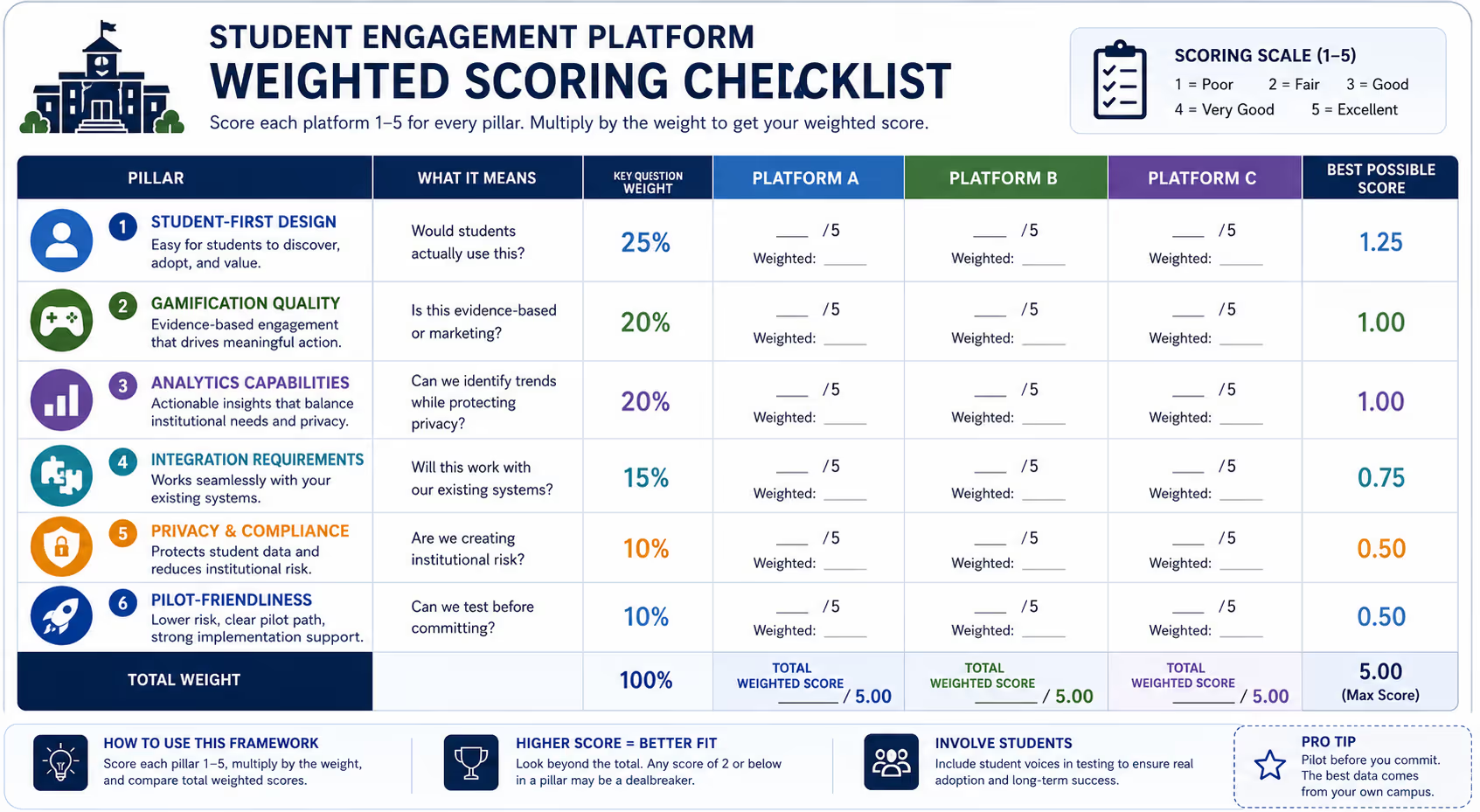
Use this framework to score platforms systematically. Adjust weights based on your institution's priorities.
| Evaluation Pillar | Suggested Weight | Key Questions |
| Student-First Design | 25% | Would students actually use this? |
| Gamification Quality | 20% | Is this evidence-based or marketing? |
| Analytics Capabilities | 20% | Can we identify trends while protecting privacy? |
| Integration Requirements | 15% | Will this work with our existing systems? |
| Privacy and Compliance | 10% | Are we creating institutional risk? |
| Pilot-Friendliness | 10% | Can we test before committing? |
Scoring approach: For each pillar, score platforms on a 1-5 scale based on your evaluation. Multiply by the weight to calculate weighted scores. Compare total scores, but don't let the math override your judgment—sometimes a clear weakness in one area should disqualify a platform regardless of overall score.
Common Evaluation Mistakes to Avoid
Mistake 1: Letting the demo drive the decision
Demos are performances.
Every vendor shows their platform's best features in ideal conditions. Request sandbox access, talk to current customers, and if possible, have actual students test the interface.
Mistake 2: Underweighting implementation
Features matter less than you think. Implementation quality matters more. A good pilot program reduces risk, accelerates learning, and builds internal buy-in.
Mistake 3: Ignoring staff adoption
Student engagement platforms require staff engagement too. If advisors, residence life staff, and student success coaches don't use the platform, students won't either. Evaluate how the platform fits into existing workflows.
Mistake 4: Treating privacy as a checkbox
FERPA compliance is table stakes. Evaluate privacy practices holistically—student trust depends on it, and trust determines adoption.
Mistake 5: Skipping the reference calls
Vendors provide references expecting positive feedback. Ask references specific questions: What surprised you during implementation? What would you do differently? What features do you wish existed?
Mistake 6: Excluding student voices from the pilot
Your evaluation team likely includes student affairs leaders, IT staff, and institutional researchers. But have actual students tested the platform? Their feedback on usability, tone, and perceived value often reveals issues invisible to administrators. Consider including student government representatives or peer mentors in your evaluation process.
Building Your Evaluation Timeline
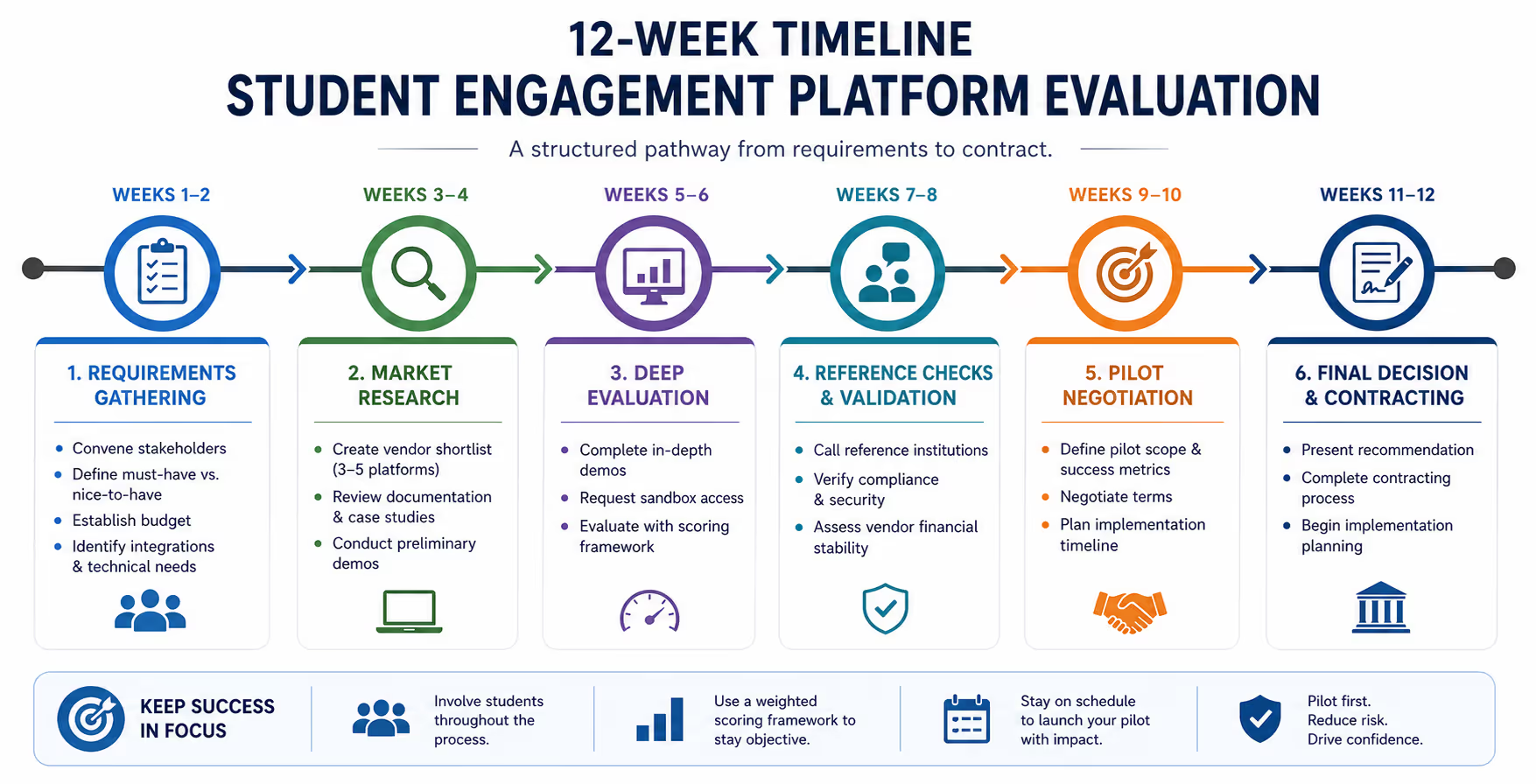
A thorough platform evaluation typically takes 8-12 weeks. Rushing leads to missed requirements and buyer's remorse.
Weeks 1-2: Requirements gathering
Convene stakeholders (student success, IT, student affairs, institutional research)
Define must-have versus nice-to-have features
Establish budget parameters
Identify integration requirements
Weeks 3-4: Market research
Create initial vendor shortlist (3-5 platforms)
Review available documentation and case studies
Conduct preliminary demos
Weeks 5-6: Deep evaluation
Schedule comprehensive demos with shortlisted vendors
Request sandbox access
Prepare evaluation scorecards using the pillar framework
Weeks 7-8: Reference checks and validation
Conduct reference calls with comparable institutions
Verify compliance documentation
Assess vendor financial stability
Weeks 9-10: Pilot negotiation
Define pilot scope and success metrics
Negotiate terms
Plan implementation timeline
Weeks 11-12: Final decision and contracting
Present recommendation to decision-makers
Complete contracting process
Begin implementation planning
Your Next Steps
Before you schedule another vendor demo, complete these three actions:
1. Assemble your evaluation team. Include voices from student affairs, IT, institutional research, and if possible, students themselves. Diverse perspectives catch blind spots.
2. Define your success metrics. What would make this investment worthwhile? Retention improvement? Increased engagement with campus resources? Reduced counseling center wait times? Get specific before you evaluate.
3. Create your institutional requirements document. Use the six pillars above to outline what matters most for your campus context. Share this with vendors before demos so they can address your actual needs.
The right student engagement platform can help your institution support students more effectively, identify struggles earlier, and demonstrate the impact of your student success investments. But only if you choose well.
Ready to see how a student-first, gamification-driven approach scores against your evaluation criteria? Download our detailed evaluation checklist and schedule a CampusMind demo to see the platform in action.

Frequently Asked Questions
How long does a typical student engagement platform implementation take?
Implementation timelines vary significantly based on integration complexity and institutional readiness. Simple pilots with limited integration requirements can launch in 4-6 weeks. Full institutional deployments with SIS and LMS integration typically require 3-6 months. The key variable is often internal resource availability rather than vendor capability.
What should we budget for a student engagement platform?
Pricing models vary widely—per-student, per-campus, or tiered approaches are all common. Rather than starting with a budget number, define your requirements first and request pricing from multiple vendors. Focus on total cost of ownership, including implementation support, training, and ongoing maintenance, not just licensing fees.
How do we measure ROI on student engagement platforms?
Retention impact is the most common ROI measure, but it requires careful methodology. Establish baseline retention rates before implementation, define comparison groups, and track cohorts over time. Some institutions also measure resource utilization (increased use of tutoring, counseling, etc.) and student satisfaction as leading indicators.
Should we require a pilot before committing to an enterprise contract?
For most institutions, yes. Pilots reduce risk, provide implementation learning, and build internal buy-in. The exception might be institutions with very high confidence in a platform based on extensive reference checks and clear alignment with existing successful programs.
How do we ensure student adoption of a new platform?
Student adoption depends on three factors: value (does the platform help students with things they care about?), ease (is it frictionless to use?), and social proof (are their peers using it?). Evaluate platforms on all three dimensions, and plan your launch strategy to address each.
About This Guide
This buyer's checklist was developed by the CampusMind team, drawing on experience working with higher education institutions implementing student engagement technology. CampusMind combines behavioral science, gamification, and AI-driven insights to help colleges support student wellbeing and improve retention. Our approach emphasizes student-first design, privacy protection, and measurable outcomes—principles we believe should guide any platform evaluation.
Works Cited
[1] EDUCAUSE — "2023 Students and Technology Report: Rebalancing the Student Experience." https://www.educause.edu/ecar/research-publications/2023/students-and-technology
[2] National Survey of Student Engagement — "Engagement Insights: Survey Findings on the Quality of Undergraduate Education." https://nsse.indiana.edu/research/annual-results/
[3] CampusMind Insights — "Do Small Rewards Really Boost Student Engagement? A Look at What Montclair State Learned." https://www.campusmind.org/student-engagement-strategies-gamification-in-higher-education/
[4] EDUCAUSE — "The EDUCAUSE IT Issues Framework for Evaluating Educational Technology." https://www.educause.edu/research-and-publications


