


The drive home after dropping your student at college probably felt surreal. One day you're reminding them about curfew, the next they're managing an entire life without you. If you're wondering what's normal, what's concerning, and how to stay connected without hovering—you're asking exactly the right questions. This is where solid first semester college advice for parents becomes essential.
Here's what I've learned after years working with college families: the first semester looks different than most parents expect, and knowing what to watch for makes all the difference. These insights are part of the most important first semester college advice for parents.
What Nobody Tells You About the First Six Weeks
Your student's Instagram shows them smiling at orientation events, trying new campus food, meeting hallmates. Everything looks perfect. Then around week four, you get that call—the one where they're overwhelmed, exhausted, or questioning whether they made the right choice. This is a common moment highlighted in first semester college advice for parents.
This pattern happens so consistently that the JED Foundation identified weeks 3-6 as when the "orientation high" typically fades and real adjustment begins. The excitement of new experiences gives way to the reality of challenging coursework, social uncertainty, and managing everything independently for the first time.
What catches most students off guard isn't any single major crisis—it's the accumulation of small stresses they've never juggled simultaneously. They're navigating:
Academic pressure unlike high school, where studying harder doesn't always mean better grades
Social exhaustion from constantly being "on" while trying to make friends
Identity questions about who they are away from their established friend group and family
Logistics overload like laundry, meal planning, budgeting, and scheduling without your help
Homesickness that strikes at unexpected moments, even when they're having fun
Research on first-year college students shows that most experience significant homesickness during their first term. It's not weakness or immaturity—it's the brain processing major life change.
Homesickness Looks Different Than You Think
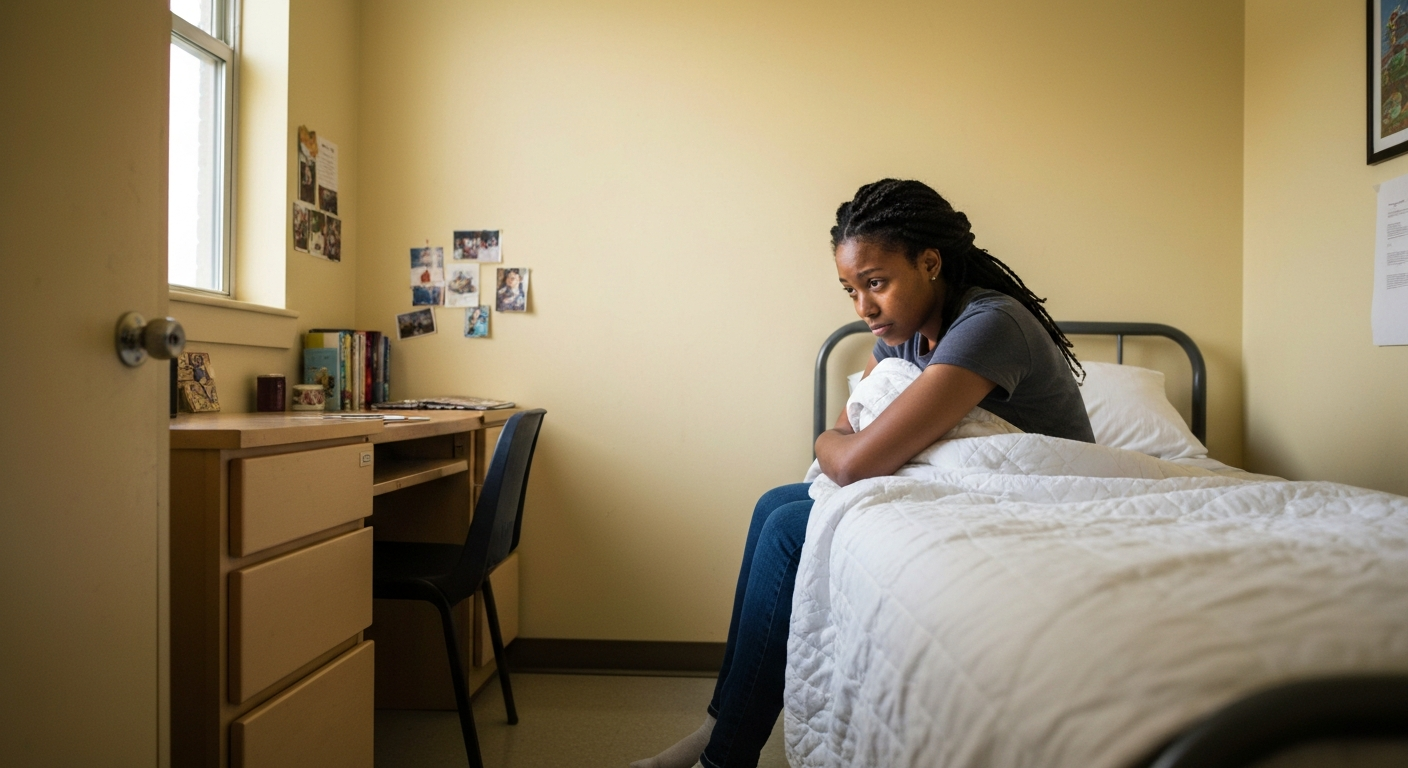
When you think "homesickness," you might picture your student crying in their dorm room, begging to come home. Sometimes it looks like that. More often, it's subtler.
Homesickness might show up as:
Irritability or short responses during calls
Sleeping excessively or staying up all night
Avoiding their dorm room by constantly being out
Obsessively Facetiming you or high school friends
Difficulty making decisions they'd normally handle easily
Here's the thing most parents don't realize: your student can be homesick and happy to be at college. These feelings coexist. They can love their new independence while missing your cooking. They can be excited about classes while wishing they could decompress with their dog.
One dad told me his daughter called crying every Sunday for six weeks. He was ready to drive up and bring her home. Then suddenly, the calls shifted. She still called every Sunday, but now she was telling him about her study group, the club she joined, and her plans for the weekend. Same schedule, completely different content. She just needed time.
How Often Should You Really Be Texting?
This question keeps parents up at night. Text too much and you're helicoptering. Text too little and you seem disconnected.
There's no universal right answer, but here's a framework that works for most families. There's no universal right answer, but here's a framework that works for most families. This framework is part of strong first semester college advice for parents.
The first two weeks: Your student will likely initiate contact frequently—sharing photos, asking questions about their health insurance card, telling you about their classes. Respond warmly and enthusiastically. This frequent contact is them staying anchored while everything feels new.
Weeks 3-6: Communication often drops off dramatically. This is normal and healthy. It means they're settling into routines and building their own life. If you don't hear from them for several days, send a low-key message: "Thinking about you today. Hope your chemistry exam went okay. No need to respond unless you want to chat."
Establishing a rhythm: Many families settle into a weekly video call at a consistent time, plus texting in between as needed. Let your student guide the frequency. If they're initiating daily texts, great—meet them there. If they go quiet, don't panic.
My colleague whose son is a junior says their family does Sunday morning calls. Her son knows that's the standing time, and if something comes up, he texts to reschedule. The consistency gives him structure without feeling like surveillance.
The Questions That Actually Get Real Answers
"How's everything going?" gets you "Fine."
"How are classes?" gets you "Good."
Try these instead:
"What's been the most surprising thing about your professors so far?"
"Who have you been eating meals with lately?"
"What's been harder than you expected? What's been easier?"
"Tell me about something you learned this week that made you think differently."
"If you could change one thing about your first few weeks, what would it be?"
These open-ended questions invite storytelling. They can't be answered with one word. And they show you're interested in their actual experience, not just checking a box.
One mom shared that asking "What made you laugh today?" became her go-to question. It worked when her daughter was stressed (gave her permission to focus on something positive) and when things were good (led to stories about funny moments with new friends).
When Normal Struggles Cross Into Concerning Territory

Every first-year student struggles sometimes. Most work through these challenges with time, support, and campus resources. But some situations need more immediate attention.
Normal first-semester challenges:
Feeling overwhelmed by workload during midterms
Missing family during weekends or holidays
Social awkwardness at events or in the dining hall
Questioning their major or career direction
Adjusting to roommate living and dorm noise
Getting a lower grade than they're used to
These experiences typically improve within weeks as students develop new skills and support systems.
Red flags requiring intervention:
You should contact your student's dean of students office or counseling center if you notice:
Persistent sadness or hopelessness lasting several weeks without improvement
Any mention of self-harm, suicidal thoughts, or feeling like a burden
Dramatic sleep changes—either sleeping 14+ hours daily or severe insomnia lasting weeks
Complete withdrawal from all activities and relationships
Failing multiple classes or stopped attending class entirely
Substance use that concerns you or that your student mentions worrying about
Expressions of paranoia, hearing voices, or severe anxiety preventing daily functioning
Trust your gut. You know your student. If something feels significantly wrong, it probably warrants a conversation with campus support services. Colleges have confidential resources specifically for parent consultations about student concerns.
The Balance Between Helping and Hovering
Sarah called me panicked because her son's roommate situation wasn't working out. The roommate stayed up until 3 a.m. gaming with the lights on, and her son was exhausted. She wanted to call housing immediately.
I asked: "Has your son contacted housing himself?"
He hadn't. She was about to solve a problem her son needed to learn to navigate.
Here's the approach I suggested: "That sounds really frustrating. What do you think your options are?"
Then listen. Ask follow-up questions. Help them think through consequences. But let them drive the solution.
When your student shares a problem:
Listen first. Say things like "That sounds really hard" or "Tell me more about what happened."
Validate their feelings. "It makes sense you'd feel overwhelmed. You're managing a lot right now."
Ask what they need. "How can I support you with this?" Sometimes they want advice. Sometimes they just need to vent.
Guide toward resources. "Have you thought about talking to your RA about this?" or "What did your advisor suggest?"
You should directly intervene when:
There's a medical emergency or hospitalization
You believe your student or others are at immediate risk
There's a billing error or housing issue requiring parent verification
Your student explicitly requests you to contact someone on their behalf
Everything else? Coach from the sidelines. Give them space to solve problems while knowing you're there as backup.
This section mirrors one of the most important parts of first semester college advice for parents—coaching instead of controlling.
Money Conversations You Need to Have Now
Financial stress significantly impacts student mental health and retention. Yet many families avoid detailed money conversations until problems arise.
If you haven't already, have a transparent discussion about:
What you're covering: Tuition, room and board, meal plan, textbooks, health insurance—be specific about which expenses are your responsibility.
What they're covering: Personal spending, entertainment, late fees, parking tickets, club dues—clarify what comes from their earnings or budget.
Monthly expectations: Set a specific amount if you're providing spending money. Discuss how to handle running out before month's end.
The emergency plan: What constitutes a financial emergency worthy of extra support? Medical needs? Yes. Concert tickets? Probably not.
This is essential first semester college advice for parents, especially since many students overspend early on. Consider reviewing spending together during fall break. Many students overspend on dining out, convenience store runs, or impulse purchases in those first weeks. Frame this as learning rather than criticism: "Let's look at where your money went this month and see if there's anything you'd do differently."
Financial literacy develops through practice and mistakes. A bounced check or overdrawn account in freshman year is a relatively low-stakes lesson compared to credit card debt as a senior.
The Academic Reality Check
Your high-achieving high school student might get their first C. Or fail an exam. This moment devastates many first-year students who've built their identity around being "smart."
When this happens, resist the urge to immediately problem-solve or panic.
Instead, try: "I know you're disappointed. What do you think contributed to this grade? What might you try differently for the next exam?"
College requires different study strategies than high school:
Reading isn't enough. They need to actively engage with material—practice problems, self-testing, explaining concepts to others.
Office hours matter. Professors and TAs provide crucial guidance, but students must initiate contact.
Study groups help. Working with peers exposes gaps in understanding and provides accountability.
Time management requires experimentation. What worked in high school (last-minute cramming) often fails in college.
Most students figure this out by second semester. That first mediocre grade is often the wake-up call they need to adjust their approach.
What Thanksgiving Break Will Actually Look Like

You're imagining a warm, connected reunion where your student shares college stories while you enjoy family time.
Reality: They might sleep 12 hours the first day, spend an entire evening out with high school friends, and seem like a slightly different person than they were in August.
This is normal. After months of intense independence and constant social interaction, they're exhausted. Home feels both comforting and constraining. They've changed, but they're still figuring out who they're becoming.
Give them space to rest. Don't schedule every moment of the break. And don't turn Thanksgiving dinner into an interrogation about grades, career plans, or whether they're being safe.
Use car rides or while cooking together for casual conversations. These informal moments often reveal more than sitting down for a "How's college really going?" discussion.
Some students realize during break how much they love college. Others recognize they're struggling more than they'd admitted. Both reactions are valuable information for planning second semester.
Preparing for Finals Without Losing Your Mind
The final three weeks of first semester are notoriously intense. Multiple exams, major papers, and presentations all converge while students are already exhausted.
How to support during finals:
Send a care package with healthy snacks, electrolyte drinks, and an encouraging note. Skip the sugary junk food—they need sustained energy, not a sugar crash.
Text encouragement without adding pressure: "Finals are tough. You've got this. Remember to eat actual meals and get some sleep."
Be available for late-night phone calls when they need to vent or process stress. Sometimes they just need to talk for 10 minutes about how overwhelmed they feel.
Remind them about campus resources: extended library hours, tutoring centers, counseling services for stress management.
Don't:
Ask constantly about exam scores
Add pressure by talking about grades and GPA
Suggest they should have started studying earlier (they know)
Compare them to other students
After finals end, they'll likely sleep for 48 hours straight. Let them. They've earned it.
Signs Your Student Is Actually Thriving
With all this focus on challenges and warning signs, it's easy to miss evidence that your student is successfully adjusting. Here's what healthy first-semester development looks like:
They have complaints and concerns. Wait—isn't that bad? No. Students who share frustrations are processing challenges normally. It's the students who say "everything's fine" while hiding struggles who worry me more.
They're making decisions without consulting you first. They picked their spring classes without running every option by you. They joined a club you've never heard of. They're building independent judgment.
They mention specific people by name. When they reference "my study group" or "this guy Alex in my hall," they're building community.
They have a routine. They mention their regular Tuesday coffee order, their favorite library spot, or their standing workout schedule. Structure signals adjustment.
They're engaged with coursework. They tell you about an interesting lecture or an assignment they enjoyed—not just complaints about workload.
They navigate small problems independently. They figured out the bus system. They changed their schedule when a class wasn't working. They resolved a billing issue themselves.
These everyday competencies matter more than straight A's.
Taking Care of Yourself During This Transition
First semester isn't just an adjustment for students. It's an adjustment for you, too—which is why so much first semester college advice for parents emphasizes self-care as well.
Let's talk about something parents rarely discuss: you're adjusting too.
You might feel:
Loss and grief as your role fundamentally shifts
Anxiety about your student's wellbeing and choices
Uncertainty about how involved to be
Pride mixed with sadness as you watch them grow
Relief at having more time for yourself, then guilt about feeling relieved
All of this is completely normal.
Connect with other parents—through your student's parent association, friends, or online communities. Knowing other people are having similar experiences helps tremendously.
Consider therapy if this transition is triggering deeper issues around identity, purpose, or relationship with your student. Many parents find that their student leaving for college surfaces unexpected emotions.
Give yourself permission to feel multiple things at once. You can be thrilled they're thriving while also missing them terribly.
Your Student Will Be Okay (Even When It Doesn't Feel Like It)
Here's what I want you to remember during the hard calls, the worried nights, and the moments when you question whether they're ready for this:
Most students successfully navigate first semester. They figure out how to study, make friends, advocate for themselves, and manage their lives. The process looks messier than you'd like, but messy is how learning happens.
Your job isn't to prevent struggles—it's to be a secure base they can return to when challenges arise. They need to know you believe in their capacity to handle this, even when they doubt themselves.
There's no perfect way to parent a college student. You'll make mistakes. You'll intervene when you should have stepped back. You'll stay quiet when you should have spoken up. That's okay. Your presence, patience, and belief in them matter far more than getting every interaction right.
The first semester is just that—the first. By spring, most students (and parents) have found their groove. The communication patterns make sense. The routines feel established. The role shift doesn't feel quite so jarring.
You've prepared them for this moment their entire lives. Now trust that preparation, trust your student, and trust the process.
They've got this. And so do you.
Ready to support your student's complete college success journey? Campus Mind provides comprehensive resources for parents navigating every stage of the college experience. Explore our parent resource center for guides on mental health support, academic success strategies, and communication tools—or sign up for our parent newsletter to receive evidence-based advice delivered monthly. Your student's success starts with informed, confident parenting.
Frequently Asked Questions
How do I know if my college freshman is struggling with normal adjustment or something more serious?
Normal adjustment struggles—like occasional homesickness, academic stress during exams, or social awkwardness—typically improve within a few weeks as students develop coping strategies. Warning signs that require professional support include persistent sadness lasting several weeks, any mention of self-harm or suicidal thoughts, dramatic changes in sleep patterns, complete withdrawal from all activities, failing multiple classes, or concerning substance use. Trust your parental instincts. If something feels significantly wrong beyond typical first-semester stress, contact your student's counseling center or dean of students office. These offices regularly consult with parents about student concerns.
What's the best communication schedule with a college freshman during first semester
There's no one-size-fits-all answer, but most families find success with one weekly video or phone call at a consistent time, plus texting in between as needed. The first two weeks often involve frequent contact as your student adjusts, while weeks 3-6 may see communication drop off as they settle into routines—this is healthy and normal. Let your student guide the frequency. If they initiate daily contact, meet them there. If they go quiet for several days, send a brief low-pressure message. The key is maintaining connection without creating obligation or surveillance.
Should I step in when my college student tells me about problems they're having?
Your default approach should be to listen, validate their feelings, and guide them toward resources rather than solving problems for them. Ask questions like "What do you think your options are?" or "Have you considered talking to your RA about this?" However, you should directly intervene in situations involving medical emergencies, safety concerns with immediate risk, administrative errors requiring parent verification, or when your student explicitly requests you to contact someone on their behalf. The goal is developing their problem-solving skills while being available as backup support.
Is it normal for my college student to seem different when they come home for Thanksgiving break?
Absolutely. Students often sleep extensively the first day or two, spend significant time with high school friends, and may seem like slightly different people than they were in August. After months of intense independence and constant social interaction, they're exhausted. Home feels both comforting and constraining as they navigate who they're becoming. Give them space to rest, avoid over-scheduling the break, and save deeper conversations for informal moments like car rides rather than formal sit-downs. This adjustment is normal and healthy.
How can I support my college student during finals week without adding more pressure?
Focus on encouragement without pressure. Send care packages with healthy snacks and encouraging notes. Text supportive messages like "Finals are tough, but you've got this. Remember to eat and sleep." Be available for late-night calls when they need to vent. Remind them about campus resources like extended library hours and counseling services. Avoid constantly asking about exam scores, suggesting they should have started studying earlier, or comparing them to other students. After finals, let them sleep and recover without guilt.
Expert Review & Credentials
This guide was developed by Campus Mind's editorial team in collaboration with higher education student success professionals with over 20 years of combined experience supporting college students and families through the transition to higher education. Our content draws on current research from the JED Foundation, American College Health Association, and evidence-based practices in college student mental health and family engagement.
Content Review: This article reflects best practices in college student mental health support and family communication strategies as of fall 2024. Information was verified against current resources from the JED Foundation, American College Health Association data, and peer-reviewed research on college adjustment.
Medical Disclaimer: This article provides general educational information about supporting college students during their first semester. It is not a substitute for professional mental health advice, diagnosis, or treatment. If you have serious concerns about your student's mental health or safety, contact their campus counseling center immediately or call the 988 Suicide & Crisis Lifeline for emergency support.
Works Cited
[1] JED Foundation — "First Year College Experience: Understanding the Transition." https://www.jedfoundation.org/wp-content/uploads/2021/06/First-Year-College-Experience-Data-Report-for-Media-Release.pdf. Published: 2021-06-15. Accessed: 2024-11-26.
[2] Thurber, C.A., & Walton, E.A. — "Homesickness and Adjustment in University Students." Journal of American College Health, Vol. 56(4), pp. 415-418. https://pubmed.ncbi.nlm.nih.gov/22686364/. Published: 2012-03-15. Accessed: 2024-11-26.
[3] Stroebe, M., et al. — "Homesickness: A Systematic Review of the Scientific Literature." Review of General Psychology, Vol. 19(2), pp. 157-171. https://pmc.ncbi.nlm.nih.gov/articles/PMC5280212/. Published: 2015-06-01. Accessed: 2024-11-26.
[4] American College Health Association — "National College Health Assessment III: Fall 2023 Reference Group Data Report." https://www.acha.org/ncha/. Published: 2024-01-10. Accessed: 2024-11-26.
[5] National Endowment for Financial Education — "Financial Stress and College Student Mental Health." https://www.nefe.org/research/polls/2023/student-loans-and-financial-stress-in-the-united-states.aspx. Published: 2023-09-20. Accessed: 2024-11-26.
[6] Ellucian — "National Survey: 59% of College Students Considered Dropping Out Due to Financial Stress." https://www.ellucian.com/newsroom/national-survey-reveals-59-college-students-considered-dropping-out-due-financial-stress. Published: 2023-08-15. Accessed: 2024-11-26.
[7] American Psychological Association — "Stress in America 2023: Collective Trauma and Mental Health." https://www.apa.org/news/press/releases/stress/2023/collective-trauma-recovery. Published: 2023-11-02. Accessed: 2024-11-26.
[8] JED Foundation — "Supporting College Students: A Guide for Parents and Families." https://jedfoundation.org/wp-content/uploads/2021/01/JED_FacilitationGuide_Families_FINAL.pdf. Published: 2021-01-15. Accessed: 2024-11-26.


