

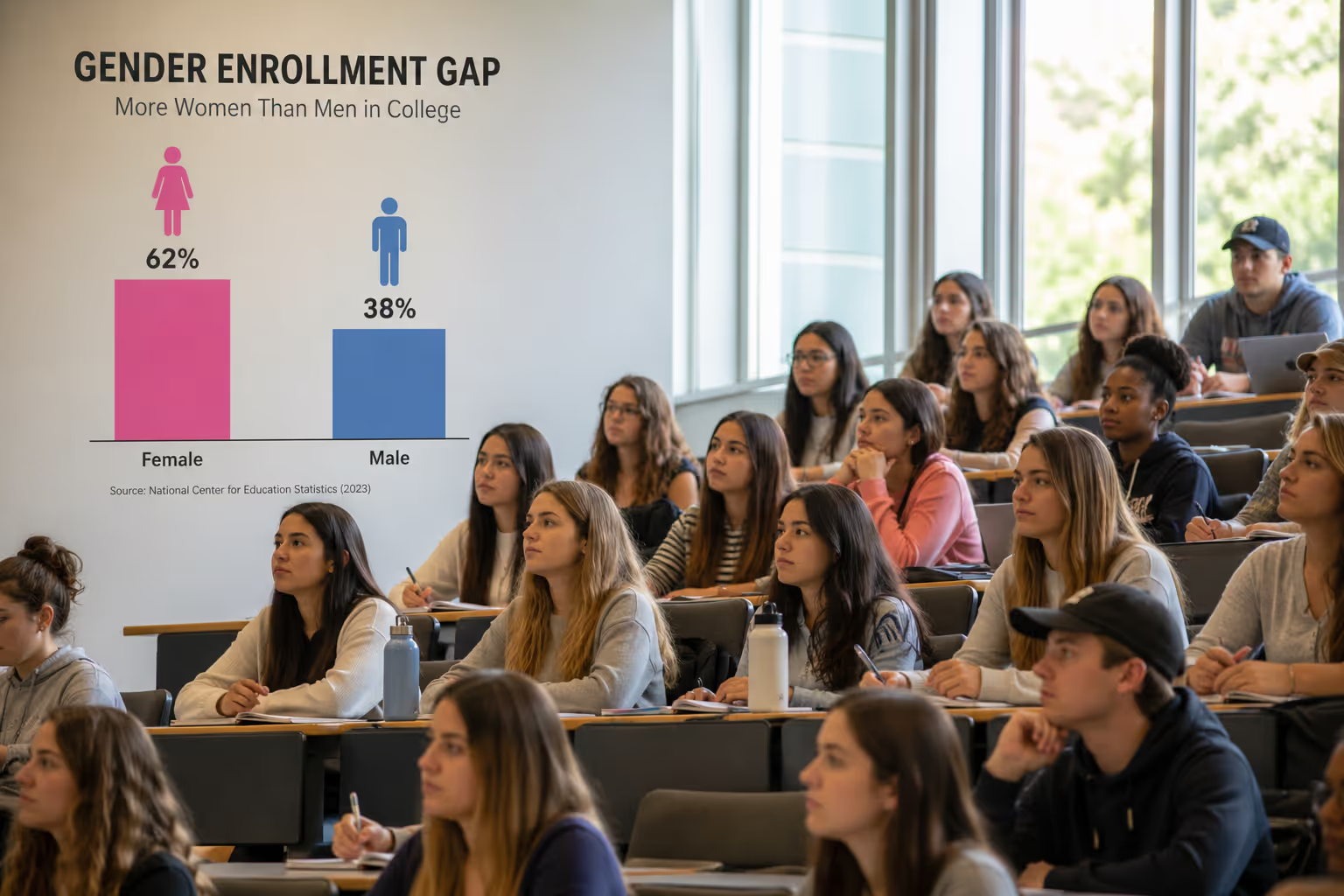
Something significant shifted in American higher education over the past two decades, and many campuses are only now reckoning with the magnitude of the change. Walk into any introductory psychology class, nursing program, or student government meeting, and you'll likely notice it immediately: the gender balance has tipped dramatically.
Men now represent just 40% of college students nationwide, a historic low that continues to decline [1]. This isn't a temporary blip or statistical anomaly. The gender enrollment gap has widened steadily since the early 2000s, and addressing it requires understanding why so many young men are choosing paths other than a four-year degree—and what institutions can do to reverse the trend.
Key Takeaways
Male college enrollment has dropped to 40% of total undergraduate students, with the gap widening each year
Contributing factors include perceived workforce alternatives, engagement misalignment, and earlier academic disengagement
Targeted interventions focusing on belonging, mentorship, and early engagement can improve male student retention
Data-driven approaches help institutions identify at-risk students before they become statistics
The Scope of the Problem: What the Numbers Actually Show
The National Center for Education Statistics reports that women made up nearly 60% of college students in fall 2021, the widest gap on record [2]. Among students who enrolled in college immediately after high school, the disparity has become even more pronounced in recent years.
The gap isn't uniform across demographics. Low-income men, rural men, and men of color face compounded barriers. UPCEA's research on the "Missing Majority" identifies adult learners—many of them men who delayed or interrupted their education—as a population that higher education has largely failed to serve [3].
The enrollment gap also translates into a completion gap. Men who do enroll are less likely to persist to graduation than their female peers. Six-year completion rates for men lag behind women by approximately 7 percentage points at four-year institutions [4].
Why Men Are Choosing Other Paths
Understanding why young men bypass college requires moving beyond assumptions. The reasons are multifaceted, and they often begin well before senior year of high school.
How Trade Schools and the Workforce Pull Men Away from College
For many young men, the trades and skilled labor present an immediate, tangible path to financial independence. Electricians, plumbers, and HVAC technicians can earn competitive wages without taking on student debt—a proposition that looks increasingly attractive when college costs continue to climb.
Workforce Pell and other initiatives designed to extend federal aid to short-term credential programs reflect a growing acknowledgment that four-year degrees aren't the only route to economic mobility [5]. For some young men, these alternatives aren't a consolation prize; they're the first choice.
The calculation isn't irrational. A young man who enters a trade at 18 can be earning journeyman wages by the time his peers are just finishing their bachelor's degrees. When the narrative around college focuses primarily on debt and uncertain job prospects, that alternative becomes even more compelling.
Cultural Barriers to Male Campus Engagement
Higher education has historically done a better job creating environments where women feel they belong. Study groups, peer support networks, and help-seeking behaviors that correlate with academic success are more commonly utilized by female students [6].
Many young men receive implicit and explicit messages that asking for help signals weakness. When they struggle academically or socially, they're less likely to visit a tutor, talk to a counselor, or join a study group. Instead, they disengage quietly—and often permanently.
Academic identity also plays a role. By middle school, boys are more likely than girls to view academic achievement as incompatible with masculinity. This identity conflict can persist into college, where men may resist engaging with resources framed as "support" or "help."
K-12 Patterns That Shape College Readiness
The gender gap in college enrollment reflects patterns that emerge much earlier. Boys are more likely to be held back a grade, more likely to be suspended, and less likely to participate in extracurricular activities that build college-going identity [7].
By the time high school graduation arrives, many young men have already experienced years of friction with educational institutions. College represents more of the same—a system that never felt designed for them.

What Institutions Can Do: Evidence-Based Interventions
The gender enrollment gap isn't destiny. Institutions that approach this challenge intentionally are seeing results.
Redesigning Outreach and Messaging
Generic recruitment materials often fail to resonate with male students, particularly those from backgrounds where college attendance isn't the assumed default. Effective outreach speaks to concerns about career outcomes, financial viability, and practical skill development.
This doesn't mean dumbing down the message or abandoning liberal arts values. It means being explicit about how education connects to goals young men actually articulate: financial stability, meaningful work, and respect in their communities.
Some institutions have found success with male-specific recruitment events, peer ambassador programs featuring male students from similar backgrounds, and messaging that highlights alumni in diverse careers—not just traditional white-collar professions.
Creating Structured Pathways with Clear Career Connections
Men benefit from clear, structured academic pathways with visible connections to career outcomes. Programs that integrate work experience, internships, or applied projects show stronger retention among male students than purely theoretical curricula [8].
Community colleges and regional universities have led in this area, creating programs in fields like cybersecurity, healthcare technology, and advanced manufacturing that appeal to students who want to see immediate relevance in their coursework.
Guided pathways that reduce the complexity of navigating degree requirements also help. When students can see exactly what they need to do and when they need to do it, they're less likely to make costly errors that extend time to degree or trigger disengagement.
Building Belonging Through Intentional Connection
Sense of belonging is the strongest predictor of student persistence, and it's an area where male students—particularly first-generation men and men of color—often struggle [9].
Effective interventions include:
Mentorship programs pairing incoming male students with successful male upperclassmen or alumni
Living-learning communities organized around shared interests or career goals
Faculty engagement initiatives that help male students build relationships with instructors outside the classroom
Male-focused affinity groups that create space for discussion and support without stigma
These interventions work best when they feel organic rather than remedial. Men are more likely to engage with opportunities framed as leadership development or professional networking than those explicitly labeled as support programs.

Early Identification and Proactive Intervention
Many institutions discover male students are struggling only after they've already failed multiple courses or stopped attending. By then, re-engagement becomes exponentially harder.
Real-time engagement data allows institutions to identify warning signs earlier—declining participation, missed check-ins, reduced campus involvement—and intervene before academic problems become irreversible. The key is moving from reactive crisis response to proactive support.
When staff can see that a student hasn't logged into the learning management system in two weeks, hasn't attended any campus events, and missed an advising appointment, they can reach out with genuine concern rather than waiting for the inevitable withdrawal.
Institutional Examples: What Specific Tactics Look Like in Practice
Several institutions have made measurable progress in closing gender gaps through intentional programming.
Georgia State University's Predictive Analytics Approach
Georgia State University's extensive use of predictive analytics and proactive advising has improved outcomes for male students alongside other underserved populations [10]. Their system tracks over 800 risk factors and triggers advisor outreach when students exhibit concerning patterns—such as registering for courses misaligned with their major or showing grade drops in gateway courses.
What makes their approach distinctive: advisors don't wait for students to seek help. When the system flags a risk indicator, an advisor reaches out within 48 hours. This proactive model treats data as a tool for support rather than surveillance, reaching students with timely interventions tailored to specific risk factors.
The results speak for themselves. Georgia State has eliminated the achievement gap for Black, Hispanic, and Pell-eligible students while increasing overall graduation rates substantially.

Morgan State University's Male Initiative Programs
Morgan State University's male initiative programs have demonstrated that culturally responsive mentorship and community-building can significantly improve retention and graduation rates for Black men—one of the demographic groups most affected by the enrollment gap [11].
Their approach includes structured peer mentoring cohorts, faculty advocates assigned to male students in their first year, and regular programming that addresses both academic skills and the social-emotional dimensions of college success. Critically, they frame participation as an honor and opportunity—not remediation.
These examples share common elements: leadership commitment, data-informed strategies, and a willingness to examine whether existing campus culture inadvertently excludes or alienates male students.
The Broader Stakes
Addressing the gender enrollment gap isn't just about equity in access—though that matters enormously. It's also about the economic and social health of communities that depend on an educated workforce.
Regions experiencing the sharpest declines in male enrollment are often the same regions struggling with workforce development, civic engagement, and economic mobility. When young men disengage from education, the effects extend far beyond campus boundaries.
For institutions themselves, declining male enrollment affects everything from program viability to campus culture to enrollment revenue. Many STEM programs, athletics, and student organizations depend on gender diversity to function effectively.
Moving From Awareness to Action
Recognizing the problem is necessary but insufficient. Institutions serious about reversing the gender gap need to move through several stages:
Assessment: What does your institution's gender data actually show? Disaggregate by program, by demographic, by entry point. Where are the gaps most pronounced?
Root Cause Analysis: Why are men leaving—or not enrolling in the first place? Exit surveys, focus groups with enrolled male students, and conversations with high school counselors in feeder communities can provide crucial insight.
Intervention Design: Based on what you learn, what specific changes could address the barriers you've identified? Avoid the temptation to implement generic approaches without adapting them to your institutional context.
Measurement: How will you know if your interventions are working? Establish baseline metrics and track progress systematically.
Iteration: Be prepared to adjust based on what the data shows. The first approach rarely works perfectly.

A Quick-Reference Checklist for Campus Leaders
Before booking that strategy call, assess where your institution stands:
[ ] Have you disaggregated retention and completion data by gender within the past year?
[ ] Do you know which programs have the largest gender gaps?
[ ] Have you surveyed or interviewed male students who left about their reasons?
[ ] Do your recruitment materials explicitly address career outcomes and financial ROI?
[ ] Are male students connected to mentors or peer groups in their first semester?
[ ] Can your advising team see real-time engagement data across academic and co-curricular domains?
[ ] Have you reviewed orientation programming for unintentional barriers to male engagement?
If you answered "no" to more than two of these, you likely have visibility gaps that are costing you students.
Ready to understand where your male students are struggling? Book a call to explore how real-time engagement data can help your institution identify and support at-risk students before they leave.
Frequently Asked Questions
Why has male college enrollment declined so significantly?
Multiple factors contribute to declining male enrollment, including attractive workforce alternatives in trades and skilled labor, earlier academic disengagement that begins in K-12 education, cultural messaging that frames help-seeking as weakness, and campus environments that may not adequately address how men experience belonging. The trend reflects systemic patterns rather than any single cause.
Are certain male populations more affected than others?
Yes. The enrollment and completion gaps are most pronounced among low-income men, rural men, Black and Hispanic men, and first-generation college students. These demographic factors compound, meaning a first-generation, low-income man from a rural community faces substantially greater barriers than his more privileged peers.
What can individual faculty members do to support male student retention?
Faculty can make significant impact through proactive outreach to struggling students, creating structured opportunities for engagement that don't require students to self-identify as needing help, connecting coursework explicitly to career relevance, and building mentoring relationships with male students. Normalizing help-seeking behavior through classroom culture also matters.
How do we address this gap without neglecting female students?
Effective male student support programs don't require diverting resources from women. Many interventions—improved advising, clearer pathways, stronger belonging infrastructure—benefit all students. The key is recognizing that equity sometimes requires differentiated approaches to achieve equal outcomes.
What role do parents and families play in male college enrollment?
Family expectations and support significantly influence college-going decisions, particularly for first-generation students. Engaging families in the recruitment and retention process, addressing concerns about cost and value, and helping parents understand how to support student success without undermining independence all contribute to improved outcomes.
Why This Analysis Matters
This exploration of the gender enrollment gap reflects CampusMind's commitment to understanding the full landscape of student success challenges facing higher education today. Our team combines expertise in student engagement research, behavioral science, and education technology to help institutions move from awareness to action. We believe that data-driven, student-centered approaches can help colleges support every student who belongs on their campus—regardless of background or demographic.
Works Cited
[1] National Student Clearinghouse Research Center — "Current Term Enrollment Estimates: Fall 2023." https://nscresearchcenter.org/current-term-enrollment-estimates/
[2] National Center for Education Statistics — "Digest of Education Statistics 2022, Table 303.70: Total undergraduate fall enrollment in degree-granting postsecondary institutions, by attendance status, sex of student, and control and level of institution." https://nces.ed.gov/programs/digest/d22/tables/dt22_303.70.asp
[3] UPCEA — "The Missing Majority: Adult Learners and the Future of Postsecondary Education." https://upcea.edu/the-missing-majority/
[4] National Center for Education Statistics — "Undergraduate Retention and Graduation Rates (Condition of Education 2023)." https://nces.ed.gov/programs/coe/indicator/ctr
[5] U.S. Department of Education — "Fact Sheet: Biden-Harris Administration Announces New Actions to Support Short-Term Workforce Training Programs." https://www.ed.gov/news/press-releases/fact-sheet-biden-harris-administration-announces-new-actions-support-short-term-workforce-training-programs
[6] American Psychological Association — "Men: A Different Depression." https://www.apa.org/research/action/men
[7] Brookings Institution — "The Growing Gender Gap in Education and What It Means for American Men." https://www.brookings.edu/articles/the-growing-male-disadvantage-in-education/
[8] Community College Research Center — "What We Know About Guided Pathways." https://ccrc.tc.columbia.edu/research/guided-pathways.html
[9] Strayhorn, T.L. — "College Students' Sense of Belonging: A Key to Educational Success for All Students (2nd ed.)." Routledge, 2019.
[10] Georgia State University — "GPS Advising." https://success.gsu.edu/initiatives/gps-advising/
[11] Morgan State University — "Center for Excellence in Teaching and Learning: Student Success Initiatives." https://www.morgan.edu/center-for-excellence-in-teaching-and-learning


