

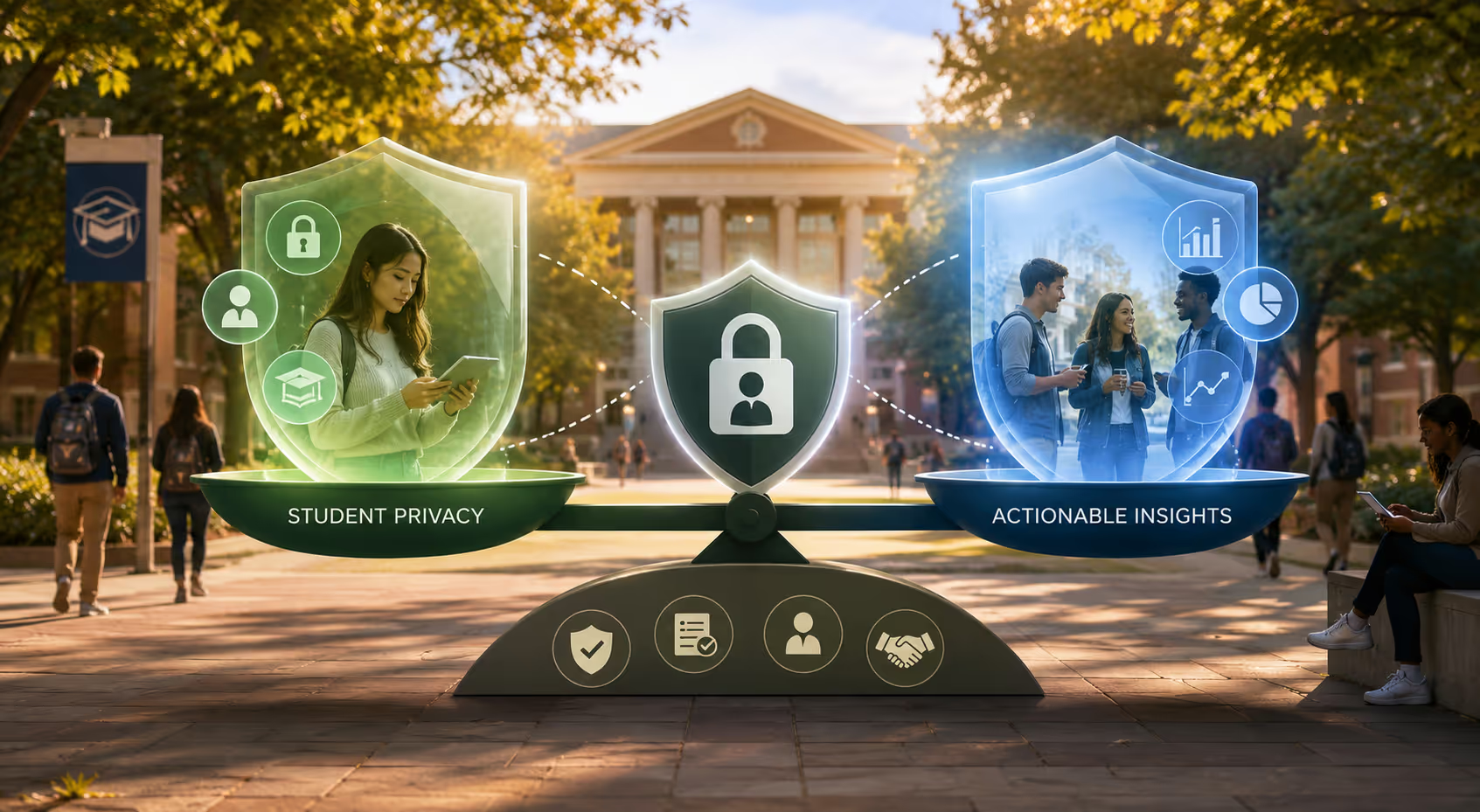
In 2023, the MOVEit file transfer vulnerability exposed sensitive data at hundreds of universities, including student records, financial aid information, and health services data. The breach didn't just compromise privacy—it shattered the trust students had placed in their institutions [1].
This wasn't an isolated incident. Higher education has become a prime target for cyberattacks, with universities experiencing a sharp increase in data breaches over the past two years. The stakes extend far beyond IT departments. For student success teams, the question isn't just "how do we protect data?" but "how do we use data ethically to help students while maintaining their trust?"
Data governance for student success sits at a critical intersection. Poor governance creates either a surveillance culture that alienates students or a compliance fortress that blocks actionable insight. Strong governance empowers institutions to intervene early, personalize support, and demonstrate measurable outcomes—all while respecting student autonomy.
Most colleges aren't struggling because they lack data. They're struggling because they lack frameworks for using it responsibly and effectively.
Key Takeaways:
Data governance isn't just an IT function—it's foundational to student success operations
FERPA compliance is the floor, not the ceiling, for ethical data use
Effective governance frameworks balance privacy protection with actionable intervention
Student trust depends on transparency about what data is collected and how it's used
Emerging state privacy laws are reshaping the compliance landscape for higher education
Why Higher Education Data Governance Matters More Than Ever for Student Success
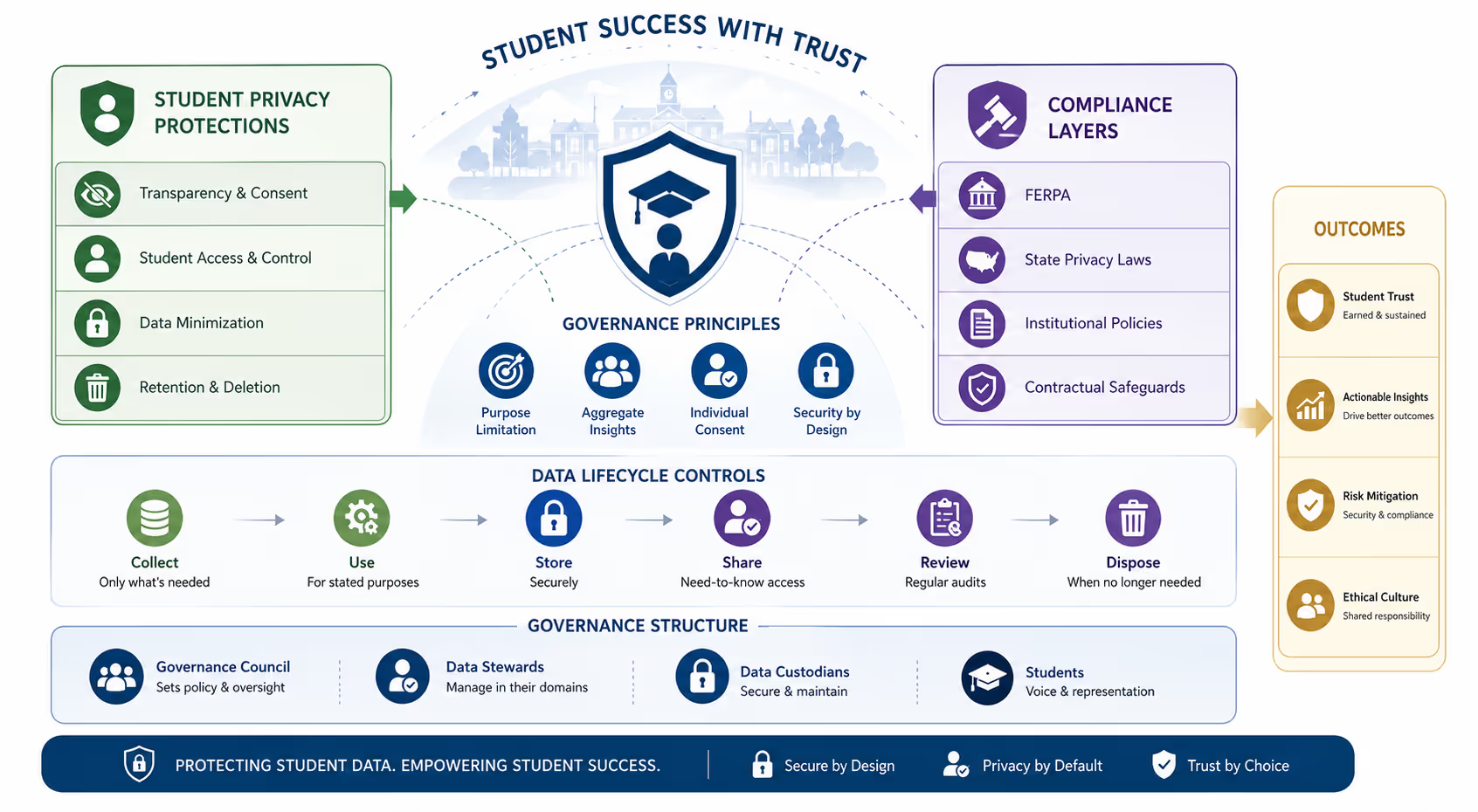
The traditional approach to student data treated privacy and utility as opposing forces. Compliance teams locked down information. Student success teams struggled to access the insights they needed. Students remained unaware of what was happening with their data.
This model is breaking down for three reasons.
The threat landscape has intensified. Educational institutions now rank among the most targeted sectors for cyberattacks. Attackers recognize that universities hold valuable personal information—Social Security numbers, financial records, health data—often protected by aging infrastructure and decentralized security practices.
Student expectations have shifted. Today's students grew up with data privacy debates. They understand that their digital footprints have value and consequences. Research indicates that students are increasingly concerned about how institutions use their personal information, particularly when it comes to predictive analytics and behavioral tracking [3].
The regulatory environment is evolving. While FERPA has governed educational records since 1974, a new wave of state privacy laws—from California's CCPA to Virginia's CDPA—is creating a patchwork of requirements that institutions must navigate. The Department of Education has also signaled increased attention to how institutions handle student data in the digital age.
For student success leaders, these shifts create both challenges and opportunities. The institutions that develop robust governance frameworks now will be positioned to use data effectively and ethically. Those that don't risk breaches, regulatory penalties, and—perhaps most damaging—erosion of student trust.
Understanding the Regulatory Foundation
FERPA in 2025: Beyond the Basics
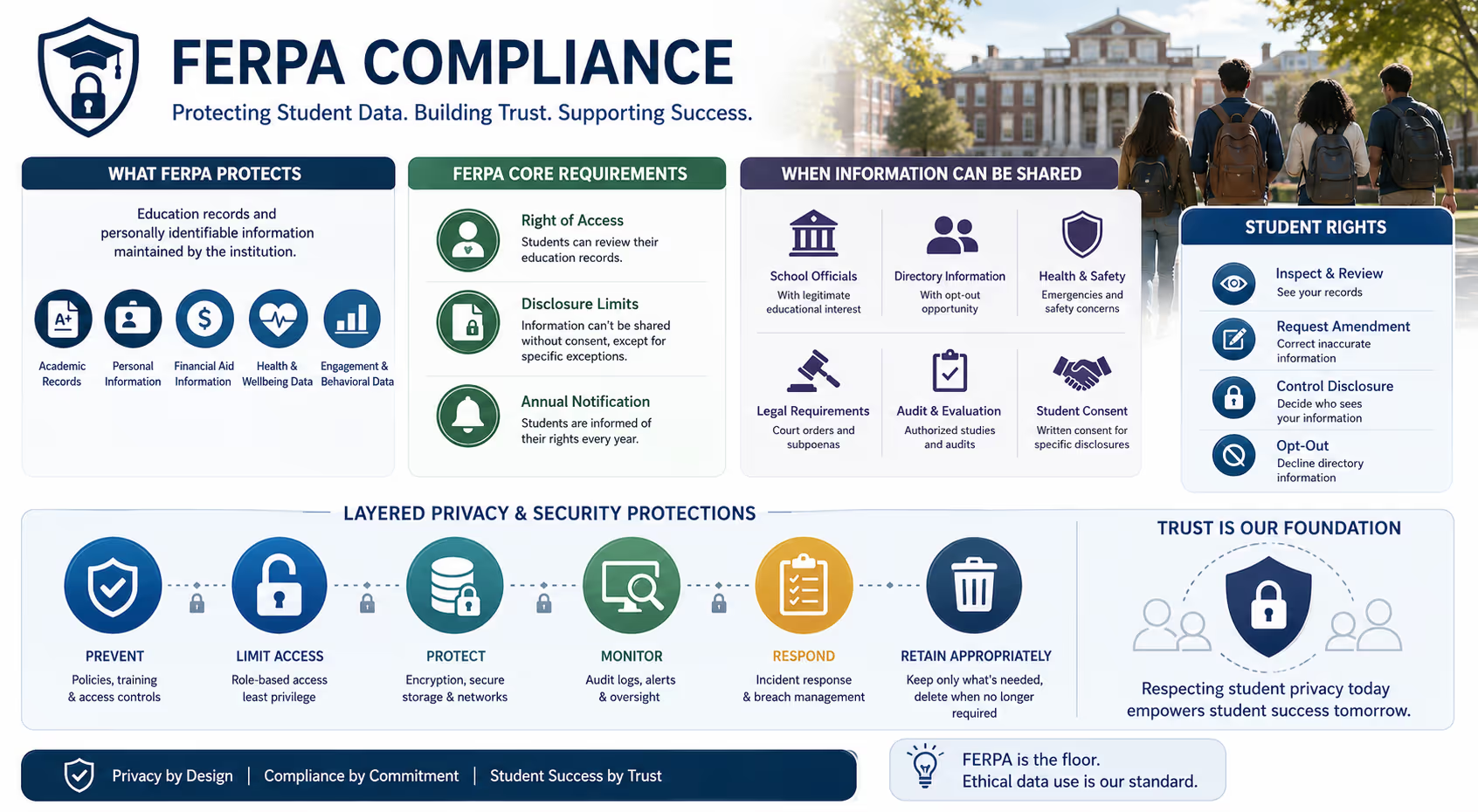
What FERPA Protects: Education records—information directly related to a student that's maintained by an educational institution. This includes grades, enrollment status, disciplinary records, and increasingly encompasses digital engagement data, wellbeing check-ins, and behavioral analytics when those systems are institutionally managed.
The Family Educational Rights and Privacy Act remains the cornerstone of student data protection [5]. But applying FERPA principles to modern student success technology requires nuanced understanding.
The law's core requirements are straightforward:
Students (or parents, for minors) have the right to access their education records
Institutions cannot disclose personally identifiable information without consent, with specific exceptions
Students must be notified of their rights annually
What's less straightforward is how these requirements apply to integrated student success platforms, predictive analytics, and real-time intervention systems.
The "school official" exception allows institutions to share student information with parties who have "legitimate educational interests." This is how student success platforms can function—but it requires careful documentation and contractual safeguards [6].
Directory information can be disclosed without consent, but institutions must define what constitutes directory information and give students the opportunity to opt out. Many institutions are narrowing their directory information definitions as awareness of data privacy grows.
The consent requirement for disclosing information to parents of adult students creates particular complexity. Students over 18 control access to their records, even if parents are paying tuition. This tension between family involvement and student autonomy requires thoughtful policy design.
State Privacy Laws: The Emerging Patchwork
While FERPA provides the federal baseline, state privacy laws are adding new requirements that affect how institutions handle student data.
California's Consumer Privacy Act (CCPA), as amended by the California Privacy Rights Act, gives individuals rights to know what data is collected, request deletion, and opt out of data sales. While educational institutions have partial exemptions for FERPA-covered records, much student data—particularly from non-academic sources—may fall under CCPA requirements.
For student success teams, this means data collected outside traditional academic channels (engagement app activity, wellness check-ins, resource utilization patterns) may require additional consent mechanisms and deletion protocols that FERPA alone doesn't mandate.
Virginia, Colorado, Connecticut, and other states have enacted comprehensive privacy laws with varying requirements. Institutions operating nationally must track compliance across multiple jurisdictions.
Proposed legislation at both state and federal levels suggests the regulatory environment will continue evolving. Student success leaders should build governance frameworks flexible enough to adapt to new requirements.
Building a Student-Centered Governance Framework
Effective data governance isn't about creating bureaucratic barriers. It's about establishing clear principles and processes that enable responsible data use while protecting student interests.
Principle 1: Transparency as the Foundation
Students should understand what data is collected, why it's collected, and how it's used. This sounds obvious, but many institutions bury this information in privacy policies no one reads.
Practical transparency means:
Plain-language explanations of data practices, not legal boilerplate
Proactive communication during onboarding about what systems collect and how
Accessible dashboards where students can see their own data
Clear opt-out mechanisms for data collection that isn't strictly necessary
When students understand and consent to data collection for their benefit, they're far more likely to engage authentically with support systems. When they feel surveilled without explanation, they disengage—or worse, game the system with false information.
Principle 2: Purpose Limitation and Minimization
Collect only what you need. Use it only for stated purposes.
This principle challenges the "collect everything, analyze later" approach that characterized early big data enthusiasm. Modern governance frameworks require:
Defined purposes for each data element collected
Regular audits to identify data that's no longer needed
Retention policies that delete information after its useful life
Access controls that limit who can see what based on role
For student success specifically, this means being intentional about what engagement data, wellbeing indicators, and behavioral signals actually inform interventions—and avoiding collection that doesn't serve student benefit.
Principle 3: Aggregate Insights, Individual Consent
This is where data governance intersects most directly with student success operations: the difference between population-level analytics and individual-level interventions.
Aggregate data helps institutions understand patterns. What percentage of first-generation students access tutoring services? Do students who participate in certain activities persist at higher rates? These insights inform program design and resource allocation without requiring individual consent beyond baseline enrollment.
Individual interventions based on data—reaching out to a specific student flagged as at-risk, for example—require more careful consideration. The best practice is ensuring students have opted into systems that may generate such outreach, understand why they're being contacted, and can adjust their preferences.
This distinction matters practically. A dashboard showing engagement trends across the student body serves institutional planning. An alert naming specific students who missed multiple check-ins serves intervention—and requires appropriate safeguards.
Principle 4: Security as Shared Responsibility
Data governance frameworks often treat security as IT's problem. But student success teams handle sensitive information daily, and security depends on everyone.
Technical controls provide the foundation: encryption, access management, secure authentication, regular patching, and incident response planning. These are non-negotiable.
Administrative controls ensure people use systems appropriately: training, acceptable use policies, vendor management, and audit trails.
Physical controls matter too, particularly for hybrid work environments: secure workstations, clean desk policies, and protection of printed materials.
The current threat environment requires assuming breaches will be attempted and designing systems to minimize damage when they occur. Zero-trust architectures, data segmentation, and rapid detection capabilities have moved from best practice to baseline requirement.
Practical Implementation: From Principles to Operations
Creating a Data Governance Structure
Most universities have distributed data responsibilities—student records in the registrar's office, health information in counseling services, engagement data in student affairs. Effective governance requires coordination without creating bottlenecks.
A data governance council brings together stakeholders from across the institution: IT security, legal/compliance, registrar, student affairs, institutional research, and student representatives. This body sets policy, resolves conflicts, and ensures consistent application of principles [8].
Data stewards in each functional area take responsibility for the data their units manage. They implement governance council decisions, train staff, and serve as first-line resources for data questions.
Data custodians—typically IT staff—handle the technical aspects of data storage, security, and access management.
This structure distributes responsibility while maintaining accountability. It also ensures that student success teams have a voice in governance decisions that affect their work.
Vetting Student Success Technology
When evaluating platforms that will handle student data, governance frameworks should inform procurement decisions. Key questions include:
Data handling:
What specific data elements does the platform collect?
Where is data stored, and what security certifications does the vendor hold?
How long is data retained, and what happens when the contract ends?
Can students access, correct, or delete their information?
Access and sharing:
What access controls exist within the platform?
Does the vendor share data with third parties for any purpose?
How does the platform handle directory information versus protected records?
Compliance:
Is the vendor willing to sign a FERPA-compliant data processing agreement?
How does the vendor address state privacy law requirements?
What incident response procedures are in place for breaches?
Ethical considerations:
If the platform uses AI or predictive analytics, what safeguards prevent bias?
How transparent is the platform with students about data use?
Does the vendor have an ethics framework or advisory structure?
Platforms designed with privacy as a core value—rather than a compliance afterthought—will have ready answers to these questions. Those that deflect or provide vague responses warrant skepticism.
CampusMind's Campus Advisory Panel (CAP) and Technology Advisory Panel (TAP) exemplify the kind of advisory structures that support ethical data use, providing ongoing guidance on inclusive design and responsible AI deployment.
Training and Culture
Governance frameworks succeed or fail based on whether people follow them. Technical controls can prevent some violations, but culture determines whether staff treat data responsibly in the gray areas policies don't explicitly address.
Effective training goes beyond annual compliance checkboxes:
Scenario-based learning helps staff recognize situations where data governance applies
Role-specific training addresses the particular data each team handles
Regular refreshers keep governance top of mind
Clear escalation paths ensure staff know where to go with questions
Culture-building requires leadership modeling appropriate behavior, celebrating good data practices, and addressing violations consistently. When staff see governance as protection—for students and for themselves—rather than bureaucratic burden, compliance becomes natural.
The Ethical Dimension: Beyond Compliance
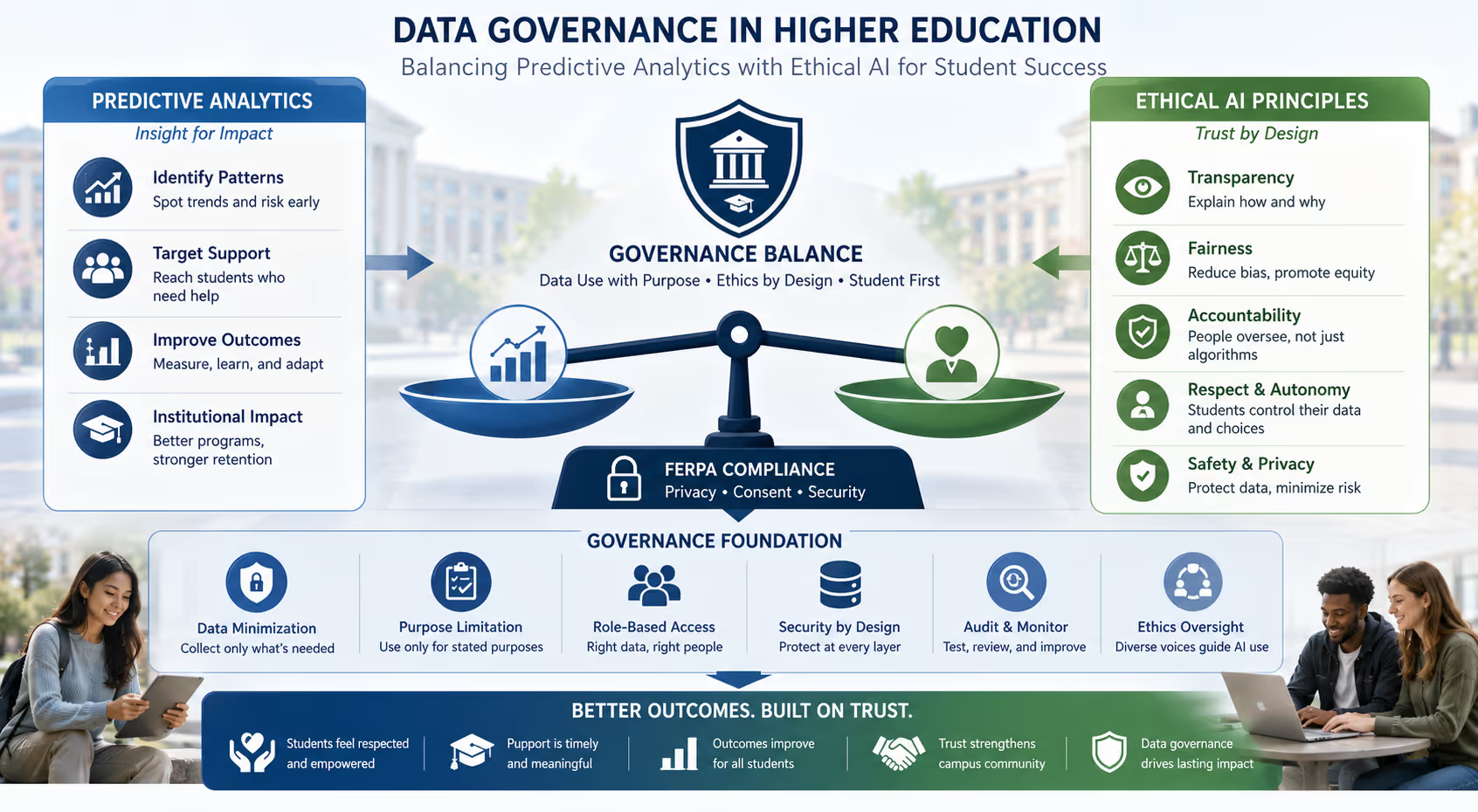
Legal compliance establishes the floor for data governance, not the ceiling. Ethical data use requires grappling with questions the law doesn't fully answer.
The Predictive Analytics Dilemma
Modern student success platforms can identify students at risk of struggling or leaving. This capability is genuinely valuable—early intervention demonstrably improves outcomes [9]. But it raises ethical questions:
False positives and labeling: When algorithms flag students as "at-risk," does that label become self-fulfilling? Research on stereotype threat suggests that being identified as likely to struggle can undermine performance [10]. Interventions must be designed to support rather than stigmatize.
Algorithmic bias: Predictive models trained on historical data may perpetuate historical inequities. If past students from certain backgrounds were less likely to persist—due to systemic barriers, not individual deficits—models may unfairly flag similar students today. Regular audits for bias are essential.
Autonomy and paternalism: At what point does data-driven intervention cross from support to surveillance? Students have the right to make their own choices, even poor ones. Governance frameworks should ensure interventions respect student agency.
Advisory Structures for Ethical AI
Given these complexities, leading institutions are establishing advisory structures specifically for AI ethics in student success applications. These panels typically include:
Faculty with expertise in ethics, data science, and student development
Student affairs professionals who understand intervention contexts
Student representatives who can speak to how AI-driven outreach feels from the receiving end
External experts who provide independent perspective
Such advisory bodies review proposed uses of predictive analytics, audit existing systems for bias, and develop principles for responsible AI deployment. They provide a check on enthusiasm for new technology and ensure student interests remain central.
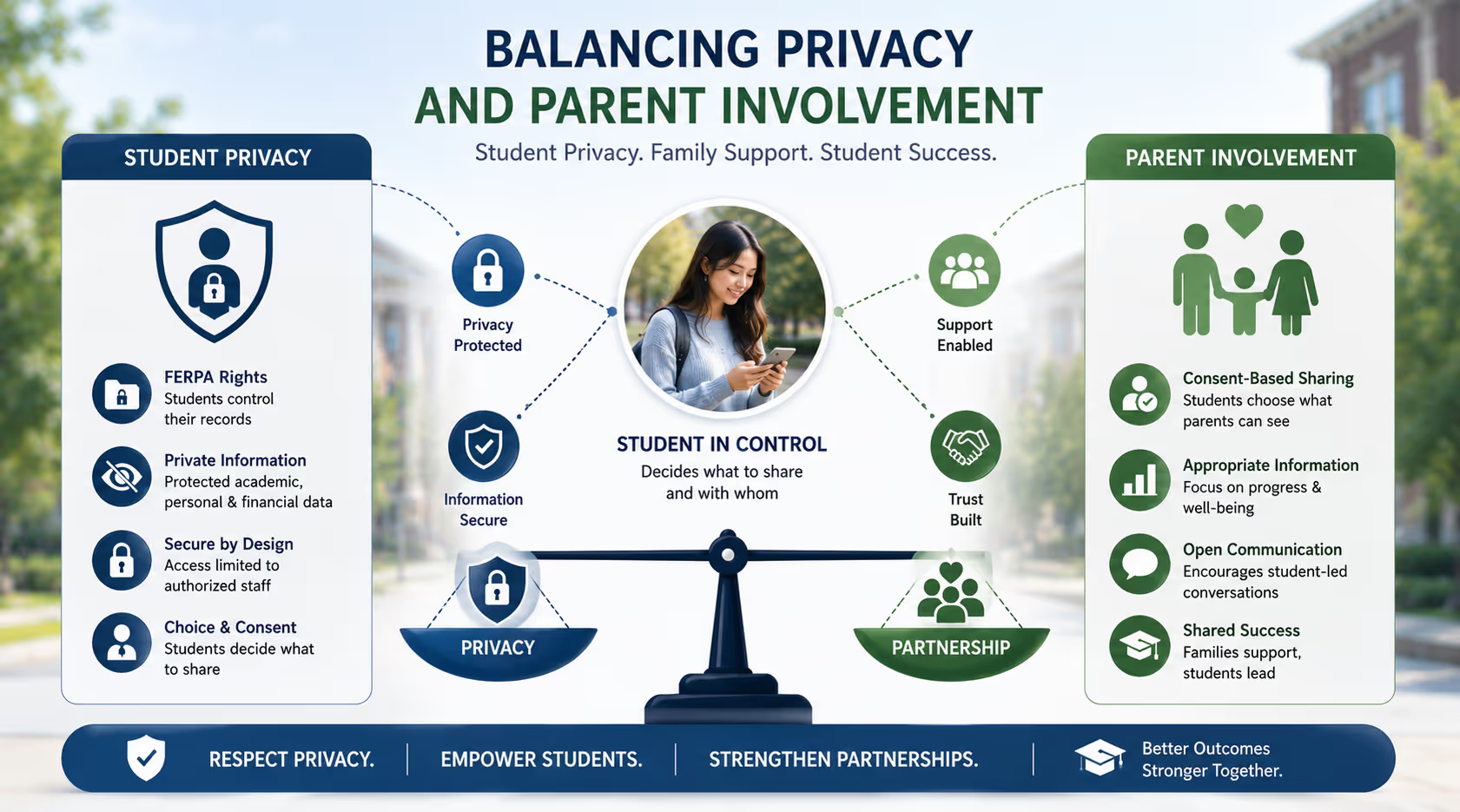
Balancing Privacy and Parent Involvement
One of the thorniest governance challenges in student success involves family engagement. Parents and families often play crucial support roles, but adult students control their educational records under FERPA.
Effective approaches include:
Consent-based sharing: Students can authorize specific information to be shared with designated family members. Platforms that make this easy—rather than requiring bureaucratic forms—enable appropriate family involvement while respecting student choice.
Aggregate wellbeing updates: Rather than sharing specific grades or incident reports, some institutions provide families with general wellbeing indicators (with student consent). This keeps families appropriately informed without violating student privacy.
Education for families: Helping parents understand why they can't access certain information—and what supportive role they can still play—reduces friction and models appropriate boundaries.
Student-mediated communication: The healthiest family involvement happens when students choose to share. Systems that encourage students to connect with their support networks, rather than reporting on students to families, respect both privacy and relationships.
Measuring Governance Effectiveness
Governance frameworks should be evaluated, not just implemented. Key metrics include:
Compliance metrics:
Audit findings and resolution times
Training completion rates
Vendor assessment completion
Policy exception requests and approvals
Security metrics:
Incident frequency and severity
Time to detect and respond to threats
Vulnerability remediation timelines
Access review completion
Operational metrics:
Data request fulfillment times
Student data access requests
Opt-out rates for data collection
Staff questions to governance resources
Trust metrics:
Student surveys on data privacy perceptions
Engagement rates with platforms that require data sharing
Authenticity of self-reported information (where measurable)
Tracking these indicators over time helps identify governance gaps before they become incidents and demonstrates the value of governance investments to institutional leadership.
Looking Ahead: Governance as Competitive Advantage
Institutions that build robust data governance frameworks now position themselves for the future in several ways.
Regulatory readiness: As state privacy laws expand and federal guidance evolves, institutions with strong foundations will adapt more easily than those scrambling to catch up.
Technology adoption: Governance frameworks that enable responsible data use—rather than blocking it—allow institutions to adopt student success innovations faster and with greater confidence.
Student trust: As data privacy awareness grows, institutions known for ethical data practices will attract students who value those commitments. Trust becomes a recruiting advantage.
Operational efficiency: Clear governance reduces uncertainty, speeds decision-making, and prevents the paralysis that occurs when nobody knows what's allowed.
Data governance isn't a cost center or a compliance burden. It's infrastructure that enables everything student success teams want to accomplish—identifying students who need support, personalizing interventions, demonstrating program impact, and building the trust that makes authentic engagement possible.
The institutions that recognize this are already investing in governance as a strategic priority. Those that wait for a breach or regulatory action to force the issue will find themselves playing catch-up in an increasingly complex environment.
Your Next Steps
For student success leaders:
Audit your current data practices against the principles outlined above
Identify gaps where governance frameworks don't exist or aren't followed
Build relationships with IT security, legal, and compliance colleagues
Advocate for student representation in governance structures
For institutional leaders:
Assess whether your governance structure coordinates across functional silos
Evaluate vendor contracts for FERPA compliance and ethical data use provisions
Invest in training that goes beyond compliance checkboxes
Consider establishing an AI ethics advisory structure
For everyone:
Remember that every data point represents a real student trusting you with their information
Treat that trust as the precious resource it is
Student success depends on data—but it depends even more on the relationships that data should serve. Governance frameworks that protect privacy while enabling insight make both possible.
Ready to see how student engagement platforms can respect privacy while delivering actionable insights? Explore how CampusMind's privacy-first design and ethical AI advisory panels put governance principles into practice. Book a call to discuss bringing responsible data-driven student success to your campus.
Frequently Asked Questions
How does FERPA apply to student wellbeing data collected through engagement apps?
Wellbeing data collected through institutionally-managed platforms generally qualifies as education records under FERPA when the information is directly related to students and maintained by the institution or its agents. This means the same protections apply—students can access their information, and disclosure requires consent except under specific exceptions. Institutions should ensure vendor contracts establish the platform as a "school official" with legitimate educational interest, and students should understand what data is collected and how it's used.
Can we share student engagement data with parents who are paying tuition?
Once students turn 18, FERPA rights transfer to them regardless of who pays tuition. Parents can only access education records with the student's written consent or if the student is claimed as a dependent for tax purposes (which allows but doesn't require disclosure). The best approach is facilitating student-controlled sharing mechanisms that let students choose what families see, respecting both privacy rights and the reality that family support often helps students succeed.
What's the difference between aggregate analytics and individual tracking for compliance purposes?
Aggregate analytics that show population-level trends without identifying specific students face fewer restrictions—they're useful for program evaluation and resource allocation. Individual-level tracking that identifies specific students requires more careful governance because it can lead to direct outreach or intervention. The key is ensuring students have meaningfully consented to systems that may flag them individually and that interventions are supportive rather than punitive.
How should we evaluate AI-driven student success tools for ethical data use?
Key evaluation criteria include transparency about how algorithms work, regular audits for bias across demographic groups, clear documentation of what data trains the models, student notification when AI informs outreach to them, and vendor willingness to submit to independent review. Look for vendors with formal ethics frameworks or advisory structures, and be wary of those who can't explain how their systems make recommendations.
What governance structures help balance IT security with student success operational needs?
Data governance councils that include representatives from student success, IT security, legal, and students themselves help balance competing priorities. This structure ensures security requirements don't create unnecessary barriers to legitimate data use while maintaining appropriate protections. Regular communication between technical teams and functional users prevents the "security says no to everything" dynamic that frustrates student success operations.
About CampusMind's Approach to Data Governance
CampusMind was built with privacy as a foundational design principle, not an afterthought. The platform incorporates student consent mechanisms that give students control over their information, aggregate-level reporting that provides institutional insights without compromising individual privacy, and FERPA-compliant data handling throughout. CampusMind's Campus Advisory Panel (CAP) and Technology Advisory Panel (TAP) provide ongoing guidance on ethical AI use and inclusive design, ensuring that student interests remain central to platform development. This commitment to responsible data governance reflects CampusMind's belief that student success and student privacy aren't competing values—they're complementary foundations for trust.
Works Cited
[1] Progress Software — "MOVEit Transfer Vulnerability Advisory." https://www.progress.com/security/moveit-transfer-and-moveit-cloud-vulnerability
[3] Slade, S. and Prinsloo, P. — "Learning Analytics: Ethical Issues and Dilemmas." American Behavioral Scientist, Vol. 57, No. 10. https://journals.sagepub.com/doi/10.1177/0002764213479366
[5] U.S. Department of Education — "Family Educational Rights and Privacy Act (FERPA)." https://www2.ed.gov/policy/gen/guid/fpco/ferpa/index.html
[6] U.S. Department of Education — "FERPA General Guidance for Students." https://studentprivacy.ed.gov/faq/what-school-official-and-when-can-school-official-obtain-access-student-education-records
[8] EDUCAUSE — "Data Governance: A Primer for Higher Education." https://library.educause.edu/resources/2018/7/data-governance-a-primer-for-higher-education
[9] Kuh, G.D., Kinzie, J., Buckley, J.A., Bridges, B.K., and Hayek, J.C. — "What Matters to Student Success: A Review of the Literature." National Postsecondary Education Cooperative. https://nces.ed.gov/npec/pdf/kuh_team_report.pdf
[10] Steele, C.M. and Aronson, J. — "Stereotype Threat and the Intellectual Test Performance of African Americans." Journal of Personality and Social Psychology, Vol. 69, No. 5. https://psycnet.apa.org/doi/10.1037/0022-3514.69.5.797