
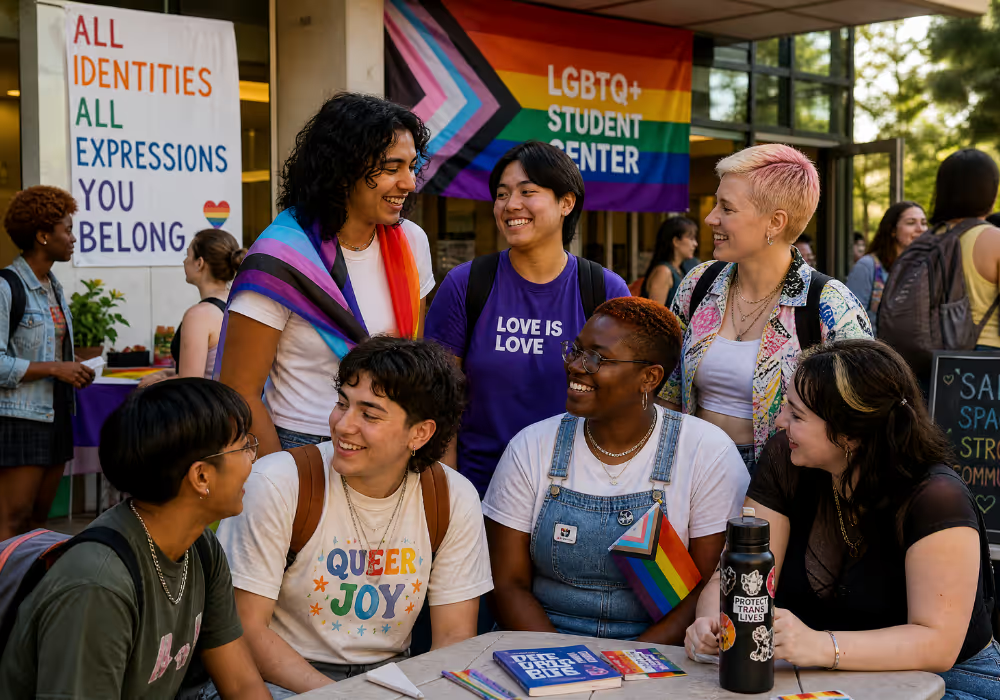
When a student walks into a campus resource center and sees their identity reflected—not just tolerated, but genuinely welcomed—something shifts. That moment of recognition can mean the difference between a student who thrives and one who quietly withdraws, eventually becoming another retention statistic.
LGBTQ+ student belonging isn't just an ethical imperative. It's a measurable factor in whether students persist to graduation. And for institutions navigating a complex landscape of policy shifts and budget constraints, understanding how to create affirming environments has never been more critical—or more strategically important.
The data is clear: LGBTQ+ students face unique challenges that directly impact their academic persistence. Research consistently shows that when campuses address these challenges through intentional programming and policy, retention improves. This isn't about checking boxes. It's about creating conditions where students can focus on learning instead of survival.
Key Takeaways
LGBTQ+ students experience disproportionately high rates of discrimination and mental health challenges that directly correlate with dropout risk
Simple policy changes—like chosen name systems and inclusive housing—create measurable improvements in student sense of belonging
Visibility of resources matters as much as their existence; students can't access support they don't know about or feel safe approaching
Privacy-first approaches to student support help LGBTQ+ students engage without fear of unwanted disclosure
Institutions with strong LGBTQ+ support structures see benefits across their entire student population, not just LGBTQ+ students
The Retention Challenge: What the Data Actually Shows
According to the Trevor Project's 2023 National Survey on LGBTQ+ Youth Mental Health, 41% of LGBTQ+ young people seriously considered suicide in the past year [1]. Among transgender and nonbinary youth, that number climbs even higher.
These aren't just mental health statistics. They're retention red flags.
Students experiencing mental health crises don't succeed academically. They miss classes. They withdraw socially. They leave. And while not every struggling LGBTQ+ student will show up in a counseling center, the underlying stress affects everything from classroom participation to housing stability.
The Campus Pride Index—a national benchmarking tool that evaluates LGBTQ-friendly policies, programs, and practices at colleges and universities—has tracked how institutional support correlates with student outcomes [2]. Campuses that score higher on LGBTQ+ inclusion metrics tend to report stronger overall climate survey results and better retention among marginalized student populations.
When LGBTQ+ students feel safe, everyone benefits. Inclusive environments signal to all students that the institution takes belonging seriously.
Intersectionality Compounds These Challenges
Retention risks don't exist in isolation. LGBTQ+ students of color, first-generation LGBTQ+ students, and those with disabilities face compounded barriers that multiply dropout risk.
A first-generation student who is also transgender may struggle to find mentors who understand both identities. A Black queer student may experience racism within LGBTQ+ spaces and homophobia within communities of color—leaving them without a clear "home" on campus.
Effective support structures acknowledge these intersections. Resource centers that partner with multicultural affairs, disability services, and first-generation student programs create more comprehensive safety nets. Programming that addresses multiple identities simultaneously—rather than treating each as separate—reaches students who might otherwise fall through the gaps.
Institutions tracking retention data should examine outcomes not just for LGBTQ+ students overall, but for subpopulations within that group. The patterns often reveal where additional support is most needed.
Chosen Name Policies: A Small Change With Outsized Impact
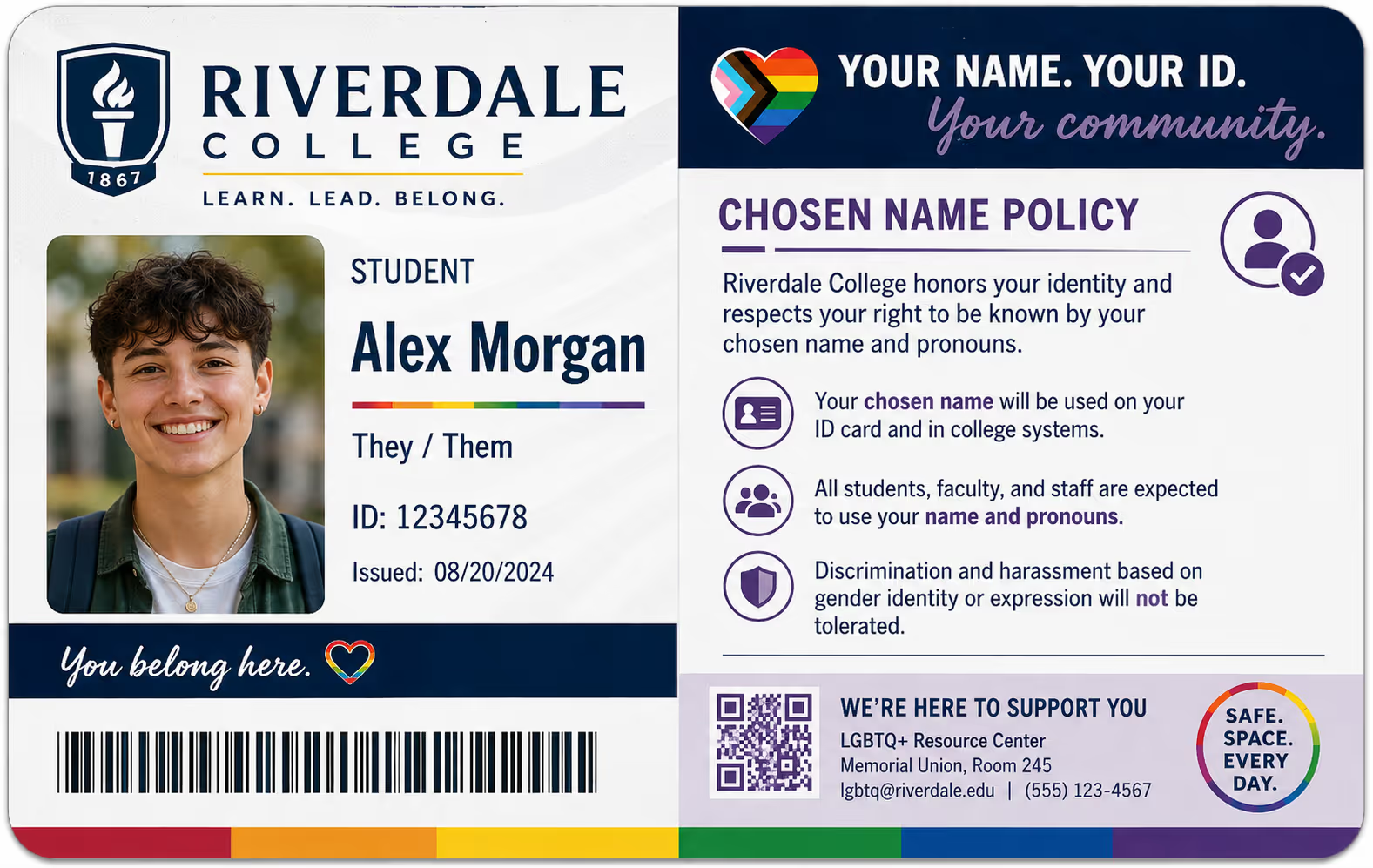
One of the most straightforward—and most impactful—policy changes campuses can implement is a chosen name system. This allows students to have their chosen name appear on class rosters, student IDs, email addresses, and learning management systems, even if their legal name hasn't changed.
For transgender and nonbinary students, being called by their deadname (a former name they no longer use) in front of classmates isn't just uncomfortable. It can be a daily source of distress that compounds over weeks and months. It signals, repeatedly, that the institution doesn't see them as they are.
Research published in the Journal of Adolescent Health found that transgender youth who could use their chosen name in multiple contexts reported significantly lower rates of depressive symptoms, suicidal ideation, and suicidal behavior [3]. The effect was dose-dependent: the more contexts where they could use their name, the better their mental health outcomes.
Implementing chosen name systems requires coordination across IT, registrar, and student affairs offices. But the technical lift is increasingly manageable—most modern student information systems now include this functionality. The larger barrier is often institutional will, not capability.
Implementation Checklist for Chosen Name Policies
| Step | Department | Key Considerations |
| Audit all student-facing systems | IT, Registrar | Identify where legal names currently appear |
| Enable chosen name fields | IT | Work with SIS, LMS, and email system vendors |
| Train faculty and staff | Student Affairs, HR | Focus on why chosen names matter and correct roster usage |
| Create communication channels | Communications, Student Affairs | Ensure students know the option exists |
| Establish update processes | Registrar | Simple procedures without requiring documentation |
Chosen name policies benefit many students beyond the transgender community. International students whose legal names are difficult for English speakers to pronounce often prefer different names. Students who go by middle names or nicknames appreciate having their preferred name on rosters. Creating systems that work for chosen names normalizes the practice and reduces stigma for everyone who uses it.
Safe Zone Training: Moving Beyond Performative Allyship
Safe Zone programs—training workshops that educate faculty and staff about LGBTQ+ identities and how to create supportive environments—have become common on college campuses. But there's a significant gap between offering training and creating actual safety.
Effective Safe Zone programs share several characteristics.
They're ongoing, not one-and-done. A single two-hour workshop doesn't create lasting competency. Institutions with strong LGBTQ+ support structures build in refresher training, advanced modules, and opportunities for continued learning.
They include bystander intervention components. Knowing terminology matters less than knowing what to do when a student experiences discrimination in a classroom or residence hall. Practical scenario-based training helps staff respond effectively when it counts.
They're connected to accountability structures. When faculty or staff display Safe Zone stickers but then misgender students or make dismissive comments, it erodes trust across the entire program. Clear expectations and follow-through matter.
They reach beyond the usual suspects. Counseling center staff and resident advisors often get trained first. But campus police, financial aid officers, and athletics staff interact with students in high-stakes moments. Broad reach creates consistent experience.
The Campus Pride Index evaluates whether institutions require Safe Zone training for specific roles and whether training content is regularly updated—both indicators of programmatic depth versus surface-level compliance [2].
Resource Center Visibility: Students Can't Access What They Can't Find
Many campuses have LGBTQ+ resource centers or Pride centers. Fewer have resource centers that students actually know about, can easily find, and feel comfortable entering.
Visibility operates on multiple levels.
Physical visibility: Is the center located in a high-traffic area or tucked into a basement corner? Is signage clear and welcoming? Can students enter without feeling like they're making a public statement about their identity?
Digital visibility: When prospective LGBTQ+ students research your institution, how many clicks does it take to find information about support resources? Is the website current, or does it list events from three years ago? Does it appear in search results, or is it buried?
Social visibility: Do LGBTQ+ resources get mentioned at orientation? Do academic advisors know how to refer students? Does campus leadership acknowledge LGBTQ+ students in regular communications, or only during Pride Month?
Perceived accessibility: Do students see people like themselves using the resource center? Are programs designed for students at different points in their identity journey—from those who are newly exploring to those who are out and activist-oriented?
Students often know resources technically exist but don't feel the resources are "for them" based on who they see using them or how programs are marketed [4]. A resource center that appears to serve only one demographic within the LGBTQ+ community may inadvertently exclude others.
Housing and Facilities: Where Policy Meets Daily Life
For residential students, housing represents a daily test of whether campus rhetoric about inclusion matches lived reality. LGBTQ+ students—particularly transgender students—navigate questions about roommate assignments, bathroom access, and locker room policies that most students never consider.
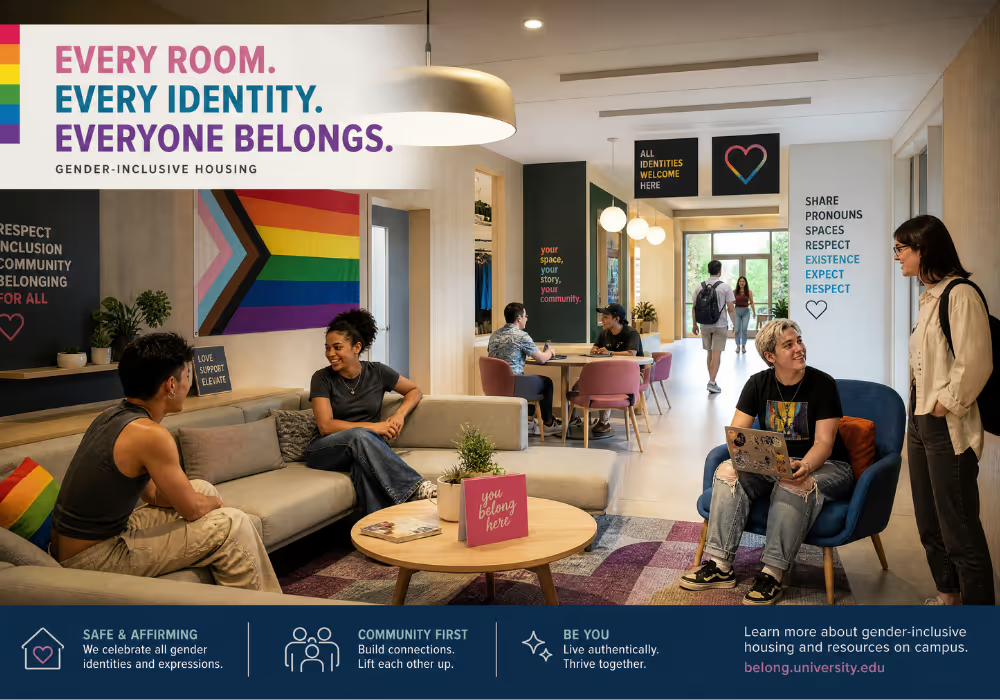
Gender-inclusive housing options (allowing students of any gender to room together) have expanded significantly over the past decade. According to Campus Pride, hundreds of colleges now offer some form of gender-inclusive housing [2]. But the details matter:
Is gender-inclusive housing available to first-year students, or only upperclassmen?
Is it located in desirable residential areas, or in less popular buildings?
How is the process communicated—proactively to all students, or only to those who specifically seek it out?
Can students request gender-inclusive housing without disclosing their identity to multiple staff members?
Bathroom and locker room access remains contentious on some campuses. Institutions that have navigated this successfully typically focus on expanding single-occupancy options available to all students rather than creating "special" facilities only for transgender students. This approach normalizes accommodation rather than singling out specific individuals.
Navigating Policy Shifts: Maintaining Support Amid External Pressure
The external policy landscape has grown more challenging. Some states have enacted legislation restricting diversity, equity, and inclusion programs. Federal guidance has shifted. Institutions face competing pressures from legislators, donors, and community members with varying perspectives on LGBTQ+ inclusion.
Campus leaders committed to LGBTQ+ student success can navigate this terrain strategically.
Frame support in student success language. The retention and mental health data isn't political. Students who feel they belong persist at higher rates. Students experiencing chronic stress underperform academically. These are educational outcomes, not political positions.
Focus on infrastructure over programming. Chosen name systems, housing policies, and nondiscrimination protections are structural. They're harder to dismantle than event-based programming and provide ongoing support without requiring constant institutional energy.
Protect what you can, where you can. Even in constrained environments, some actions remain within institutional control. Training, resource allocation, and administrative practices can often be adjusted without legislative approval.
Partner strategically. Student organizations, community nonprofits, and alumni networks can sometimes provide programming and support that institutions are hesitant to directly sponsor. These partnerships expand capacity without concentrating risk.
Document outcomes. If you implement supportive policies and see retention improve, that's evidence. Building institutional memory about what works positions you to advocate for resources when conditions shift.
Technology and Privacy: Supporting Students Without Unwanted Disclosure
LGBTQ+ students often need support but may not be out to everyone in their lives. A student might be openly gay in their campus friend group but closeted to their parents. A transgender student might be navigating how and when to socially transition.
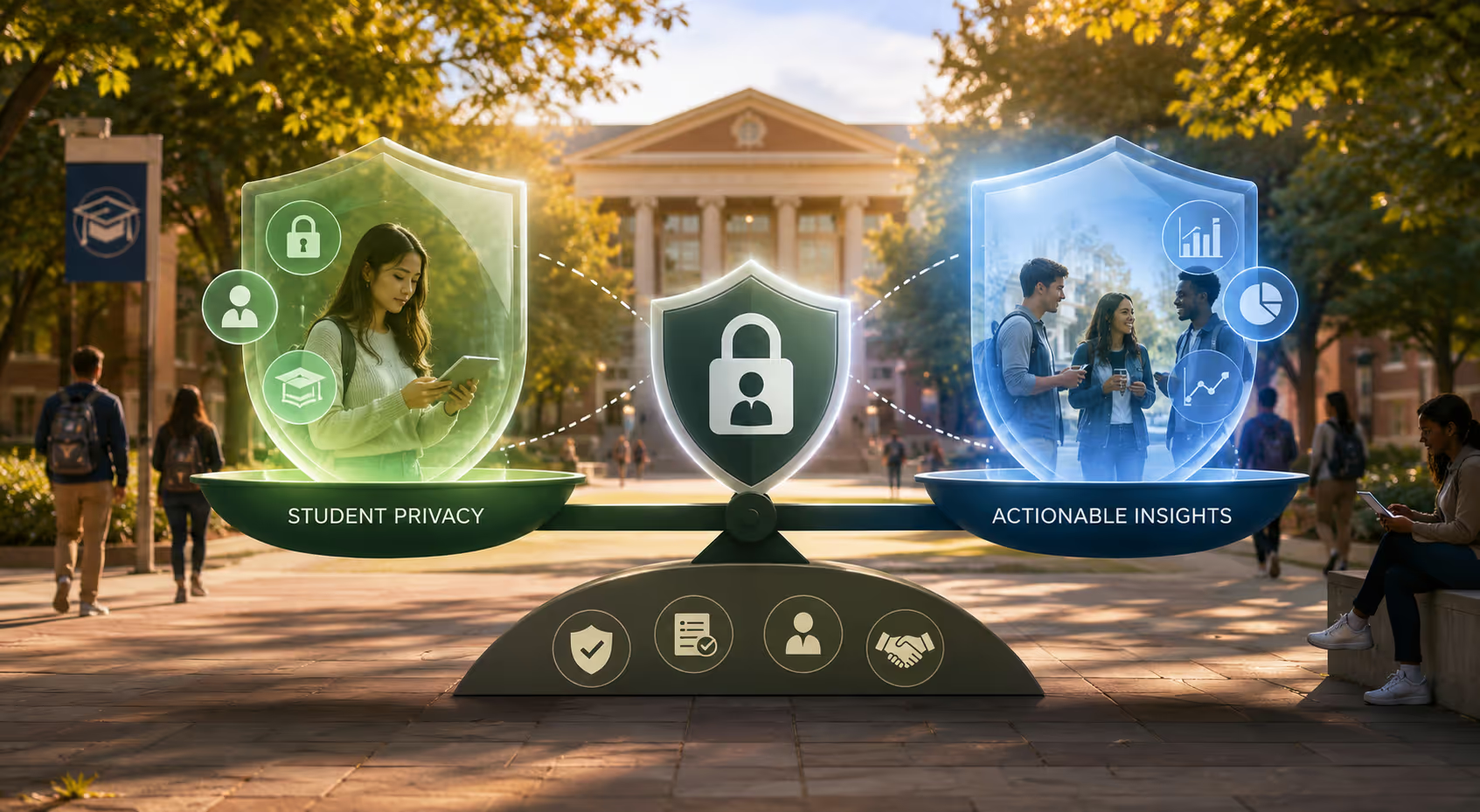
This creates real challenges for engagement and outreach. Students can't access resources they don't know about. But targeted communication—emails about LGBTQ+ support services, for instance—could inadvertently out students if parents have access to email accounts or if systems lack appropriate privacy protections.
Privacy-first engagement approaches address this challenge directly.
Student-controlled visibility. Rather than institutions deciding what information to share with whom, students should be able to control where their identities are visible. Who sees their chosen name versus legal name? What programs can communicate with them about LGBTQ+ topics?
Opt-in rather than opt-out. Students should actively choose to receive identity-specific communications rather than being automatically added to lists based on disclosed identities.
Aggregate data for assessment. Institutions need to understand whether LGBTQ+ students are thriving. But this can be accomplished through voluntary, anonymous climate surveys and aggregate retention analysis rather than individual-level tracking.
Clear communication about data practices. Students should understand exactly how identity information is stored, who can access it, and how it might be used. Ambiguity creates distrust.
Engagement platforms designed with privacy-first architecture help LGBTQ+ students access support on their own terms—connecting them to resources without requiring them to publicly disclose their identity before they're ready. CampusMind, for example, builds student-controlled visibility into its engagement approach, allowing students to connect with relevant campus resources while maintaining control over their personal information.
Building Sustainable Support Structures
The most effective LGBTQ+ support structures share a common characteristic: they're integrated into institutional operations rather than siloed as standalone initiatives. When LGBTQ+ student success is seen as "the resource center's job," it remains peripheral. When it's understood as part of overall student success strategy, it gains traction.
Integration Points Across Campus
Admissions and enrollment: Are prospective LGBTQ+ students seeing themselves reflected in campus communications? Do recruitment materials feature diverse identities? Is financial aid information accessible to students whose family situations may be complicated by family rejection?
Academic advising: Do advisors understand how identity-related stress might affect academic performance? Can they refer students to appropriate resources when they notice warning signs?
Career services: Are career counselors prepared to discuss workplace discrimination concerns? Do they have relationships with LGBTQ+-affirming employers?
Alumni relations: Are LGBTQ+ alumni engaged and visible? Seeing successful graduates who share their identity helps current students envision futures for themselves.
Institutional research: Is the institution tracking outcomes for LGBTQ+ students? Without data, it's impossible to know whether interventions are working.
Assessment: Measuring What Matters
Several assessment approaches provide useful information about whether support efforts are working.
Climate surveys: Regular surveys asking students about their sense of belonging, experiences with discrimination, and awareness of resources provide trend data over time. The key is asking specific enough questions to identify LGBTQ+-specific experiences.
Retention and completion analysis: If students self-identify their sexual orientation or gender identity (voluntarily) during enrollment, you can compare retention rates for LGBTQ+ students against the overall population. Closing gaps indicates progress.
Resource utilization: Are LGBTQ+ resources being accessed? By whom? Tracking usage patterns—while maintaining individual privacy—helps identify whether services are reaching intended audiences.
Campus Pride Index benchmarking: Completing the Campus Pride Index provides standardized comparison against peer institutions and identifies specific areas for improvement [2].
Focus groups and qualitative feedback: Numbers tell part of the story. Conversations with LGBTQ+ students about their actual experiences fill in crucial context that surveys miss.

What Success Looks Like
Campuses that excel at LGBTQ+ student support don't treat it as a separate initiative. They've woven inclusion into institutional culture so thoroughly that it stops being remarkable. Students can use their chosen names without fanfare. Faculty naturally use inclusive language in syllabi. Resource centers are busy because students see them as valuable, not because they're desperate.
These campuses also recognize that creating affirming environments is ongoing work, not a destination. Student populations change. External contexts shift. What constitutes best practice evolves as understanding deepens.
The institutions making real progress share a commitment to continuous improvement rather than defending the status quo. They listen to LGBTQ+ students, track outcomes, adjust approaches based on evidence, and communicate openly about both successes and challenges.
Moving Forward: Practical Next Steps
If you're looking to strengthen LGBTQ+ student support at your institution, start with honest assessment. Where are the gaps between your stated values and students' actual experiences? What do LGBTQ+ students tell you—in surveys, focus groups, or informal conversations—about what's working and what isn't?
From there, prioritize based on impact and feasibility.
Quick wins with significant impact:
Implement or improve chosen name systems
Audit website visibility of LGBTQ+ resources
Add LGBTQ+ resources to standard orientation programming
Review housing assignment processes for inclusivity
Medium-term structural improvements:
Expand Safe Zone training to reach more staff, with more depth
Develop gender-inclusive housing and facilities options
Create clear referral pathways from academic advising to support resources
Begin tracking LGBTQ+ student outcomes
Long-term cultural shifts:
Integrate LGBTQ+ inclusion into strategic planning
Build alumni engagement pipelines
Develop faculty development focused on inclusive pedagogy
Advocate for supportive policies at the system level
LGBTQ+ student belonging matters because these students matter. It also matters because retention matters, because institutional climate matters, and because the skills students develop navigating diverse campus environments prepare them for diverse workplaces and communities.
Creating affirming environments isn't always easy, particularly in challenging political contexts. But the evidence is clear: when LGBTQ+ students feel they belong, they succeed. And when institutions commit to genuine inclusion, everyone benefits.
Ready to support all your students more effectively? Engagement platforms with privacy-first design help LGBTQ+ students—and all students—connect with campus resources on their own terms. Book a call to learn how CampusMind helps institutions improve belonging and retention through personalized, student-centered support.
Frequently Asked Questions
How can colleges support LGBTQ students effectively?
Effective support combines policy infrastructure (chosen name systems, inclusive housing, nondiscrimination protections) with visible programming and trained staff. The key is integration: LGBTQ+ support works best when embedded across campus operations—from admissions to career services—rather than isolated in a single resource center. Regular assessment through climate surveys and retention tracking helps institutions identify gaps and measure progress.
Why is LGBTQ inclusion important in higher education?
LGBTQ+ students who don't feel they belong are significantly more likely to experience mental health challenges and leave school. Research shows that inclusive campus environments improve retention not just for LGBTQ+ students but for the broader student population. Inclusion signals that an institution takes all students' wellbeing seriously, which strengthens overall campus climate and student success outcomes.
What if our institution is in a state with restrictive DEI legislation?
Even in constrained environments, many supportive practices remain possible. Chosen name systems, housing policies, and nondiscrimination protections are often within institutional authority. Focus on structural changes and student success framing rather than programming that might draw legislative attention. Partner with community organizations when direct institutional action isn't feasible, and document outcomes to build evidence for future advocacy.
How do we measure LGBTQ+ student retention without requiring identity disclosure?
Voluntary, anonymous climate surveys can capture experiences without identifying individuals. Some institutions include optional sexual orientation and gender identity questions during enrollment with clear communication that responses are voluntary and protected. Aggregate analysis of these responses can reveal retention patterns without individual-level tracking, allowing institutions to assess progress while respecting student privacy.
What's the most cost-effective first step for institutions with limited resources?
Improving visibility of existing resources often costs little but significantly impacts access. Audit your website, orientation materials, and student communications to ensure LGBTQ+ support information is prominent and current. Train academic advisors on referral pathways. These steps require minimal budget but meaningfully improve student connection to support services already in place.
About CampusMind
CampusMind partners with higher education institutions to improve student retention through data-driven, privacy-first engagement strategies. Our platform helps students connect with campus resources on their own terms while providing administrators with real-time insights into student wellbeing trends. We believe every student deserves to feel they belong—and that belonging directly supports the outcomes institutions care about. Learn more about bringing CampusMind to your campus.
Works Cited
[1] The Trevor Project — "2023 U.S. National Survey on the Mental Health of LGBTQ Young People." https://www.thetrevorproject.org/survey-2023/
[2] Campus Pride — "Campus Pride Index." https://www.campusprideindex.org/
[3] Russell, S.T., Pollitt, A.M., Li, G., & Grossman, A.H. — "Chosen Name Use Is Linked to Reduced Depressive Symptoms, Suicidal Ideation, and Suicidal Behavior Among Transgender Youth." Journal of Adolescent Health. https://www.jahonline.org/article/S1054-139X(18)30085-5/fulltext
[4] Rankin, S., Weber, G., Blumenfeld, W., & Frazer, S. — "2010 State of Higher Education for Lesbian, Gay, Bisexual and Transgender People." Campus Pride. https://www.campuspride.org/resources/2010-state-of-higher-education-for-lgbt-people/