

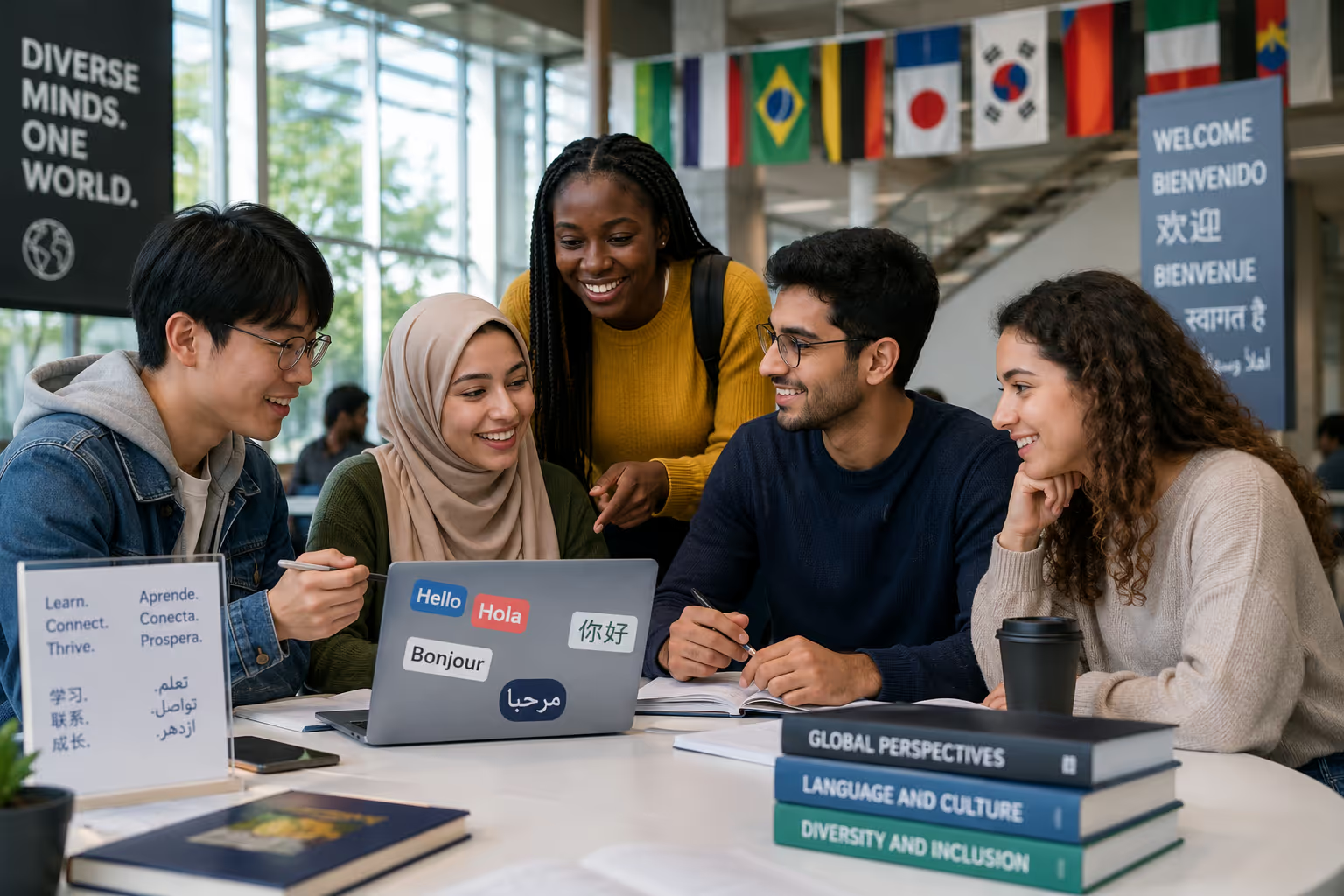
Walk into any first-year seminar at a California State campus, a Texas community college, or a New York City public university, and you'll hear it—the quiet hum of students thinking in two languages. Maybe three. These aren't international students navigating a temporary study abroad experience. They're U.S. citizens, permanent residents, and longtime Americans whose first language simply wasn't English.
Consider Maria, a first-generation college student from Houston. She grew up translating for her parents at doctor's appointments, code-switching between Spanish at home and English at school, and navigating two cultural worlds before she ever stepped onto a college campus. She tests out of ESL placement. She doesn't qualify for international student support services. And yet, she faces distinct challenges that traditional student success programming rarely addresses.
Multilingual students like Maria represent a growing and often overlooked population in higher education. Most institutions still treat language diversity as a deficit to remediate rather than an asset to leverage.
ESL courses alone won't help these students thrive. What they need is holistic support that honors their linguistic backgrounds while connecting them to the resources, relationships, and sense of belonging that drive retention.
Key Takeaways
According to national higher education data, a significant percentage of first-time college freshmen speak a language other than English as their primary language at home—with substantially higher rates in states like California, Texas, Florida, and New York
Multilingual students face unique challenges around belonging, family communication, and navigating campus systems—not just academic English proficiency
Heritage speakers and domestic multilingual learners have different needs than traditional ESL or international student populations
Research on translanguaging pedagogy suggests that leveraging students' full linguistic repertoire improves learning outcomes [1]
Bilingual engagement strategies—including parent outreach in preferred languages—can significantly improve retention for this population
Who Are Multilingual Students? Moving Beyond the ESL Label

When higher education talks about "non-native English speakers," the conversation usually defaults to two categories: international students on F-1 visas and students who need developmental English courses. But there's a third group that doesn't fit neatly into either box.
Domestic multilingual learners are U.S.-born or raised students whose home language differs from academic English. They might be heritage Spanish speakers from Texas who grew up hearing abuela's stories in their first language. They might be children of Vietnamese, Tagalog, or Mandarin-speaking immigrants who learned English in kindergarten but still dream in their parents' tongue. They might be second-generation Americans who speak flawless conversational English but struggle with the dense academic prose of a sociology textbook.
These students often test out of ESL placement. They don't qualify for international student support services. And yet, they face distinct challenges that traditional student success programming rarely addresses.
Comparing Student Populations: A Quick Reference
| Factor | International ESL Students | Domestic Multilingual Learners |
| Immigration Status | F-1 visa, temporary | U.S. citizens, permanent residents, DACA recipients |
| K-12 Experience | Educated abroad | Navigated U.S. school system |
| English Proficiency | Building from formal instruction | Often fluent conversationally; gaps in academic register |
| Family Support | Often have college-educated parents abroad | Frequently first-generation; parents may not speak English |
| Institutional Support | International student office, dedicated advisors | Often falls through the cracks—too "American" for ESL, too "different" for mainstream |
| Primary Challenge | Language acquisition and cultural adjustment | Belonging, academic confidence, family communication |
The Numbers Behind the Population
Data on multilingual college students can be difficult to track comprehensively because many institutions don't systematically collect home language information. However, research from organizations studying first-generation and linguistically diverse students consistently shows that a meaningful percentage of entering freshmen—particularly at public universities and community colleges—come from homes where English is not the primary language spoken.
In states like California, Texas, Florida, and New York, that percentage climbs significantly higher than national averages. At Hispanic-Serving Institutions, community colleges in urban centers, and regional public universities serving diverse populations, multilingual students aren't a niche demographic—they're a core constituency. Yet institutional support structures rarely reflect this reality.
Why ESL Isn't Enough: The Belonging Gap
The challenges facing domestic multilingual students extend far beyond grammar and syntax.
Academic Confidence vs. Academic English
Many heritage speakers possess strong verbal fluency in English. They can participate in class discussions, understand lectures, and communicate with professors without difficulty. But academic writing—with its discipline-specific conventions, citation requirements, and stylistic expectations—presents a different challenge entirely.
The result is a confidence gap. Students who feel perfectly capable in conversation suddenly doubt themselves when facing a research paper. They may not seek tutoring because they don't see themselves as "ESL students." Meanwhile, writing centers may not recognize their specific needs, which differ from both native English speakers and traditional second-language learners.
Family Communication Barriers
For multilingual students, family engagement often requires translation—literal and cultural.
When institutions send financial aid notifications, academic alerts, or event invitations exclusively in English, they're effectively excluding the support system these students rely on most. Parents who sacrificed for their children's education find themselves locked out of the college experience, unable to understand the systems their students are navigating.
This creates a double burden. Students become responsible not only for their own success but for translating that success to their families. The emotional labor is real, and it compounds the stress of college transition.
Navigating Institutional Systems
Every college campus has its own bureaucratic language. FAFSA, drop-add periods, degree audits, articulation agreements—these terms confuse most first-generation students, regardless of linguistic background. But for multilingual students whose parents can't help decode the system, the learning curve steepens.
The FAFSA verification process presents a particularly high-friction barrier. Students may need to translate complex tax documents and financial terminology for parents who have never encountered these systems. What takes other families an evening can consume weeks of frustrating back-and-forth for multilingual households.
Students shouldn't have to choose between asking for help and protecting their family's pride. They shouldn't have to explain why their parents didn't attend orientation. And they certainly shouldn't have to serve as the sole bridge between two worlds while also trying to pass organic chemistry.
The Science of Translanguaging: What Research Tells Us
Traditional approaches to language education treated bilingualism as interference—something to overcome on the path to English fluency. But contemporary research on translanguaging offers a different perspective [1].
Translanguaging pedagogy recognizes that multilingual individuals don't have separate language systems operating in isolation. Instead, they draw from a unified linguistic repertoire, strategically deploying different languages for different purposes. When students are allowed—even encouraged—to use their full linguistic toolkit, learning outcomes improve.
What does this mean in practice? Forcing students to suppress their home language doesn't make them better English speakers. It makes them less confident, less connected, and less likely to persist.
Institutions that embrace linguistic diversity rather than pathologizing it see benefits across multiple metrics. Students feel more seen. Faculty gain richer classroom discussions. And retention improves because students experience belonging rather than marginalization.
Practical Strategies for Supporting Multilingual Students
Moving from awareness to action requires systemic changes.
Create Bilingual Communication Pathways
If 30% of your student body comes from Spanish-speaking households, why is every campus communication in English only?
Bilingual outreach isn't just a nice-to-have—it's a retention strategy. When parents receive financial aid information, deadline reminders, and event invitations in their preferred language, they can actually support their students. When orientation materials exist in multiple languages, families feel welcomed rather than excluded.
This doesn't require translating every email blast. Strategic bilingual communication—targeted at high-stakes moments like enrollment, financial aid deadlines, and early alert notifications—can make a meaningful difference.
One institution's approach: A mid-sized public university in the Southwest began offering bilingual parent newsletters and translated FAFSA guidance materials. Within two years, staff reported fewer missed financial aid deadlines among students from Spanish-speaking households and increased parent attendance at family events. While many factors contributed to these improvements, campus leadership credited the bilingual outreach as a key component of their holistic retention strategy.
Train Faculty and Staff on Asset-Based Approaches
Language diversity is an asset, not a liability. But that mindset shift requires intentional training.
Faculty development programs should address:
How heritage speakers' needs differ from international students and traditional ESL learners
Strategies for providing feedback that builds confidence rather than emphasizing deficits
Ways to incorporate translanguaging practices that honor students' linguistic backgrounds
Resources for connecting multilingual students with appropriate support services
Academic advisors and student affairs professionals need similar preparation. The goal isn't fluency in every language—it's cultural humility and awareness of where to direct students for help.
Rethink Writing Support
Writing centers often operate from a deficit model: students arrive with problems, tutors fix them. For multilingual students, this approach can feel stigmatizing.
Consider instead:
Training writing tutors specifically on working with heritage speakers
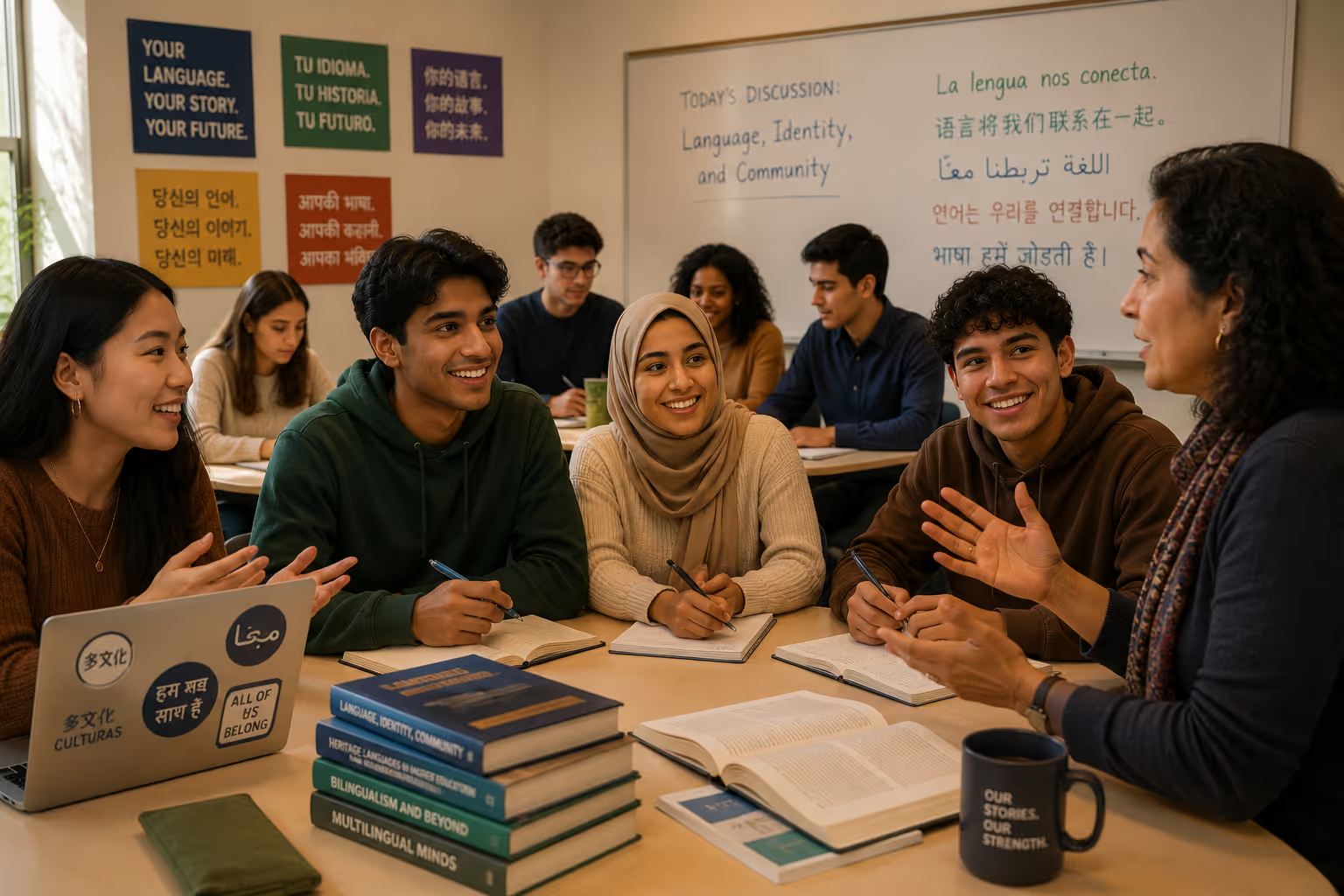
Creating multilingual peer mentor programs where students can discuss assignments in their preferred language before translating to academic English
Offering workshops on academic English conventions that acknowledge students' existing linguistic sophistication
The message matters as much as the method. Students should leave writing support feeling more confident, not more aware of their "errors."
Build Peer Communities
Belonging happens through relationships, not programming. Multilingual students benefit from peer communities where their experiences are normalized rather than exceptional.
This might look like:
Affinity groups for heritage language speakers
Peer mentor matching based on linguistic background
Student organizations celebrating bilingual and bicultural identities
Residential learning communities designed around multicultural exchange
When students see others like themselves thriving on campus, they can imagine their own success.
Engage Families in Their Language
Parent engagement shouldn't end at orientation—and it shouldn't assume English proficiency.
Institutions committed to multilingual student success should consider:
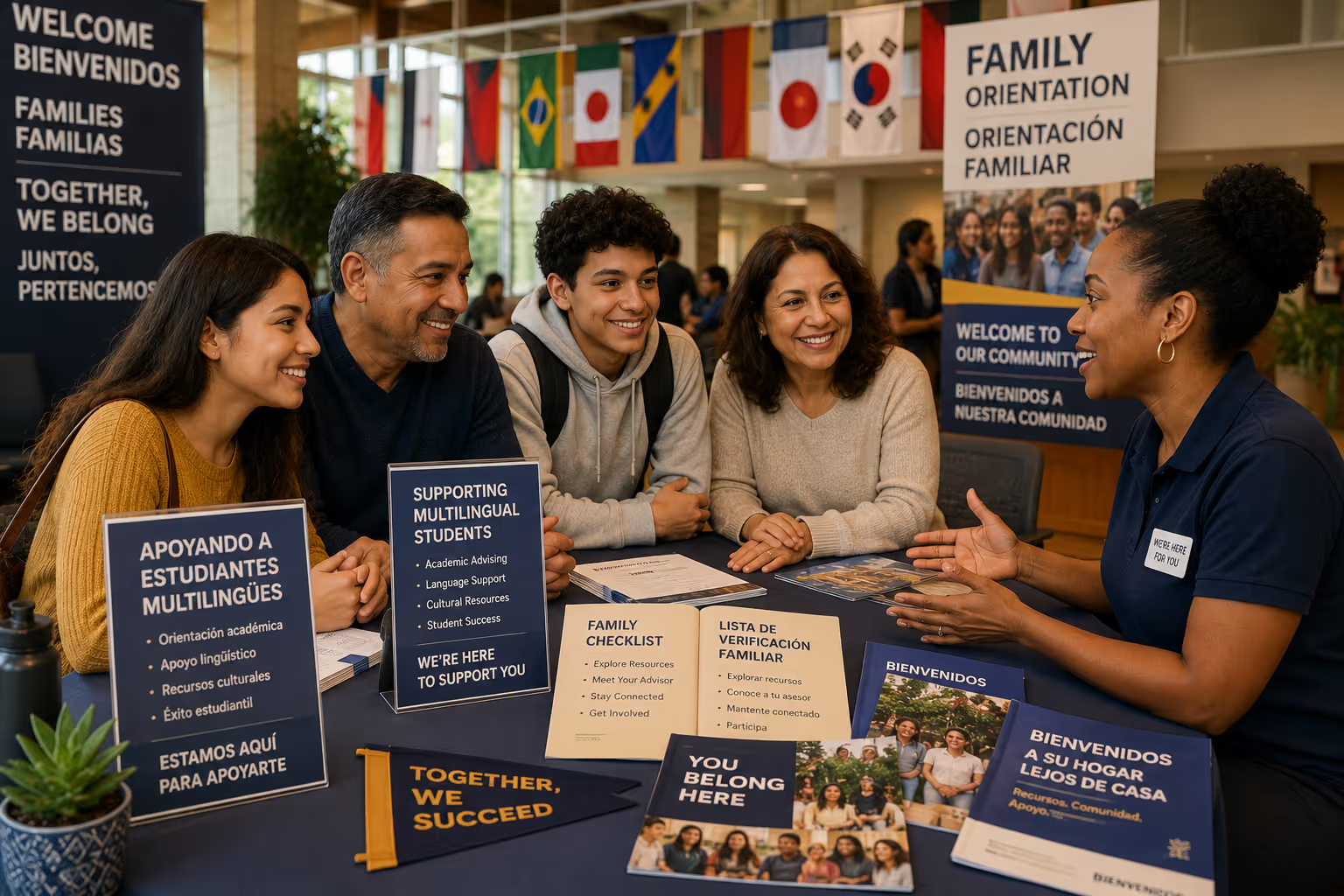
Bilingual family newsletters providing updates on academic calendars, campus resources, and student success tips
Parent information sessions offered in Spanish, Mandarin, Vietnamese, and other widely spoken community languages
Translated materials for high-stakes processes like financial aid appeals and academic probation
Technology platforms that allow families to receive updates in their preferred language
When parents understand what their students are experiencing, they become partners in the retention equation rather than bystanders.
Technology's Role in Multilingual Engagement
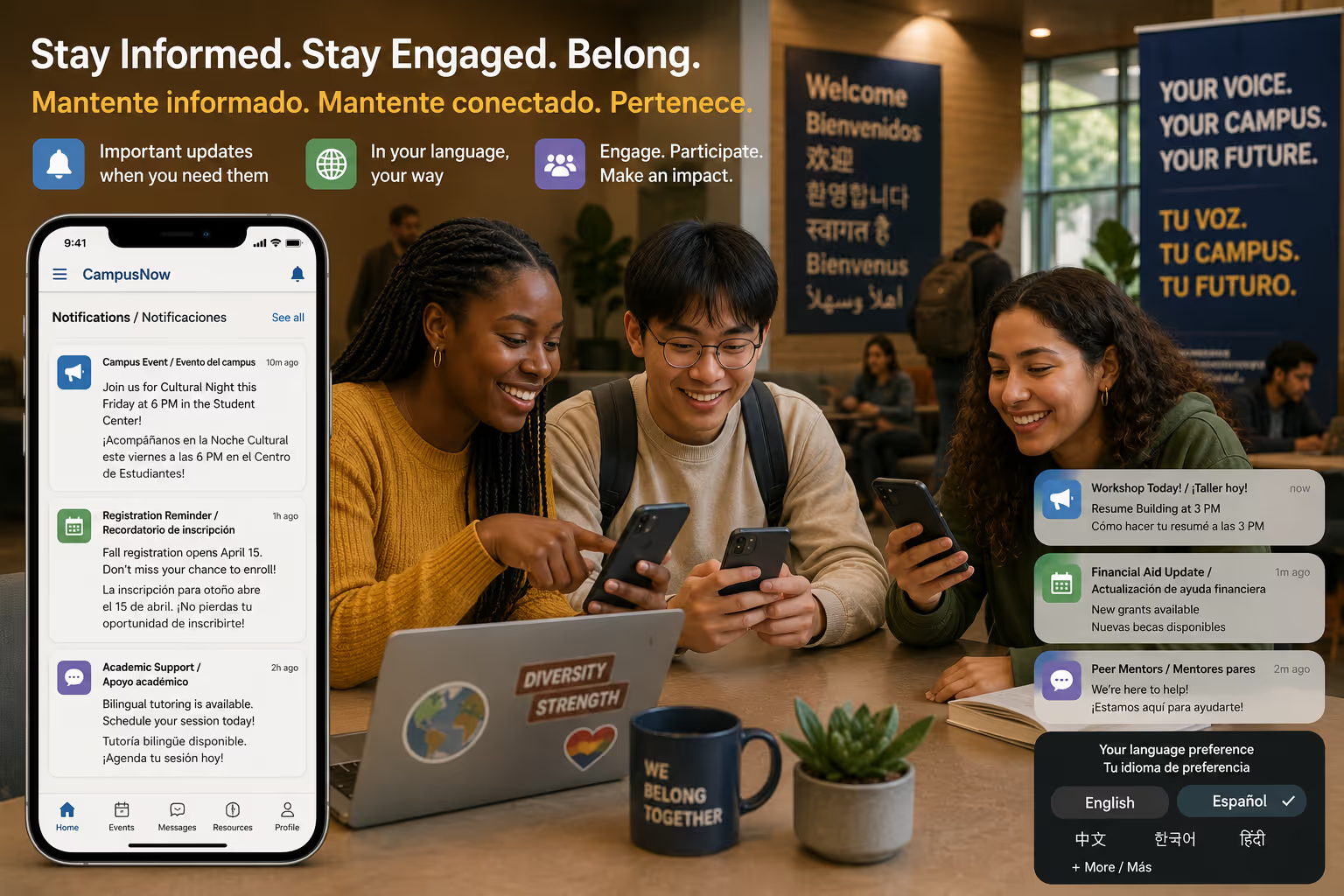
Traditional campus communication systems weren't built for linguistic diversity. They assume English proficiency across all stakeholders and deliver one-size-fits-all messaging. But emerging engagement platforms are changing that paradigm.
The most effective student engagement technology now offers:
Bilingual interface options that allow students to toggle between languages based on preference and context
Multilingual notifications that reach students and families in their primary language
Culturally responsive content that acknowledges diverse backgrounds rather than defaulting to majority-culture assumptions
Real-time translation features that reduce barriers to accessing campus resources
For institutions serving substantial multilingual populations, these capabilities aren't luxury features—they're essential infrastructure for equitable student support.
What Not to Do: Common Missteps
Supporting multilingual students requires avoiding some well-intentioned but counterproductive approaches.
Don't assume language proficiency equals cultural assimilation. Students may speak perfect English while still navigating bicultural identity in complex ways. Don't conflate linguistic ability with cultural belonging.
Don't treat all non-native speakers the same. A heritage Spanish speaker who grew up in Arizona has fundamentally different needs than an international student from Spain who just arrived on a study visa. Lumping them together in "ESL support" misses the point.
Don't rely on students to translate for their families. This places unfair burden on students and creates uncomfortable power dynamics. Institutional responsibility shouldn't become student labor.
Don't position bilingualism as a problem to solve. The goal isn't English-only assimilation. It's leveraging linguistic diversity as an educational and social asset.
Your Next Steps
If your institution serves multilingual student populations, start here:
Audit your communication channels. How many touchpoints with students and families assume English proficiency? Where would bilingual options have the greatest impact?
Review your support services. Do writing centers, tutoring programs, and academic advising acknowledge the specific needs of heritage speakers and domestic multilingual learners?
Examine your data. Can you identify multilingual students in your retention analytics? Are you tracking their outcomes separately from international students?
Ask students directly. Focus groups with multilingual students will reveal gaps that institutional data can't capture. What do they wish existed? Where do they feel unsupported?
Explore technology solutions. Modern engagement platforms can deliver bilingual outreach at scale without requiring massive staff capacity. Evaluate whether your current systems meet the needs of your population.
Ready to support every student in the language they understand best? Institutions serving diverse populations should explore engagement platforms designed for bilingual outreach and family connection. Book a call with CampusMind to learn how data-driven, multilingual engagement can improve belonging and retention for your multilingual students.
Frequently Asked Questions
How do heritage speakers differ from international ESL students?
Heritage speakers are U.S.-born or raised individuals who grew up hearing a language other than English at home. Unlike international students, they've navigated American K-12 education and possess strong cultural knowledge of U.S. institutions. However, they may have gaps in the formal academic register of both English and their heritage language. Their support needs center more on belonging and academic confidence than basic language acquisition.
Why isn't traditional ESL programming sufficient for multilingual students?
Traditional ESL focuses on building English proficiency from the ground up—appropriate for recent immigrants but often irrelevant for students who've spoken English since childhood. Domestic multilingual learners typically don't need phonics instruction or basic grammar remediation. They need support navigating academic conventions, building confidence in their existing abilities, and connecting with communities that honor their bicultural identities.
What is translanguaging and how does it help students?
Translanguaging is a pedagogical approach that encourages students to use their full linguistic repertoire—drawing on multiple languages strategically rather than suppressing one in favor of another [1]. Research suggests this approach improves comprehension, critical thinking, and academic outcomes because it honors how multilingual minds actually work rather than forcing artificial separation between language systems.
How can institutions engage families who don't speak English?
Effective family engagement for multilingual populations requires meeting families in their language of comfort. This includes bilingual orientation materials, translated financial aid communications, parent newsletters in multiple languages, and technology platforms that deliver updates in preferred languages. When families understand the college experience, they become active partners in student success rather than passive observers.
What role does technology play in supporting multilingual students?
Modern student engagement platforms can deliver personalized, bilingual communication at scale—something manual outreach can't achieve. Features like multilingual push notifications, toggle-able language preferences, and culturally responsive content help institutions reach diverse populations without requiring proportional increases in staff capacity. The right technology infrastructure makes equitable engagement operationally sustainable.
About This Resource
This guide reflects CampusMind's commitment to data-driven, equity-centered approaches to student success. Our team brings expertise in student engagement research, higher education technology, and retention strategy. CampusMind partners with colleges and universities to build connected campus experiences that support every student—regardless of linguistic background. We believe that belonging drives persistence, and that institutions have both the opportunity and responsibility to meet students where they are.
Works Cited
[1] García, O. & Wei, L. — "Translanguaging: Language, Bilingualism and Education." Palgrave Macmillan. https://www.palgrave.com/gp/book/9781137385758