

For college and university leaders across the United States, the funding equation is shifting. State and federal governments are increasingly tying institutional dollars to student outcomes—completion rates, post-graduation employment, equity gaps—rather than enrollment headcounts alone.
If you're responsible for retention, student wellbeing, or completion rates at your institution, this shift matters. A lot. Performance-based funding models are no longer a fringe policy experiment happening elsewhere. They're becoming the operational reality for institutions that want to remain financially sustainable while genuinely serving students well.
Understanding these accountability metrics—and building the infrastructure to meet them—is now a strategic imperative.
What Is Outcome-Based Funding in Higher Education?
Outcome-based funding (OBF) allocates a portion of state or federal dollars to institutions based on student success metrics rather than enrollment alone [1]. Instead of receiving funding primarily for how many students enroll each semester, institutions earn funding based on outcomes like degree completion, credit accumulation, and post-graduation employment.
The logic is straightforward: public investment should produce public benefit. Taxpayers and policymakers want assurance that education dollars translate into graduates who are educated and employed—not just semester enrollments that never reach the finish line.
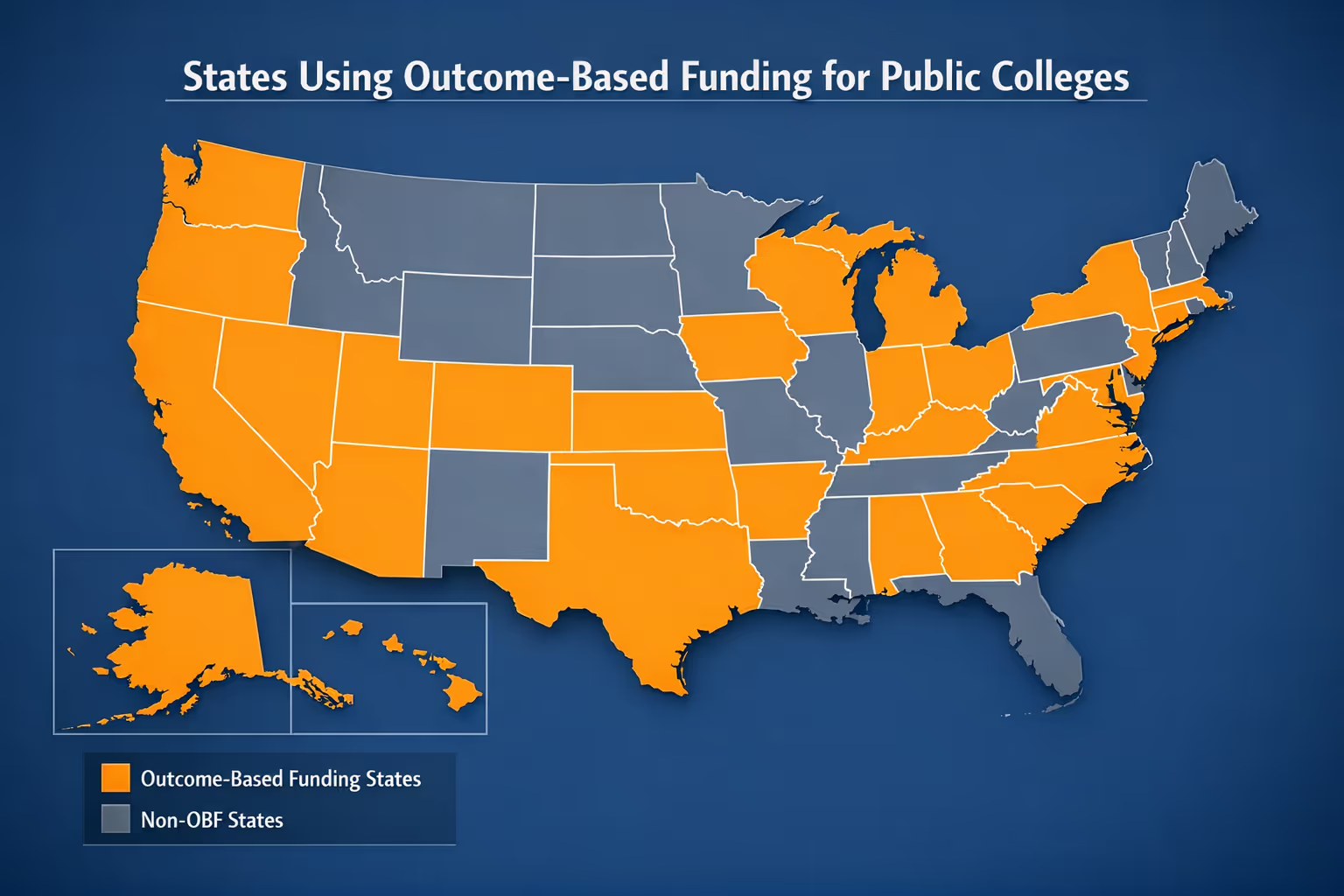
More than 30 states have now adopted some form of performance-based funding for public higher education [2]. The specific metrics vary by state, but common indicators include:
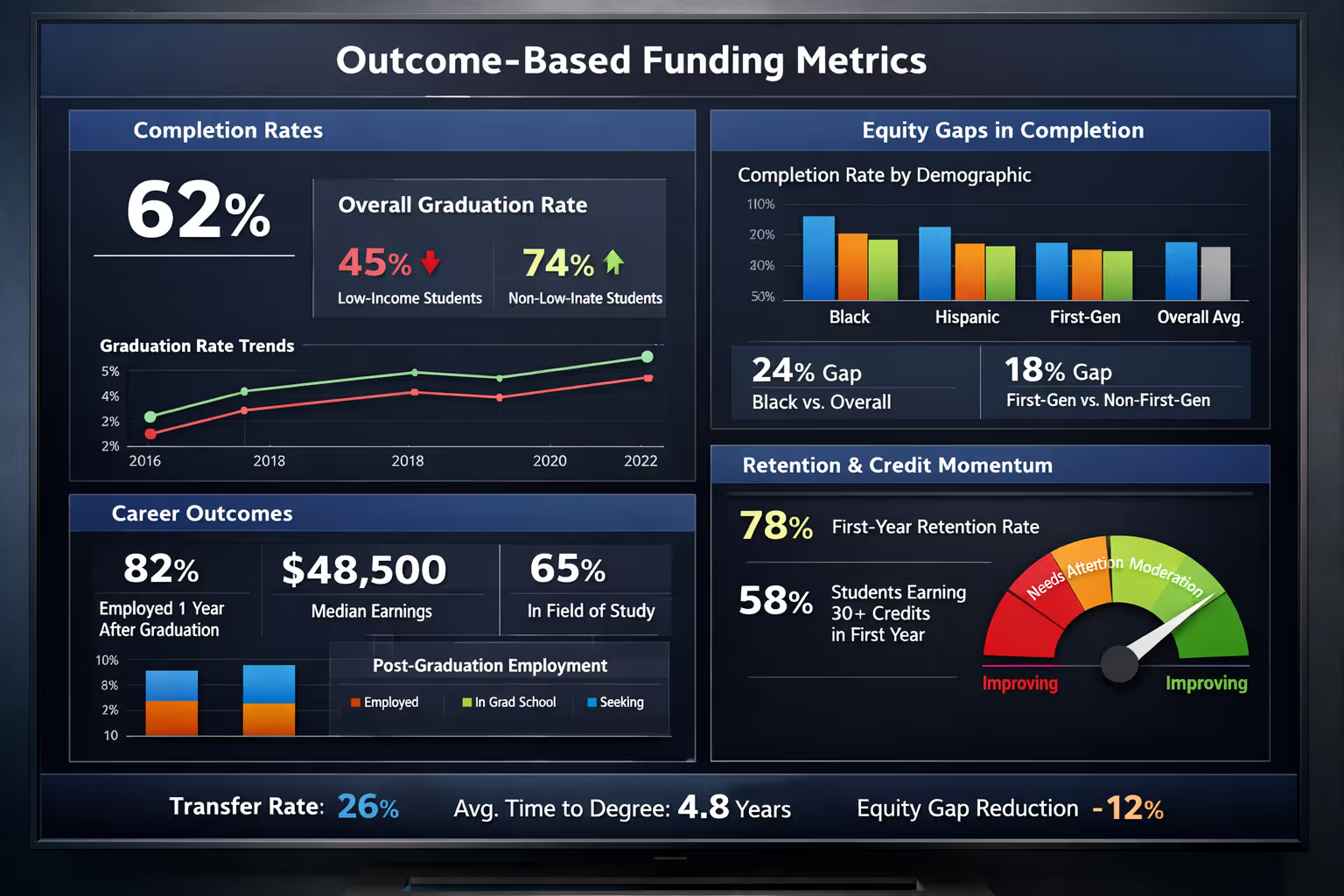
Degree and certificate completion rates
Credit momentum (students completing 15 or 30 credits within defined timeframes)
Transfer rates to four-year institutions
Time-to-degree
Equity gaps in completion among underrepresented populations
Post-graduation earnings and employment
States leading the way offer useful examples. Tennessee's outcomes-based funding formula, implemented over a decade ago, now drives the majority of state appropriations to public institutions based on student progression and completion metrics. Ohio weights funding heavily toward course and degree completions. Texas incorporates both completion and post-graduation outcomes into its formula [2].
These aren't pilot programs. This is how significant portions of higher education funding now flow.
Federal Accountability: Gainful Employment and Earnings Requirements
At the federal level, the reinstatement of Gainful Employment (GE) regulations adds another layer of outcome-based accountability. These rules, which took effect in 2024, require career-focused programs to demonstrate that graduates earn enough to justify their educational debt [3].
Programs that fail to meet debt-to-earnings thresholds face consequences ranging from mandatory disclosures to loss of federal financial aid eligibility. The message is clear: institutions must show that their programs lead to gainful employment, not just credential attainment.
Emerging frameworks extend this thinking further. Proposals around "do no harm" provisions would require programs to demonstrate that graduates experience meaningful earnings gains relative to their pre-enrollment income [4]. The policy intent is to protect students—particularly adult learners and those from lower-income backgrounds—from programs that leave them financially worse off than before they enrolled.
For student success leaders, this creates both pressure and opportunity. Programs that genuinely serve students well have a chance to demonstrate measurable value. Programs that don't will face increasing scrutiny and, potentially, loss of access to federal aid.
Why This Matters for Student Success Operations
When funding depends on completion rates, retention becomes a revenue issue.
When post-graduation earnings factor into program eligibility, career readiness can't be an afterthought tacked onto senior year.
When equity gaps in outcomes carry financial weight, closing those gaps moves from aspiration to operational necessity.
Industry analyses of higher education trends consistently highlight this reality: institutions that fail to align their student support infrastructure with outcome-based metrics risk significant financial instability in the coming years [5]. Reactive, crisis-driven approaches to student support—waiting until students fail exams or stop showing up—are fundamentally incompatible with performance funding models that reward completion and penalize attrition.
But here's where the alignment gets interesting. The metrics policymakers care about—completion, employment, equity—are the same outcomes that genuinely serve students. This isn't about gaming numbers. It's about recognizing that good policy and good practice can point in the same direction.
That alignment creates space for student success teams to advocate for resources and systems that make a real difference. When retention has a quantifiable dollar value attached to it, the budget conversation changes.
The Data Challenge: Moving from Lagging Indicators to Early Signals
Traditional approaches to tracking student outcomes rely heavily on lagging indicators. Graduation rates tell you what happened three, four, or six years ago. Employment data arrives even later. By the time these numbers show up in funding formulas, the students they represent have long since left campus.
To succeed under outcome-based funding, institutions need earlier signals—data that predicts outcomes rather than just recording them.
This is where the operational challenge gets real. Most campuses still operate with fragmented data systems [6]. Academic performance lives in the SIS. Counseling center visits are tracked separately. Student organization involvement sits in yet another system. Residence life has its own data. Financial aid has its own.
The result? An advisor may know a student is struggling academically but have no visibility into whether that student:
Is connected to peer communities or clubs
Has accessed mental health support recently
Is showing early signs of social disengagement
Is dealing with housing or food insecurity
Effective early intervention requires integrated data that captures the whole student experience. Research consistently shows that non-academic factors—sense of belonging, mental health, financial stability—are as predictive of completion as GPA [7]. Yet most institutional data systems remain stubbornly focused on academic metrics alone.
The institutions that thrive under outcome-based funding will be those that build infrastructure to identify students at risk of not completing—and intervene before those students become dropout statistics.

Connecting Outcome-Based Funding to Equity Mandates
Many state performance funding formulas now include equity-weighted metrics that provide additional funding when institutions successfully graduate students from underrepresented populations [8]. This design choice reflects research showing that completion gaps between demographic groups persist even as overall graduation rates improve.
For student success leaders, equity-weighted funding creates both a mandate and a resource argument. Closing equity gaps isn't just the right thing to do—it's increasingly tied to institutional revenue.
But you can't close gaps you can't see.
Institutions need data systems that disaggregate outcomes by race, income, first-generation status, and other relevant factors. They need the capacity to identify where disparities emerge in the student journey and target interventions accordingly.
Generic retention strategies rarely move equity needles. Sending the same emails to all students, running the same orientation for everyone, offering the same support in the same ways—these approaches tend to help students who were already most likely to succeed.
What works is understanding the specific barriers different student populations face and designing support systems that address those barriers proactively. First-generation students may need different navigation support than continuing-generation students. Commuter students face different belonging challenges than residential students. Transfer students often fall through cracks designed for first-time freshmen.
Equity-weighted funding formulas create financial incentives to solve these specific problems rather than treating retention as a monolithic challenge.
Building Infrastructure for Outcome-Based Accountability
Meeting outcome-based funding requirements isn't primarily about compliance. It's about building operational capacity that genuinely supports student success. Several infrastructure components prove essential:
Real-Time Engagement Tracking
Institutions need systems that capture student engagement across academic, social, and wellbeing dimensions as it happens—not months after the fact.
This includes:
Participation in academic support services (tutoring, supplemental instruction, advising)
Connection to campus communities (clubs, organizations, peer groups)
Utilization of student services (counseling, career services, basic needs resources)
Attendance and participation patterns in courses and co-curricular activities
When this data exists in real time rather than in semester-end reports, staff can act on it.
Predictive Analytics for Early Intervention
Identifying at-risk students early enough to intervene requires predictive models that integrate multiple data sources. The goal is shifting from reactive crisis response—scrambling when a student fails midterms—to proactive outreach before problems escalate.
This doesn't require exotic technology. It requires connecting existing data streams and building workflows that translate risk signals into outreach actions.
Unified Student Support Platforms
Fragmented systems create fragmented support. When students have to navigate multiple portals and offices to access help, many simply don't. When staff can't see the full picture of a student's engagement, they can't provide coordinated support.
Integrated platforms that connect advising, wellness resources, and engagement opportunities make it easier for students to get support and easier for institutions to track whether that support is working.
Outcome Documentation Systems
Demonstrating compliance with outcome-based metrics requires robust data infrastructure. Institutions need the ability to:
Track completion pathways and identify where students exit
Monitor credit accumulation at key momentum points
Connect educational records with post-graduation employment data
Generate reports that meet state and federal accountability requirements
The common thread across all of these is integration. Point solutions that address individual aspects of student success create administrative burden without delivering the holistic view that outcome-based accountability demands.

Strategic Implications for Campus Leaders
Outcome-based funding changes the calculus for student success investments. Here's what that means practically:
Retention becomes a budget line item. When completion rates directly affect funding, every percentage point of improved retention has a quantifiable financial value. This makes it easier to justify investments in proactive student support—the ROI calculation becomes concrete rather than abstract.
Data infrastructure is no longer optional. Institutions that can't track engagement, identify risk, and demonstrate outcomes will struggle under performance funding models. Building this capacity requires deliberate investment, but the alternative is flying blind while funding depends on outcomes you can't measure.
Equity work gains institutional priority. Equity-weighted funding formulas create financial incentives to close completion gaps. This alignment between values and resources can accelerate progress on longstanding disparities—if institutions build the data systems to see those gaps clearly and act on them.
Career services becomes mission-critical. When gainful employment metrics determine program eligibility, career preparation can't remain siloed from academic affairs. Integrating career readiness throughout the student experience—not just at graduation—becomes essential.
Partnerships matter more. No single office owns student success outcomes. Meeting outcome-based accountability requirements demands collaboration across academic affairs, student affairs, institutional research, and finance. Siloed operations that worked under enrollment-based funding models won't work under outcome-based models.
The Opportunity in Accountability
It's tempting to view outcome-based funding as just another compliance burden. One more set of metrics to track. One more report to file. One more way external forces are telling institutions what to do.
But that framing misses what's actually happening.
These accountability models exist because student outcomes genuinely matter—to students, to families, to taxpayers, and to the broader economy. When funding formulas reward completion and employment, they're pushing institutions toward the outcomes that students themselves want: finishing degrees, getting jobs, building careers.
The question isn't whether accountability is coming. It's whether institutions will build the capacity to meet it in ways that genuinely serve students—or scramble to check boxes while outcomes remain stuck.
Institutions that invest now in integrated engagement data, early intervention systems, and equity-focused support infrastructure position themselves to thrive under outcome-based models. More importantly, they position their students to succeed.
Outcome-based accountability isn't a threat. It's an invitation to do student success work better—with data, with intentionality, and with resources tied to what actually matters.
Ready to demonstrate student success outcomes with real-time engagement data?
Book a CampusMind demo call to explore how integrated engagement tracking can help your institution meet outcome-based funding requirements while genuinely supporting student completion.
Frequently Asked Questions
What is outcome-based funding in higher education?
Outcome-based funding allocates state or federal dollars to colleges based on student success metrics—like graduation rates, credit completion, and employment outcomes—rather than enrollment numbers alone. More than 30 states now use some form of performance-based funding for public institutions. The approach aims to ensure public investment produces measurable educational outcomes rather than simply subsidizing enrollment regardless of whether students complete their degrees.
How do Gainful Employment rules affect institutions?
Gainful Employment regulations require career-focused programs to demonstrate that graduates earn enough to manage their educational debt. Programs failing debt-to-earnings thresholds may face mandatory disclosures or loss of federal financial aid eligibility. These rules particularly affect certificate programs and career-focused credentials, requiring institutions to track and report graduate outcomes in ways many haven't historically done.
Why does outcome-based funding matter for student affairs?
When funding depends on completion rates, student retention directly affects institutional revenue. This means student affairs work—supporting wellbeing, building belonging, connecting students to resources—becomes financially material to the institution. Student success teams can advocate for resources by demonstrating how their work contributes to outcomes that drive funding rather than framing support services as costs without measurable returns.
How can institutions prepare for performance-based funding?
Preparation involves building data infrastructure that tracks student engagement and outcomes in real time, implementing early warning systems that identify at-risk students before they disengage, and integrating support services so students can access help without navigating bureaucratic mazes. Institutions also need systems to document outcomes for compliance reporting and staff capacity to act on the data these systems generate.
Do outcome-based funding models address equity?
Many state formulas include equity-weighted metrics that provide additional funding when institutions graduate students from underrepresented populations. This creates financial incentives to close completion gaps. However, realizing these benefits requires data systems that can identify disparities at specific points in the student journey and targeted interventions that address the specific barriers different student groups face—not just generic retention programming.
About CampusMind
CampusMind is a student engagement platform built specifically for higher education institutions navigating the challenges of retention, well-being, and accountability. Our approach combines behavioral science with real-time engagement data to help campus leaders identify at-risk students early, connect students to resources proactively, and demonstrate the outcomes that matter for institutional success. We work with colleges and universities through collaborative pilot partnerships, bringing data-driven insights to student success work without adding administrative burden. Our team brings expertise in student affairs, educational technology, and outcome measurement to help institutions build the capacity that modern accountability demands.
Works Cited
[1] National Conference of State Legislatures — "Performance-Based Funding for Higher Education." https://www.ncsl.org/education/performance-based-funding-for-higher-education
[2] HCM Strategists — "Driving Better Outcomes: State Funding in Higher Education." https://hcmstrategists.com/resources/driving-better-outcomes
[3] U.S. Department of Education — "Gainful Employment."
https://www.ed.gov/policy-data/college-university/gainful-employment
[4] Third Way — "The Case for Outcomes-Based Funding in Higher Education." https://www.thirdway.org/report/the-case-for-outcomes-based-funding-in-higher-education
[5] Deloitte Insights — "Higher Education Trends." https://www2.deloitte.com/us/en/insights/industry/public-sector/higher-education-trends.html
[6] EDUCAUSE — "Integrated Planning and Advising for Student Success." https://www.educause.edu/research-and-publications
[7] Tinto, V. — "Completing College: Rethinking Institutional Action." University of Chicago Press.