


Working students aren't an edge case anymore. They're the majority.
According to the National Center for Education Statistics, approximately 40% of full-time undergraduates and 74% of part-time undergraduates are employed while enrolled [1]. Many work 20 hours or more per week. These students face a structural challenge that no amount of individual time management can solve: the collision between inflexible academic schedules and the economic realities of paying for college.
Institutions that treat student employment as an inconvenience—rather than a design constraint—are leaving persistence on the table. Research consistently shows that where students work and how much flexibility they have matters enormously for retention. For campus leaders navigating the enrollment cliff, supporting working students isn't just the right thing to do. It's a strategic imperative.
Key Takeaways
On-campus employment correlates with higher retention and graduation rates compared to off-campus work
Schedule flexibility—course timing, modality, and registration priority—directly affects persistence for working students
Employer partnerships and work-based learning programs can turn employment from a retention risk into a retention asset
Engagement platforms help working students stay connected to campus resources between shifts and classes
The Scope of the Challenge: Who Are Working Students?
The working student population is far more diverse than the traditional image of a college junior picking up shifts at the campus bookstore.
Today's working students include:
Adult learners returning to complete degrees while maintaining careers
First-generation students supporting themselves or contributing to family income
Student parents balancing childcare, coursework, and employment
Community college students more likely to work full-time than their four-year peers
Students from low-income backgrounds for whom employment isn't optional
The Council for Adult and Experiential Learning (CAEL) has documented extensively how adult learners—who make up a growing share of enrollment—often struggle with institutions designed around 18-to-22-year-olds with parental support [2]. These students don't have the luxury of choosing between working and studying. They must do both.
What matters for retention isn't simply whether a student works. It's how many hours they work, where they work, and whether their institution accommodates that reality.
Why On-Campus Employment Outperforms Off-Campus Work
A consistent body of research shows that students who work on campus tend to have better academic outcomes than those who work off campus—even when controlling for hours worked.
A study examining student employment patterns found that students employed on campus had higher GPAs and were more likely to persist than students working comparable hours off campus [3]. Federal work-study participants, in particular, show stronger retention outcomes.
Several factors explain this difference:
Integration, Not Isolation
On-campus jobs keep students physically present and socially connected. A student working at the library help desk interacts with peers, faculty, and staff throughout their shift. A student driving for a rideshare app between classes does not.
This integration matters. Vincent Tinto's foundational research on student persistence emphasizes that academic and social integration are the strongest predictors of whether students stay enrolled [4]. On-campus employment embeds students into the campus community in ways that off-campus work cannot.

Supervisors as Informal Mentors
On-campus supervisors often serve as additional support figures—noticing when a student seems stressed, connecting them to resources, or providing references for internships. The relationship between student employee and supervisor can function as an early warning system and an additional touchpoint for support.
Flexibility Around Academic Schedules
Campus employers typically understand the primacy of academics. They're more likely to accommodate exam schedules, adjust hours during finals week, and support students attending required events. Off-campus employers—particularly in retail, food service, or gig work—may offer less predictability and less flexibility.
Skill Development That Reinforces Academic Identity
Work-study positions and campus employment often align more closely with students' fields of study or career aspirations. A biology major working in a research lab gains experience that reinforces their academic identity. A communications student staffing the campus radio station builds a portfolio. These connections strengthen both engagement and motivation to persist.
The Institutional Levers That Matter
If on-campus employment and flexibility drive persistence, what can campus leaders actually do? The answer involves structural changes, not just student-facing advice.
Expand On-Campus Employment Opportunities
Many institutions underutilize their capacity to employ students. Every department—from facilities to IT to academic advising—can potentially offer positions. Some campuses have launched initiatives to increase student employment in administrative roles, creating pipelines that benefit both students and operations.
Federal work-study funding remains underutilized at many institutions. According to the National Association of Student Financial Aid Administrators, some colleges return unspent work-study funds to the federal government each year [5]. Common reasons include administrative complexity in posting positions, timing mismatches between when funds are available and when students are matched to jobs, and insufficient outreach to eligible students. Proactive coordination between financial aid offices and hiring departments can close this gap.
Build Scheduling Flexibility Into Course Design
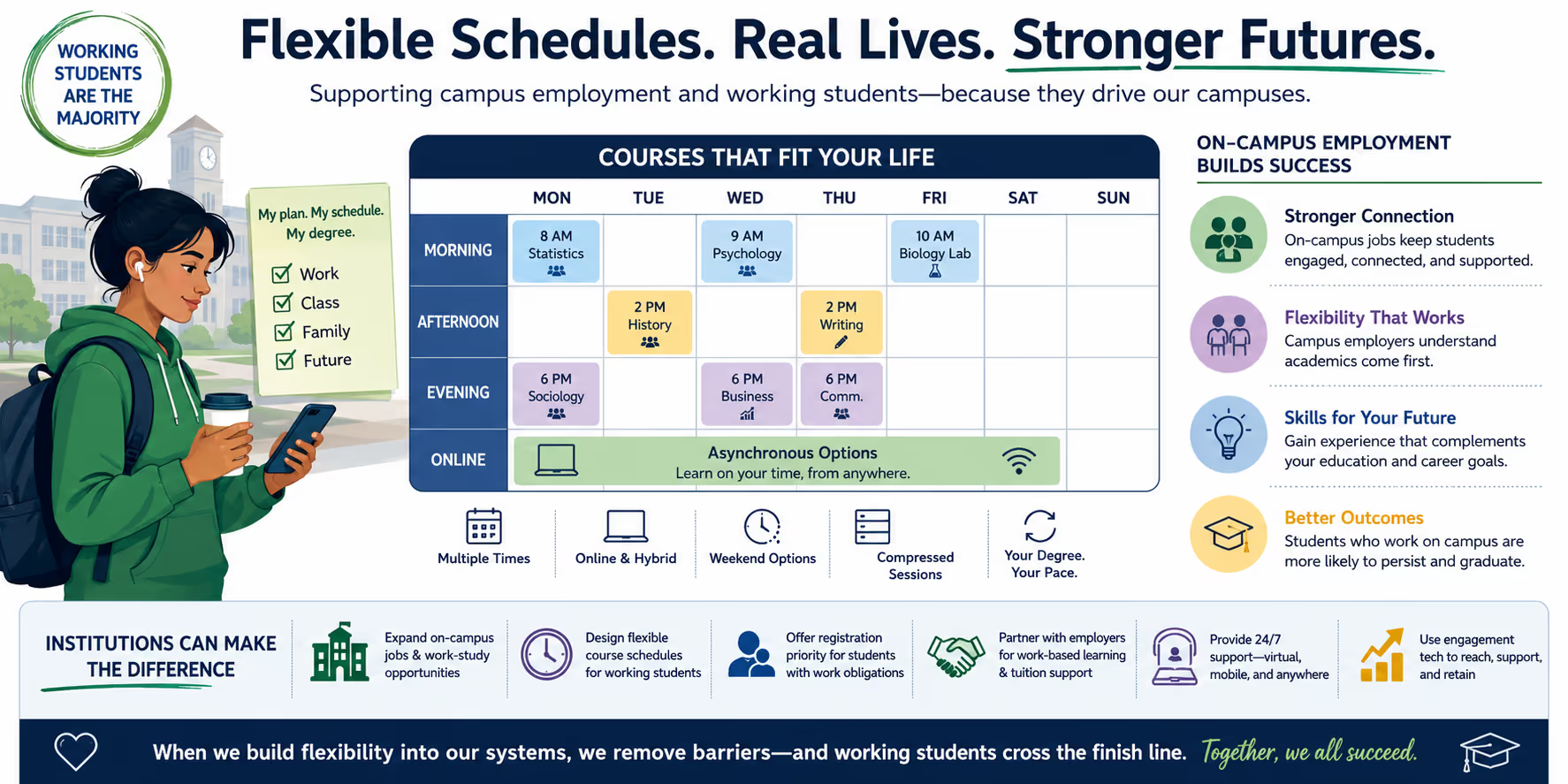
For working students, a required course offered only at 2 p.m. on Tuesdays and Thursdays can be a semester-ender. Institutions that audit their course schedules for working-student accessibility often find straightforward fixes: evening sections, weekend options, asynchronous modules, or compressed formats.
The CAEL framework for serving adult learners emphasizes that schedule flexibility is non-negotiable for this population [2]. Institutions competing for adult and working students must treat scheduling as a design priority, not an afterthought.
Offer Registration Priority for Working Students
Some campuses extend priority registration—traditionally reserved for student athletes or honors students—to students who demonstrate employment obligations. This simple policy change can prevent the cascade effect where a working student gets locked out of necessary courses and falls behind on their degree pathway.
Partner with Employers for Work-Based Learning
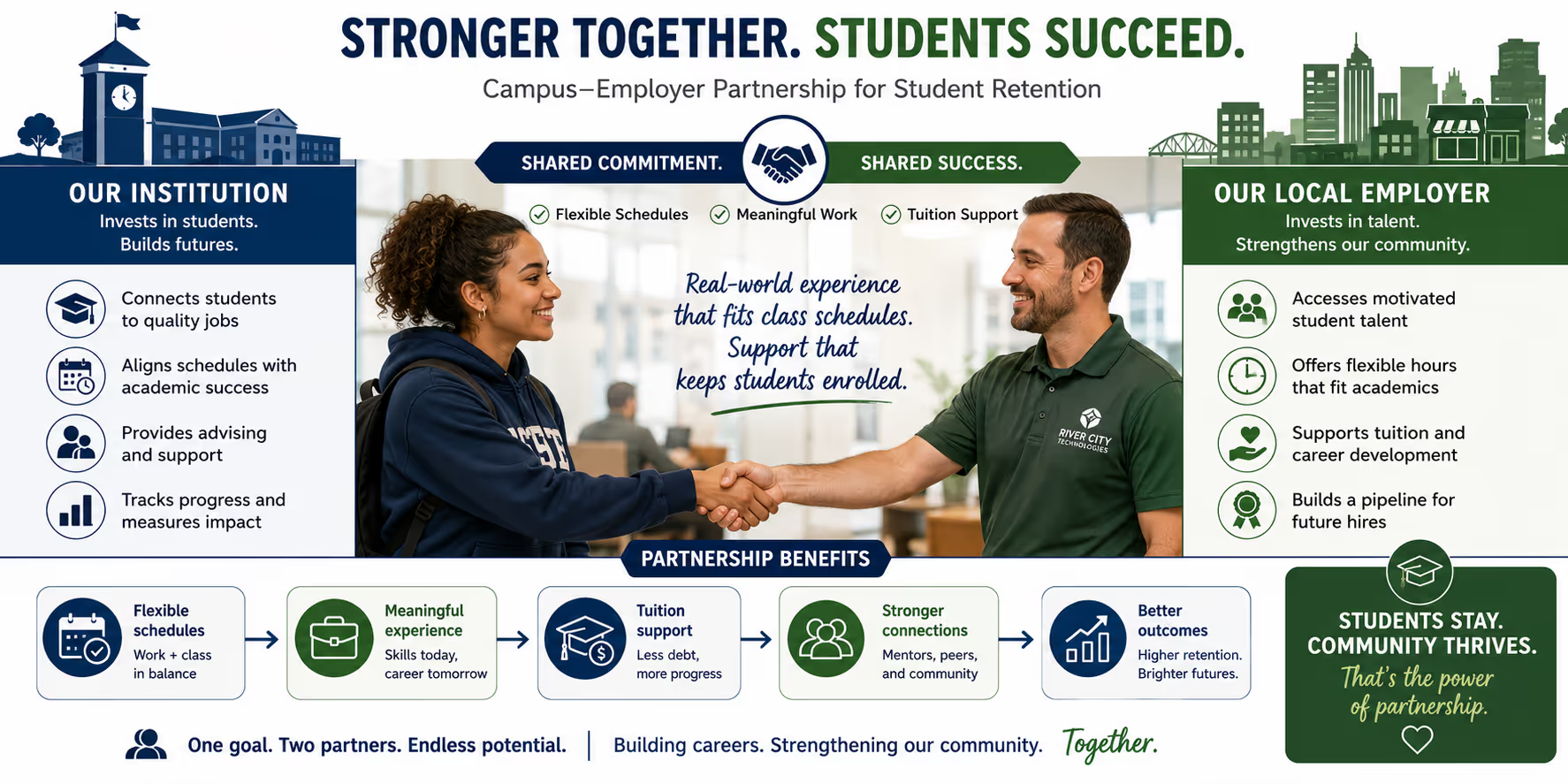
Rather than viewing student employment as competing with academics, forward-thinking institutions are partnering with employers to align the two. Co-op programs, apprenticeships, and employer-sponsored tuition benefits turn work into a persistence asset.
Community colleges have pioneered many of these partnerships. For example, institutions in states like Tennessee and Kentucky have developed relationships with regional employers—in healthcare, manufacturing, and logistics—that guarantee students flexible schedules aligned with academic calendars and tuition support in exchange for work commitments during and after college. These arrangements reduce financial pressure while maintaining academic engagement.
Create Flexible Support Services
Working students often can't access traditional 9-to-5 support services. They're in class during the day and working at night—or vice versa. Virtual advising appointments, extended tutoring hours, and asynchronous access to career services can close this gap.
Engagement platforms that provide real-time recommendations for resources—accessible from a phone between shifts—help working students stay connected to support even when they can't physically be on campus.
The Role of Engagement Technology
Working students face a unique challenge: they're often invisible to traditional engagement metrics. They don't attend campus events. They don't hang out in the student union. They may not even open their campus email regularly. From an institutional data perspective, they look disengaged—even when they're actually working hard to stay enrolled.
This invisibility creates a problem. Staff can't intervene to support students they can't see. Traditional early-alert systems that rely on class attendance or midterm grades miss the students who are struggling to balance 25 hours of work with 15 credits of coursework.
Modern engagement platforms can help by:
Surfacing personalized resource recommendations based on a student's specific situation (work-study opportunities, flexible course sections, emergency aid)
Providing mobile-first access so students can engage with campus support from anywhere—between shifts, on a break, during a commute
Tracking engagement signals that aren't tied to physical presence, giving staff a more accurate picture of which students need outreach
Sending timely nudges about deadlines, registration windows, or wellness check-ins that working students might otherwise miss
For working students, the question isn't whether they care about their education. It's whether the institution makes it possible for them to persist despite competing demands.
What the Data Says About Hours Worked
The relationship between work hours and academic outcomes follows a curve. Moderate employment—generally defined as fewer than 15-20 hours per week—appears to have neutral or even positive effects on GPA and persistence. Students working these hours may benefit from the structure, income, and integration that employment provides.
Students working more than 20 hours per week face steeper challenges. Research consistently shows that high-intensity work—particularly off-campus, unrelated to career goals, and with unpredictable schedules—correlates with lower grades and higher dropout rates [1].
This finding has direct policy implications. Institutions can't control the labor market, but they can:
Help students access aid that reduces the need for excessive work hours
Connect students to on-campus jobs that offer flexibility
Identify students working high hours and offer proactive support
Advocate for employer partnerships that respect academic schedules
Addressing Equity in Working Student Support
Not all students have equal choices about whether and how much to work. Students from low-income backgrounds, first-generation students, and students of color are more likely to work longer hours in off-campus positions [1]. They're also more likely to face the negative academic consequences.
Not all students have equal choices about whether and how much to work. Students from low-income backgrounds, first-generation students, and students of color are more likely to work longer hours in off-campus positions [1]. They're also more likely to face the negative academic consequences.
Audit financial aid packaging to ensure students aren't pushed into excessive work by aid gaps
Expand emergency aid so students don't take on extra shifts to cover unexpected expenses
Target on-campus job recruitment toward students who might otherwise work off campus
Train advisors to ask about employment as part of routine check-ins
Supporting working students is an equity issue. Addressing it requires institutional action, not just individual advice.
Building a Working-Student-Friendly Campus
What does a campus that truly supports working students look like?
Schedule transparency. Course schedules are published early enough for students to coordinate with employers. Multi-year course rotation plans help students plan ahead.
Modality options. Key courses are available in multiple formats—in-person, online, hybrid—so students can choose what fits their lives.
Visible on-campus employment. Student jobs are actively promoted, supervisors are trained in supporting student success, and work-study funds are fully utilized.
Employer partnerships. Local employers understand the institution's academic calendar and offer scheduling flexibility. Some participate in tuition assistance or work-based learning programs.
Mobile-accessible support. Students can access advising, tutoring, wellness resources, and engagement opportunities from their phones, on their schedules.
Data-informed intervention. Staff have visibility into which students are disengaging—not just based on class attendance, but on a fuller picture of connection to campus resources.
Your Next Steps
If you're a campus leader focused on retention, here's where to start:
Audit your on-campus employment ecosystem. How many positions do you offer? What's your work-study utilization rate? Where could you expand?
Review course scheduling through a working-student lens. Are required courses bottlenecked into times that conflict with common work schedules?
Examine your financial aid packaging. Are students being pushed to work excessive hours because of aid gaps?
Explore engagement technology that meets students where they are—on their phones, between shifts, outside business hours.
Train advisors and staff to ask about employment and connect students to on-campus opportunities.
The students who are working to pay for college aren't failing to engage. They're doing everything they can to persist despite structural barriers. The question is whether your institution will meet them halfway.
Ready to help working students stay connected? Explore how engagement platforms can surface resources for students who can't always be physically on campus—keeping them engaged between shifts and classes. Learn how CampusMind supports student persistence →
Frequently Asked Questions
How does on-campus employment improve student retention?
On-campus employment keeps students physically integrated into the campus community, exposes them to informal mentorship from supervisors, and typically offers more flexibility around academic schedules than off-campus work. Research shows students working on campus tend to have higher GPAs and persistence rates than students working comparable hours off campus, even when controlling for other factors [3].
What's the ideal number of hours for students to work while enrolled?
Studies suggest that moderate employment—generally fewer than 15-20 hours per week—has neutral or even positive effects on academic outcomes. Beyond 20 hours, the relationship becomes more negative, particularly when work is off campus, unrelated to career goals, or involves unpredictable scheduling [1]. Institutions should help students access aid and on-campus jobs to minimize the need for excessive hours.
How can institutions better support student parents who work?
Student parents face compounded scheduling challenges. Institutions can support them through flexible course modalities, childcare partnerships or subsidies, priority registration, and engagement platforms that provide mobile access to resources. Recognizing student parents as a distinct population with specific needs—rather than treating them as traditional students who happen to have children—is the first step.
What role do employer partnerships play in student persistence?
Employer partnerships can transform employment from a retention risk into a retention asset. When employers offer flexible scheduling aligned with academic calendars, tuition assistance, or work-based learning opportunities, students can integrate work and education rather than choosing between them. Community colleges have pioneered many of these models, but four-year institutions are increasingly adopting them.
Does federal work-study count as income for financial aid purposes?
Federal work-study earnings are excluded from the income calculation when determining financial aid eligibility for the following year. This makes work-study more advantageous than other forms of employment for students concerned about maintaining their aid packages. Students should consult their financial aid office for specifics about how employment income affects their individual situation.
About This Resource
This article was developed by the CampusMind Insights team, drawing on research from the National Center for Education Statistics, the Council for Adult and Experiential Learning, and peer-reviewed studies on student employment and persistence. CampusMind works with higher education institutions to improve student retention through data-driven engagement strategies. Our platform helps campus leaders identify students who need support and connects students to the resources that matter most for their success.
Works Cited
[1] National Center for Education Statistics — "Undergraduate Employment." https://nces.ed.gov/programs/coe/indicator/ssa
[2] Council for Adult and Experiential Learning — "Ten Principles for Effectively Serving Adults." https://www.cael.org/ten-principles-for-effectively-serving-adults
[3] Scott-Clayton, J. — "What Explains Trends in Labor Supply Among U.S. Undergraduates?" National Bureau of Economic Research Working Paper No. 17744. https://www.nber.org/papers/w17744
[4] Tinto, V. — "Leaving College: Rethinking the Causes and Cures of Student Attrition." University of Chicago Press.
[5] National Association of Student Financial Aid Administrators — "Issue Brief: Federal Work-Study." https://www.nasfaa.org/issue_brief_fws