
The traditional degree pathway—four years, 120 credits, one diploma—served generations of students well. But today's learners look different. They're working adults balancing jobs and families. They're career changers seeking targeted skills without starting over. They're first-generation students who need visible progress markers to stay motivated through long academic journeys.
Micro-credentials and stackable pathways offer something the traditional model often can't: flexibility, momentum, and proof of competency at every stage. When designed thoughtfully, these credentials don't dilute academic rigor—they reinforce it while meeting students where they actually are.
Here's the truth: most institutions approach credential design as a marketing exercise rather than an academic architecture problem. The result is a patchwork of certificates that confuse students, frustrate employers, and create administrative headaches. This guide takes a different approach, walking through how to design credential ecosystems that actually work—for students, for institutions, and for the workforce partners who ultimately hire graduates.
Key Takeaways
Stackable credentials create visible milestones that can improve student persistence, particularly for adult learners and first-generation students
Effective credential design requires backward mapping from workforce needs, not forward extension from existing courses
Micro-credentials work best when embedded within larger degree pathways rather than existing as standalone offerings
Technology infrastructure matters—tracking progress across multiple credentials requires integrated systems
Employer recognition remains the limiting factor; credentials without labor market validation risk becoming empty promises
Why Credential Flexibility Matters for Today's Students
The numbers tell a clear story about who's actually enrolling in higher education today. According to data from the National Center for Education Statistics, approximately 40 percent of undergraduate students are 25 years or older. These students rarely follow traditional enrollment patterns. They stop out, return, transfer, and juggle coursework around employment and caregiving responsibilities.
For these learners, the standard degree timeline creates real problems. A four-year commitment feels impossible when you can't predict your work schedule six months out. Progress feels invisible when the only meaningful milestone is graduation itself—years away.
Stackable credentials address both issues. They break long academic journeys into shorter, completable segments. Each credential represents genuine achievement, not just course completion. Students accumulate documented skills they can use immediately while continuing toward larger goals.
The labor market reinforces this shift. Research from the Burning Glass Institute indicates that employer job postings increasingly specify skills rather than degree requirements, with skills-based hiring language appearing in a growing share of postings over the past five years. When employers care about specific competencies, credentials that document those competencies carry real value.
Understanding the Credential Landscape: Key Definitions
Before diving into design strategy, let's get clear on terminology—because confusion here creates problems downstream.
Micro-credentials are focused, competency-based recognitions that validate specific skills or knowledge. They typically require fewer credit hours than traditional certificates and emphasize demonstrated ability over seat time.
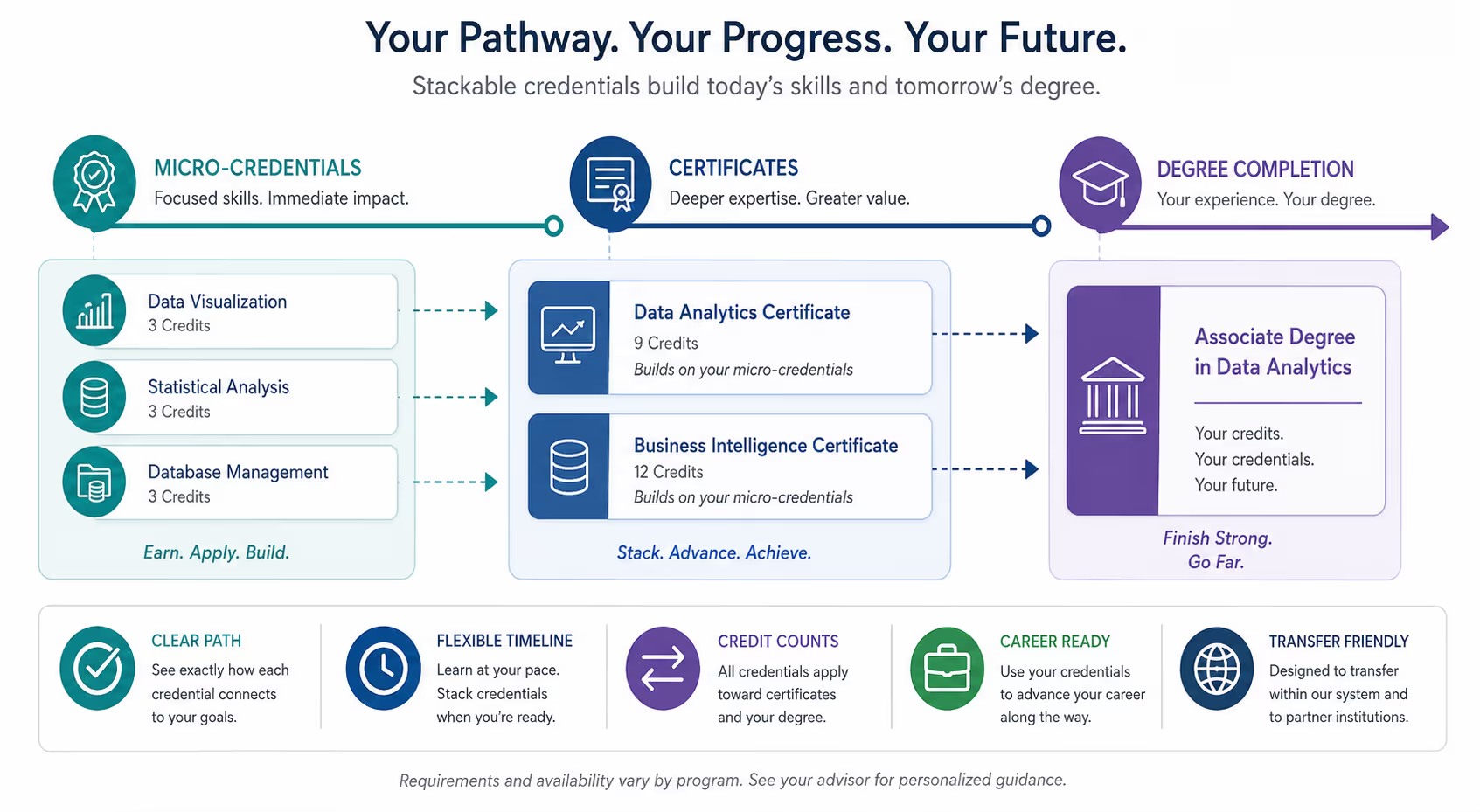
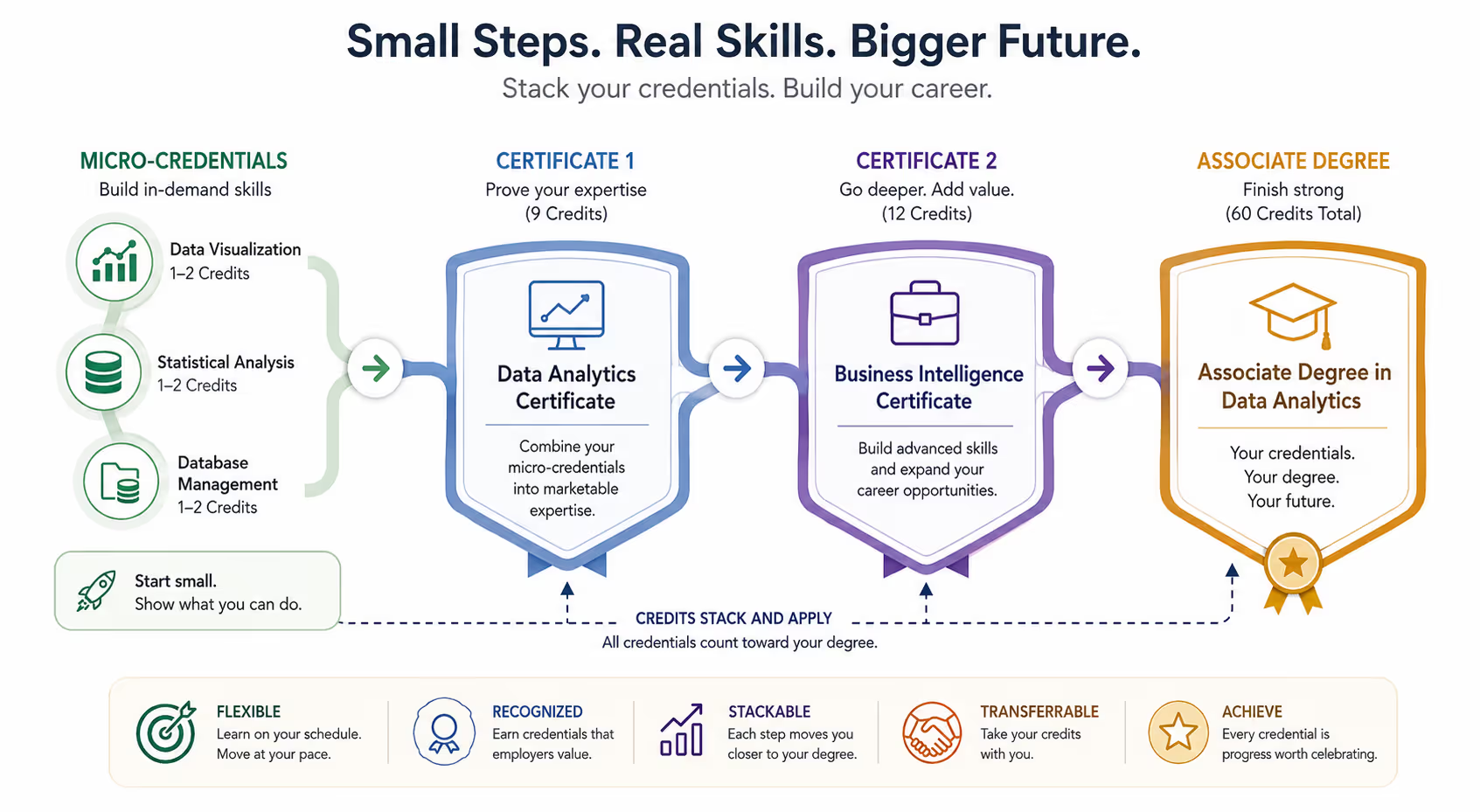
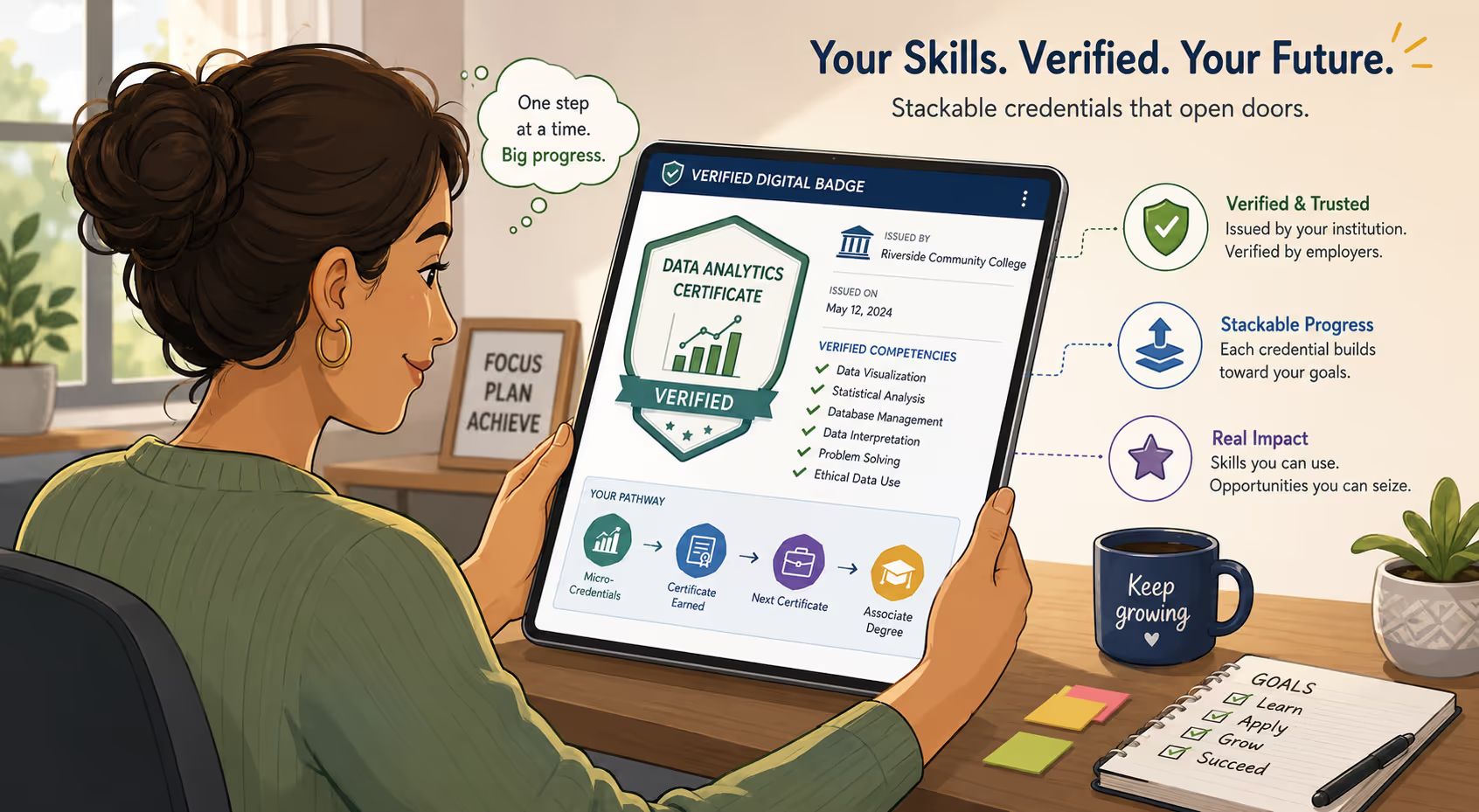
Stackable credentials are sequences of credentials that build upon each other, creating pathways toward larger qualifications. A student might earn a micro-credential in data visualization, stack it with credentials in statistical analysis and database management, and have those collectively count toward an associate degree in data analytics.
Badges are digital representations of credentials—the visual and metadata packaging, not the credential itself. A badge displays what was earned, how it was assessed, and what competencies it represents.
Certificates traditionally refer to credit-bearing programs shorter than degrees, though usage varies by institution. They may or may not be designed to stack.
The distinction that matters most: credentials can be embedded (built into existing degree programs as milestone markers) or standalone (independent offerings marketed to specific populations). Embedded credentials tend to support retention. Standalone credentials often struggle to achieve meaningful enrollment without significant marketing investment.
How to Design Stackable Credential Pathways That Work
Effective credential ecosystems don't emerge from adding badges to existing courses. They require intentional architecture—and that architecture starts with the end user in mind.
Start with Labor Market Validation, Not Course Catalogs
The most common design mistake is building credentials around what faculty want to teach rather than what employers need graduates to know. This backward approach creates credentials that satisfy internal stakeholders but confuse external ones.
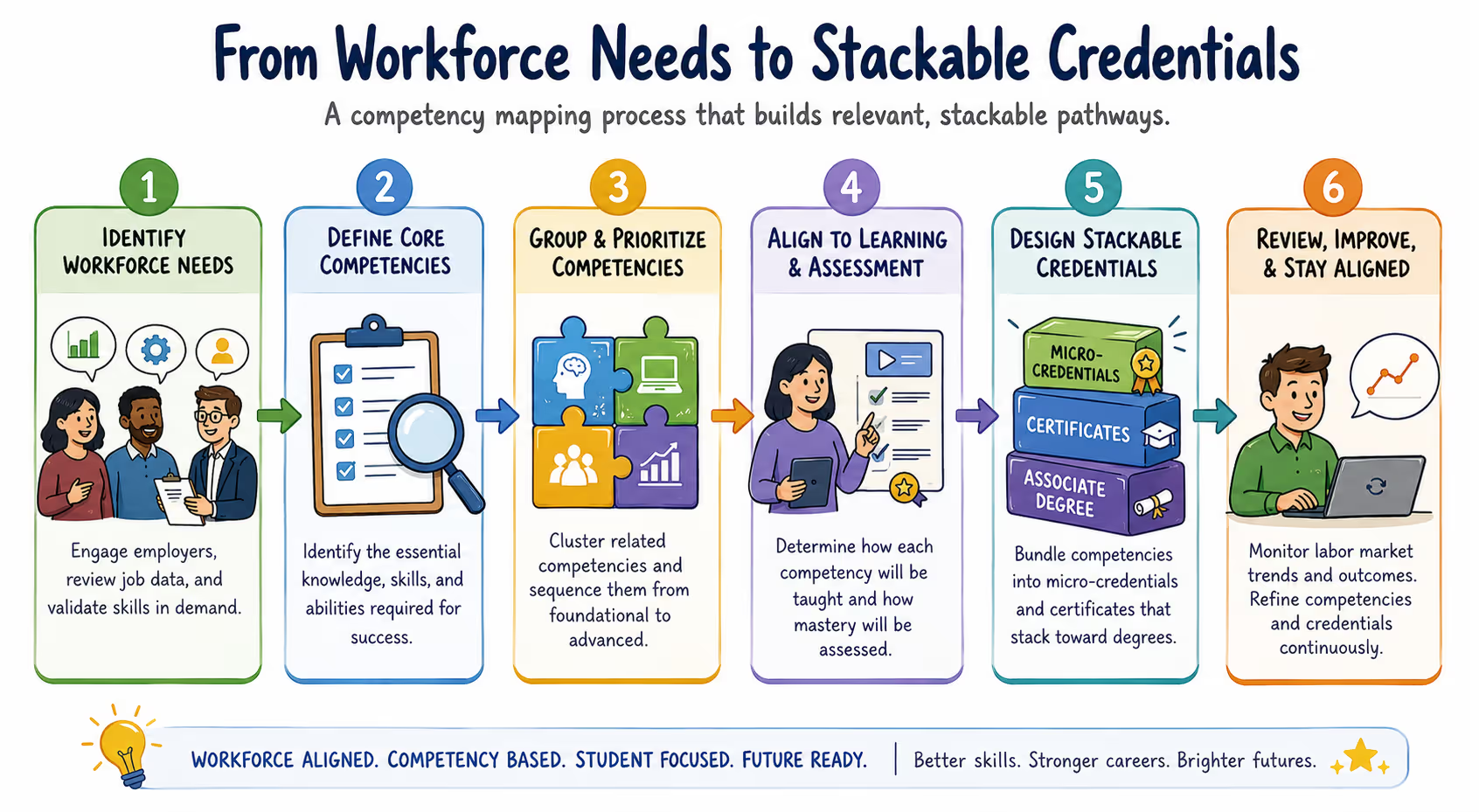
Begin with workforce analysis instead. What competencies do regional employers actually seek? What skills gaps do industry advisory boards identify? Which positions hire credential-holders versus requiring full degrees?
Credential Engine's registry now catalogs over one million credentials across the United States, revealing massive variation in how similar competencies get packaged. Institutions that align their credential language with established frameworks—like those from industry associations or professional bodies—help employers recognize what graduates can do.
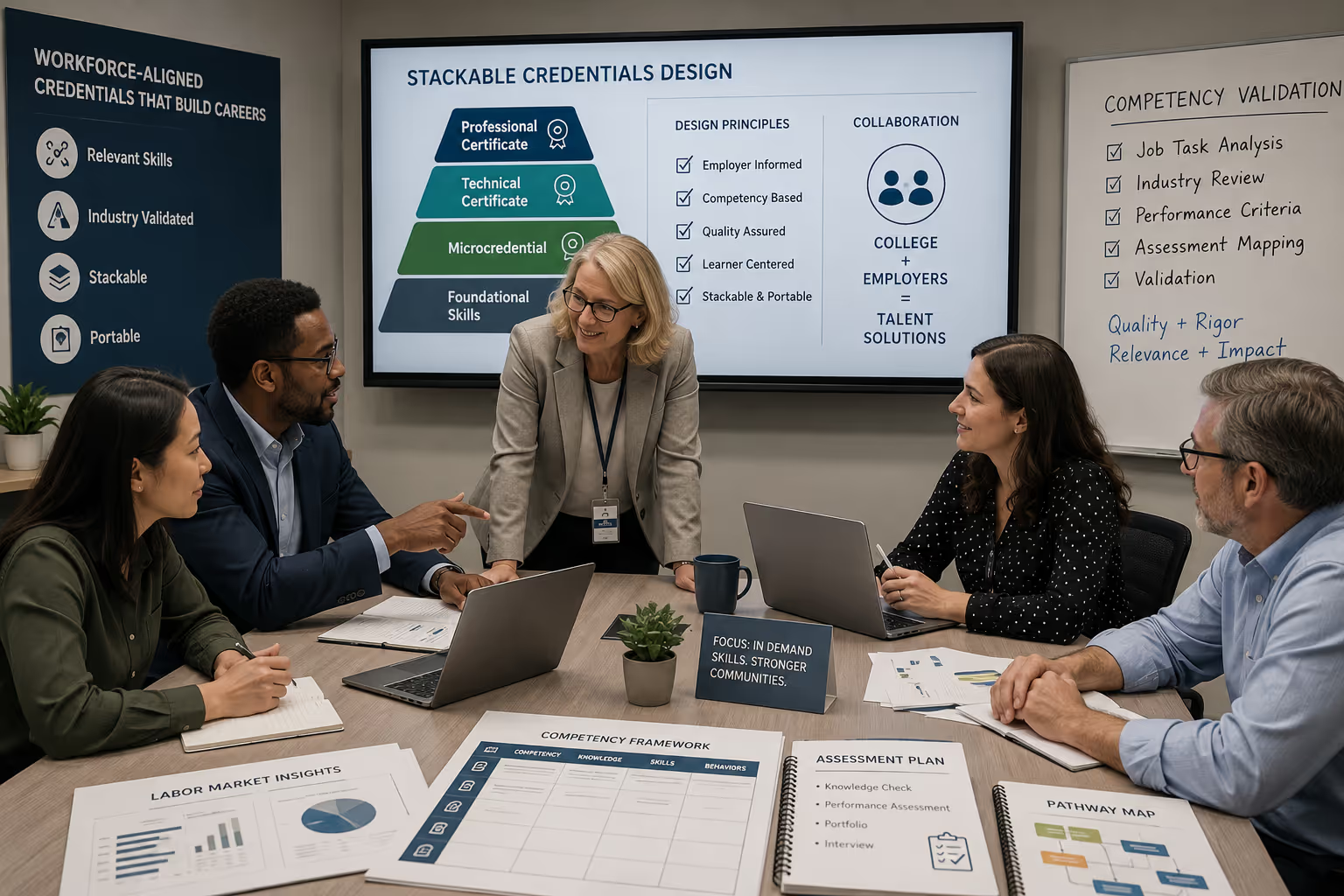
This doesn't mean surrendering academic judgment to employer preferences. It means ensuring that credential design reflects actual labor market reality, so students' investments translate into genuine opportunity.
Consider Rio Salado College's approach to healthcare credentials. Rather than designing certificates based on existing course sequences, they mapped competencies directly from employer input, then built assessments and learning experiences backward from those requirements. The result: credentials that employers in their region recognize and trust because they helped define them.
Map Competencies Before Mapping Courses
Traditional curriculum design starts with courses: "We have Introduction to Accounting, Intermediate Accounting, and Advanced Accounting. Let's offer a certificate for completing the first two."
Competency-based credential design inverts this sequence. Start by identifying the competencies a credential should document. Then determine how students demonstrate those competencies. Only then decide which courses (if any) provide the necessary preparation.
This shift matters because competencies often span multiple courses, and courses often contain competencies irrelevant to specific credentials. A "Financial Analysis Fundamentals" micro-credential might require competencies taught across accounting, statistics, and business communication courses—not a neat package of sequential offerings in one department.
The mapping process also reveals gaps. If a competency appears in job postings but lacks clear assessment methods in your curriculum, that's a design problem to solve before launching the credential.
Build Clear Stacking Logic Students Can Actually Follow
Stackable pathways only work when stacking logic is transparent and meaningful. Students need to understand:
Which credentials combine toward larger qualifications
How many credits each credential represents
What prerequisites (if any) each credential requires
How credentials transfer to other institutions
Unclear stacking creates frustration. A student who earns three related credentials only to discover they can't combine toward a degree feels deceived, not supported.
The strongest stacking models use visual pathway maps showing exactly how credentials relate. They specify "milestone credentials" within degree programs—points where students who stop out leave with something documented, not just incomplete transcripts.
The California Community Colleges Guided Pathways initiative has invested significantly in visualizing these pathways, recognizing that clarity helps students from all backgrounds see how credentials connect to their goals.
[Insert visual: Sample stackable pathway map showing micro-credentials building toward associate degree]
Embed Assessment Integrity from the Start
Micro-credentials face a credibility problem. If anyone can earn them easily, they mean nothing. If assessment rigor varies dramatically across programs, employers can't trust the documentation.
Rigorous credential programs specify assessment methods upfront: standardized exams, portfolio reviews, performance assessments, industry certifications, or competency demonstrations. The assessment method becomes part of the credential's identity, not an afterthought.
Some institutions partner with third-party assessment providers to add external validation. Others use industry-recognized certifications as the capstone assessment, ensuring that credential-holders meet standards set beyond campus walls.
Whatever approach you choose, document it transparently. When a credential specifies how competency was evaluated, employers can make informed judgments about what the credential represents.
How Stackable Credentials Support Student Retention
Credential design intersects directly with retention strategy: every credential earned represents a visible milestone in a student's journey. These milestones matter psychologically and practically.
The Psychology of Progress and Visible Achievement
Research on goal pursuit consistently shows that visible progress markers sustain motivation through long endeavors. Credentials function as these markers, transforming an abstract four-year journey into a series of achievable steps.
For students from backgrounds with limited college exposure—first-generation students, adult returners, career changers—this visibility proves especially valuable. They lack the inherited confidence that comes from watching family members complete degrees. Credentials provide external validation that they're succeeding, not just persisting.
When institutions celebrate credential attainment—through digital badges, recognition events, or resume updates—they reinforce student identity as achievers, not just enrollees.
Early Warning Systems and Proactive Intervention
Credential progress tracking also enables earlier intervention when students struggle. Rather than waiting until midterm grades reveal problems, engagement systems can monitor progress toward credential milestones, identifying students who fall behind on prerequisite competencies.
This requires integrated tracking infrastructure. If credentials exist as administrative afterthoughts—checked off manually when students complete course sequences—their intervention value disappears. If credentials connect to learning management systems and student success platforms, progress becomes visible in real time.
Institutions using engagement platforms can configure credential milestones as tracking points, triggering outreach when students disengage from credential pathways before problems compound.
Protecting Student Investment Through Stop-Outs
Not every student will complete a degree in one continuous enrollment. Credentials protect educational investment when life interrupts.
A student who completes two years of nursing prerequisites, earns credentials in patient care fundamentals and medical terminology, then stops out for family reasons, leaves with documented qualifications—not just accumulated credits. When they return (or transfer), those credentials carry forward.
This design philosophy treats stop-outs as expected, not exceptional. It builds systems that protect student investment rather than penalizing interruption.
Overcoming Implementation Challenges in Micro-Credential Programs
Credential innovation sounds compelling in concept. Implementation creates real friction. Here's how to navigate the most common obstacles.
Navigating Faculty Governance and Academic Authority
New credential programs navigate existing governance structures designed for traditional degrees. Faculty senates reasonably ask: Who approves competency definitions? How do credentials affect departmental authority? What prevents credential proliferation from diluting brand value?
Successful implementations address these concerns directly:
Establish clear governance pathways for credential approval, parallel to course approval processes
Create credential oversight committees with faculty representation
Set minimum rigor standards that credentials must meet
Require labor market evidence in credential proposals
The goal isn't circumventing shared governance. It's adapting governance structures to handle new credential types efficiently.
Closing Technical Infrastructure Gaps
Many institutions lack systems designed for credential tracking. Student information systems record course completions and degree conferrals—but credentials that span multiple courses or require competency assessment don't fit neatly.
Solutions range from simple to sophisticated:
Spreadsheet overlays: Track credential progress manually using existing course completion data. Workable for small programs; unsustainable at scale.
Learning management system extensions: Configure LMS platforms to track competencies and award badges. Works for credentials assessed within courses; struggles with credentials requiring external assessment.
Dedicated credentialing platforms: Specialized systems like Credly or Badgr manage credential issuance, verification, and display. Require integration with existing systems.
Comprehensive student success platforms: Solutions that track student engagement across multiple touchpoints can incorporate credential milestones alongside other persistence indicators.
The infrastructure you need depends on scale and complexity. A single stackable certificate program requires less sophistication than an institution-wide credential ecosystem.
Building Employer Recognition for New Credentials
The credential that employers don't recognize creates no advantage for students. This limitation constrains credential strategy more than institutions often acknowledge.
Building employer recognition requires ongoing work:
Involve employers in credential design from the start
Align credential language with industry terminology
Provide employers with verification tools to confirm credential authenticity
Track hiring outcomes to demonstrate credential value
Update credentials as industry needs evolve
Some sectors have moved faster than others. Healthcare, information technology, and advanced manufacturing show relatively strong micro-credential adoption. Fields relying heavily on traditional degree signals may take longer.
Solving Articulation and Transfer Complexity
Credentials that don't transfer create problems for students who move between institutions. This challenge particularly affects community college students, who may earn credentials at one campus and seek credit at another.
State systems have made uneven progress on credential articulation. Some have established common credential frameworks that guarantee transfer. Others leave articulation to bilateral agreements between institutions—or ignore it entirely.
Institutions can't solve transfer challenges alone. But they can design credentials with transfer in mind, using competency frameworks that align with regional and national standards, and advocating for state-level articulation policies.
Federal Policy and Workforce Pell Eligibility
Federal policy is beginning to catch up with credential innovation. Recent efforts to expand Pell Grant eligibility to shorter-term programs signal recognition that credentials matter for economic mobility.
The Workforce Pell pilot program has tested federal aid eligibility for programs as short as 150 clock hours, dramatically shorter than traditional financial aid minimums. While implementation has been limited, the pilot demonstrates policy momentum toward recognizing credentials as legitimate pathways.
For institutions, federal recognition creates both opportunity and obligation. Credentials that qualify for federal aid can reach students who otherwise couldn't afford enrollment. But qualification requires meeting program quality standards—completion rates, earnings outcomes, and employer engagement metrics.
Designing credentials with federal requirements in mind, even for programs not yet eligible, positions institutions to benefit when eligibility expands.
Next Steps for Building Your Stackable Credential Strategy
Individual credentials serve students best when embedded within institutional strategy. Here's how to move from concept to implementation.
Audit Existing Credentials First
Most institutions already offer more credentials than they realize. Certificates, certifications, specializations, concentrations, and endorsements accumulate over time without systematic review.
Begin with inventory: What credentials exist? How do they stack (if at all)? What enrollment and completion patterns do they show? Which have employer recognition? Which have clear competency frameworks?
This audit often reveals redundancy (multiple credentials covering similar competencies), gaps (workforce needs without corresponding credentials), and orphans (credentials that lead nowhere and enroll no one).
Identify Priority Pathways Based on Evidence
You can't transform everything at once. Identify three to five priority pathways for credential development based on:
Student demand and enrollment potential
Employer need and recognition likelihood
Faculty expertise and willingness to engage
Infrastructure readiness and resource availability
Healthcare, business technology, and manufacturing typically emerge as priorities, but local labor markets vary. Let workforce data guide selection.
Design and Test Pilot Programs with Clear Metrics
Test credential approaches before scaling. Pilot programs allow iteration on:
Competency frameworks and assessment methods
Marketing and enrollment strategies
Technology infrastructure and workflow integration
Employer partnership and recognition building
Pilots should include clear success metrics—enrollment targets, completion rates, employer feedback, and continuation patterns for students who earn credentials.
Scale What Works, Honestly Assess What Doesn't
Pilots that demonstrate value justify expansion. Those that struggle deserve honest assessment: Is the credential design flawed, the implementation weak, or the market nonexistent?
Scaling requires different resources than piloting. Systematic faculty development. Technology investments. Marketing infrastructure. Employer partnership programs at institutional rather than program level.
The institutions making most progress on credentials treat them as strategic priorities, not special projects. They allocate sustained resources, create dedicated coordination roles, and integrate credentials into enrollment and retention dashboards.
Your Action Plan
Credential strategy can feel overwhelming. Start here:
This week: Inventory your institution's existing credentials. Identify which have clear competency frameworks and which have documented employer recognition.
This month: Convene stakeholders—academic affairs, workforce development, student success, and IT—to assess credential infrastructure gaps and governance questions.
This quarter: Identify one priority pathway for credential development or refinement. Engage employers early. Design with stacking in mind.
This year: Launch a pilot program with clear success metrics. Track not just enrollment and completion, but continuation patterns—do credential earners persist toward larger goals?
Credential innovation isn't about chasing trends. It's about serving students who don't fit traditional models—and increasingly, those students are the majority. Institutions that design flexible, meaningful pathways position themselves to serve this reality rather than resist it.
Explore How Engagement Platforms Support Credential Progress Tracking
Understanding how students progress across credential milestones requires visibility into engagement patterns that traditional systems often miss. Platforms designed to track student wellbeing and engagement can incorporate credential milestones as meaningful progress indicators, helping staff intervene before students disengage from their pathways.
Curious how engagement platforms support credential tracking? Book a call with CampusMind to explore what's possible.
Frequently Asked Questions
How do micro-credentials differ from traditional certificates?
Micro-credentials typically focus on specific, validated competencies rather than course completion sequences. They often require demonstration of skills through assessment rather than seat time, and they're designed to stack toward larger credentials. Traditional certificates may not have clear competency frameworks or stacking pathways, though terminology varies significantly across institutions.
What makes stackable credentials effective for student retention?
Stackable credentials create visible progress markers throughout long academic journeys. Students can see tangible achievement before degree completion, which sustains motivation—particularly for adult learners and first-generation students who may lack inherited confidence about college success. Additionally, credentials protect educational investment if students stop out temporarily.
How can institutions ensure employers recognize micro-credentials?
Employer recognition requires intentional partnership throughout credential design. Involve employers in defining competencies, align credential language with industry terminology, use assessment methods that employers trust, and provide verification tools. Track hiring outcomes to demonstrate value. Recognition builds over time; credentials without demonstrated labor market impact struggle to achieve recognition.
What infrastructure does credential tracking require?
Requirements vary by scale. Small programs can manage with manual tracking overlaid on existing course completion data. Larger ecosystems need integrated systems connecting learning management, student information systems, and credentialing platforms. Comprehensive student engagement platforms can incorporate credential milestones alongside other persistence indicators, enabling proactive intervention when students fall behind.
Should institutions prioritize embedded or standalone credentials?
Embedded credentials—those built into degree pathways as milestone markers—typically support retention more effectively than standalone offerings. Students pursuing degrees earn credentials as progress markers; students who stop out leave with documented achievement. Standalone credentials often struggle to achieve enrollment without significant marketing investment and clear workforce demand.
About This Guide
This article reflects CampusMind's commitment to supporting institutional leaders navigating student success challenges. Our approach combines research evidence with practical implementation guidance, recognizing that effective strategy requires both. CampusMind's platform helps colleges track student engagement across multiple touchpoints, including progress toward credential milestones—supporting the visibility that keeps students on track through complex academic journeys.