
Key Takeaways
Strategic enrollment management works best when it spans recruitment through graduation—not just through deposit day
Enrollment and retention teams often operate with disconnected data, missing patterns that predict student persistence
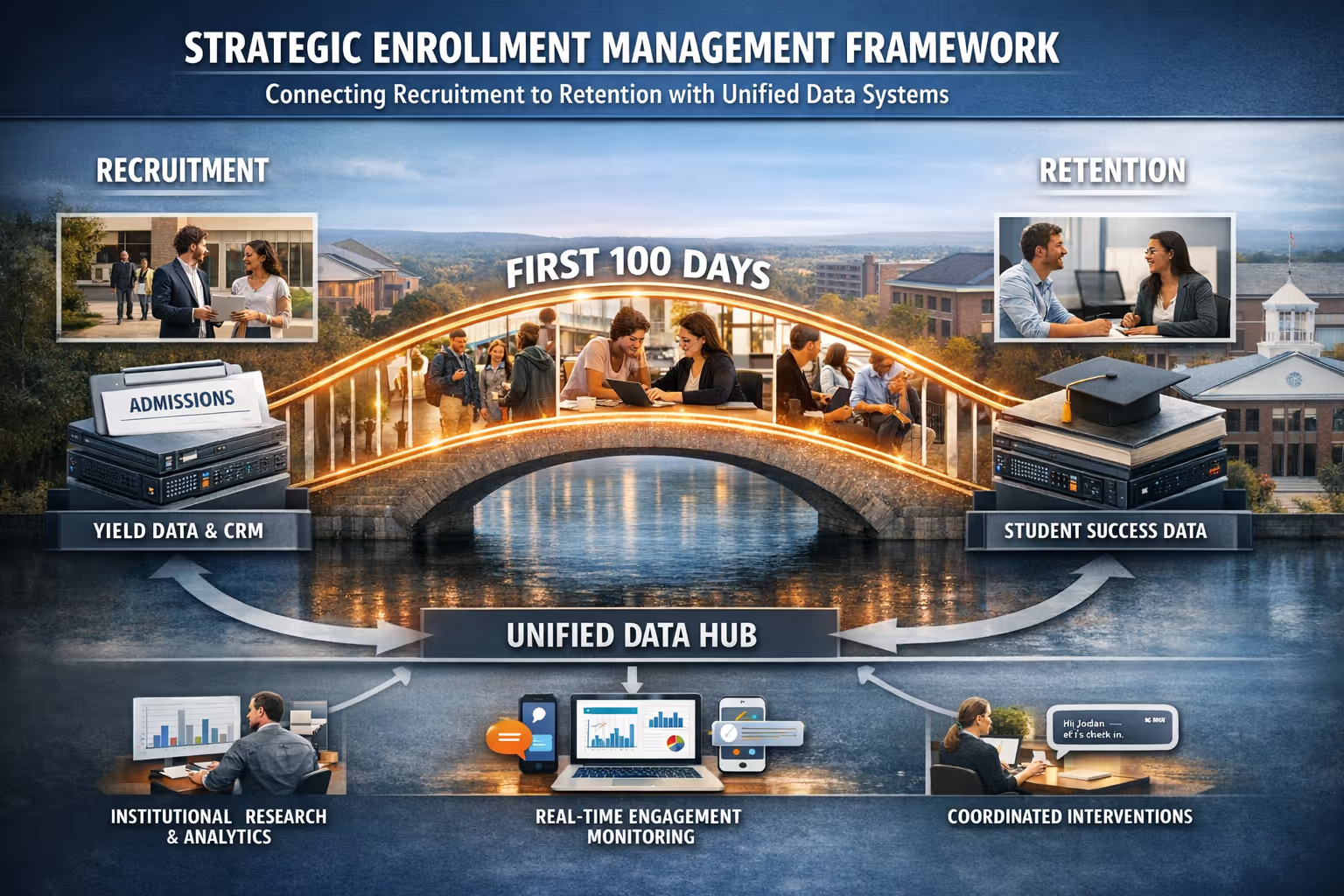
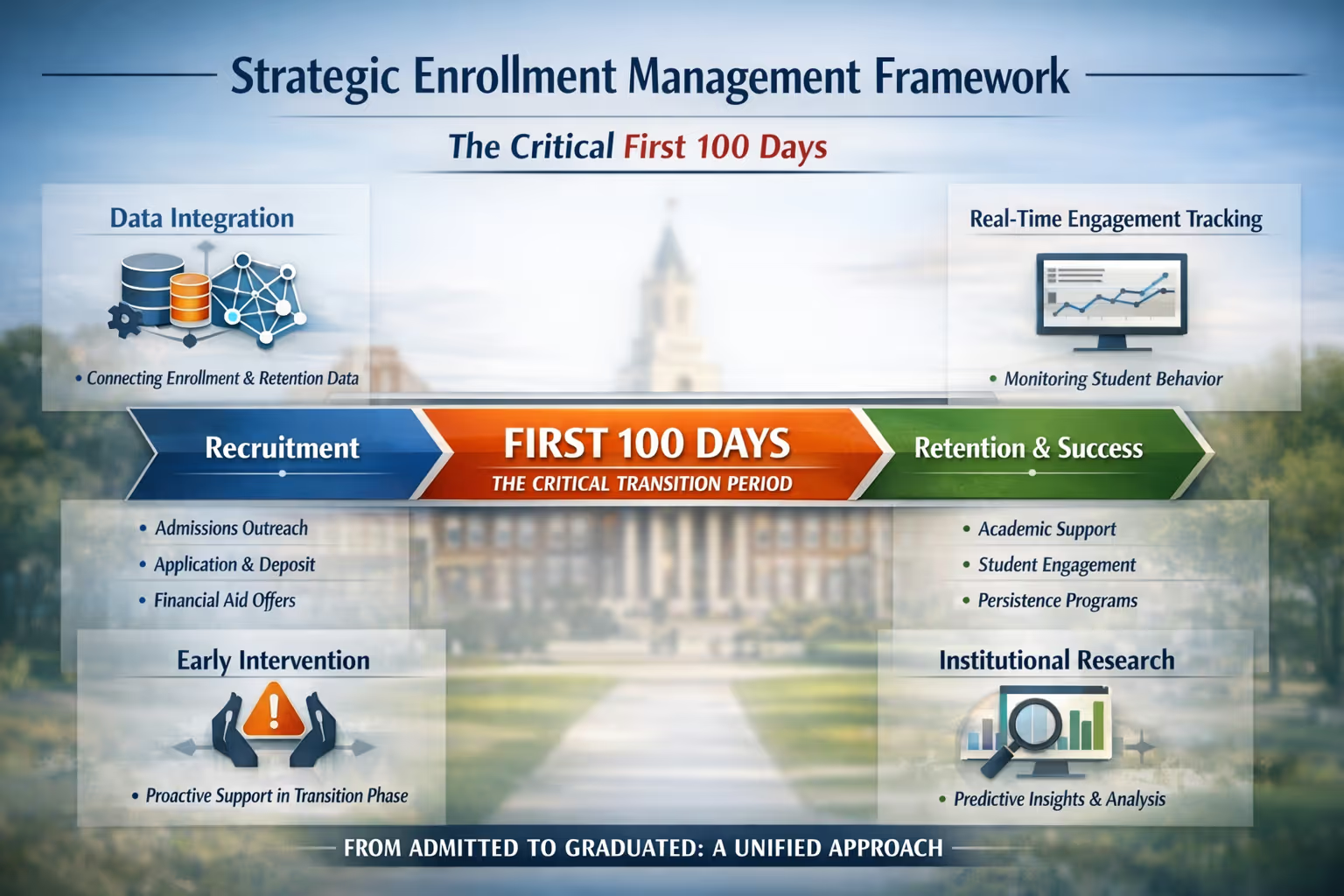
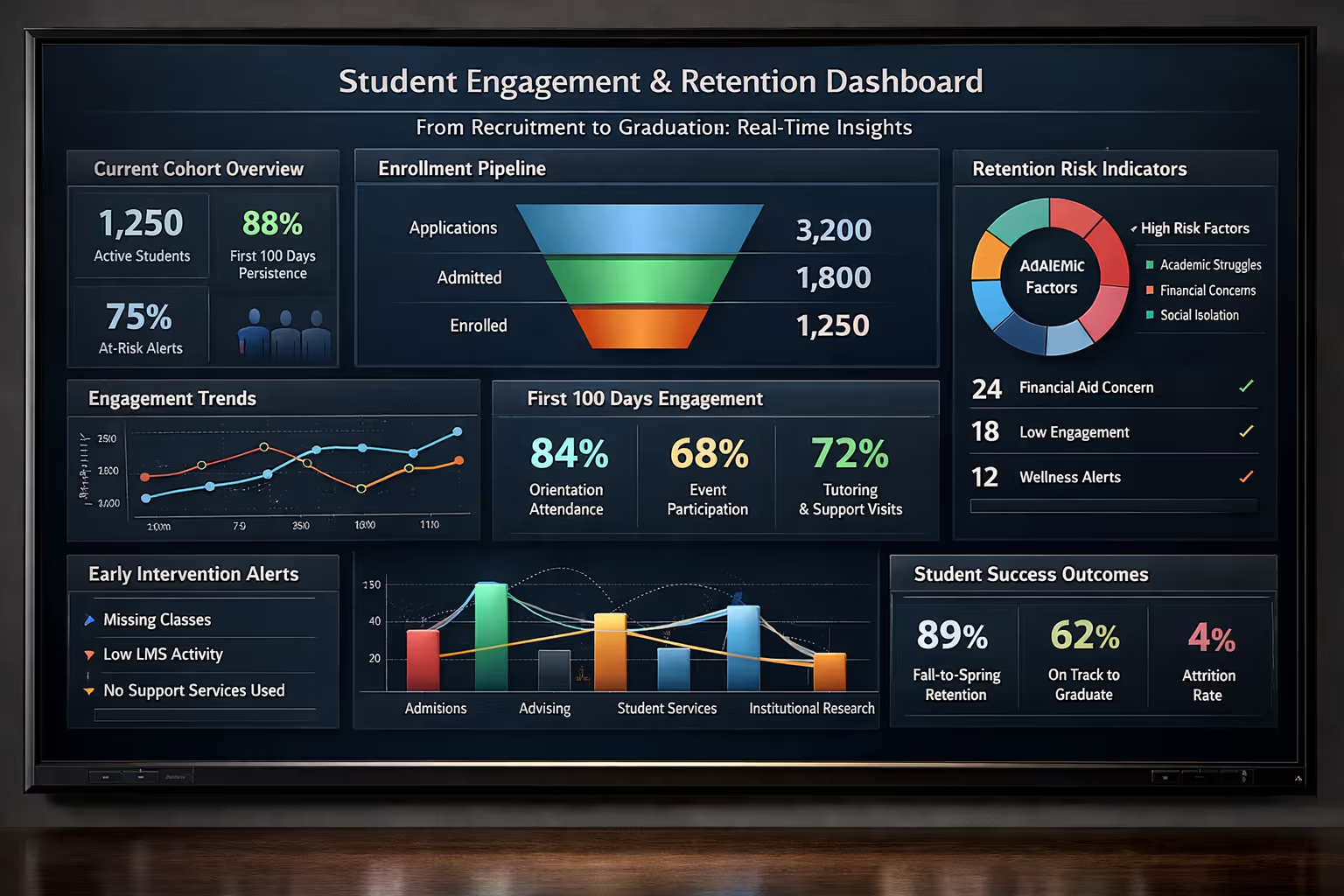
The first 100 days after enrollment represent the most critical window for unified strategy
Institutional research teams can serve as the integration engine connecting enrollment signals to retention outcomes
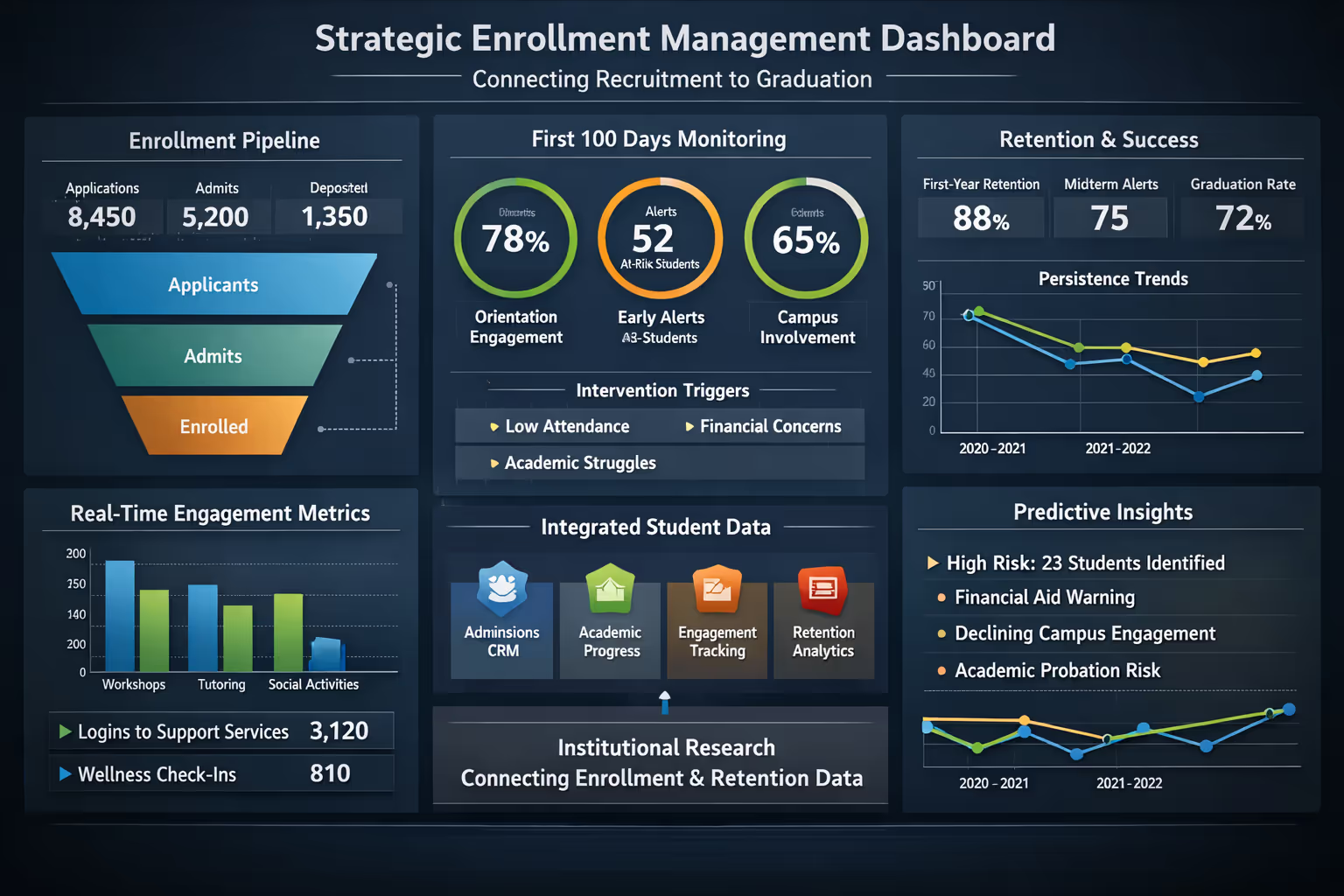
Real-time engagement data fills the gap between enrollment CRM sophistication and reactive student success systems
For decades, colleges have treated enrollment and retention as separate operations with separate leaders, separate data systems, and separate definitions of success. Admissions builds the incoming class. Student affairs works to keep them enrolled. Institutional research tracks what happened—often months after it mattered.
Students don't experience college in silos. Their journey from application to graduation is continuous, and when institutions manage it in fragments, gaps emerge. Students slip through. Data that could have predicted risk sits unused in disconnected systems.
Strategic enrollment management offers a more coherent path forward. When extended beyond recruitment to encompass the full student lifecycle, SEM becomes the connective framework that changes how institutions approach both enrollment and retention. The schools doing this well aren't just filling seats—they're keeping students in them.
What Strategic Enrollment Management Actually Means
Strategic enrollment management is a comprehensive approach that integrates every aspect of attracting, enrolling, and retaining students into a cohesive institutional strategy [1]. The American Association of Collegiate Registrars and Admissions Officers (AACRAO) has championed SEM as a framework extending far beyond recruitment metrics alone [2].
Yet most institutions still practice SEM with a heavy enrollment bias. The strategic planning stops once students deposit. Retention becomes someone else's problem—typically student affairs, academic advising, or a standalone retention committee operating with different data, different goals, and different definitions of success.
This fragmentation costs institutions significantly. Research consistently shows that retaining existing students is more cost-effective than recruiting replacements [3]. When enrollment and retention operate independently, institutions miss the opportunity to apply the same strategic rigor that fills classrooms to keeping students in them.
Anyone who has worked in student affairs understands the frustration: watching a retention committee spin up initiatives from scratch each fall, without access to the behavioral insights admissions gathered during recruitment. Staff are stretched thin. Budgets are tight. And the students who need the most support often remain invisible until it's too late to help them effectively.
The Data Disconnect Between Enrollment and Retention
During recruitment, admissions teams track every interaction. They know which campus tour prompted an application, which financial aid package sealed the commitment, which academic program attracted initial interest. Modern CRM systems capture behavioral signals and predict yield with increasing accuracy.
After enrollment, that rich behavioral picture often goes dark. Student success teams start fresh, waiting for midterm grades or advisor referrals to identify who needs support. The predictive sophistication that characterized recruitment gives way to reactive intervention.
This disconnect reflects a strategy problem, not a technology problem. The tools exist to track engagement continuously. What's missing is the unified framework that treats enrollment-to-graduation as a single journey worth managing strategically.
Institutions practicing true strategic enrollment management recognize that the signals predicting yield are cousins to the signals predicting persistence. A student's engagement patterns during orientation can forecast their connection to campus six months later. Early involvement in co-curricular activities correlates with degree completion [4]. The question is whether anyone is watching—and whether they have the systems to respond.
Building the Unified Framework: From Yield to Persistence
A unified SEM framework requires three structural shifts:
Shared Metrics Across the Student Lifecycle
Traditional enrollment metrics focus on application volume, admit rates, yield, and net tuition revenue. Traditional retention metrics track fall-to-fall persistence, credit completion, and graduation rates. A unified framework connects these through intermediate measures:
Orientation engagement predicts first-semester persistence
First-month campus involvement correlates with year-one retention
Early connection to support services indicates help-seeking behavior that protects against silent struggles
Summer melt prevention success links directly to fall-to-spring persistence
When institutional research aligns enrollment and retention data streams, patterns emerge that neither team would see independently. Students who needed significant financial aid counseling during enrollment may benefit from proactive outreach when tuition bills arrive. Students who chose the institution for a specific program merit attention if their major confidence wavers.
Cross-Functional Data Visibility
The CRM that powers admissions and the early-alert system that flags struggling students often don't communicate. This creates blind spots precisely when visibility matters most.
A unified framework demands that student engagement data flow across functional boundaries—while respecting privacy and FERPA requirements. Campus leaders should be able to ask: How are students who were recruited for our nursing program engaging with nursing-specific resources? Are first-generation students using the support services we highlighted during recruitment?
This visibility doesn't require invasive monitoring. It requires intentional design of systems that capture engagement signals students willingly generate—event attendance, resource utilization, wellness check-ins—and make those signals actionable across teams.
Coordinated Intervention Protocols
When enrollment and retention teams share data, they can coordinate responses. A student showing early disengagement doesn't need three separate outreach attempts from housing, advising, and the dean's office. They need one thoughtful intervention that acknowledges their whole experience.
What coordinated intervention looks like in practice: A student who expressed financial concerns during enrollment gets flagged when they haven't visited the financial aid office by week three. Rather than waiting for a missed payment, the financial wellness coordinator receives an automated notification and sends a personalized text: "Hi Jordan—we haven't connected since orientation. Would you like to schedule a quick check-in about your account?" Meanwhile, their peer mentor receives a nudge to grab coffee with them that week. One concern, two touchpoints, zero panic.
This coordination requires more than technology. It demands that enrollment and retention leaders meet regularly, share concerns, and develop joint playbooks for supporting students through predictable transition points.

The First 100 Days: Where Enrollment Strategy Meets Retention Reality
The research is clear: student persistence is largely determined in the first semester [5]. This makes the transition from admitted student to engaged student the most critical window for unified SEM strategy.
Yet this is precisely when institutional attention often shifts. Admissions celebrates yield numbers and pivots to the next recruitment cycle. Student affairs inherits a new cohort without the behavioral context that preceded enrollment.
A unified framework treats the first 100 days as the bridge between enrollment and retention. During this window:
Orientation programming should connect to recruitment messaging, reinforcing why students chose this institution
Early engagement opportunities should be tracked with the same rigor applied to recruitment touchpoints
Behavioral signals should trigger proactive support before academic warning signs appear
Institutions that monitor engagement continuously during this period can identify students drifting toward the margins early enough to intervene. Those relying solely on academic metrics often act too late.
Real-Time Engagement Data: The Missing Layer
Traditional SEM relies heavily on point-in-time data: application completion, enrollment deposit, course registration, semester grades. These snapshots miss the dynamic nature of student experience.
A student's GPA tells you how they performed last semester. It doesn't tell you that they stopped attending club meetings three weeks ago, haven't visited the tutoring center since midterms, or are isolating in ways that concerned their RA.
Real-time engagement data fills this gap. When institutions capture ongoing behavioral signals—participation in campus activities, utilization of support resources, social connection patterns—they gain a continuous view of student wellbeing and belonging.
This matters for strategic enrollment management because engagement predicts persistence. Students who are actively connected to campus community, utilizing available resources, and maintaining healthy involvement patterns are significantly more likely to persist than academically similar students who are disengaged [6].
The most effective approaches invite student participation—wellbeing check-ins, activity logging, resource utilization tracking—while maintaining transparency about how data is used and protecting individual privacy in aggregate reporting.
Institutional Research: The Integration Engine
For a unified SEM framework to function, someone must own the integration. Institutional research (IR) teams are positioned to play this role, but many face real constraints: understaffing, competing compliance demands, and limited access to cross-functional data.
Traditional IR focuses on compliance reporting and retrospective analysis. Strategic enrollment management that bridges to retention requires predictive modeling, cross-functional data integration, and real-time dashboards that surface actionable insights.
This means IR needs:
Access to enrollment and student success data in formats that permit integration
Analytical capacity to build predictive models connecting recruitment behavior to persistence outcomes
Communication channels to share findings with enrollment managers, student affairs leaders, and academic advisors
Protected time beyond compliance work to pursue strategic analysis
When IR can demonstrate that students recruited through certain channels show stronger early engagement, enrollment strategy adjusts. When IR identifies that students with particular demographic profiles benefit from specific support interventions, retention strategy refines. This feedback loop is the heartbeat of unified SEM.
The challenge is real: most IR offices are stretched thin, and adding strategic analysis to compliance workloads requires institutional commitment. But the institutions making progress on unified SEM have recognized that IR capacity is infrastructure, not overhead.
Technology That Connects Rather Than Fragments
Most institutions have invested heavily in enrollment technology—CRMs like Salesforce, Slate, or Element451 that manage recruitment pipelines with sophisticated automation [7]. Many have also invested in student success platforms that track academic progress and trigger early alerts.
What's often missing is the connective layer between these systems. The engagement platform that bridges recruitment data and student success intervention. The real-time behavioral signals that complement academic early-warning systems.
Effective technology for unified SEM should:
Capture ongoing engagement data that predicts persistence before academic warning signs appear
Integrate with existing enrollment CRM to leverage recruitment insights for retention support
Provide visibility to multiple stakeholders while protecting student privacy
Enable proactive intervention rather than reactive response
This isn't about replacing existing systems. It's about adding the engagement layer that makes enrollment-to-retention data flow coherent.
Building Your Unified SEM Strategy: Practical Steps
For campus leaders ready to bridge enrollment and retention strategy, here's where to start:
Audit your data flow. Map how student information moves (or doesn't) between admissions, student affairs, academic advising, and institutional research. Identify the handoff points where context gets lost. This mapping exercise alone often reveals opportunities hiding in plain sight.
Define shared metrics. Bring enrollment and retention leaders together to establish common success indicators that span the student lifecycle. Early engagement measures—orientation participation, first-month involvement, resource utilization—should connect recruitment outcomes to persistence predictions.
Establish cross-functional governance. Strategic enrollment management committees often focus narrowly on recruitment. Expand membership and mandate to include retention leadership. Meet regularly to review shared dashboards and coordinate interventions.
Invest in the engagement layer. If your technology stack has gaps between enrollment CRM and student success platforms, evaluate tools that capture real-time engagement signals and make them actionable across teams.
Pilot before scaling. Start with a defined cohort—perhaps first-generation students or a specific academic program—and build the unified tracking and intervention approach before expanding institution-wide.
Build in feedback loops. Schedule quarterly reviews where enrollment and retention teams examine what the integrated data revealed, what interventions worked, and what adjustments are needed.
The Enrollment Cliff Demands Unified Strategy
With demographic shifts reducing the traditional college-going population, institutions face a stark choice: compete more fiercely for a shrinking applicant pool or retain more of the students they already enroll [8].
Strategic enrollment management that extends through retention addresses both pressures. Better retention stabilizes enrollment without requiring proportional increases in recruitment spending. The return on keeping students exceeds the cost of replacing them.
But this requires treating retention not as an afterthought to enrollment strategy, but as its continuation. The same data discipline, strategic rigor, and cross-functional coordination that characterizes effective recruitment belongs in the retention domain.
Institutions that build unified frameworks now will be better positioned for the enrollment challenges ahead. Those that continue operating in silos will keep losing students through gaps that integrated strategy could have closed.
Connect Enrollment Strategy to Real-Time Engagement
Building a unified SEM framework requires tools that capture the engagement signals bridging recruitment to retention. CampusMind's real-time engagement platform provides the behavioral data layer that connects what admissions knows about incoming students to what student success teams need for proactive support.
Campus leaders developing unified enrollment-to-retention strategies can explore how CampusMind integrates with existing systems to close data gaps and enable early intervention.
Book a CampusMind demo call to discuss how engagement data strengthens your strategic enrollment management framework.
Frequently Asked Questions
What is strategic enrollment management and how does it relate to retention?
Strategic enrollment management (SEM) is a comprehensive institutional approach that integrates recruitment, enrollment, and student success into a unified strategy. While traditionally focused on admissions, effective SEM extends through the full student lifecycle, treating retention as a continuation of enrollment strategy rather than a separate function. This unified approach connects recruitment data to persistence outcomes and enables proactive intervention during critical transition periods.
Why do most institutions separate enrollment and retention operations?
Historical organizational structures created functional silos where admissions reports to enrollment management while retention often falls under student affairs or academic affairs. Different data systems, metrics, and leadership create operational separation. This fragmentation misses opportunities to leverage recruitment insights for retention support and creates handoff gaps where students can disengage without detection.
What role does institutional research play in unified SEM?
Institutional research serves as the integration engine for unified strategic enrollment management by connecting data across enrollment and retention functions. IR teams can build predictive models showing how recruitment behaviors correlate with persistence outcomes, create shared dashboards for cross-functional visibility, and provide the analytical foundation for coordinated intervention strategies spanning the student lifecycle.
How do engagement platforms support strategic enrollment management?
Engagement platforms capture real-time behavioral signals that predict persistence before academic warning signs appear. They provide the connective data layer between enrollment CRM systems and student success platforms, enabling institutions to track student involvement continuously from orientation through graduation. This visibility supports proactive intervention during critical transition periods like the first 100 days.
What metrics should bridge enrollment and retention strategy?
Effective bridging metrics include orientation engagement levels, first-month campus involvement, early utilization of support resources, co-curricular participation patterns, and summer melt prevention outcomes. These intermediate measures connect yield outcomes to persistence predictions, providing leading indicators that enable intervention before semester-end retention data reveals problems that started weeks earlier.
About This Article
This article was developed by content specialists with expertise in higher education strategy and student success research. CampusMind partners with colleges and universities to provide data-driven engagement platforms that support student wellbeing, belonging, and retention. Our approach integrates behavioral science with real-time analytics to help institutions identify and support students proactively throughout their college journey.
Works Cited
[1] AACRAO — "Strategic Enrollment Management Core Concepts." https://www.aacrao.org/resources/strategic-enrollment-management
[2] AACRAO — "SEM: Definitions and Context for Higher Education." https://www.aacrao.org/docs/default-source/sem-documents/sem-core-concepts.pdf
[3] Ruffalo Noel Levitz — "2023 Report: Cost of Recruiting an Undergraduate Student." https://www.ruffalonl.com/papers-research/2023-cost-of-recruiting-report/
[4] National Survey of Student Engagement — "Engagement Indicators and High-Impact Practices." https://nsse.indiana.edu/nsse/survey-instruments/engagement-indicators.html
[5] Tinto, Vincent — "Leaving College: Rethinking the Causes and Cures of Student Attrition." University of Chicago Press, 1993. https://press.uchicago.edu/ucp/books/book/chicago/L/bo3630345.html
[6] NASPA — "First-Year Experience and Persistence: Research and Best Practices." https://www.naspa.org/report/first-year-experience-persistence
[7] EDUCAUSE — "Student Success Technologies: The Landscape." https://library.educause.edu/resources/2022/student-success-technologies
[8] Western Interstate Commission for Higher Education — "Knocking at the College Door: Projections of High School Graduates, 10th Edition." https://www.wiche.edu/resources/knocking-at-the-college-door-10th-edition/