


A few years ago, a mid-sized state university invested heavily in a student engagement platform. The procurement team followed their standard RFP process—the same one they used for their financial system and parking management software. Eighteen months later, the platform sat largely unused. Students found it clunky. Staff couldn't get the data they needed. The integration with their SIS never worked properly. The six-figure investment became a cautionary tale shared quietly at student affairs conferences.
This scenario plays out more often than most institutions admit. The problem rarely stems from bad intentions or incompetent vendors. It stems from asking the wrong questions during procurement.
Student engagement platforms occupy a fundamentally different category than traditional enterprise software. They succeed or fail based on whether students actually use them—a criterion that standard technology RFPs barely address. They handle sensitive wellness and behavioral data that requires different privacy considerations than academic records. They must integrate across departmental silos in ways that administrative systems never need to.
This guide provides a comprehensive student engagement platform RFP template with over 20 essential questions organized by category. Whether you're a Vice President of Student Affairs, a Director of Retention, or an IT procurement lead, these questions will help you evaluate vendors with the precision this category demands.
Why Standard Technology RFPs Miss the Mark
Traditional procurement templates focus heavily on technical specifications: server requirements, database architecture, API documentation. These matter. But student engagement platforms live or die based on factors that rarely appear in standard RFPs.
Will students actually open the app after orientation week? Does the platform surface early warning signs before a student disappears—or only generate reports after they've already withdrawn? How does it handle the sensitive intersection of student privacy and institutional insight? Can staff from advising, counseling, residence life, and student activities actually see the information they need without drowning in data they don't?
According to EDUCAUSE research on student success technologies, institutions increasingly recognize that vendor evaluation for these tools requires fundamentally different criteria than traditional enterprise software procurement [1]. The reason is straightforward: a clunky financial system frustrates staff. A failed engagement platform means students who needed help never received it.
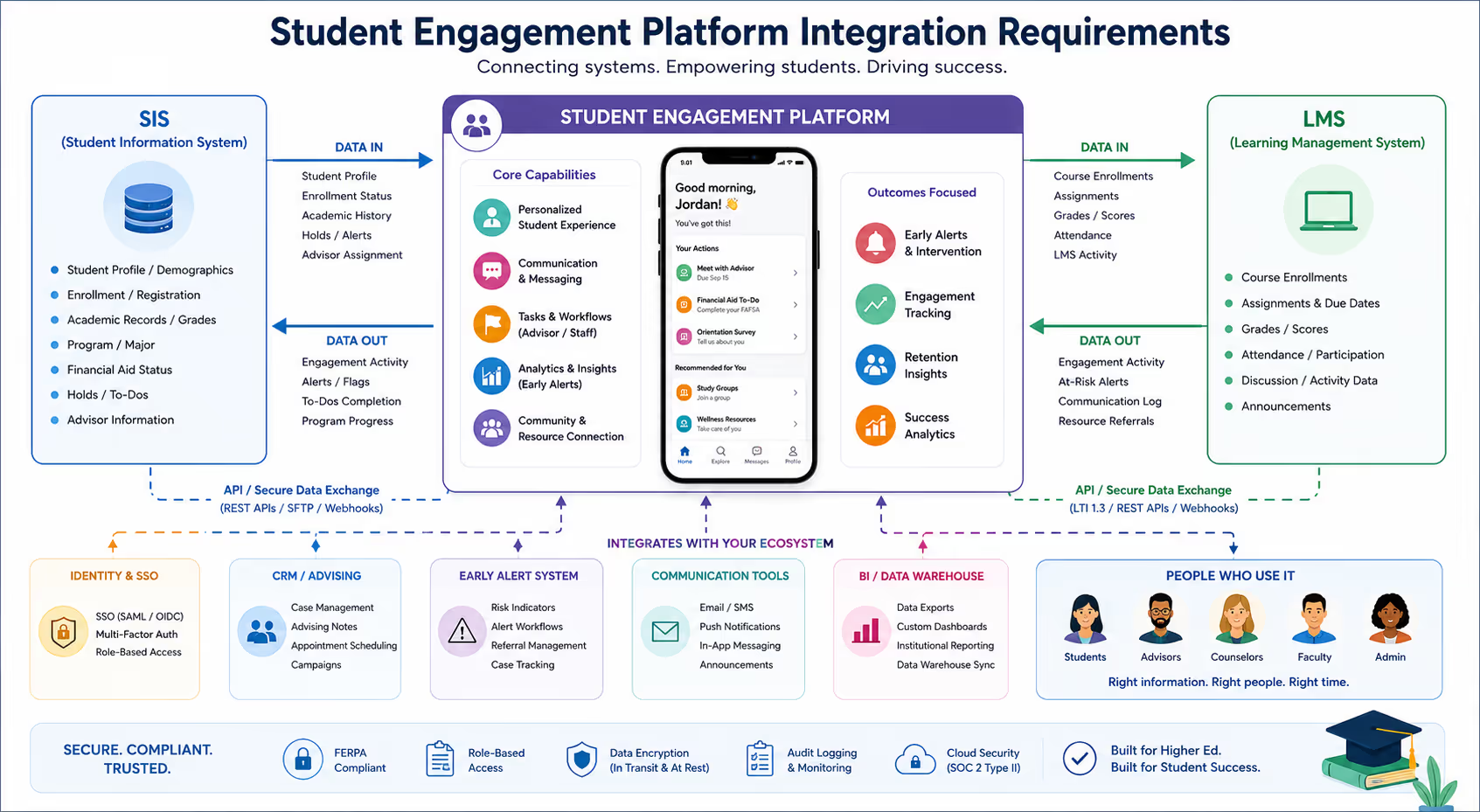
The questions below address what actually determines success or failure in this space.
Anatomy of an Effective Student Engagement RFP
Before diving into specific questions, understanding the structure of an effective RFP helps ensure nothing critical gets overlooked. A well-constructed student engagement platform RFP typically includes these sections:
| Section | Purpose | Key Components |
| Executive Summary | Outlines your institution's goals and evaluation timeline | Retention targets, student populations of concern, decision timeline |
| Institutional Context | Provides vendors with necessary background | Current tech stack, student demographics, existing engagement efforts |
| Functional Requirements | Defines what the platform must do | Student-facing features, admin capabilities, reporting needs |
| Technical Requirements | Specifies integration and infrastructure needs | SIS/LMS integration, SSO requirements, data security standards |
| Compliance Requirements | Establishes privacy and regulatory expectations | FERPA compliance, data governance, accessibility standards |
| Vendor Qualifications | Screens for relevant experience | Higher-ed clients, similar institution references, implementation track record |
| Pricing Structure | Enables accurate cost comparison | Licensing model, implementation costs, ongoing support fees |
| Response Format | Standardizes vendor submissions | Required sections, page limits, demo requirements |
The questions that follow fit within this framework. Customize them based on your institution's specific challenges and priorities.
Functionality and Student Experience Questions
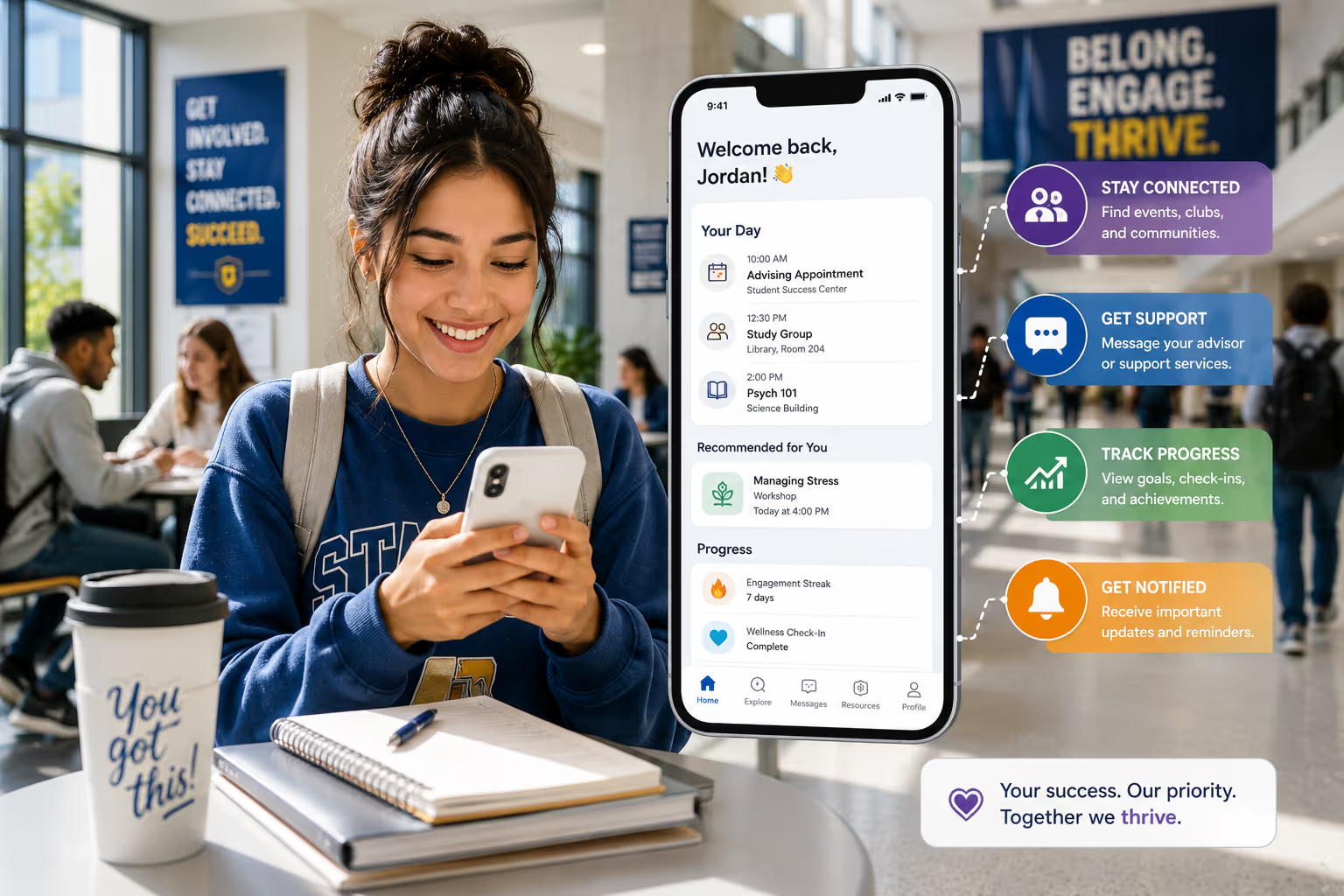
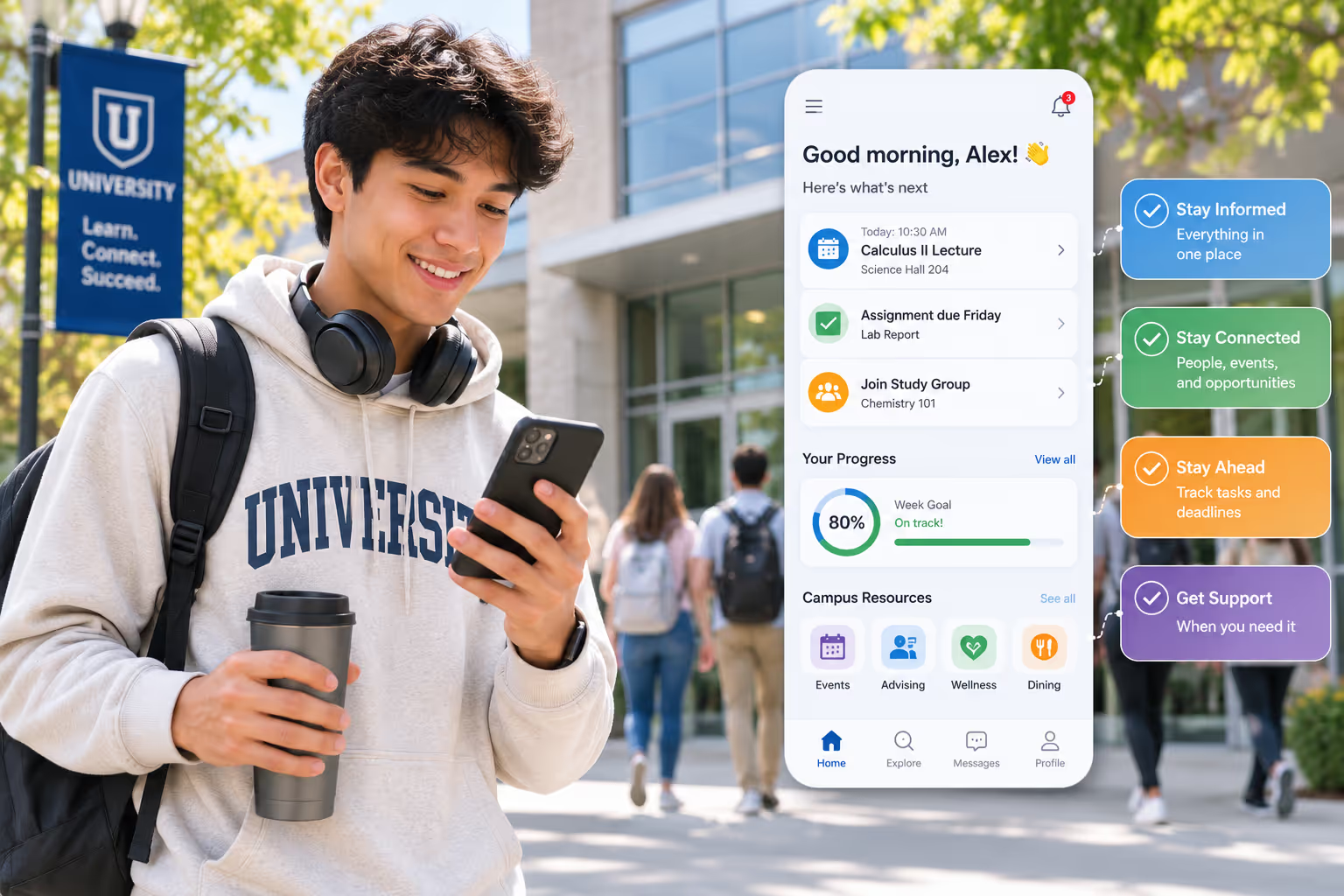
The core purpose of any student engagement platform is getting students to engage. That sounds obvious, but many platforms are built administrator-first, with student experience as an afterthought. Start your evaluation here.
How does the platform encourage ongoing student engagement beyond initial onboarding?
Look for specific mechanisms: gamification elements, personalized recommendations, push notification strategies, peer connection features. Vague answers like "intuitive design" aren't sufficient. You need to understand the behavioral science behind sustained usage.
Effective platforms recognize that getting students to download an app during orientation is easy. Getting them to open it in week six—when they're struggling but haven't yet reached out for help—is what actually matters.
What does the student-facing interface look like, and can we see it in action with real student interactions?
Request a live demo with actual usage data (anonymized), not just a polished sales presentation. The gap between demo environments and production reality can be significant.
Ask to see the interface on a mobile device, not just projected on a conference room screen. Most student interactions happen on phones between classes, not on laptops in dorm rooms.
How does the platform personalize the experience for different student populations?
First-generation students, transfer students, commuters, and residential students have different needs. A platform that treats all students identically typically serves none of them well.
Ask specifically how the system adapts recommendations and resources based on student characteristics and behaviors. Does a commuter student see different content than a residential freshman? Does a transfer student get different onboarding than someone starting as a first-year?
What is the typical student adoption rate among your current institutional partners, and how is that measured?
Vendors should be able to provide concrete adoption metrics, not just download numbers. Active monthly users, engagement frequency, and feature utilization tell a more complete story than app installs.
Be skeptical of any vendor who can't provide this data or who hedges with vague statements about "strong engagement." If they don't measure it rigorously, that tells you something about their priorities.
How does the platform handle students who disengage or stop using it?
Re-engagement strategies matter as much as initial adoption. Ask about automated outreach, staff alerts for disengaged students, and historical data on re-engagement success rates.
The students who stop using the platform are often the ones who need support most. A platform that simply lets them disappear defeats its own purpose.
Privacy, Security, and Compliance Questions
Student data privacy isn't just a legal requirement—it's the foundation of trust that makes engagement possible. Students who don't trust a platform won't use it honestly, which defeats the entire purpose.
How does the platform ensure FERPA compliance, and what specific technical and procedural safeguards are in place?
FERPA compliance should be demonstrated through specific controls: role-based access, audit logging, data minimization practices, and clear policies on what constitutes an "education record" within the system [2].
Don't accept "we're FERPA compliant" as a complete answer. Ask for documentation of their compliance framework and how it's audited.
What student data is collected, who has access to it, and how is access controlled?
Request a complete data inventory. Understand exactly what's collected, how long it's retained, and who can see what. Aggregate reporting for administrators should be clearly distinguished from individual-level access.
Pay particular attention to wellness and behavioral data. This information requires more careful handling than academic records, and the platform should have clear protocols for how sensitive disclosures (like a student indicating thoughts of self-harm) are escalated.
How do students control their own data and privacy settings?
Student agency matters. Platforms should offer meaningful privacy controls—not buried in settings menus, but integrated into the core experience.
Ask how students can choose what information is shared and with whom. Can a student opt out of having their engagement data shared with their academic advisor? Can they control whether their parents receive wellbeing updates? These aren't edge cases—they're central to building trust.
What is your data breach notification policy and incident response plan?
Every vendor should have documented procedures for security incidents. Ask for specifics: notification timelines, responsible parties, and historical incident data if available.
A vendor who has never had a security incident may simply not have enough clients or data to have been tested. A vendor who has had incidents and handled them transparently may actually be more trustworthy.
Where is data stored, and do you use third-party processors or subcontractors with access to student information?
Data residency and third-party access create compliance complexity. Understand the complete data flow, including any cloud providers, analytics services, or support contractors who may access student information.
If data is processed offshore or accessed by third parties, understand exactly what data they can see and under what circumstances.
How do you handle data portability and deletion if we terminate the contract?
Exit planning should happen before you sign, not during a contentious contract termination.
Understand data export formats, deletion timelines, and any data the vendor retains after the relationship ends. If they can't give you your own data in a usable format, you're locked in whether you like it or not.
Integration and Technical Requirements
A student engagement platform that operates in isolation creates another silo—the opposite of what most institutions need. Integration capabilities determine whether the platform amplifies your existing systems or competes with them.
What existing systems does the platform integrate with, and what does integration actually look like in practice?
Request specifics for your SIS, LMS, CRM, and any early alert systems you currently use.
"We integrate with Banner" could mean anything from real-time bidirectional sync to manual CSV exports. Clarify the depth, reliability, and maintenance requirements of each integration. Ask for references from institutions using the same systems you use.
What APIs are available, and what level of technical expertise is required to implement custom integrations?
Open APIs provide flexibility, but they require development resources. Understand what's available out of the box versus what requires custom work—and who does that work.
If your IT team is already stretched thin, a platform that requires significant custom development may not be realistic, regardless of how powerful its API is.
How does the platform handle single sign-on, and which identity providers are supported?
SSO isn't optional. Students won't create and remember another username and password.
Confirm support for your specific identity provider (SAML, CAS, Azure AD, etc.) and the implementation requirements. Ask whether SSO is included in base pricing or costs extra.
What is your implementation timeline, and what resources are required from our institution?
Implementation timelines vary dramatically. Understand the realistic workload for your IT team, student affairs staff, and any other stakeholders.
Ask for references from institutions of similar size and complexity. A vendor who consistently hits their implementation timelines is worth more than one with impressive features but a history of delayed rollouts.
How do you handle system updates and maintenance, and what is your uptime commitment?
Scheduled maintenance during finals week would be disastrous.
Understand update policies, notification procedures, and the vendor's historical uptime performance. Ask for their SLA and what remedies exist if they fail to meet it.
Outcomes Measurement and Reporting
The fundamental question for any student engagement platform: does it actually help students succeed? Your RFP should establish how you'll answer that question.
What metrics does the platform track, and how do those metrics connect to retention and student success?
Engagement metrics alone aren't sufficient. A student who opens the app daily but never connects with support services hasn't been helped.
Look for platforms that can demonstrate meaningful correlation between platform usage and outcomes that matter: persistence, GPA, graduation rates, and wellbeing indicators. Ask how they establish causation versus correlation.
Can you provide case studies or outcome data from institutions similar to ours?
Peer institution data carries weight. Ask for results from schools with comparable student populations, challenges, and existing technology infrastructure.
Be skeptical of cherry-picked success stories without context. A platform that improved retention at a selective private university may not produce the same results at an open-access community college serving different populations.
What reporting and analytics capabilities are available for administrators?
Understand both standard reporting and customization options.
Can you build custom dashboards?
Export data for your own analysis?
Integrate reporting with institutional research workflows?
Disaggregate data by student population?
If the platform can't produce the reports your institution needs for accreditation, strategic planning, or board presentations, it's not solving your problem.
How does the platform support early intervention, and what early warning indicators does it surface?
Early intervention capability separates strategic tools from simple engagement apps.
Ask specifically how the platform identifies students who may be struggling—and how that information reaches the right staff members in time to help. Does it integrate with your existing early alert system, or does it create another parallel workflow staff must check?
Pricing, Contract Terms, and Pilot Options
Budget conversations often happen too late in procurement. Address pricing structure and contract flexibility early to avoid wasted effort evaluating platforms outside your realistic range.
What is your pricing model, and what factors affect total cost?
Student engagement platforms typically price per-student, per-campus, or through tiered licensing.
Understand what's included in base pricing versus what costs extra:
Implementation support
Staff training
Premium features
Ongoing technical support
Data migration
Custom integrations
Get quotes that reflect your actual implementation, not just the base platform cost.
Do you offer pilot programs, and what are the terms?
Pilots reduce risk for both parties. Ask about pilot duration, scope, success criteria, and how pilot pricing relates to full implementation costs.
A vendor confident in their product should welcome a structured pilot. If they push back hard on piloting, ask why.
Also clarify what happens at the end of a pilot: What data do you keep? What are your obligations if you don't proceed to full implementation? What happens to students who were using the platform?
What is the minimum contract term, and what are the renewal and termination provisions?
Multi-year contracts offer price stability but create risk if the platform underperforms.
Understand your options for exit, including any termination fees or data transition requirements. Some institutions negotiate performance clauses that allow early termination if adoption targets aren't met—this aligns vendor incentives with your success.
What training and ongoing support is included, and what costs extra?
Implementation support and ongoing training significantly affect total cost of ownership.
Clarify what's included:
Administrator training (initial and ongoing)
Student onboarding support
Dedicated account management
Technical support response times
Access to user communities or best practice resources
Ask about support availability during critical periods like orientation week or registration.
Building Your Evaluation Criteria
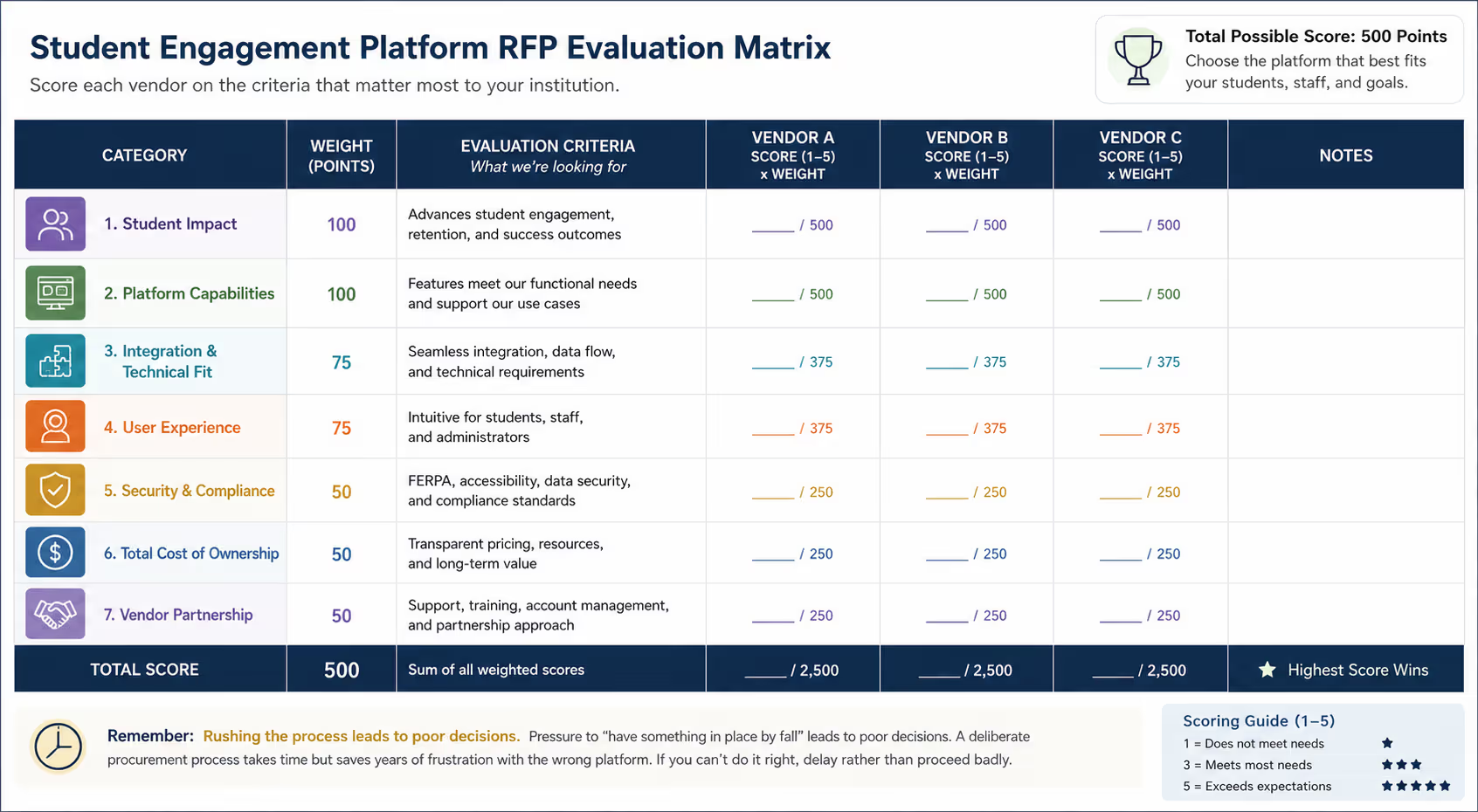
Raw answers to these questions won't produce a vendor decision on their own. You need evaluation criteria that reflect your institution's specific priorities.
Weight questions by category based on your context
An institution with significant FERPA concerns due to recent incidents might weight privacy questions heavily. A campus with limited IT resources might prioritize integration simplicity and vendor-provided support. An institution serving many first-generation students might weight personalization capabilities most heavily.
Document these weightings before you receive vendor responses, not after.
Create a scoring rubric before reviewing responses
For each question, document what constitutes an excellent, acceptable, or inadequate answer. This discipline prevents post-hoc rationalization of a predetermined preference and ensures fair evaluation across vendors.
Include multiple stakeholders in evaluation
Student affairs leaders, IT staff, institutional research, and student representatives bring different perspectives that improve decision quality.
The student affairs team knows what workflows matter. IT knows what integrations are realistic. Institutional research knows what data they actually need. And students know whether they'd actually use the thing. Leaving any of these voices out creates blind spots.
Common Procurement Mistakes to Avoid
Evaluating features instead of outcomes. A longer feature list doesn't mean better results. Focus on whether the platform solves your specific problems, not whether it has capabilities you'll never use. The most impressive demo isn't necessarily the best fit.
Underweighting student experience. Administrator dashboards are easier to demo than student engagement patterns. Don't let impressive analytics distract from the fundamental question of whether students will actually use the platform.
Ignoring total cost of ownership. Implementation, training, integration work, and ongoing support often exceed licensing costs. Build a complete cost picture before comparing vendors. A platform that costs less per student but requires $50,000 in custom integration work may not actually be cheaper.
Skipping reference checks. Vendor-provided references are inherently biased, but they still provide valuable information. Ask specific questions: What implementation challenges did you face? How responsive is support when something breaks? Would you choose the same vendor again knowing what you know now?
Rushing the process. Pressure to "have something in place by fall" leads to poor decisions. A deliberate procurement process takes time but saves years of frustration with the wrong platform. If you can't do it right, delay rather than proceed badly.
Your Next Steps
Effective vendor evaluation starts with clear requirements. Before issuing an RFP, document your institution's specific goals for student engagement technology:
Which student populations are you most concerned about?
What systems must integrate seamlessly?
What does success look like in year one versus year three?
What's your realistic budget, including implementation?
Who needs to be involved in the decision?
Use this student engagement platform RFP template as a foundation, but customize it for your context. Add questions specific to your institution's challenges, remove those that don't apply, and weight categories according to your priorities.
Then evaluate with discipline. Score responses consistently, involve diverse stakeholders, and make decisions based on evidence rather than sales presentations.
The right student engagement platform can meaningfully support student retention and wellbeing. The wrong one becomes another piece of underused technology that drains budget and staff attention. These questions help you tell the difference.
Ready to see how a student engagement platform addresses these critical requirements? Contact CampusMind to receive a tailored proposal that responds to every question in this template—with specific evidence from institutions facing challenges similar to yours.
Frequently Asked Questions
How long should the RFP evaluation process take for a student engagement platform?
Plan for three to six months from RFP issuance to contract signing. This timeline allows adequate time for:
Vendor responses and clarifying questions
Demonstrations with relevant stakeholders
Reference checks with peer institutions
Pilot negotiations if applicable
Final stakeholder alignment and approval
Rushing typically leads to overlooked issues that surface after implementation, when switching costs are highest.
Should we require a pilot program before signing a full contract?
Pilots significantly reduce procurement risk, particularly for platforms where student adoption determines success. A well-structured pilot includes:
Clear success criteria defined upfront
Appropriate duration (typically one full semester minimum)
Representative student population
Defined data collection and evaluation process
Most reputable vendors welcome pilots as an opportunity to demonstrate value. Resistance to piloting warrants follow-up questions.
What role should students play in the vendor evaluation process?
Student input improves platform selection by surfacing usability issues and adoption barriers that administrators may overlook. Consider:
Including student representatives in demo sessions
Gathering feedback through focus groups after demos
Incorporating student advisory input into evaluation criteria
Testing mobile interfaces with actual students
The students who will use the platform daily offer perspectives that procurement teams lack.
How do we evaluate vendor claims about retention improvement?
Request specific methodology and context for any outcome claims:
Were improvements measured through controlled studies or simple before-and-after comparisons?
What was the institutional context—would results transfer to your setting?
What other initiatives were happening simultaneously?
How long were improvements sustained?
Peer institution references provide more relevant evidence than aggregate vendor statistics.
What happens to our data if we decide to switch platforms?
Data portability should be addressed in your initial contract. Key provisions include:
Export formats that work with your other systems
Transition timelines that don't disrupt services
Confirmation of data deletion after transition
Clear ownership of all institutional data
Planning for exit before you enter protects your institution regardless of how the relationship unfolds.
About CampusMind
CampusMind builds student engagement technology grounded in behavioral science and designed for real-world higher education environments. Our team combines expertise in student affairs, data privacy, and educational technology to create platforms that students actually use and institutions can trust.
We work with colleges and universities through structured pilot partnerships, providing the evidence institutions need to make confident procurement decisions. Our approach emphasizes transparency, measurable outcomes, and genuine partnership with the campus leaders responsible for student success. We believe support should empower student autonomy—not replace human connection, but extend its reach.
Works Cited
[1] EDUCAUSE — "Student Success Technologies: Key Considerations for Institutional Leaders." https://www.educause.edu/research-and-publications/research/student-success-technologies
[2] U.S. Department of Education — "Family Educational Rights and Privacy Act (FERPA) Guidance for Postsecondary Institutions." https://studentprivacy.ed.gov/ferpa