

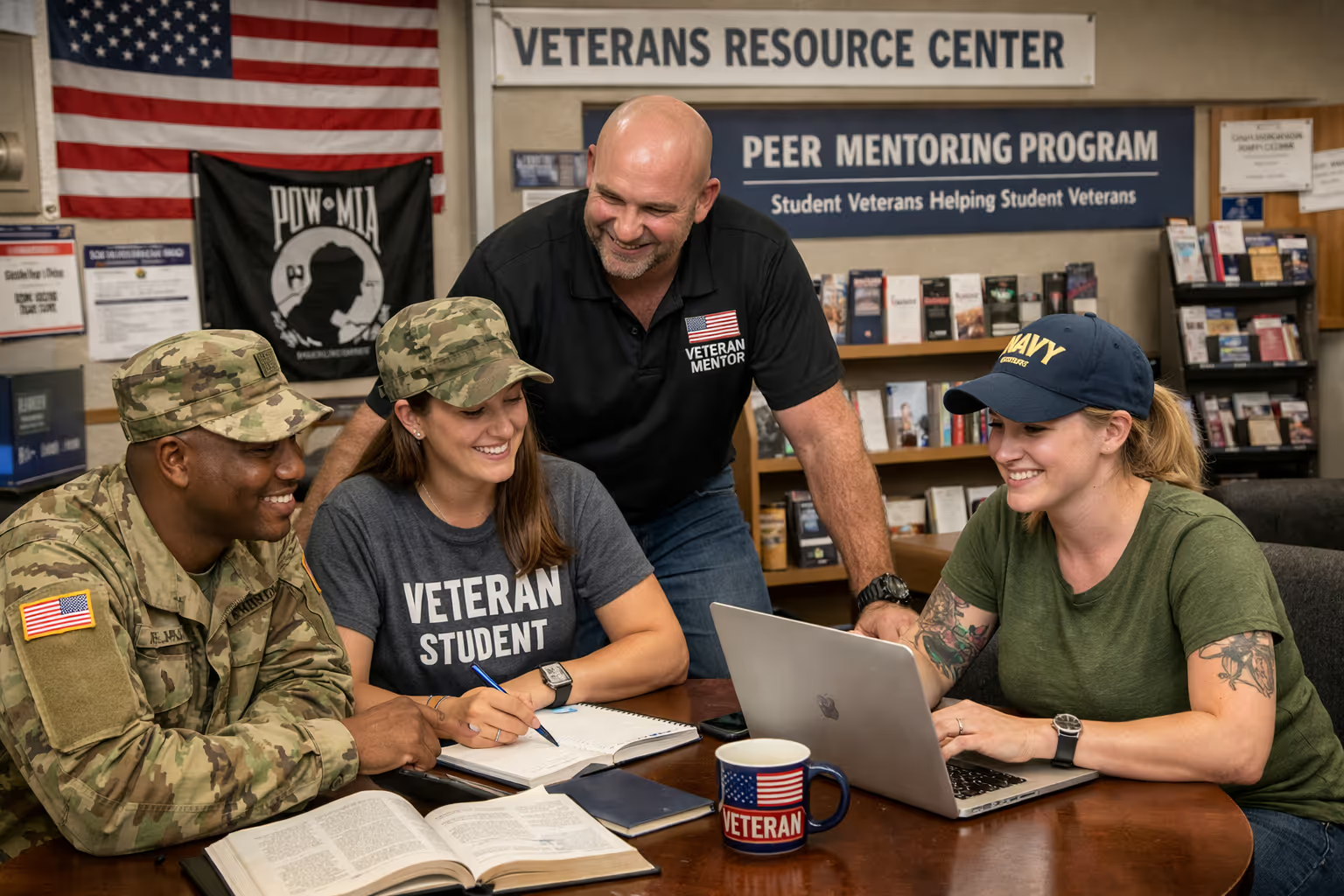
The transition from military service to college life represents one of the most significant identity shifts a person can experience. One day, you're operating within a structured hierarchy where expectations are clear, your role is defined, and your unit functions as a tight-knit community. The next, you're navigating a sprawling campus where nobody tells you when to wake up, class schedules vary wildly, and the average student is a decade younger with vastly different life experiences.
Veteran students don't fail because they lack discipline or intelligence. They struggle when institutions treat them as just another demographic checkbox rather than individuals navigating a profound personal transformation.
More than one million student veterans are currently enrolled in American colleges and universities, using GI Bill benefits to pursue degrees [1]. According to the National Center for Education Statistics, the average age of student veterans is 33—significantly older than traditional undergraduates [2]. Despite their maturity, leadership experience, and clear career goals, veteran students face unique barriers that generic student success programs weren't designed to address.
Institutions that understand these challenges—and respond with intentional, structured support—see veteran students not just persist, but thrive.
Understanding the Military-to-College Identity Shift
The challenge facing veteran students isn't academic preparedness. Most bring exceptional time management skills, goal orientation, and resilience forged through demanding circumstances.
The real challenge is identity.
In the military, identity is collective. You belong to a unit, wear the same uniform, share the same mission, and operate within a clear chain of command. Rank structures provide instant social cues. When someone asks "What do you do?"—the answer is immediate and carries weight.
On a college campus, that identity evaporates overnight.
Student Veterans of America research indicates that many veterans experience what researchers call "identity renegotiation" during this transition [3]. They're no longer defined by their military occupational specialty or unit affiliation. They're now "students"—a role that can feel passive, undefined, and isolating compared to their previous lives.
This shift manifests in practical ways:
Social disconnection. A 28-year-old combat veteran sitting in a lecture hall with 18-year-olds discussing weekend plans faces an immediate belonging gap. The age difference alone creates distance, but the experiential gulf runs deeper.
Loss of purpose clarity. Military missions have clear objectives, defined success criteria, and immediate feedback. College can feel ambiguous by comparison—the endpoint of a degree feels abstract when you're used to tangible, daily missions.
Civilian-military cultural divide. References, humor, and shared experiences that bond traditional students often exclude veterans. Pop culture touchstones from the years spent in service may be completely unfamiliar.
Imposter syndrome. Despite their accomplishments, many veterans question whether they "belong" in academic settings. Some worry their skills won't translate. Others feel their classmates don't take them seriously—or take them too seriously, treating military service as either glorified or stigmatized.
Understanding this context is essential. Veterans aren't struggling with college—they're struggling with becoming someone new while processing everything that came before.
Why Generic Student Success Programs Fall Short
Most campus retention strategies focus on challenges common to traditional students: academic readiness, time management, financial literacy, and social connection. These matter for veterans too. But applying the same playbook misses critical nuances.
The Age and Life Experience Gap
Traditional first-year experience programs assume participants are 18, living away from home for the first time, and figuring out adulthood basics. Veteran students often arrive with mortgages, families, deployments to combat zones, and years of professional leadership experience.
Orientation sessions covering "how to do laundry" or "managing your first checking account" can feel patronizing. Meanwhile, the support these students actually need—navigating VA benefits, finding peer communities, and processing service-related challenges—goes unaddressed.
Timing Mismatches
Veterans often enroll at non-traditional times. They might separate from service mid-semester, relocate for family reasons, or start classes while still processing their transition. The assumption that all new students arrive in August with the freshman cohort excludes many veterans from structured onboarding experiences entirely.
Benefits Navigation Complexity
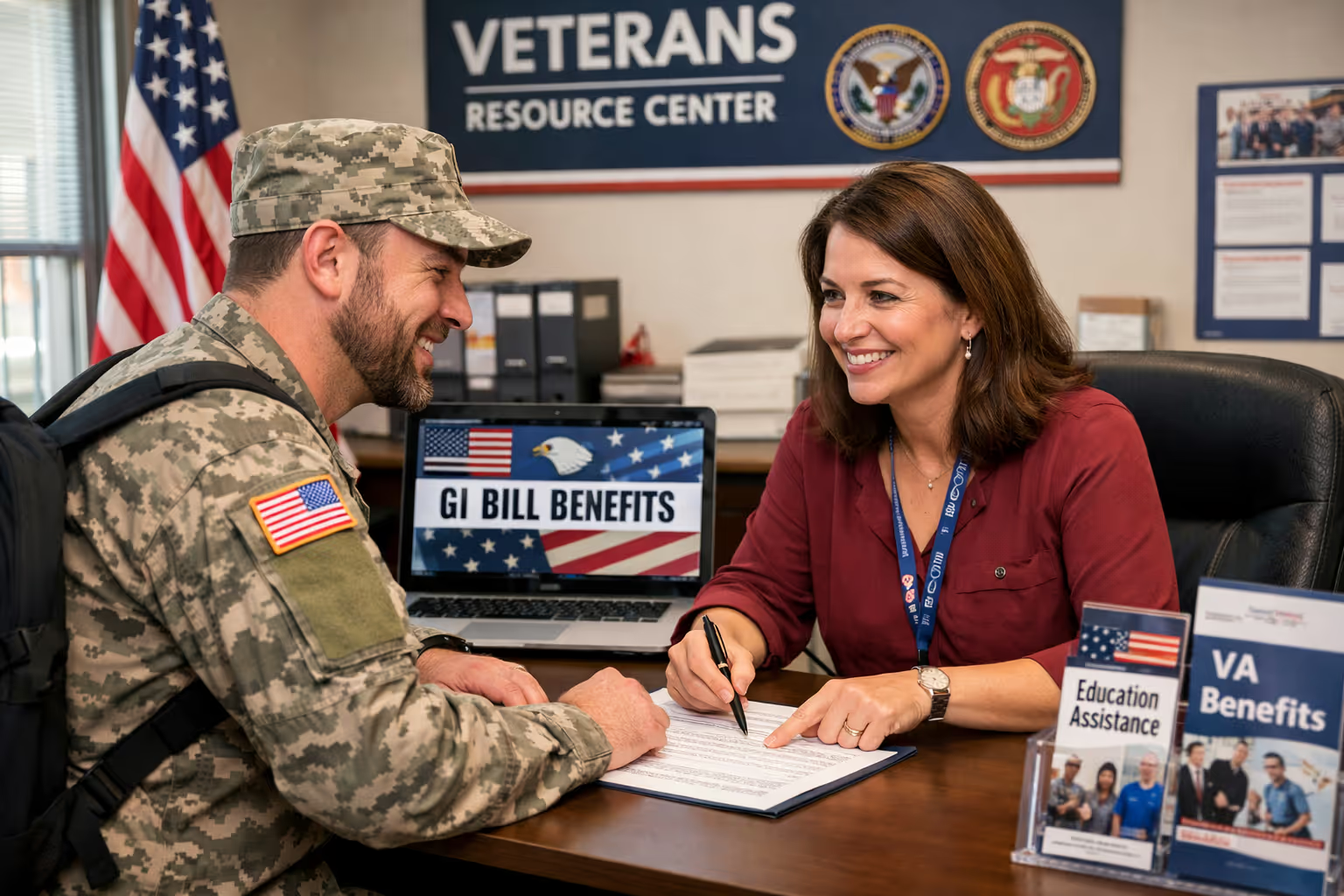
Student veterans must simultaneously manage their academic transition and a complex federal benefits system. The Post-9/11 GI Bill (Chapter 33) operates differently from Vocational Rehabilitation (Chapter 31), and each has distinct eligibility requirements, payment structures, and certification processes [1].
Yellow Ribbon Program participation varies by institution and can significantly affect out-of-pocket costs at private universities [4]. Housing allowances depend on zip code and enrollment status. Book stipends have specific disbursement timelines.
When benefits certification is delayed—which happens frequently—veterans may face weeks without housing allowance payments. Unlike traditional students who might call parents for emergency funds, many veterans are the primary earners for their families. A certification delay isn't an inconvenience; it's a housing crisis.
Help-Seeking Stigma
Military culture emphasizes self-reliance and mission completion despite personal hardship. This strength becomes a barrier when veterans need academic support, mental health resources, or basic navigation help. Many would rather struggle silently than seek assistance they perceive as weakness.
Generic outreach methods—mass emails, posted flyers, optional workshops—don't overcome this barrier. Veterans often need personalized, proactive contact from someone who understands their context.
Deployment and Drill Obligations
Some student veterans remain in the Reserves or National Guard while pursuing their degrees. This means potential drill weekends, annual training periods, and—in some cases—unexpected deployment orders.
Institutions without clear policies for military-related absences put these students in impossible positions. When a drill weekend conflicts with a midterm, or deployment orders arrive mid-semester, veterans need withdrawal and readmission policies that don't penalize their continued service.
The Critical First Semester: Where Support Matters Most
Research consistently shows that the first semester shapes long-term retention outcomes. For veteran students, this window is even more critical.
During those initial weeks, veteran students are simultaneously:
Learning to navigate GI Bill certification, housing allowances, and benefits processing
Adjusting to unstructured schedules after years of regimented routines
Attempting to form social connections with peers who may not understand their background
Processing the psychological aspects of their service transition
Managing family responsibilities that traditional students don't face
I spoke with a veteran services coordinator at a mid-sized public university who described it this way: "By week three, I can usually tell who's going to make it and who's going to disappear. The ones who disappear aren't the ones struggling academically—they're the ones who haven't connected with anyone. They feel invisible."
Without structured check-ins during this period, at-risk students disappear from view. They stop attending class. They don't respond to emails. By the time anyone notices, they've already mentally checked out—or formally withdrawn.
The pattern is predictable enough to prevent. Institutions that proactively engage veterans during the first 100 days see measurably better outcomes. The key is consistency: regular touchpoints that don't wait for students to ask for help.
Peer Mentoring: The Power of Shared Experience
One of the most effective interventions for veteran student success is peer mentoring from fellow veterans. The logic is simple: someone who has navigated the same transition understands the challenges in ways that civilian staff, however well-intentioned, cannot.
When a first-semester veteran is struggling to adjust to an unstructured schedule, hearing "I felt that too—here's what helped me" from a senior veteran student carries weight that no orientation packet can match.
Effective veteran peer mentoring programs share several characteristics:
Structured matching. Pairing incoming veterans with mentors who share relevant experiences (similar service branch, comparable time in service, or shared academic major) increases engagement and trust. A Marine Corps veteran may feel more immediately comfortable with another Marine than with a mentor from a different branch—small connection points matter early in the relationship.
Regular contact expectations. Rather than leaving outreach to chance, successful programs establish expected check-in frequencies—especially during the critical first semester. Weekly contact during the first month, transitioning to biweekly, prevents students from falling through the cracks during adjustment.
Training on resources. Peer mentors need to know where to direct mentees for specific needs, from VA benefits questions to tutoring to counseling services. The mentor doesn't need to be an expert in everything—but they need to know who is.
Social connection facilitation. Beyond one-on-one relationships, mentors help connect new veterans to existing campus veteran communities, student organizations, and events. The goal is building a network, not just a single relationship.
Student Veterans of America chapters on campuses nationwide provide natural infrastructure for this peer support, creating spaces where veteran students can find community with others who share their background [3].
Pre-Orientation Programs Designed for Veterans
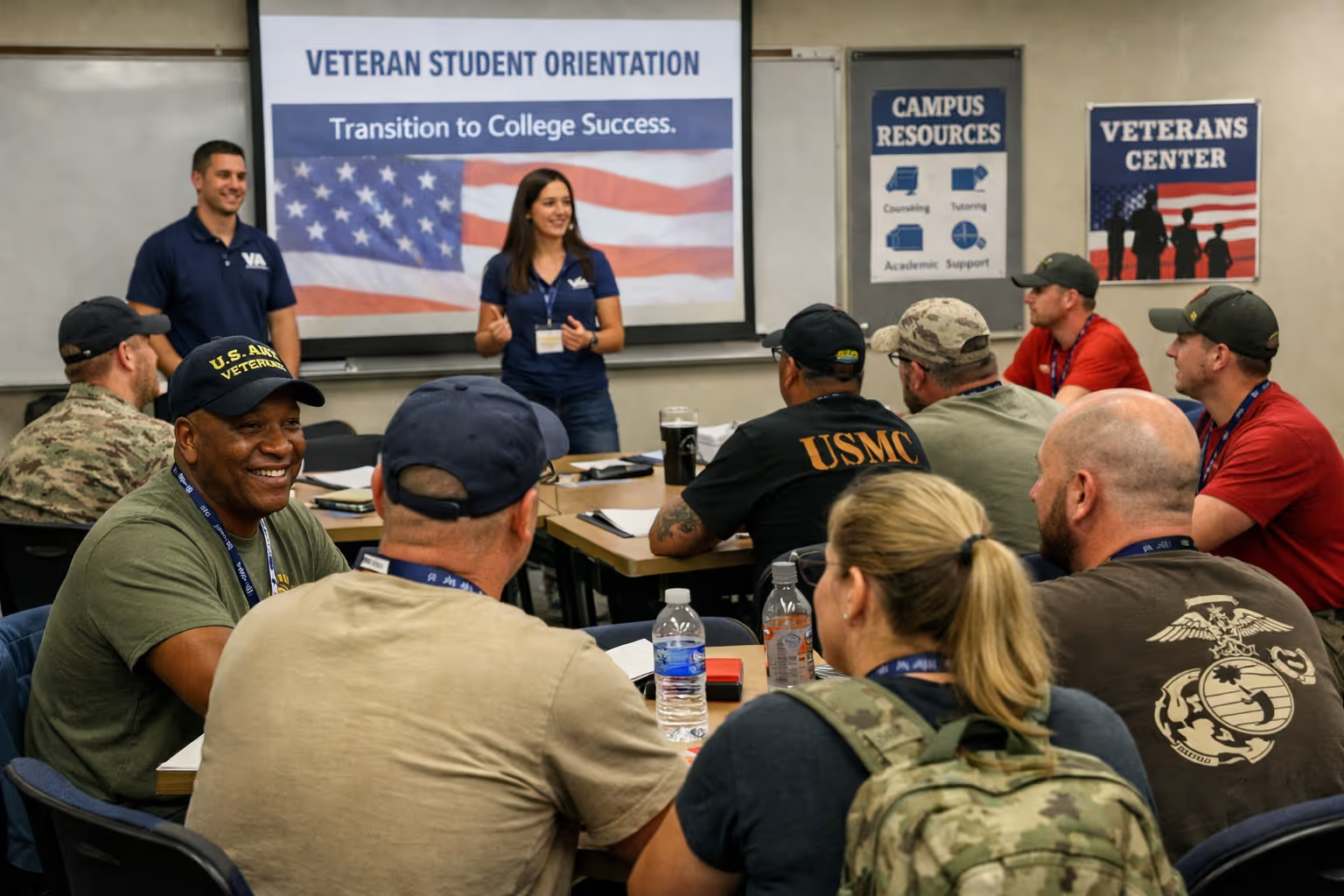
Several institutions have developed pre-orientation programs specifically for incoming veteran students, recognizing that their needs differ significantly from traditional freshmen.
These programs typically address:
GI Bill navigation. Understanding how benefits work, ensuring certification is processed correctly, and troubleshooting common issues before they become crises. This includes explaining the differences between Chapter 33 and Chapter 31 benefits, Yellow Ribbon Program eligibility, and the timeline for housing allowance disbursement.
Campus resource mapping. Veterans benefit from explicit guidance on where to go for specific needs—something that traditional students often figure out organically through peer networks that veterans may lack. A campus tour designed for veterans might emphasize the veteran services office, counseling center, and career services rather than the student union game room.
Academic expectations calibration. Military training is hands-on and applied. Academic learning often requires different study strategies—more reading, less immediate application, different assessment formats. Pre-orientation can bridge this gap before the first exam reveals it.
Community building. Bringing veteran students together before classes begin creates immediate peer connections that persist throughout the semester. Some programs pair incoming veterans with current veteran students during orientation itself.
Family inclusion. For veterans with spouses or children, including families in orientation helps the entire support system understand what's ahead. Spouses often become crucial support mechanisms—or sources of additional stress—depending on how well they understand the transition.
The most effective programs recognize that veteran students aren't starting from scratch—they're translating existing skills and knowledge into a new context.
Proactive Engagement: Moving Beyond Reactive Support
Traditional student support operates reactively. Students fail a test, then get referred to tutoring. Students show signs of distress, then get connected to counseling. Students stop attending, then receive outreach.
For veteran students with strong self-reliance instincts, this reactive model doesn't work. By the time problems become visible, disengagement is often already advanced.
Proactive engagement means:
Regular check-ins that don't require students to initiate. Structured touchpoints—whether through advisors, peer mentors, or technology platforms—reach out before problems escalate. The check-in itself communicates that someone is paying attention.
Monitoring engagement patterns, not just grades. Academic performance is a lagging indicator. Changes in class attendance, campus involvement, or interaction with resources often signal trouble earlier. A veteran who attended every class for six weeks and then misses three in a row is showing something—whether or not their grades have dropped yet.
Normalizing support as standard practice. When check-ins happen for everyone, seeking help doesn't carry stigma. It's simply part of the process. This matters enormously for veterans who may resist anything that feels like singling them out for needing assistance.
Meeting students where they are. Veterans juggling families, jobs, and commutes may not visit campus offices during business hours. Mobile-friendly, accessible support matters. A veteran working night shifts while taking morning classes shouldn't have to choose between sleeping and accessing support services.
Institutions using engagement platforms with proactive check-in capabilities can identify students showing early warning signs and intervene before withdrawal becomes the only option.
Building Campus Communities That Include Veterans
Belonging predicts persistence. Students who feel connected to their institution are dramatically more likely to complete their degrees than those who feel isolated.
For veteran students, belonging requires intentional community-building that bridges the civilian-military divide.
Veteran-Specific Spaces and Organizations
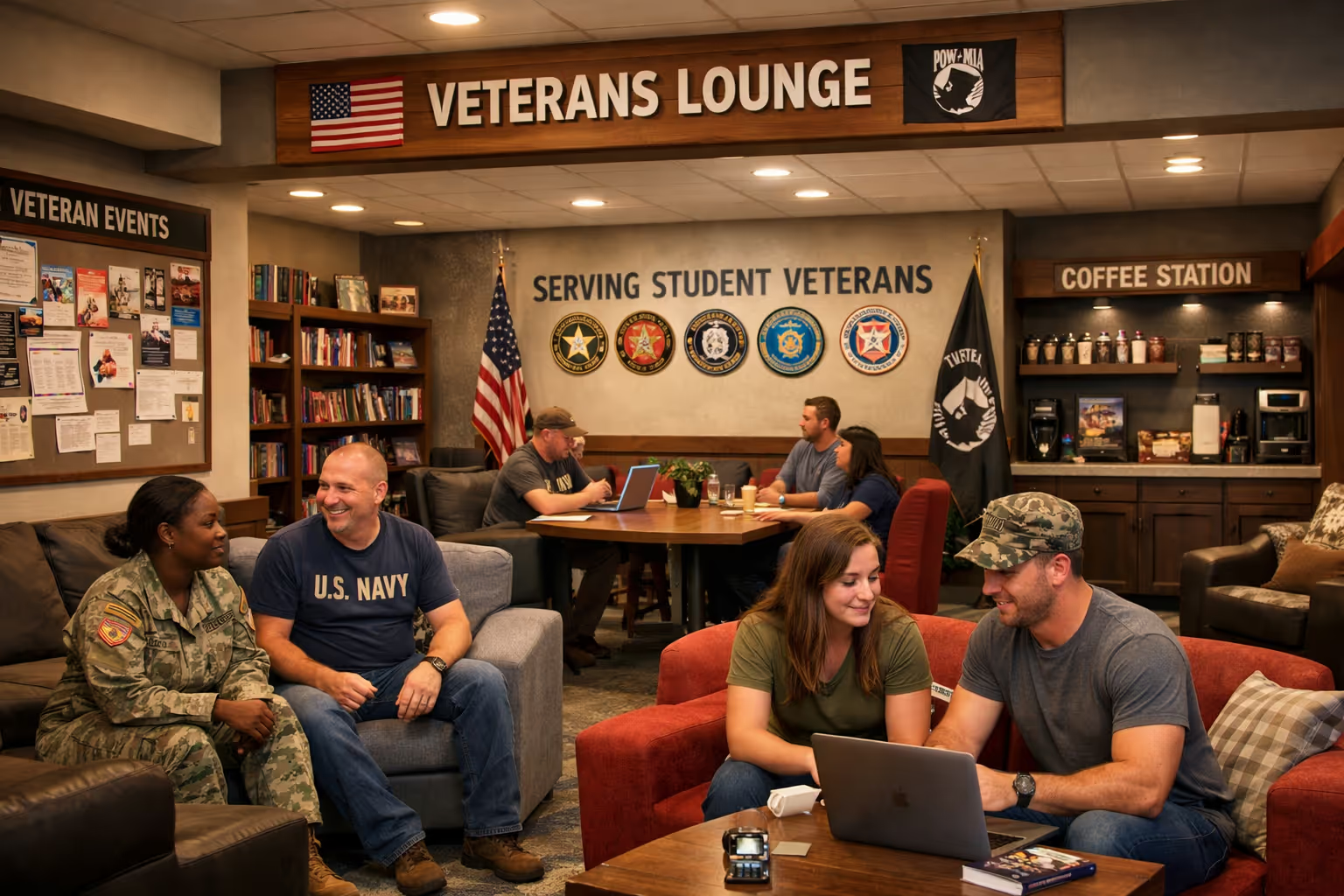
Dedicated veteran resource centers, lounges, and student organizations create physical and social spaces where veteran students can find peers who understand their experience.
These spaces don't replace integration with the broader campus community—they provide a home base from which to engage. A veteran who starts their morning in the veteran lounge, surrounded by people who share their background, may feel more confident walking into a lecture hall full of 18-year-olds afterward.
The physical space matters. A dedicated lounge with comfortable seating, coffee, and quiet study areas communicates institutional investment. A converted storage closet with folding chairs communicates... something else.
Faculty and Staff Training
When instructors understand veteran student backgrounds, they can avoid common missteps:
Cold-calling veterans to "share their experiences" in class without consent. Some veterans are happy to discuss their service; others find it intrusive or triggering. Asking privately first shows respect.
Making assumptions about political beliefs. Military service doesn't correlate neatly with political affiliation. Assuming it does alienates veterans who don't fit the expected mold.
Treating military service as either glorified or stigmatized. Both extremes create distance. Veterans generally want to be treated as students who happen to have military backgrounds—not as heroes, victims, or curiosities.
Ignoring military training as valid learning. Some veterans arrive with extensive technical training that doesn't transfer as academic credit. Acknowledging this expertise—even when it can't count toward a degree—validates their prior learning.
Simple awareness training helps create classrooms where veteran students feel respected rather than othered.
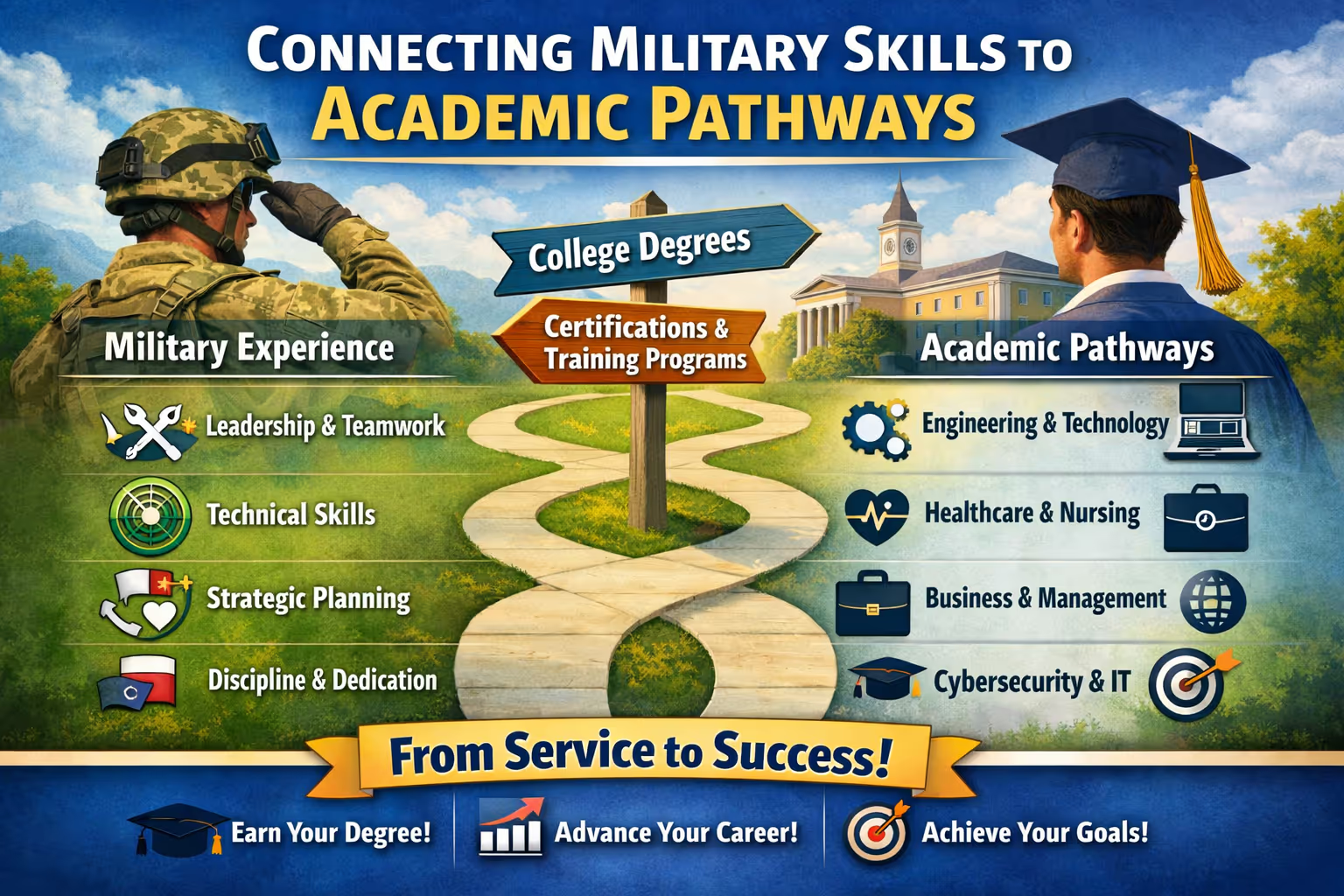
Connecting Military Skills to Academic Pathways
Many veterans arrive uncertain how their military experience translates to civilian careers. A logistics specialist may not immediately see the connection between their military role and supply chain management degrees. A medic may not realize their experience positions them well for nursing or healthcare administration programs.
Academic advisors and career services staff who understand military skill translation can help veterans see pathways forward. The Department of Labor's Military Skills Translator and similar tools provide starting points, but human guidance helps veterans understand which paths align with both their skills and their goals [5].
Addressing Mental Health Without Stigmatizing
Conversations about veteran student mental health require careful navigation.
Not all veterans experienced trauma. Many who did have processed it effectively. Treating every veteran as a potential mental health crisis is both inaccurate and insulting.
At the same time, some veteran students do carry service-related challenges—including PTSD, traumatic brain injury, or adjustment difficulties—that affect their academic experience. According to a RAND Corporation study, approximately 20% of post-9/11 veterans experience PTSD or major depression [6].
The balanced approach:
Make resources visible and accessible without requiring self-identification. Information about counseling, VA mental health services, and crisis support should be readily available to all students. A veteran who needs help shouldn't have to announce that need to access information.
Train faculty and staff to recognize warning signs without making assumptions. Changed behavior, withdrawal, or distress indicators warrant compassionate outreach—not conclusions about causation. "I've noticed you've seemed stressed lately—is there anything I can help with?" is appropriate. "Are you having PTSD flashbacks?" is not.
Normalize help-seeking across the student population. When mental health support is destigmatized broadly, veterans are more likely to engage. Campus-wide messaging about counseling services benefits everyone.
Partner with VA resources. Campus counseling centers can collaborate with VA mental health services to ensure veterans receive appropriate support, whether campus-based or through the VA system. The VA's Vet Center program provides readjustment counseling specifically for this population [7].
Respect autonomy. Veteran students, like all students, have the right to make their own choices about their wellbeing. Support should be offered, not imposed.
What Institutions Can Do: Practical Next Steps
Campuses genuinely committed to veteran student success can take concrete actions:
Establish a Dedicated Veteran Services Office
A single point of contact for veteran-specific needs—GI Bill certification, military credit evaluation, VA coordination—reduces the fragmentation that makes navigation difficult. The School Certifying Official role is federally mandated, but wrapping that function in a broader veteran services office provides continuity and relationship-building that certification alone cannot.
Implement Structured First-Semester Check-Ins
Whether through advisors, peer mentors, or technology platforms, ensure veteran students receive proactive outreach during their first 100 days on campus. Don't wait for them to ask for help.
A simple check-in cadence might include: weekly contact during weeks 1-4, biweekly during weeks 5-10, and monthly thereafter during the first year. The format matters less than the consistency.
Create Veteran Pre-Orientation Programming
Develop orientation experiences designed specifically for veteran students, addressing their unique needs rather than requiring them to extract relevant information from programs built for 18-year-olds.
Even a half-day veteran-specific session before general orientation begins can establish peer connections and provide targeted information that improves the entire first semester.
Support Student Veterans of America Chapters
Campus SVA chapters provide peer community infrastructure that staff alone cannot replicate. Institutional support—funding, space, staff advising—strengthens these student-led organizations and multiplies their impact.
Develop Clear Military Absence Policies
For veterans who remain in the Reserves or National Guard, clear policies for drill weekends, annual training, and potential deployment remove uncertainty and demonstrate institutional understanding of continued service obligations.
Train Faculty and Staff
Even brief awareness training helps instructors and staff understand veteran student backgrounds and avoid common missteps. This doesn't require extensive programming—a 90-minute session during faculty development can cover key considerations.
Track Veteran Student Outcomes
Disaggregating retention and graduation data by veteran status allows institutions to identify gaps and measure improvement over time. What gets measured gets managed. Many institutions don't know their veteran retention rates because they've never looked.
Use Engagement Platforms with Proactive Features
Technology that enables regular check-ins, connects students to relevant resources, and identifies early warning signs can extend staff capacity to reach every veteran student—not just those who self-advocate.
Veterans as Campus Assets
When institutions view veteran students as assets rather than challenges, everything shifts.
These students bring leadership experience, maturity, diverse perspectives, and goal orientation that enrich campus communities. Many become peer mentors themselves, supporting incoming veterans who follow their path. Others take leadership roles in student organizations, contribute meaningfully to classroom discussions, and graduate into careers where their combined military and academic preparation makes them exceptional candidates.
A 2019 study found that student veterans who persist to graduation actually complete degrees at higher rates than their non-veteran peers once they make it past the critical first year [8]. The challenge isn't capability—it's connection.
The military-to-college transition is real and difficult. But with intentional support—structured onboarding, peer mentoring, proactive engagement, and genuine community—veteran students don't just persist.
They lead.
Ready to strengthen support for veteran students at your institution? Proactive engagement platforms can help you reach every student during their critical first semester, identify those who need additional support, and connect them to the right resources before challenges become crises. Book a call to explore how CampusMind can support your veteran student success initiatives.
Frequently Asked Questions
Why do veteran students face different challenges than traditional students?
Veteran students navigate a profound identity transition from military to civilian life while simultaneously adapting to academic environments. Unlike traditional freshmen, they often arrive with families, professional leadership experience, and years of structured routine—only to encounter unstructured schedules and peer groups a decade younger. They must also manage complex federal benefits systems while adjusting to campus culture. Their challenges aren't about academic capability but about finding belonging and translating existing strengths into a new context.
How can peer mentoring help veteran students succeed?
Peer mentors who have completed the military-to-college transition themselves understand challenges that civilian staff cannot fully grasp. They provide credible guidance, normalize adjustment difficulties, and create immediate social connections. Effective programs pair incoming veterans with mentors from similar service backgrounds and establish regular check-in expectations. Research shows structured peer mentoring is particularly effective during the first semester when isolation risks are highest and institutional connections are still forming.
What should veteran pre-orientation programs include?
Effective veteran pre-orientation addresses GI Bill navigation (including differences between Chapter 33 and Chapter 31 benefits), campus resource mapping, academic expectations calibration, and community building with fellow veteran students. The best programs recognize that veterans aren't starting from scratch but translating existing skills into new contexts. Family inclusion helps spouses and children understand the transition ahead, turning potential stress points into support systems.
How can campuses provide mental health support without stigmatizing veterans?
Make resources visible and accessible without requiring veterans to self-identify as needing help. Train staff to recognize warning signs without making assumptions about causation. Partner with VA mental health services and Vet Centers for specialized support. Most importantly, normalize help-seeking across the entire student population so veterans don't feel singled out when accessing support. Approximately 20% of post-9/11 veterans experience PTSD or major depression, but many more are managing their wellbeing effectively.
What role does the first semester play in veteran student retention?
The first semester is critical because veteran students face simultaneous challenges: benefits processing, schedule adjustment, social connection, and identity transition. Without structured check-ins and proactive outreach during this period, at-risk students often disengage before anyone notices. Research shows that veterans who make it through the first year actually graduate at higher rates than non-veteran peers—the challenge is supporting them through that initial transition window.
About CampusMind
CampusMind is a student engagement and wellbeing platform built to help colleges support students throughout their entire campus journey. Our approach combines behavioral science, personalized recommendations, and real-time insights to connect students with the resources they need—proactively, not reactively. For institutions serving veteran students and other non-traditional populations, our platform enables the structured check-ins and early intervention that research shows make the difference between persistence and withdrawal.
Works Cited
[1] U.S. Department of Veterans Affairs — "Post-9/11 GI Bill (Chapter 33) Rates." https://www.va.gov/education/about-gi-bill-benefits/post-9-11/
[2] National Center for Education Statistics — "Profile of Undergraduate Students: Attendance, Distance and Remedial Education, Degree Program and Field of Study, Demographics, Financial Aid, Financial Literacy, Employment, and Military Status." https://nces.ed.gov/pubs2020/2020009.pdf
[3] Student Veterans of America — "National Veteran Education Success Tracker (NVEST)." https://studentveterans.org/research/nvest/
[4] U.S. Department of Veterans Affairs — "Yellow Ribbon Program." https://www.va.gov/education/about-gi-bill-benefits/post-9-11/yellow-ribbon-program/
[5] U.S. Department of Labor — "Veterans' Employment and Training Service." https://www.dol.gov/agencies/vets
[6] RAND Corporation — "Invisible Wounds of War: Psychological and Cognitive Injuries, Their Consequences, and Services to Assist Recovery." https://www.rand.org/pubs/monographs/MG720.html
[7] U.S. Department of Veterans Affairs — "Vet Center Services." https://www.vetcenter.va.gov/