The email arrives in August. A first-generation college student opens it from her childhood bedroom, 400 miles from campus. There's a link to virtual orientation. She clicks, watches a pre-recorded video of the dean waving at a camera, scrolls through a PDF about dining halls she's never seen, and closes her laptop feeling more anxious than before.
This scenario plays out thousands of times each year. And it represents a missed opportunity that directly impacts whether students stay enrolled.
Virtual orientation and onboarding have become permanent fixtures in higher education—not pandemic stopgaps, but strategic tools for building connection at scale. Yet too many institutions treat digital welcome experiences as information dumps rather than community-building moments. The research is clear: how students experience their first days—even through a screen—shapes whether they feel they belong. And belonging predicts persistence.
Here's what the evidence shows about creating virtual orientations that actually work, plus practical strategies campus leaders can implement before the next cohort arrives.
Why Virtual Orientation Matters for Student Retention
The first weeks of college represent a critical window. Students who don't connect early often don't connect at all.
Research from the National Resource Center for The First-Year Experience and Students in Transition consistently demonstrates that orientation quality correlates with first-year retention. Their multi-institutional studies show that students who participate in high-engagement welcome experiences report stronger institutional commitment and higher persistence rates than those who receive passive, information-only orientations [1]. The key distinction is active engagement—passive content consumption doesn't build the relationships that keep students enrolled.
This aligns with broader findings on student support. The Gallup-Purdue Index found that students who felt "supported" during college were nearly three times more likely to thrive after graduation [2]. That sense of support begins during orientation—or fails to.
Virtual orientation presents unique challenges. Students can't bump into future roommates in the hallway. They can't feel the energy of a crowded campus quad. They can't ask a peer a quick question after a session ends. These organic moments of connection require intentional design in digital environments.
But virtual formats also offer advantages. Students can revisit recorded content. Introverted students may feel more comfortable participating through chat functions. Geographic and financial barriers to attending in-person sessions disappear. The question isn't whether virtual orientation can work—it's whether institutions design it to work.
Best Practices for Virtual Orientation That Builds Community
Prioritize Synchronous Sessions Over Asynchronous Content
Pre-recorded videos have their place. They're efficient for delivering logistical information about financial aid deadlines or parking permits. But they cannot replace real-time human interaction for building community.
Effective virtual orientations build their schedule around live sessions where students can see faces, hear voices, and participate in conversations. This doesn't mean every moment needs to be synchronous—that would exhaust everyone. It means the most important community-building moments happen live.
Consider structuring virtual orientation with this balance:
Asynchronous modules for compliance training, campus tour videos, and reference materials students can review at their own pace
Synchronous sessions for small-group discussions, Q&A with current students, and interactive activities that require real-time participation
Hybrid elements like discussion boards that extend live conversations between sessions
Platforms like Zoom, Microsoft Teams, and dedicated orientation software all support this structure. Tools such as Eventus (known for event management features that track attendance and engagement), Suitable (which offers gamification elements that reward participation), and Orientation Gateway (designed specifically for campus orientation workflows) can enhance virtual delivery. But the technology matters less than the intentional design behind it.
Design Ice-Breakers That Actually Break Ice
Not all ice-breakers are created equal. Asking students to share their name and major through a chat function doesn't create connection. It creates a wall of text that scrolls by too fast to read.
Effective virtual ice-breakers share several characteristics:
They're small-group based. Breakout rooms of 6-8 students allow everyone to speak and be heard. Large-group introductions become performative rather than connective.
They invite storytelling, not facts. Instead of "share your major," try "describe a moment when you first imagined yourself in college" or "tell us about someone who encouraged you to pursue higher education." Stories create emotional resonance that facts cannot.
They build toward something. The best ice-breakers have students collaborate on a small task—creating a playlist for the first week of classes, designing a hypothetical club, or solving a low-stakes puzzle together. Shared activity accelerates relationship formation.
They acknowledge the awkwardness. Facilitators who name the discomfort of virtual introductions ("I know this feels strange, and that's okay") give students permission to be imperfect. This vulnerability modeling matters.
Make Live Q&A Sessions the Centerpiece
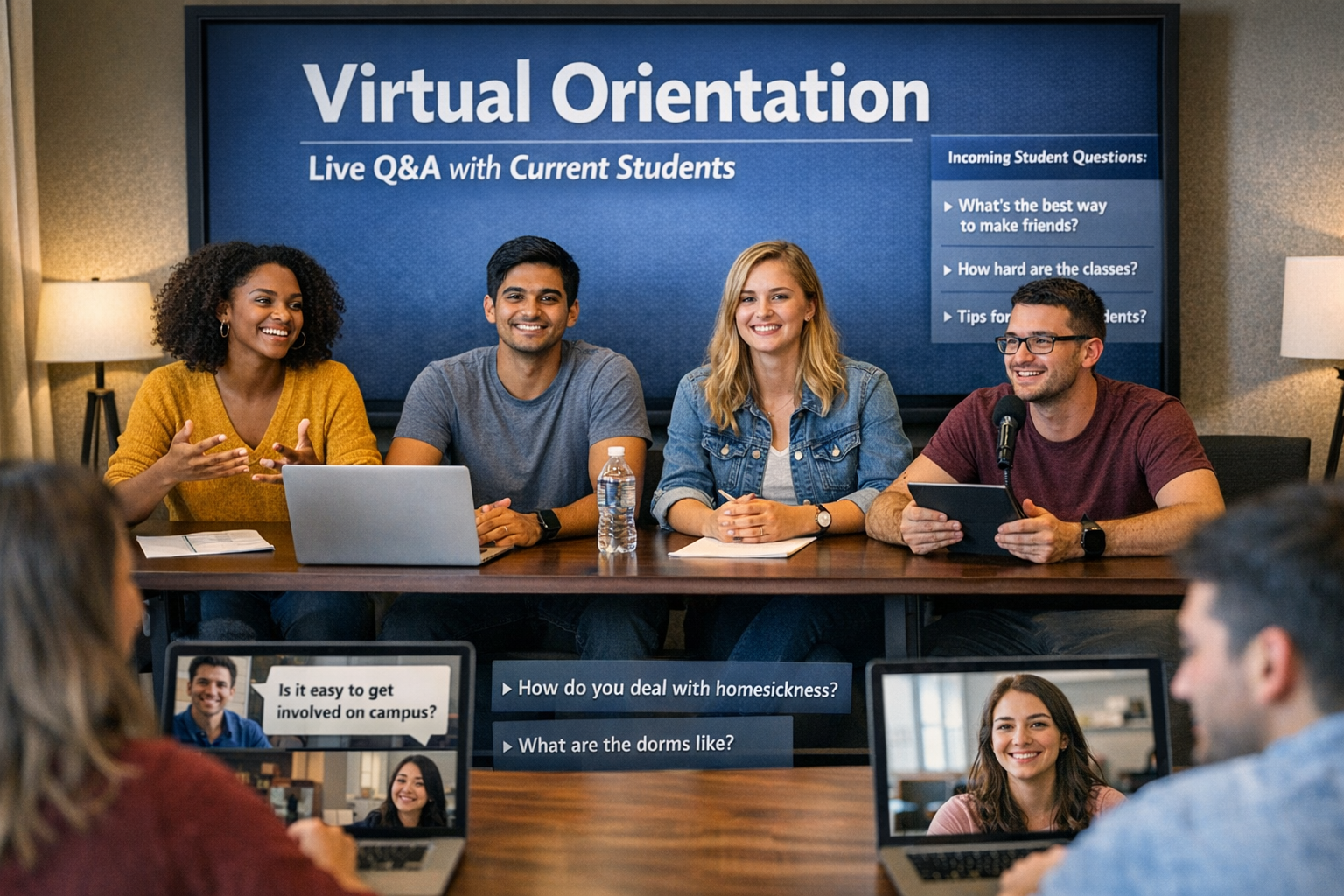
Nothing builds trust like answered questions. Live Q&A sessions—especially those featuring current students, not just administrators—consistently rank among the most valued orientation components in student feedback.
Effective Q&A design includes:
Anonymous question submission through tools like Slido, Mentimeter, or Poll Everywhere, which allows students to ask things they'd be embarrassed to voice aloud
Panel diversity that includes students from various backgrounds, majors, and years—not just student government presidents
Honest answers that acknowledge challenges alongside opportunities (current students who admit they struggled initially are more credible than those who claim everything was perfect)
Follow-up pathways so students know how to get answers to questions that couldn't be addressed in the session
The Q&A format also provides valuable intelligence for administrators. The questions students ask reveal their anxieties, knowledge gaps, and priorities. This data should inform ongoing communication strategies throughout the first semester.
Create Smaller Cohort Experiences
A virtual orientation with 500 students in one Zoom room is a webinar, not a community experience. Students need to see the same faces repeatedly to begin forming relationships.
Successful programs divide incoming students into smaller cohorts that stay together throughout orientation. These groups might be organized by:
Intended major or college
Residence hall assignment
Shared identity (first-generation students, transfer students, student-athletes)
Random assignment with intentional facilitation
The key is consistency. When students recognize peers from previous sessions, they begin to feel known. When they're repeatedly thrown into new groups of strangers, each session feels like starting over.
Research on peer connection in higher education supports this approach. A study published in the Journal of College Student Retention found that students who formed at least one meaningful peer connection during orientation week were significantly more likely to persist to their second year [3]. Small-group cohort models create the conditions for those connections to form.

Train Facilitators for Virtual Engagement
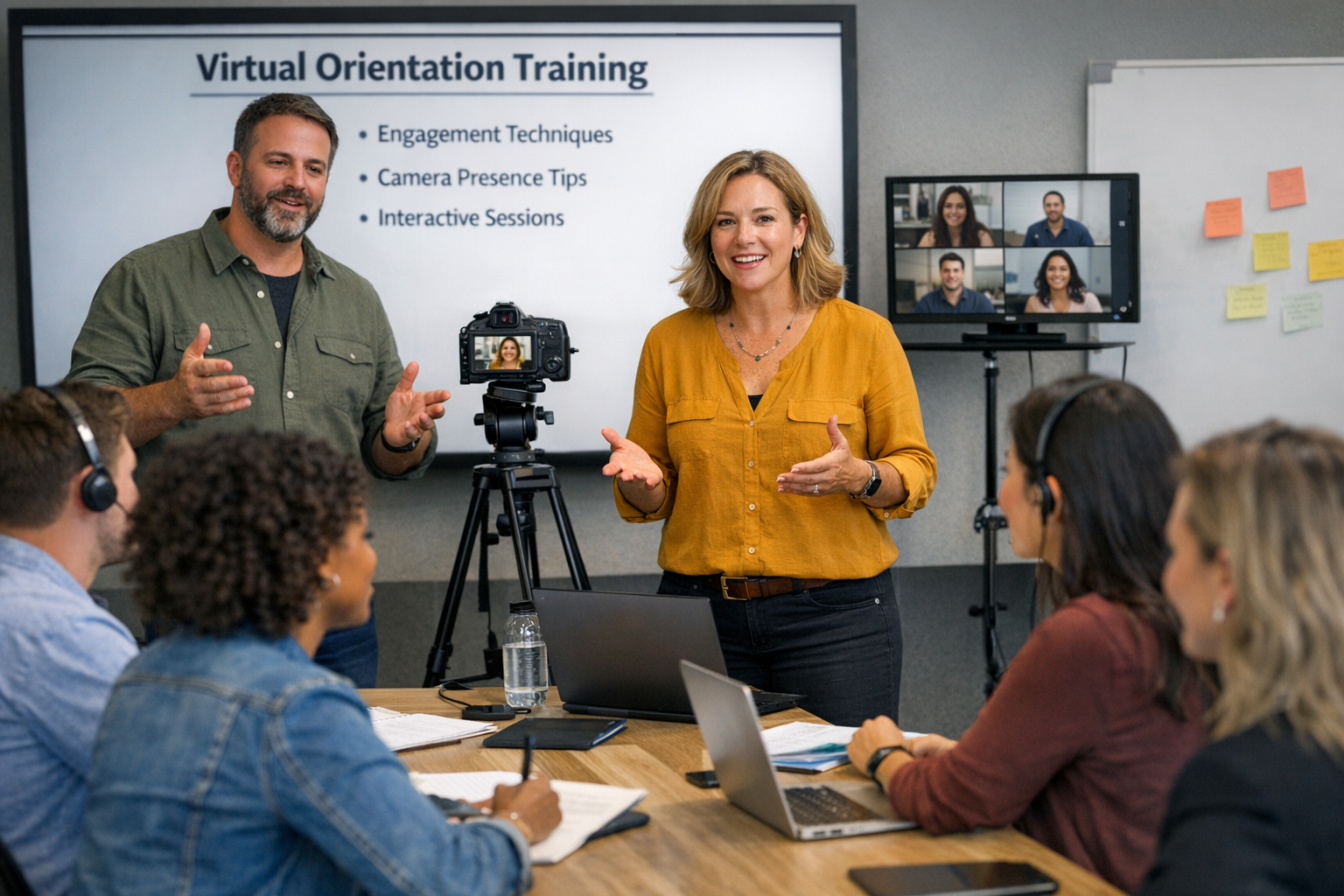
Running an effective virtual session requires different skills than facilitating in-person. Energy that reads as enthusiastic in a physical room can feel performative through a camera. The pacing that works with visible audience feedback fails when participants are muted with cameras off.
Facilitator training should address:
Technical fluency with the platform, including backup plans for common glitches
Engagement techniques specific to virtual environments (directed questions, chat prompts, strategic use of breakout rooms)
Camera presence including lighting, eye contact with the camera, and speaking pace
Inclusive practices that don't assume all students have reliable internet, private space, or ability to have cameras on
Student facilitators—peer mentors, orientation leaders, resident advisors—need this training as much as professional staff. Often more, since students may have less experience running virtual sessions.
Extending Onboarding Beyond Orientation Week
The most common mistake institutions make is treating orientation as an event rather than a process. A single week of programming, no matter how well-designed, cannot fully integrate students into campus life.
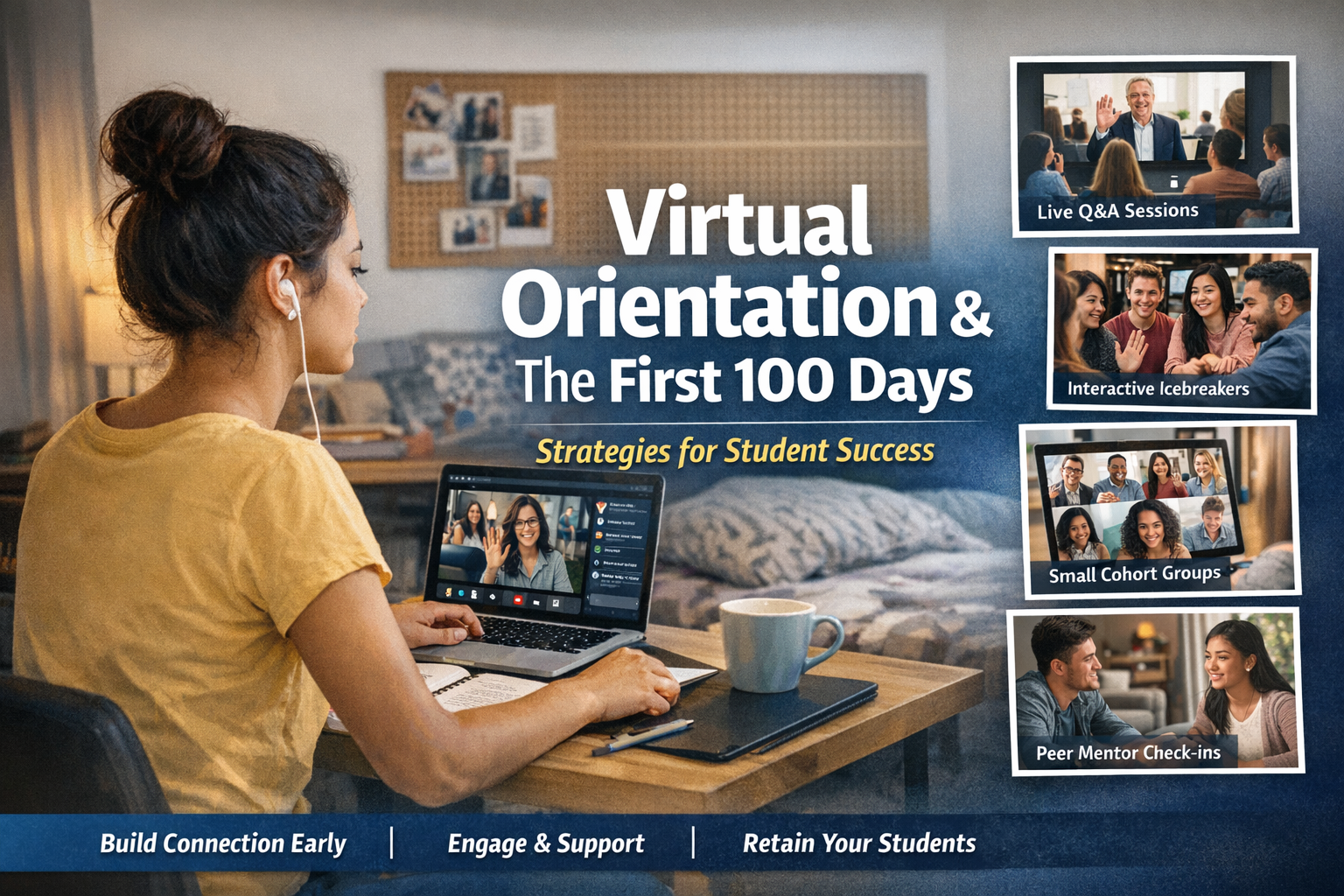
The First 100 Days Framework
Research consistently shows that the first weeks and months of college determine long-term outcomes. Students who don't feel connected by midterm are significantly more likely to leave.
Georgia State University's nationally recognized approach to proactive student support demonstrates what's possible with sustained attention to early engagement. By implementing data-driven advising that identifies struggling students early and reaches out before problems escalate, the institution increased its six-year graduation rate from 32% in 2003 to 55% in 2019—a 23 percentage point improvement—while eliminating equity gaps in completion rates among racial and ethnic groups [4]. Their success came not from orientation alone, but from treating the entire first year as an extended onboarding period.
This reality demands extended strategies:
Structured touchpoints at key moments (week 3, week 6, midterms) that re-engage students who may be drifting
Progressive content that introduces resources when students need them rather than front-loading everything into orientation
Peer mentor check-ins that continue throughout the first semester
Low-stakes social opportunities that give students multiple chances to find their people
Bridge Virtual to Physical
For students who will eventually be on campus, virtual orientation should explicitly prepare them for in-person arrival. This means:
Virtual campus tours that identify specific buildings students will need to find
"Scavenger hunt" style activities that students complete during their first days on campus
Connections to current students they can meet in person after arrival
Clear communication about what orientation content they can skip and what they should revisit
The goal is continuity. Students should arrive on campus feeling like they're rejoining a community, not starting from scratch.
Measuring What Matters
Virtual orientation success shouldn't be measured solely by attendance rates or satisfaction surveys. While those metrics have value, they don't capture whether orientation accomplished its core purpose: helping students feel they belong.
Consider tracking:
Connection formation: How many students report making at least one friend or acquaintance during orientation?
Resource awareness: Can students name specific offices and how to access them?
Confidence levels: Do students feel prepared to navigate their first week?
Follow-through: Do students who engaged actively in orientation show up for recommended early-semester programs?
Retention correlation: How do orientation engagement levels correlate with persistence to second semester and second year?
This data allows continuous improvement. It also helps justify investment in orientation programming to institutional leadership focused on retention outcomes.
Technology That Supports Community, Not Replaces It
Platforms matter, but they're not magic. The best technology enables human connection rather than substituting for it.
When evaluating virtual orientation technology, prioritize:
Ease of use for students with varying technical proficiency
Accessibility features for students with disabilities (closed captioning, screen reader compatibility, keyboard navigation)
Mobile functionality for students without reliable computer access
Breakout room capabilities that allow small-group conversations
Engagement tools like polls, chat, and collaborative documents
Recording options for students who can't attend live sessions
Integration with other campus systems students will use throughout their enrollment, such as Canvas, Blackboard, or your institution's student portal
The technology should be invisible enough that students focus on each other and the content, not on troubleshooting the platform.
What This Means for Campus Leaders
Virtual orientation and onboarding represent a strategic investment in student retention. Every dollar spent on engaging welcome experiences pays dividends in retained tuition, improved completion rates, and stronger alumni relationships.
Campus leaders should:
Audit current virtual orientation against the best practices outlined above
Invest in facilitator training for both staff and student leaders
Extend onboarding timelines beyond orientation week into the first full semester
Collect meaningful data that connects orientation engagement to retention outcomes
Resource appropriately recognizing that effective virtual programming requires dedicated staff time and technology investment
The institutions that thrive in the coming decade will be those that treat every student touchpoint—especially early ones—as an opportunity to demonstrate care and build belonging.
Ready to Transform Your Student Welcome Experience?
If you're looking for ways to support student engagement from day one through graduation, explore how CampusMind helps institutions create connected experiences that improve retention and student wellbeing. Book a call to discuss what's possible at your campus.
Frequently Asked Questions
How long should virtual orientation sessions run before students disengage?
Research on virtual learning suggests attention drops significantly after 45-60 minutes of continuous content. Build in breaks every 45 minutes and alternate between passive content consumption and active participation. Shorter, more frequent sessions typically outperform marathon programming days, even if total hours remain the same. Consider sessions of 45-50 minutes with 10-minute breaks between them.
Should we require cameras to be on during virtual orientation?
Mandatory camera policies create equity concerns. Some students lack private space, reliable internet, or technology that supports video. Instead of requirements, create conditions where students want cameras on—small groups where they'll see the same faces again, facilitators who model camera use, and activities that benefit from visual connection. Explain why cameras help community building without mandating compliance.
How can we create community for fully online students who will never come to campus?
Online students need different community strategies, not less community. Consider cohort-based models where online students progress through courses with consistent peers. Create dedicated virtual spaces—Discord servers, social media groups, or platform-based communities—where online students can connect informally. Pair online students with virtual peer mentors who understand their experience. The principles of repeated interaction, small groups, and shared activity apply regardless of modality.
What's the most common mistake institutions make with virtual orientation?
Information overload. Institutions try to communicate everything students might possibly need during orientation, resulting in overwhelming sessions where nothing sticks. Students don't need to know everything before classes start—they need to know how to find information when they need it and to feel that people on campus care about their success. Prioritize connection over content coverage.
How do we know if virtual orientation is actually improving retention?
Research consistently shows that the first weeks and months of college determine long-term outcomes. Students who don't feel connected by midterm are significantly more likely to leave.
About CampusMind's Expertise in Student Engagement
CampusMind's approach to student success draws on behavioral science research and real-world implementation across diverse institutions. The platform is designed to extend the welcome experience beyond orientation week, helping students stay connected to campus resources and support throughout their college journey. Our team combines expertise in student development theory with practical understanding of what campus administrators need: data-driven insights, scalable solutions, and measurable improvements in student outcomes.
Works Cited
[1] National Resource Center for The First-Year Experience and Students in Transition. "Research and Best Practices for Orientation Programs." University of South Carolina. https://sc.edu/about/offices_and_divisions/national_resource_center/research/index.php
[2] Gallup and Purdue University. "Great Jobs, Great Lives: The Relationship Between Student Debt, Experiences and Perceptions of College Worth." Gallup-Purdue Index Report, 2014. https://www.gallup.com/services/176768/2014-gallup-purdue-index-report.aspx
[3] Swenson, L.M., Nordstrom, A., & Hiester, M. "The Role of Peer Relationships in Adjustment to College." Journal of College Student Retention: Research, Theory & Practice, 9(1), 2008. https://journals.sagepub.com/home/csr
[4] Georgia State University. "Student Success Programs." Georgia State University Office of the Provost, 2023.
https://success.gsu.edu/approach/