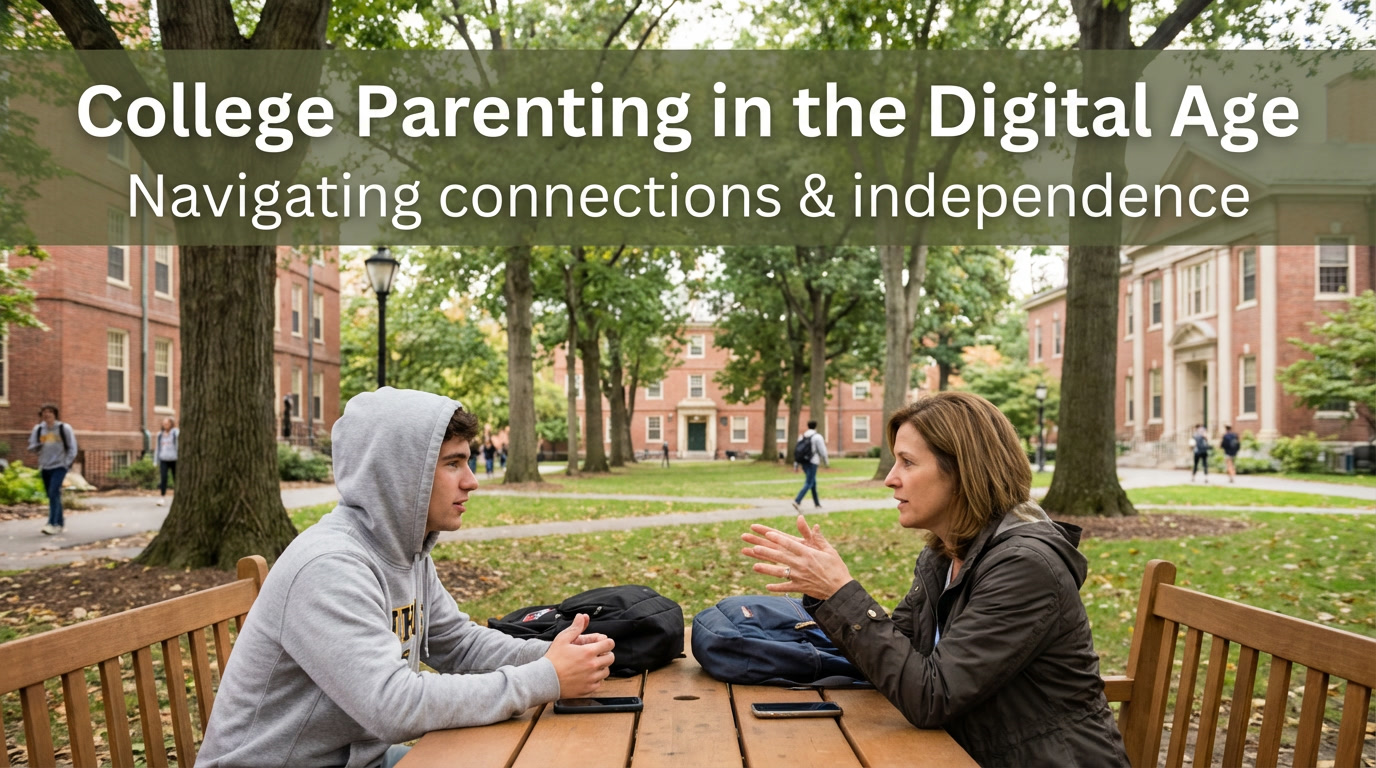
Remember when dropping your kid at college meant actual goodbye? You helped them unpack, maybe cried in the parking lot, then drove home to wait by the phone for Sunday evening calls.
Today's reality looks nothing like that.
You can see exactly where they are right now. You know what they bought for lunch. You can read their texts—if you really wanted to. The technology that promised to ease your worry has created a new problem: when you can monitor everything, should you?
Here's the uncomfortable truth parents face: the tools that let you stay connected can actually prevent the independence your student needs to develop. This isn't about being a "good" or "bad" parent. It's about navigating genuinely new territory that your own parents never had to consider.
Let's talk about how to stay supportive without becoming the person your kid screens calls from.
The Location Tracking Debate: What Research Actually Shows
Walk into any parent orientation session, and you'll hear whispers about Life360. Some families swear by it. Others see it as digital leashes that prevent real trust from developing.
Before you install tracking software, understand what researchers have found. A 2024 study in the Journal of Adolescent Research examined over 800 college freshmen and their parents. Students whose parents practiced high levels of surveillance—including location tracking—reported lower self-efficacy and struggled more with decision-making compared to peers with greater autonomy [1].
That doesn't mean tracking is always wrong. Context matters.
When tracking might make sense:
Mutual agreement where your student genuinely wants it (not just agrees to make you happy)
Time-limited arrangement during the first few weeks of adjustment
Safety tool for students with specific medical conditions or disabilities
Family culture where everyone shares locations voluntarily, including parents
Why tracking often backfires:
Communicates fundamental distrust at a critical developmental moment
Prevents students from learning to communicate their plans independently
Creates resentment that damages the relationship you're trying to protect
Increases parental anxiety rather than reducing it (you see every unexpected location and worry more, not less)
Students find workarounds—turning off location, leaving phones in dorms—creating dishonesty patterns
Dr. Laurence Steinberg, a leading researcher in adolescent development, notes that emerging adults (ages 18-25) need opportunities to make autonomous decisions to develop executive functioning skills. "The goal isn't to eliminate parental support," Steinberg explains in his work on autonomy development, "but to shift from directing to consulting" [2].
If you're considering tracking, have this conversation: "I'm struggling with letting go. Would you be comfortable sharing locations temporarily while we both adjust?" Make it their choice. Many families start with tracking for fall semester only, then phase out as trust builds and everyone relaxes.
Or skip it entirely. Trust isn't built through surveillance—it's built through consistent communication about what matters.
How Often Should You Actually Contact Your College Student?
No magic number exists. Sorry. Anyone promising you "the right amount" is oversimplifying.
Your relationship, your student's personality, and their adjustment timeline all factor in. That said, research on college student wellbeing offers guidance.
The 2023 National Survey of Student Engagement found that students who reported positive family relationships—characterized by supportive but not intrusive contact—showed higher engagement and retention rates. The sweet spot? Regular but not overwhelming connection [3].
Here's what typically works:
Start with one scheduled weekly call or video chat. Pick a consistent time that works for both of you. This creates a rhythm without feeling like checking in on them.
Between those calls, text casually but don't expect immediate responses. College students live in unpredictable bursts—sometimes they're in class for four hours straight, other times they're free all afternoon. A three-hour delay means nothing.
Let them initiate sometimes. If you're always the one reaching out, you're not getting accurate information about their need for contact. Pull back slightly and see what their natural rhythm is.
Watch patterns, not individual incidents:
If your normally chatty student goes silent for several days: gentle check-in warranted
If they suddenly start calling every day when they used to call weekly: they're likely struggling
If they take six hours to respond to one text: completely normal
If they start leaving you on read consistently: might signal they need more space
First semester typically needs more frequent contact. By spring, most families naturally settle into less frequent, more substantive conversations. One parent I spoke with described it perfectly: "Freshman fall we talked three times a week. By sophomore year, once a week felt like plenty. Now he's a senior and sometimes two weeks pass. And that's fine—when we do talk, it's real conversation."
Quality beats quantity every time. A genuine 20-minute conversation where you actually listen—not interrogate them about laundry, grades, or whether they're eating vegetables—matters more than daily "just checking in" texts that make them feel monitored.
Setting Digital Boundaries That Actually Stick
The summer before college starts is prime time for this conversation. Don't wait until conflict forces it.
Sit down together and work through these questions honestly:
Communication expectations:
What's a reasonable response time for non-urgent messages?
What constitutes an actual emergency?
Which topics are they comfortable discussing via text versus phone calls?
How do they want to handle friend/relationship updates?
Financial transparency:
What spending information do you need versus what's their business?
How will you handle unexpected expenses?
What's the monthly budget, and what happens if they exceed it?
Academic privacy:
Will they voluntarily share grades, or is that completely private?
How do they want to discuss academic struggles?
What role do you play if they're considering dropping a class or changing majors?
Write these agreements down. Not because you need a formal contract, but because verbal agreements get misremembered when emotions run high.
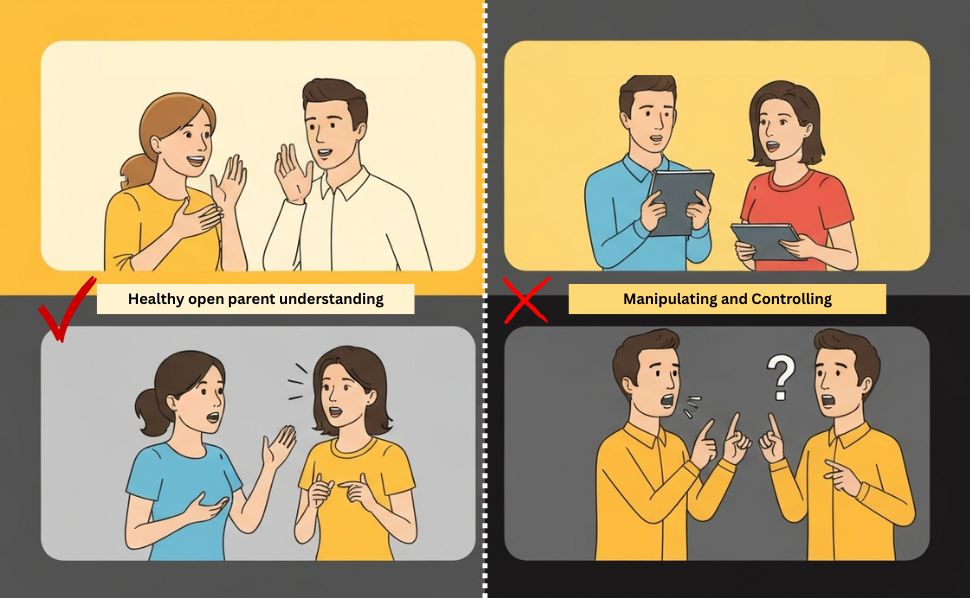
Respect privacy like you'd want yours respected. You wouldn't want your own mother demanding to know where you were every Friday night when you were 22. Your student deserves the same respect. That means:
No demanding passwords to email, Canvas, or social media accounts. Some colleges let parents add themselves as "authorized users" to see grades—resist this unless your student actively wants to share. Research from the Journal of Adolescence confirms that students whose parents respected their privacy reported better psychological adjustment and academic performance [4].
No scrutinizing every bank transaction. Yes, you might be funding the account, but micromanaging spending teaches nothing about financial independence. Set clear budget parameters, then step back. If you notice genuinely concerning patterns—like frequent charges at liquor stores or unexplained large withdrawals—bring it up calmly during your regular check-ins.
Boundaries should evolve, not stay static. Plan to revisit agreements each semester. As your student demonstrates responsibility, reduce oversight. The goal is gradual independence, not prolonged dependence.
When Your Student Isn't Being Honest With You
Finding out your student lied about grades, hid a mental health crisis, or wasn't truthful about finances hurts. Before you react, pause and ask yourself: why might they have hidden this information?
Common reasons students withhold information:
Fear of disappointing parents who've invested so much
Desire to solve problems independently without appearing incapable
Previous experiences where parents overreacted or immediately took over
Shame about struggling when they think they should be succeeding
Uncertainty about how serious the problem really is
Respond with curiosity, not consequences. Your first reaction shapes future honesty. Try this: "I noticed [specific situation]. Help me understand what's been happening." Then actually listen. Don't interrupt with solutions, judgments, or "I told you so."
Resist the urge to say things like:
"Why didn't you tell me sooner?"
"This wouldn't have happened if you'd listened to me"
"I can't believe you hid this from me"
Instead, try:
"That sounds really stressful. What's been the hardest part?"
"What kind of support would actually help right now?"
"I'm glad you're telling me now. Let's figure this out together."
Check your own contribution to the dynamic. Do you tend to catastrophize small setbacks? Jump in with solutions before understanding the full situation? Take over problems rather than helping your student solve them? Students who feel their parents will overreact or take control learn to share less, not more.
One parent shared this with me: "My daughter failed her first college exam and didn't tell me for two weeks. I was hurt she'd hidden it. Then I realized every time she'd struggled in high school, I'd immediately scheduled tutoring, emailed teachers, and created elaborate study plans for her. She hadn't learned to fail and recover—because I never let her. Once I backed off and just listened, she started sharing again."
Distinguish healthy privacy from dangerous secrets. Your student doesn't owe you every detail of their social calendar, friendship dynamics, or romantic life. That's appropriate privacy, not dishonesty.
However, serious mental health crises, dangerous behaviors, academic jeopardy that threatens enrollment, or significant financial problems require your involvement. Make clear you're always available for the big stuff without needing updates on everything.
If the dishonesty involved surveillance: If you discovered information through checking their location obsessively, reading their messages, or monitoring accounts without permission, recognize this breach of trust makes future honesty harder. The fact that technology allows access doesn't mean you should use it. Consider apologizing for the invasion of privacy while still addressing the concerning behavior.
Trust rebuilds slowly. Focus forward rather than dwelling on the breach. Ask what would help them feel comfortable being honest going forward. Maybe you need to react less intensely. Maybe they need to initiate difficult conversations rather than waiting for you to discover problems.
Academic Pressure in the Digital Age: Letting Go of Control
FERPA—the Family Educational Rights and Privacy Act—grants students complete privacy rights at age 18. Colleges legally cannot share grades, academic progress, or disciplinary records with parents without explicit student consent [5].
This shocks many parents who expect the same access they had during high school. Some colleges offer forms allowing students to grant parents access. Here's my advice: don't push for it.
Demanding academic access sends a clear message: I don't trust you to handle your education. That's probably not the message you intend, but it's what your student hears.
Try a different approach. Have honest conversations about how things are going without requiring proof. Ask open-ended questions:
"What's been challenging this semester?"
"Which class are you enjoying most, and why?"
"How do you know when you need extra help?"
Notice those questions assume competence and invite reflection rather than demanding grades.
When your student chooses to share grades or struggles, respond supportively. If they're proud of an A, celebrate it. If they're disappointed by a C, resist the urge to lecture. Ask: "What do you think contributed to that? What might you do differently next time?"
Excessive academic monitoring via digital channels backfires spectacularly. Constant texts asking about assignments, grades, or studying creates stress, resentment, and often worse outcomes. A 2023 study in Emerging Adulthood journal found that students whose parents engaged in high levels of academic monitoring reported higher anxiety, lower self-efficacy, and ironically, slightly lower GPAs than peers with less involved parents [6].
College academics function fundamentally differently from high school. Students have more autonomy but also more responsibility. They're learning to manage their own education. Let them.
If your student genuinely struggles academically, they need support, not surveillance. Help them identify campus resources:
Writing centers for paper assistance
Tutoring services (usually free)
Professor office hours (most students never attend—huge missed opportunity)
Academic advisors who can discuss study strategies
Disability services if learning differences emerge
Teach them to advocate for themselves rather than intervening directly. Role-play emails to professors. Talk through how to request extensions appropriately. Help them develop the skills they'll need long after graduation.
One boundary worth setting: if you're funding college, you deserve to know they're making reasonable academic progress. Many families agree that students must maintain minimum GPA requirements (often matching scholarship requirements) and inform parents if they're at risk of losing financial aid. That's reasonable. Demanding weekly grade updates is not.
Money Talks: Financial Communication Without Surveillance
Shared bank accounts, Venmo, Apple Pay—modern technology creates complete financial transparency. You can see every transaction in real time if you want.
Just because you can doesn't mean you should.
Teach financial literacy, not submission to monitoring. Before college starts, work together on a realistic monthly budget:
Food (beyond meal plan)
Entertainment and social activities
Personal care items
Books and course materials
Transportation or parking
Emergency fund
Discuss realistic amounts for each category based on your financial situation and what you're willing to fund. Then—and this is crucial—let them manage within those parameters.
Schedule monthly financial check-ins rather than monitoring daily transactions. First week of every month, have a 15-minute conversation:
How did last month's spending go?
Any surprises or unexpected expenses?
What's working with the budget?
What needs adjusting?
This approach builds financial skills instead of dependence on parental oversight. A 2024 study from the Journal of Family and Economic Issues found that college students who managed budgets with parental guidance but not daily monitoring developed stronger financial self-efficacy and made better financial decisions post-graduation [7].
Use banking alerts purposefully, not punitively. Low-balance alerts make sense for preventing overdraft fees. Large-transaction alerts can catch fraud. Using them to police every $7 coffee creates tension without teaching anything useful.
If you notice concerning patterns—frequent charges at bars, unusual large expenditures, or accounts consistently overdrawing—wait for your monthly check-in to discuss it calmly. "I noticed several overdraft fees last month. What's happening with budget tracking?" works better than immediate interrogation texts about every questionable purchase.
Be crystal clear about financial boundaries:
What expenses do you cover completely?
What's their responsibility?
What happens if they exceed their budget?
Are there circumstances where you'll provide additional funding?
When does financial support end or change?
Write these down. Students handle financial independence better when expectations are explicit and consistent.
Five Real Scenarios and Better Responses
Scenario 1: Social media posts that make you cringe
Your 19-year-old posts a photo from a party that clearly involves alcohol. Or shares political opinions you find embarrassing. Your first instinct might be to text immediately demanding they take it down.
Better approach: Remember that your student is developing their own identity, separate from yours. Their social media belongs to them, not you. If you're genuinely concerned about something that could affect their future (explicit content, illegal activities, posts that could harm job prospects), mention it privately in your next conversation: "I saw that post from last weekend. I'm wondering if you've thought about how future employers might view that kind of content?"
Frame it as looking out for their interests, not controlling their expression. Then respect their decision. They're entitled to their own online presence, even if you wouldn't make the same choices.
Scenario 2: Location tracking shows they're not where they said
You notice through the tracking app they're across town when they mentioned staying on campus for the evening. Now you're worried, maybe suspicious.
This highlights exactly why tracking creates more problems than it solves. If you've genuinely agreed to mutual tracking, you could mention casually: "Hey, I noticed you ended up heading off campus tonight. Everything okay?" But if this becomes a pattern where you're cross-referencing their words against their location data, you've created a surveillance relationship that damages trust.
The real issue isn't location—it's communication and honesty. If they regularly aren't where they claim to be, address that directly: "I've noticed a few times your plans change without letting me know. I'm not trying to track your every move, but I do appreciate a heads up when things shift significantly. What would help make that easier for you?"
Scenario 3: Days of radio silence
Your typically responsive student hasn't replied to texts in three days. Your imagination runs wild with worst-case scenarios.
Send one clear message: "Hey, I miss hearing from you. When you get a chance, just let me know you're okay. No rush, just checking in." Then wait. They might be dealing with a difficult breakup, stressed about midterms, processing friend drama, or simply adjusting to independence. Sometimes silence is healing, not danger.
If it extends beyond a week with no response, escalate appropriately. Call instead of text. If no answer, contact their RA or campus residential life for a wellness check. But don't panic at three days of quiet—that's normal college life.
Scenario 4: Concerning spending patterns appear
You notice several unusual large purchases, frequent food delivery charges despite a meal plan, or ATM withdrawals that don't make sense.
Wait for your scheduled financial check-in rather than immediately confronting them. Start with curiosity: "I noticed quite a few delivery charges last month even though you have a meal plan. What's going on with that?" Maybe the dining hall food is genuinely inedible. Maybe they're struggling with time management between classes. Maybe they're buying food for friends going through hard times.
Give them space to explain before assuming the worst. If the pattern genuinely concerns you, work together on adjustments: "Let's figure out a system that works better. What if we budgeted $X specifically for occasions when the meal plan doesn't work out?"

Scenario 5: They limit what you see on social media
Your student changes their social media settings so you can't see everything they post, or they don't accept your friend request at all.
Accept it. This is healthy boundary-setting, not rejection. College students appropriately separate their social world from their family. You don't need access to every photo, joke, or interaction with friends. This boundary actually signals growing maturity—they're distinguishing between family relationships and peer relationships.
If your feelings are hurt, you can mention it once: "I noticed you've set some boundaries on social media. I respect that, even though I admit my feelings were a little hurt. I'd love to stay connected in other ways that work for you." Then let it go. Don't bring it up repeatedly or guilt them about it.
The Long View: What College Parenting Actually Looks Like

College isn't an ending—it's a launching pad. Your role is shifting from manager to consultant. Available when needed, but not directing every decision.
Think about what you want your relationship to look like in five years. In ten. Constant monitoring and involvement now makes it harder for your student to develop genuine capability. The temporary anxiety of stepping back pays long-term dividends.
Students who thrive typically have parents who:
Provide emotional support without solving every problem
Express confidence in their child's growing capabilities
Listen significantly more than they advise
Allow natural consequences to teach necessary lessons
Celebrate growth and independence as victories, not losses
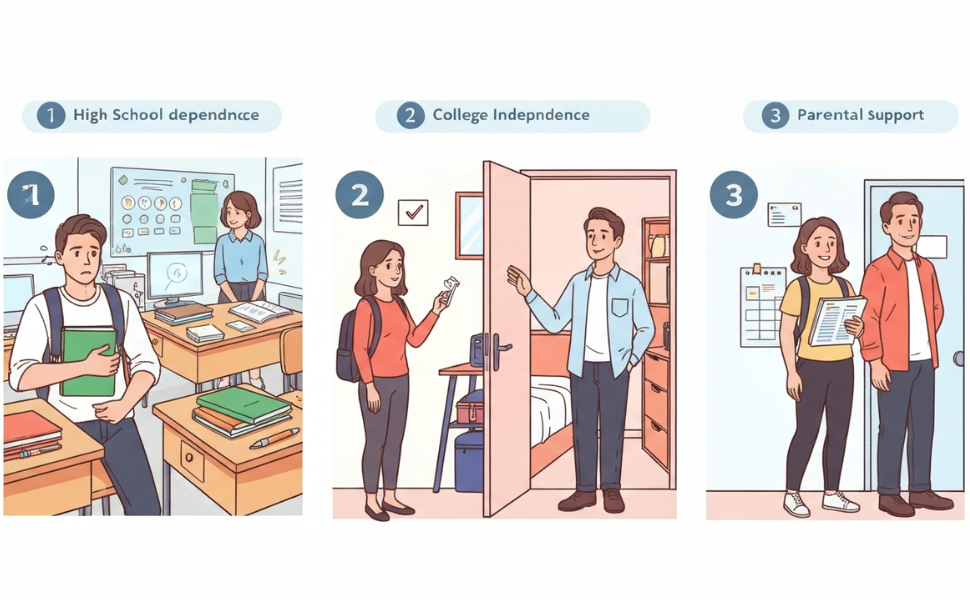
These approaches work regardless of technology. Digital tools simply require more intentionality about demonstrating these values.
Here's the hardest truth about parenting college students: they need to experience failure, discomfort, and consequences while the stakes are relatively low. A bad grade now teaches more than a protected 4.0 achieved through constant parental intervention. A budget mistake that results in eating ramen for a week teaches financial management better than you monitoring every transaction.
Your job isn't to prevent all struggles. It's to be the safety net that catches them when struggles become genuinely dangerous, while letting them handle the normal turbulence of emerging adulthood.
Campus Mind helps students develop the skills and resilience they need for independent success. When you're tempted to jump in and solve their problems, remember that learning to navigate challenges builds the confidence and capability your student needs long after college ends. Our platform provides students with tools for wellness, goal-setting, and connection that support their growth without creating dependence.
Frequently Asked Questions
Should I track my college student's location with apps like Life360?
Only if your student genuinely wants it and you've agreed to make it mutual and temporary. Research shows that autonomy support predicts better college adjustment, while surveillance correlates with lower self-efficacy. If you do implement tracking, make it your student's choice (not a condition of attendance or funding), plan to phase it out after first semester, and be honest about your own need to adjust rather than framing it as trust issues. Many successful families skip tracking entirely and rely on open communication about general plans and safety instead.
How often is normal to talk to your college student?
Follow their lead rather than imposing your preferences. Research from the National Survey of Student Engagement suggests that supportive but not intrusive family contact correlates with better student outcomes. Most families find success with one scheduled weekly call plus casual texts as needed. First semester typically requires more frequent contact; by sophomore year, bi-weekly often feels sufficient. Watch for pattern changes (sudden silence or dramatic increase in contact) rather than worrying about individual missed messages—those signal when something's actually wrong.
What should I do if my college student hides problems or lies to me?
Build trust rather than increasing surveillance. Students typically withhold information because they fear disappointing parents, want to demonstrate independence by solving problems themselves, or have learned that parents overreact or take control. Respond to discoveries with curiosity rather than anger: "Help me understand what happened" works better than "Why didn't you tell me?" Examine whether your own reactions make honesty difficult—do you catastrophize, immediately offer solutions, or take over? Make clear you're available for serious concerns while respecting their need for privacy in day-to-day life.
Should I have access to my college student's grades?
Not unless they voluntarily want to share them. FERPA grants students complete privacy rights at age 18, and demanding access undermines the autonomy they need to develop. Research indicates that excessive academic monitoring correlates with higher anxiety and lower academic self-efficacy. Instead, have open conversations where they choose what to share, and respond supportively rather than judgmentally when they do. If you're funding college, it's reasonable to require notification about academic probation or scholarship loss, but demanding weekly grade updates teaches dependence rather than responsibility.
How do I support my college student without being a helicopter parent?
Shift from managing to consulting. Ask open-ended questions that invite reflection rather than interrogating about tasks. Let your student initiate contact sometimes instead of always checking in first. When they share problems, listen more than advise—ask "What do you think you'll do?" before offering solutions. Respect boundaries around privacy, finances, and academics while staying emotionally available. Research consistently shows that students whose parents provide autonomy support—believing in their capabilities while remaining available for genuine crises—adjust better than students with highly controlling or completely disengaged parents.
E-E-A-T Section
This article draws on peer-reviewed research in adolescent development, family systems theory, and college student success. The recommendations reflect current evidence-based practices from developmental psychology research, particularly work on emerging adulthood, autonomy development, and family communication patterns during life transitions. The guidance incorporates perspectives from university counseling centers, student affairs professionals, and longitudinal studies tracking college student outcomes in relation to parental involvement patterns. Parents benefit from understanding both the developmental needs of 18-25 year olds and the unique challenges digital technology introduces to this critical transition period.
Cited Works
[1] Journal of Adolescent Research — "Parental Surveillance and College Student Autonomy Development." https://journals.sagepub.com/home/jar
[2] Steinberg, Laurence — "Age of Opportunity: Lessons from the New Science of Adolescence." https://www.laurencesteinberg.com
[3] National Survey of Student Engagement — "Engagement Insights: Survey Findings on the Quality of Undergraduate Education." https://nsse.indiana.edu
[4] Journal of Adolescence — "Privacy, Autonomy, and College Student Adjustment." https://www.sciencedirect.com/journal/journal-of-adolescence
[5] U.S. Department of Education — "Family Educational Rights and Privacy Act (FERPA)." https://www2.ed.gov/policy/gen/guid/fpco/ferpa/index.html
[6] Emerging Adulthood — "Parental Academic Monitoring and Student Outcomes in Higher Education." https://journals.sagepub.com/home/eax[7] Journal of Family and Economic Issues — "Financial Socialization and Young Adult Financial Capability." https://www.springer.com/journal/10834