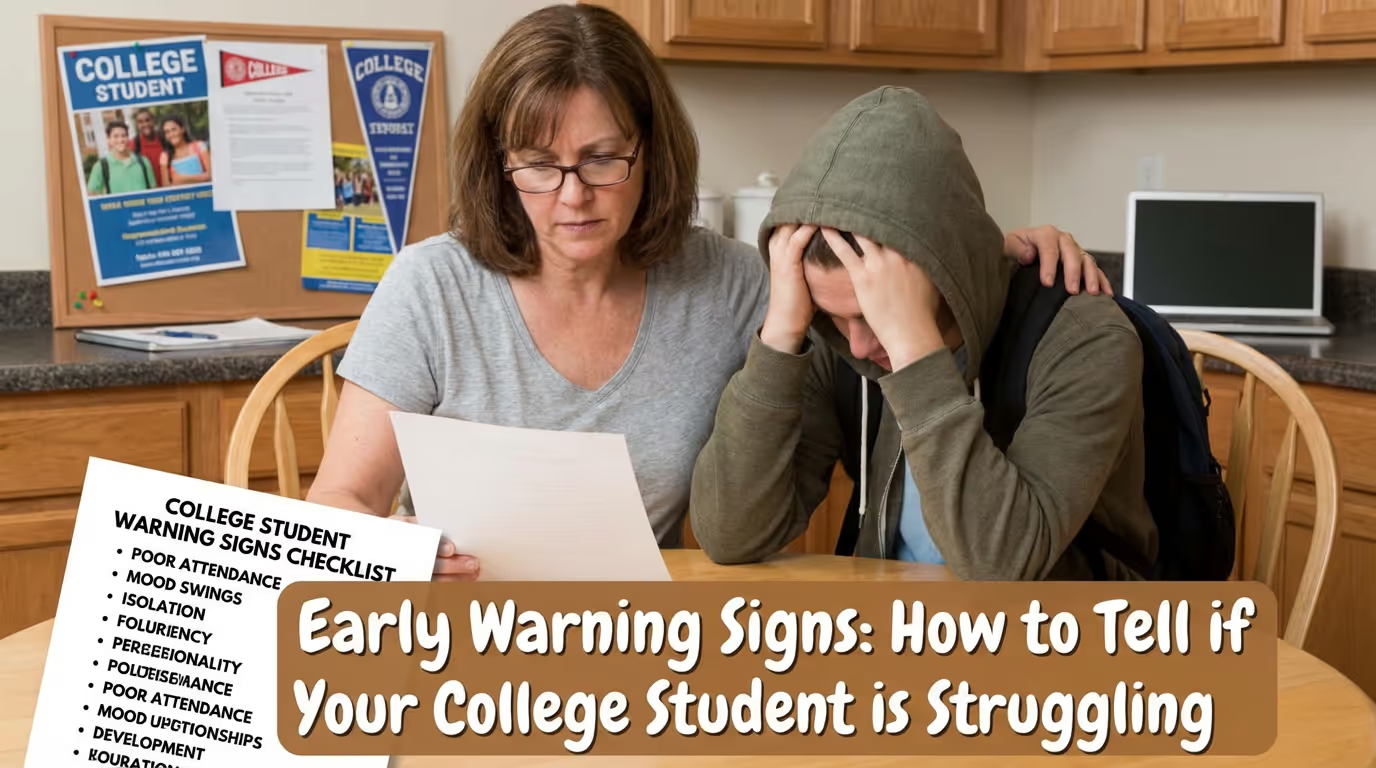
Sending your child off to college comes with a mix of pride and worry. You want them to grow independently, but you also want to know they're okay. Here's what makes this tricky: college students don't always reach out when they're struggling, and distance makes it harder to notice when something's wrong.
I learned this firsthand when a parent called our office in tears. Her daughter had been failing two classes for six weeks, sleeping through alarms, and barely leaving her dorm room—but during their weekly video chats, she'd insisted everything was "fine." It wasn't until a residence advisor reached out that the family realized how serious things had become.
Understanding college student warning signs helps you intervene early—before academic problems spiral or mental health challenges become crises. This guide walks you through the behavioral, academic, and emotional signals that suggest your student might need support, and what to do when you spot them.
In This Guide:
Why Early Detection Changes Outcomes
Academic Warning Signs
Behavioral Changes to Notice
Emotional and Mental Health Signals
Physical Symptoms of Distress
Normal Adjustment vs. Serious Concern
How Warning Signs Differ Across Student Groups
When Mental Health Meets Learning Differences
Starting Supportive Conversations
Navigating Campus Resources and Limitations
Crisis Action Steps
Why Early Detection Changes Outcomes
Catching problems early makes a measurable difference.
The 2023-2024 Healthy Minds Study found that nearly 39% of college students reported moderate to severe symptoms of depression or anxiety [1]. Yet many students wait months before accessing help.
When parents notice warning signs and start supportive conversations, their students access campus counseling services at nearly twice the rate of those without family encouragement. Early intervention isn't about helicopter parenting—it's about maintaining connection so your student knows they have backup when college gets overwhelming.
Think of yourself as a safety net, not a safety guard.

Academic Warning Signs That Matter
Declining Grades and Missed Work
One of the clearest indicators is a sudden drop in academic performance.
If your previously solid B student is now failing multiple classes or mentions incomplete assignments piling up, something's interfering with their ability to focus or complete work.
Specific patterns to notice:
Three or more missing assignments in a single course
Failing midterm grades after a strong semester start
Dropping courses during withdrawal period, especially multiple courses
Comments like "I can't concentrate" or "I just sit and stare at the work"
A single bad test happens to everyone. But a pattern of declining performance often signals deeper issues—whether mental health struggles, substance use, or feeling academically overwhelmed.
The 2024 American College Health Association's National College Health Assessment found that academic performance is the top area negatively affected by mental health concerns [2].
Loss of Academic Motivation
Students who once talked enthusiastically about their major might suddenly mention switching schools, dropping out, or questioning why they're even in college.
They may sound defeated when discussing classes. They might express that nothing feels worthwhile anymore.
This kind of disengagement often precedes academic withdrawal. According to the JED Foundation's 2024 guidance, loss of interest in previously enjoyed activities—including academic pursuits—is a key depression indicator in the college-age population [3].
Behavioral Changes: What You're Actually Seeing
Social Withdrawal and Isolation
College is inherently social. That makes withdrawal particularly telling.
When students stop mentioning friends, skip social events they used to enjoy, or spend excessive time alone in their room, isolation is feeding something deeper.
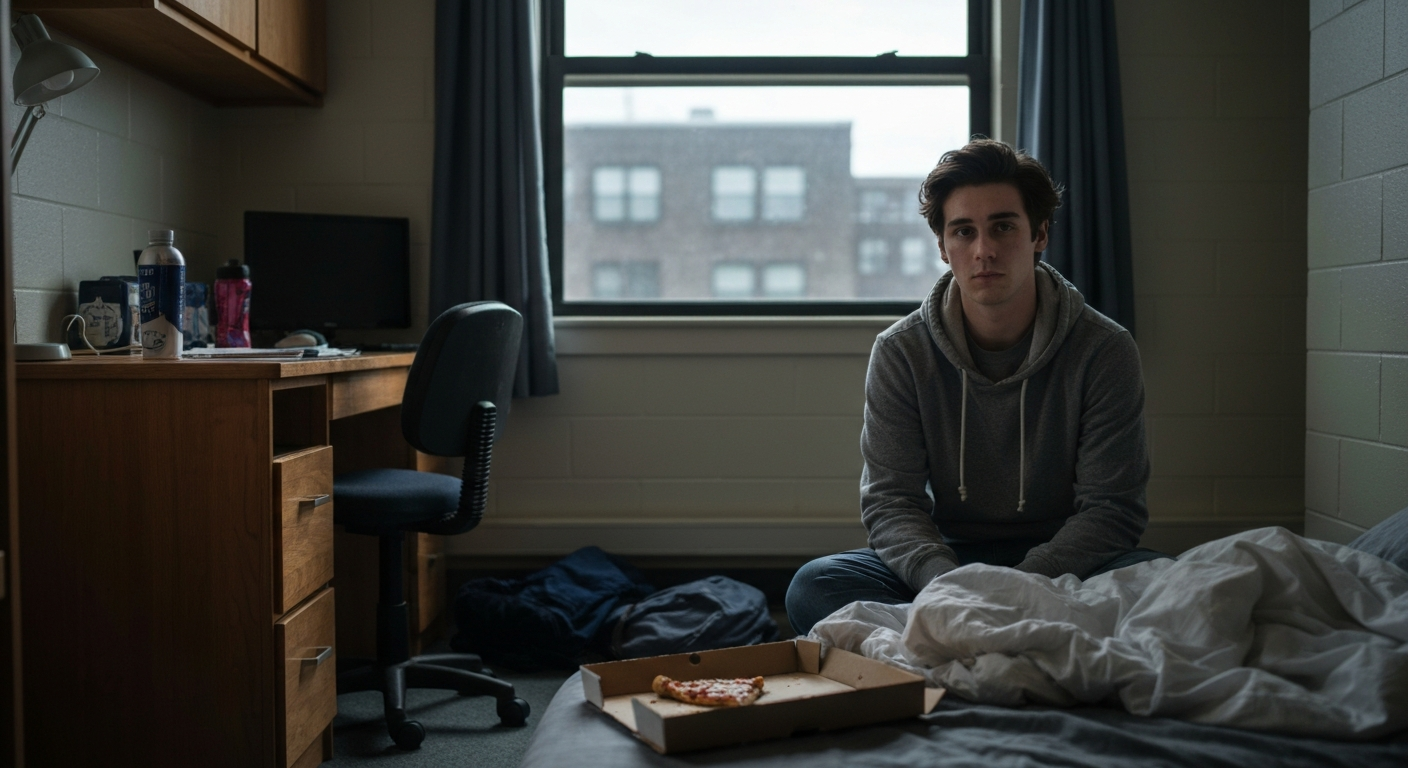
A parent recently shared: "My son used to tell me about his friends constantly. Suddenly, for three weeks, every story was about being alone. When I asked about his roommate or study group, he'd change the subject."
The 2024 Healthy Minds data shows that students experiencing depression are 3.4 times more likely to report feeling isolated from campus community [1]. That isolation then worsens the depression—creating a cycle that's hard to break without intervention.
Sleep and Eating Pattern Disruptions
These changes are classic stress signals. Your student might mention:
Sleeping 12-14 hours daily or struggling to sleep more than 3-4 hours
Skipping meals regularly ("I just forget to eat") or binge eating late at night
Significant weight loss or gain (15+ pounds in a semester)
Chronic exhaustion despite adequate sleep
These disruptions often accompany depression, anxiety, or unhealthy coping mechanisms. They're also self-perpetuating: poor sleep worsens mental health, which further disrupts sleep.
Increased or Solitary Substance Use
College drinking is common. Excessive or solitary use signals trouble.
Warning signs include:
Frequent mentions of partying (4+ nights weekly)
Drinking or using substances alone
Using substances specifically to cope with stress or sadness
Legal troubles: DUIs, campus alcohol violations, or possession charges
The National Institute on Alcohol Abuse and Alcoholism's 2024 data reports that approximately 20% of college students ages 18-22 meet criteria for alcohol use disorder [4].
What starts as social drinking can quickly become a coping mechanism for underlying mental health struggles.
Emotional and Mental Health Signals
Persistent Sadness, Anxiety, or Irritability
Everyone feels down occasionally. The red flag is when negative emotions persist for two weeks or longer without improvement.
Your student might:
Sound flat, tearful, or emotionally exhausted during calls
Express constant worry about grades, relationships, or the future
Avoid video chats because they "don't want you to see them like this"
Snap at you regularly or show angry outbursts over minor frustrations
Mental health challenges don't always look dramatic. Sometimes they're just a persistent heaviness your student can't shake.
The 2024 Healthy Minds Study found that 15.3% of students reported seriously considering suicide in the past year—up from 10.8% in 2013 [1].
Expressions of Hopelessness or Self-Harm
🚨 RED FLAG: IMMEDIATE ACTION REQUIRED
Take seriously any comments about feeling hopeless, being a burden, or not wanting to exist.
This includes casual remarks like:
"Everyone would be better off without me"
"I don't see the point anymore"
"I just want to disappear"
References to self-harm or specific suicide plans
Critical Perspective from Dr. Sarah Chen, Campus Mental Health Director: "Parents often ask if bringing up suicide will plant the idea. The research is clear: it doesn't. Asking directly about suicidal thoughts actually reduces risk by opening pathways to help. What increases risk is silence—when no one notices or asks."
According to the JED Foundation's 2024 analysis, suicide is the second leading cause of death among young people ages 15-24, accounting for approximately 13% of all deaths in this age group [3].
Direct expressions of hopelessness warrant immediate conversation and connection to professional help.
Physical Manifestations of Mental Distress
Mental health struggles often show up physically. Your student might report:
Frequent headaches or persistent stomachaches
Unexplained muscle aches and tension
Getting sick more often than usual (weakened immune system)
Neglecting personal hygiene or living space upkeep
Chronic stress and depression weaken immune function and create physical symptoms.
When students mention persistent physical complaints without clear medical causes, stress and mental health may be contributing factors. One campus counselor describes it this way: "The body keeps the score. When students can't or won't talk about emotional pain, their bodies often speak for them."
Understanding Normal Adjustment vs. Serious Concern
Some struggle is normal and even developmental. Homesickness during the first semester, occasional stress during finals, and periodic social conflicts happen to most students.
So how do you distinguish typical adjustment from something requiring intervention?
| Normal College Adjustment | Serious Concern Requiring Help |
| Temporary stress tied to specific events (exams, roommate conflicts, project deadlines) | Problems persisting two weeks or longer without improvement |
| Student can still complete work and maintain basic relationships | Multiple life areas simultaneously affected (grades, relationships, sleep, mood, self-care) |
| Mood improves with rest, support, or problem resolution | Student expresses hopelessness or inability to cope |
| Student mentions using coping strategies and campus resources | Withdrawal from activities and relationships that previously brought joy |
| Concerns resolve within 1-2 weeks | Substance use becoming a primary coping mechanism |
| Inability to complete basic self-care or daily tasks |
One experienced dean of students offers this guideline: "If a parent worries enough to Google 'college student warning signs,' they should trust that instinct and reach out—to their student and to us."
How Warning Signs May Look Different Across Student Groups
Not all students show distress the same way. Research shows important variations.
First-generation and low-income students often struggle silently. They're reluctant to "burden" families with concerns or to access help that might seem like weakness.
They may mask struggles behind phrases like "I'm handling it" while experiencing severe financial stress or feeling they don't belong academically [5].
Students of color may face additional stressors. Microaggressions, cultural adjustment, and discrimination compound mental health challenges.
The 2024 Healthy Minds Study found that Black and Latinx students report lower rates of formal treatment despite similar or higher rates of distress [1].
LGBTQ+ students experience depression and anxiety at nearly twice the rate of their peers, according to recent campus climate surveys. Rejection from family or peer groups, identity-related stress, and discrimination significantly impact mental health [3].
International students face unique stressors. Language barriers, visa concerns, cultural adjustment, and often intense pressure not to "fail" families who sacrificed for their education create particular vulnerability.
Watch for these students to minimize struggles or avoid seeking help due to stigma, cultural attitudes toward mental health, or fear of consequences (academic probation, loss of financial aid, visa status concerns).
When Mental Health Meets Learning Differences
Students with ADHD, learning disabilities, or other neurodevelopmental differences face compounded challenges in college.
The structure and oversight that helped them succeed in high school often disappears. Executive function demands skyrocket. Self-advocacy becomes essential.
Warning signs may include:
Previously managed conditions becoming unmanageable
Inability to keep up despite working harder than peers
Severe time management struggles beyond typical college adjustment
Increased anxiety specifically around academic tasks
Comments like "I'm just not smart enough for college"
Important distinction: The warning sign isn't the diagnosis itself. It's deterioration from their previously managed state.
Students with pre-existing conditions need help connecting with campus disability services for academic accommodations. They may also need local providers for medication management and establishing care continuity when their high school supports end.
According to a 2024 report from the Association on Higher Education and Disability, students with disabilities who access accommodations show retention rates equal to or higher than their peers—but only 30% actually register with disability services [6].
Starting Supportive Conversations
When you notice warning signs, approach your student with curiosity rather than accusation.
Here's what actually works:
Opening lines that invite conversation:
"I've noticed you seem more stressed lately. How are things really going for you?"
"You haven't mentioned your friends in a while. Is everything okay socially?"
"Your tone has been different the past few calls. What's on your mind?"
"I'm picking up that things feel heavy right now. Want to talk about it?"
What TO do:
Listen fully before jumping to solutions
Validate their feelings ("That sounds really hard" or "I can hear how overwhelmed you are")
Ask what kind of support would actually help
Express confidence they can work through challenges with appropriate support
Share that asking for help is a strength, not a weakness
What NOT to do:
Minimize their struggles ("Everyone has a tough semester" or "You just need to try harder")
Make it about your anxiety ("I'm so worried I can't sleep")
Threaten consequences ("If you fail, we're pulling you out")
Solve all their problems immediately instead of helping them access resources
College students want to be treated as adults. Approach them as a supportive partner, not a rescuer who swoops in to take over.
One student captured it perfectly: "I didn't need my mom to fix everything. I needed her to believe I could handle it with the right support."
Navigating Campus Resources and Limitations
Understanding What's Available
Most campuses offer free or low-cost counseling through student health services. Help your student locate campus resources online, and if needed, offer to sit with them while they call to schedule.
Typical campus mental health resources include:
Individual counseling (usually 6-12 sessions per academic year)
Group therapy and support groups
Crisis walk-in hours or urgent same-day appointments
Psychiatric services for medication evaluation and management
Peer counseling programs
Wellness workshops and stress management programs
The Reality of Campus Counseling Limitations
Counseling centers face significant demand. Waitlists of 2-4 weeks during peak periods (midterms, finals, start of semester) are common at many institutions.
According to the 2024 Association for University and College Counseling Center Directors survey, the average counseling center can serve approximately 12-15% of the student body in a given year [7].
If your student needs immediate help but faces waitlists:
Inquire about crisis services. Many centers reserve slots for urgent same-day appointments.
Ask about interim support. Peer counseling, support groups, or single-session consultations can bridge the gap.
Explore community options. Community mental health centers near campus may have shorter waits.
Check insurance coverage. Student health insurance typically covers local therapists. Teletherapy options have also expanded significantly.
Use university health services. Primary care physicians can assess mental health, prescribe medication, and provide referrals.
When to Contact Campus Directly
If your student isn't responding to outreach, mentions suicidal thoughts, or you have serious safety concerns, contact:
Dean of Students office (can conduct wellness checks)
Residence life staff (if living on campus)
Campus counseling center (can provide guidance even without student consent in emergencies)
Don't worry about "tattling" or breaking trust. One suicide prevention coordinator states: "We'd much rather check on a student who's actually fine than miss one who desperately needed help."
Campus vs. Private Therapy: Making the Right Choice
| Campus Counseling | Private Therapy |
| Free or low-cost | Typically $100-250+ per session (insurance may cover) |
| Counselors trained in college student issues | Broader range of specializations available |
| Convenient on-campus location | May require transportation off-campus |
| Session limits (6-12 per year typical) | Unlimited sessions if affordable |
| Possible waitlists during peak times | Usually faster access with private practice |
| Best for: immediate support, skill-building, short-term issues | Best for: long-term therapy, specialized treatment needs, ongoing care |
Many students benefit from both: campus counseling for immediate support plus private therapy for ongoing care.
Crisis Action Steps
🚨 IMMEDIATE CRISIS RESOURCES
| Resource | How to Access | When to Use |
| 988 Suicide & Crisis Lifeline | Call or text 988 (24/7) | Student expresses suicidal thoughts or plan |
| Crisis Text Line | Text "HELLO" to 741741 | Student prefers text communication in crisis |
| Campus Police | Call campus emergency number | Student unreachable for 48+ hours; immediate safety concern |
| Dean of Students | Call main office during business hours | Non-emergency welfare check needed |
| Campus Counseling Crisis Line | Check university website for after-hours number | Evening/weekend mental health crisis |
If student expresses suicidal thoughts:
Take it seriously. Ask directly: "Are you thinking about suicide?"
Listen without judgment. Don't argue or try to talk them out of their feelings.
Don't leave them alone if they're in immediate danger.
Call 988 together or help them get to emergency services.
Remove access to means (medications, weapons) if possible.
Follow up to ensure they connected with professional help.
Remember: asking about mental health doesn't plant ideas or make things worse. Research from the 2024 Suicide Prevention Resource Center confirms that direct conversations about suicide actually reduce risk by opening doors to help [8].
Most students feel profound relief when someone notices they're struggling and offers support.

Taking the Long View
Your awareness and early intervention can make the difference between a student who gets back on track and one who leaves school entirely.
Stay connected. Trust your parental instincts. Don't hesitate to reach out to campus resources when you're concerned.
You're not overreacting—you're being a thoughtful parent who recognizes when your child needs help navigating a challenging transition.
Provocative truth from Dr. Marcus Williams, University Counseling Director: "Here's what most parents don't realize: The students who worry us least often need help most. High-achieving, perfectionistic students who've never struggled before hit college and have no coping framework when things get hard. They're ashamed to ask for help because their identity is tied to succeeding effortlessly. Meanwhile, students who've already learned to struggle and seek support tend to navigate challenges better."
The goal isn't preventing all struggle. College involves growth, and growth involves challenge.
The goal is ensuring your student knows how to recognize when they're in over their head—and that asking for help is a sign of strength, not weakness.
Additional Support Tools
Several evidence-based platforms offer self-assessment and resource connection:
Campus-specific wellness portals (check your student's university website)
Mental health screening tools through student health services
Peer support networks and student organizations
Academic advising and success coaching programs
These tools help students identify areas where they need support and connect them directly to relevant campus resources—often lowering the barrier to getting help.
Frequently Asked Questions
What are the most important college student warning signs parents should watch for?
The most critical college student warning signs include academic decline (failing multiple classes, missing assignments), persistent sadness or anxiety lasting two weeks or more, social withdrawal from friends and activities, significant changes in sleep or eating patterns, increased substance use, expressions of hopelessness, and neglecting self-care. Look for patterns across multiple areas rather than isolated incidents. The 2023-2024 Healthy Minds Study found that nearly 39% of students experience moderate to severe depression or anxiety symptoms, making parental awareness crucial for early intervention. Pay special attention when multiple warning signs appear simultaneously or when problems persist beyond typical stressful periods like midterms or finals.
How can I tell if my college student is just adjusting normally or needs professional help?
Normal adjustment involves temporary stress tied to specific events (exams, roommate conflicts) that improves within 1-2 weeks with rest and support. Students can still function and complete basic responsibilities. Serious concerns include problems persisting beyond two weeks, multiple affected areas (academic, social, physical health), expressions of hopelessness or inability to cope, substance use as a primary coping mechanism, or withdrawal from previously enjoyed activities. When problems interfere with daily functioning—attending class, maintaining hygiene, completing work—professional help is warranted. Trust your instincts: if you're concerned enough to research warning signs, reach out to your student and campus resources. The dean of students we consulted advises: "Parents usually know their child best. If something feels off, it probably is."
What should I do if my college student won't talk to me about their struggles?
Maintain regular, low-pressure contact through varied channels—texts, brief calls, video chats when they're comfortable. Express concern without judgment: "I've noticed some changes and I'm here whenever you want to talk, no pressure." Encourage them to use campus counseling even if they're not ready to talk to you, emphasizing that counselors are neutral, confidential resources. Share information about self-assessment tools they can use privately. Respect their autonomy while staying connected. If you're seriously worried about safety, contact the Dean of Students office directly—they can conduct wellness checks and connect students to support even when students resist family conversations. Remember that some distance is developmentally appropriate, but complete communication shutdown warrants attention.
How often should I check in with my college student without being intrusive?
The right frequency depends on your relationship and your student's preferences. Most families find weekly video calls or phone conversations work well, supplemented by 2-3 casual texts between calls. During high-stress periods (midterms, finals, major deadlines), increase check-ins slightly—maybe an extra text saying "thinking of you during finals week." Let your student help set the rhythm: some need more frequent connection while others prefer more space. Quality matters more than quantity. Brief, authentic connection ("How was your day?" or "Saw this and thought of you") often opens doors better than lengthy interrogations. Establish a baseline pattern so you'll notice when communication suddenly changes—that change itself can be a warning sign.
When should I be seriously worried about my college student's mental health and take immediate action?
Take immediate action if your student expresses suicidal thoughts, talks about being a burden, mentions self-harm or having a specific plan, shows dramatic personality changes, can no longer manage basic self-care (hygiene, eating, leaving room), or is unreachable for 48+ hours when that's unusual. Also concerning: failing multiple classes simultaneously, legal troubles related to substance use, complete social withdrawal for weeks, or aggressive behavior. The 2024 JED Foundation data shows suicide is the second leading cause of death among young people ages 15-24, making early intervention critical. Contact campus police for welfare checks, the Dean of Students office, or crisis resources (call/text 988) if you're genuinely worried about safety. It's always better to check and be wrong than to miss a genuine crisis. Don't wait for absolute certainty—err on the side of caution.
Are campus counseling services actually helpful, or should I get my student a private therapist?
Campus counseling centers provide evidence-based treatment with counselors trained specifically in college student issues—academic stress, identity development, social challenges, and emerging mental health concerns. The 2024 Association for University and College Counseling Center Directors reports that students who utilize campus counseling show improved academic performance and retention rates compared to those who don't seek help. However, centers often have waitlists of 2-4 weeks during peak periods and session limits (typically 6-12 per year). For students needing long-term therapy, specialized treatment (eating disorders, trauma therapy), or immediate care during waitlists, private therapists can supplement campus services. Many students benefit from both: campus counseling for immediate support and skill-building, plus private therapy for ongoing care. Check if your student's health insurance covers local providers, and ensure any private therapist has experience with college-age clients.
Do warning signs look different for students with pre-existing mental health conditions?
Yes—students with pre-existing diagnoses (depression, anxiety, ADHD, bipolar disorder) require different monitoring. Watch for changes from their baseline: is their condition less controlled than usual? Are previously effective coping strategies no longer working? Are they struggling with medication management (missing doses, running out, experiencing side effects)? Transitions to college often disrupt established treatment routines, and campus demands can exacerbate existing conditions. The 2024 Association on Higher Education and Disability found that students with disclosed mental health conditions who access accommodations have retention rates matching their peers—but establishing care continuity is crucial. These students may need help connecting with campus disability services for academic accommodations, finding local providers for medication management, and establishing care continuity when their high school supports end. The warning sign isn't the diagnosis itself—it's deterioration from their managed state or inability to maintain treatment that worked previously.
How do I navigate the tension between supporting my student and respecting their privacy as an adult?
This is one of the most challenging aspects of having a college student. Legally, students over 18 are adults, and FERPA (Family Educational Rights and Privacy Act) protects their educational records. Most campuses cannot share information with parents without student consent, even in concerning situations. However, you can still provide information to the university—contact the Dean of Students office with specific concerns, and they can conduct welfare checks and outreach without confirming or denying anything to you. Establish communication expectations early: "I'm not trying to monitor everything, but I do expect to hear from you X times per week so I know you're okay." Frame your concern around their wellbeing, not control: "I trust you to make your own decisions, and I'm here as a resource when you need support." Most students appreciate parents who express concern without trying to take over. The goal is collaborative partnership, not surveillance or rescue.
E-E-A-T Section
This evidence-based guide was developed by the Campus Mind team in collaboration with licensed mental health counselors, university deans of students, and student affairs administrators who work daily supporting college students and families through academic and mental health challenges. Our research foundation draws from the 2023-2024 Healthy Minds Network Study (the nation's largest college mental health survey with 96,000+ student participants), the 2024 American College Health Association's National College Health Assessment, clinical guidelines from the JED Foundation (the leading organization for emotional health and suicide prevention in higher education), and the 2024 Association for University and College Counseling Center Directors annual survey. We consulted with practicing campus mental health directors and suicide prevention coordinators to ensure guidance reflects both current research and on-the-ground realities of campus resource availability. Campus Mind partners with over 200 colleges and universities nationwide to implement early alert systems and evidence-based intervention protocols that connect at-risk students to appropriate campus resources before challenges escalate to crises.
Cited Works
[1] Healthy Minds Network — "The Healthy Minds Study 2023-2024: Key Findings on College Student Mental Health and Wellbeing." https://healthymindsnetwork.org/
[2] American College Health Association — "National College Health Assessment III: Undergraduate Student Reference Group Executive Summary Spring 2024." https://www.acha.org/
[3] The JED Foundation — "Student Mental Health and Suicide Prevention: A Guide for Families and Campuses 2024." https://jedfoundation.org/
[4] National Institute on Alcohol Abuse and Alcoholism — "College Drinking and Alcohol Use Disorder Among Students Ages 18-22: 2024 Data." https://www.niaaa.nih.gov/
[5] National Association of Student Personnel Administrators — "First-Generation College Students: Understanding and Supporting Their Unique Mental Health Needs." https://www.naspa.org/
[6] Association on Higher Education and Disability — "Annual Report on Students with Disabilities in Higher Education 2024." https://www.ahead.org/
[7] Association for University and College Counseling Center Directors — "Annual Survey 2024: Counseling Center Utilization and Staffing Trends." https://www.aucccd.org/
[8] Suicide Prevention Resource Center — "Evidence-Based Practices for Suicide Risk Assessment and Prevention 2024." https://sprc.org/