
The acceptance letter arrives, and for a moment, everything feels possible. Then reality sets in: tuition statements, housing deposits, textbook lists, meal plan costs. For low-income and first-generation college students, that gap between celebration and panic can feel impossibly wide.
Here's the truth: financial barriers remain one of the most persistent—and preventable—reasons students leave college before finishing. The good news? Institutions that get strategic about financial support aren't just improving access. They're dramatically improving completion rates.
Key Takeaways
Financial stress is a leading cause of dropout, with low-income students facing completion rates nearly 20 percentage points lower than their higher-income peers
Emergency aid programs show outsized impact on retention for relatively modest institutional investment
First-generation students face compounding challenges that require wraparound support beyond tuition assistance
Proactive financial wellness interventions work better than reactive crisis management
The Financial Barrier Problem: What the Data Actually Shows
Let's start with the numbers, because they tell a stark story.
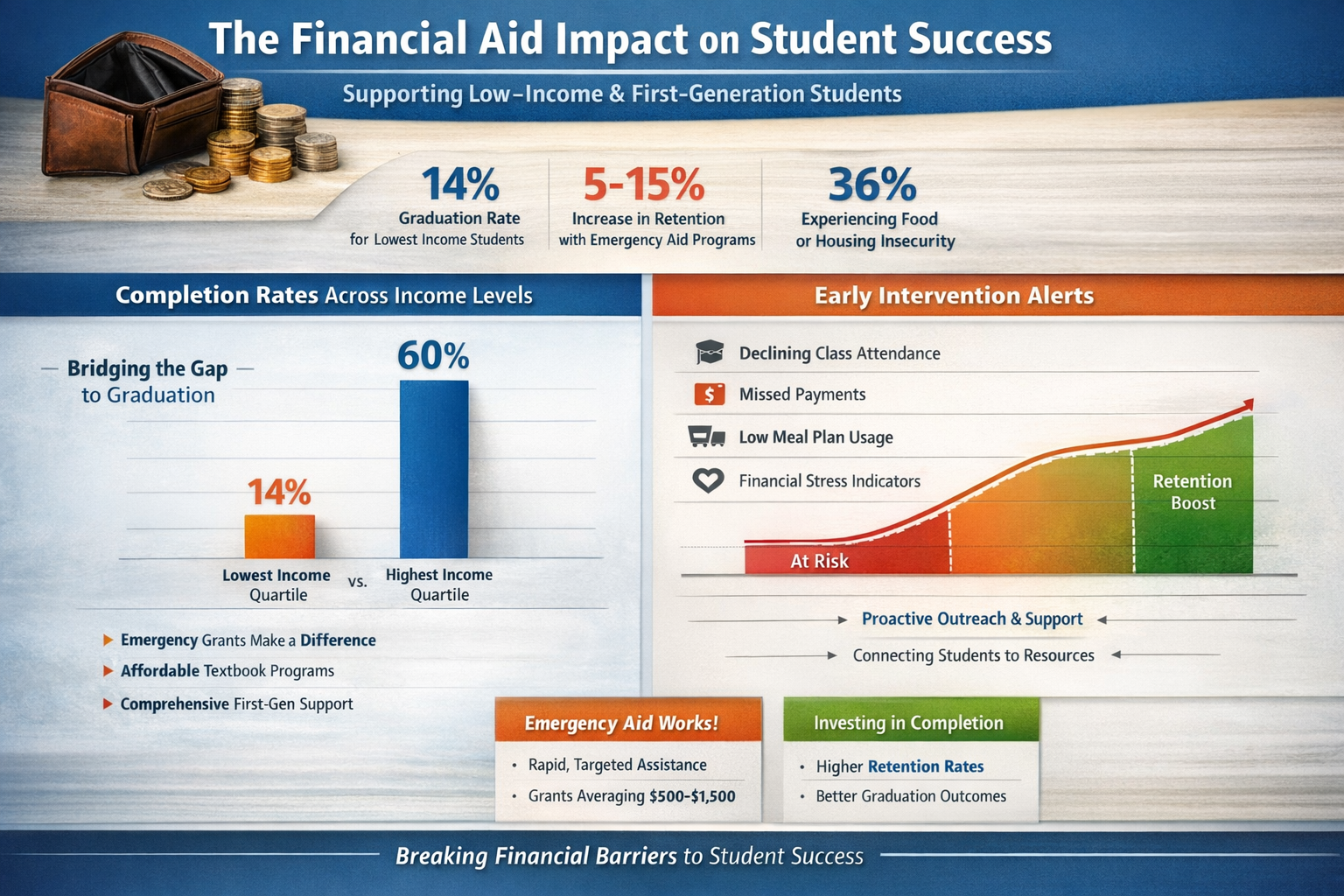
Students from the lowest income quartile complete bachelor's degrees at a rate of approximately 14%, compared to 60% for students from the highest income quartile [1]. That's not a gap—it's a chasm.
And it's not because low-income students are less capable or motivated. Research consistently shows that when financial barriers are addressed, completion rates climb significantly. A study from the Wisconsin HOPE Lab found that 36% of university students experienced food insecurity, and 36% experienced housing insecurity [2]. Students managing these basic needs crises aren't failing academically—they're being failed systemically.
The mechanics of financial dropout often look like this: A student misses a shift at work to study for an exam. That missing income means choosing between a textbook and groceries. The stress compounds. Grades slip. Financial aid eligibility becomes uncertain. The student quietly withdraws, often owing the institution money, making return nearly impossible.
First-generation students face these pressures at higher rates. Without family experience navigating higher education's financial complexity—FAFSA deadlines, verification processes, scholarship applications, work-study bureaucracy—they're more likely to miss opportunities and more likely to experience financial emergencies without a safety net [3].
Financial Aid Strategies That Actually Move the Needle
Not all financial support is created equal. Some interventions show clear evidence of retention impact; others simply check boxes without changing outcomes.
Emergency Aid Funds: Small Dollars, Major Returns
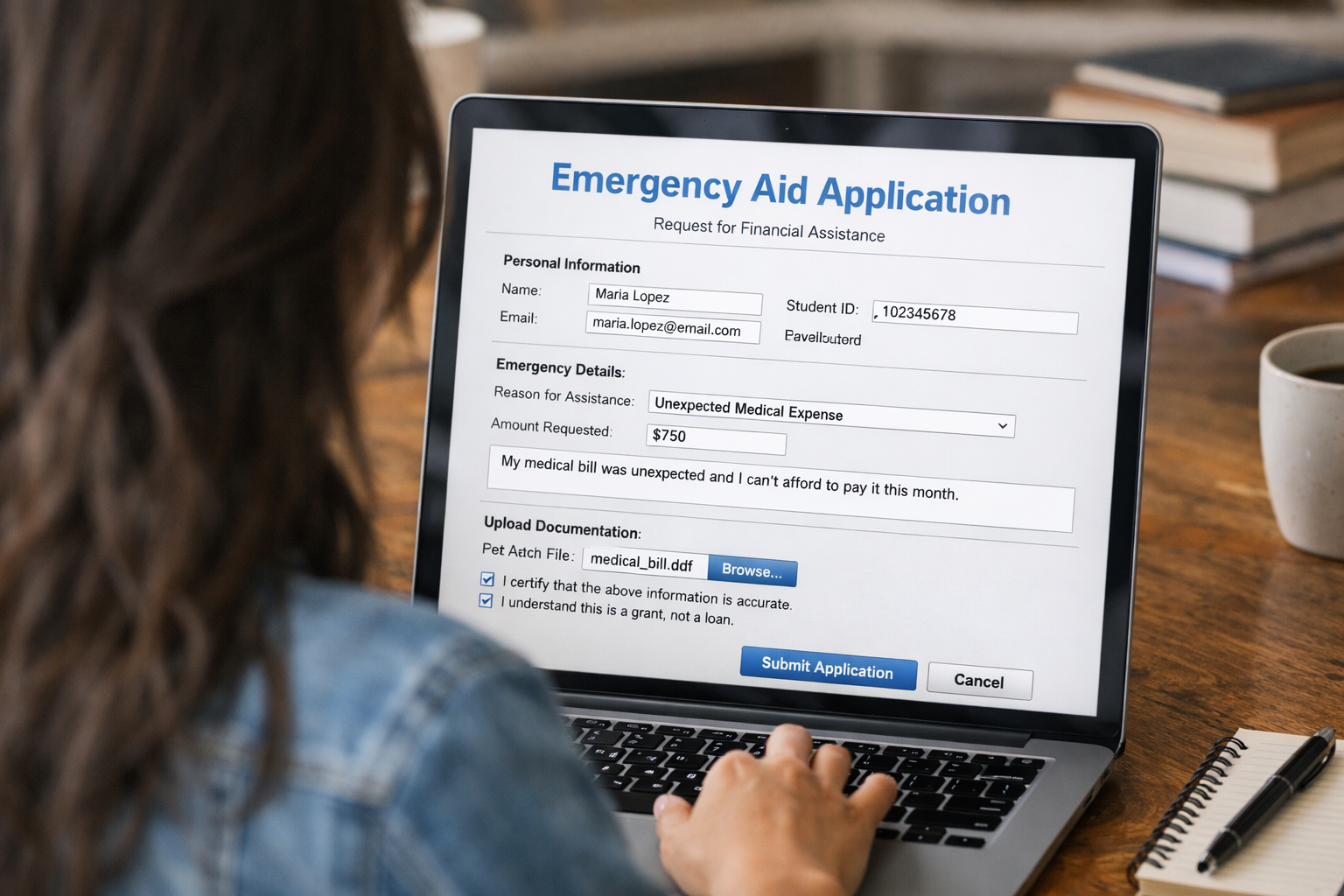
Emergency aid programs—providing rapid, small-dollar grants for unexpected expenses—consistently demonstrate strong retention effects relative to their cost. Georgia State University's Panther Retention Grants program, which provides micro-grants averaging $900 to students at risk of dropping out due to unpaid balances, has helped the institution retain thousands of students who would otherwise have been dropped from enrollment [4].
The key features of effective emergency aid programs include:
Speed: Funds disbursed within 48–72 hours, not weeks
Accessibility: Simple application processes without extensive documentation requirements
Appropriate amounts: Covering the actual gap (typically $300–$1,500), not arbitrary limits
No-strings-attached structure: Grants, not loans, to avoid adding to debt burden
Institutions implementing emergency aid report retention improvements ranging from 5–15% among students who receive funds—a significant return on relatively modest investment [5].
Sliding Scale and Transparent Pricing Models
Tuition complexity creates its own barrier. When students can't predict their actual costs, they can't plan effectively. Some institutions are addressing this through:
Income-based tuition adjustments: Programs that automatically adjust net tuition based on family income, eliminating the scholarship-hunting burden from students.
Tuition guarantee programs: Locking in rates for four years so students and families can plan without fear of unexpected increases.
Transparent total-cost communication: Providing clear, personalized cost estimates before enrollment—not buried in financial aid letters that require a decoder ring to understand.
Research from the National Bureau of Economic Research indicates that simplified financial aid information significantly increases college enrollment among low-income students [6]. Clarity isn't just customer service—it's a retention intervention.
Book and Supply Programs
Textbook costs, often overlooked in financial planning, can add $1,200 or more per year to student expenses. Effective interventions include:
Open Educational Resources (OER) adoption, eliminating textbook costs for specific courses
Textbook lending libraries within campus resource centers
Inclusive access programs that bundle digital materials into tuition at reduced per-student cost
Emergency grants specifically designated for course materials
These programs remove a barrier that disproportionately impacts students who can't afford to purchase materials at the start of the semester—putting them behind academically from day one.
Supporting First-Generation Students: Beyond Financial Aid
First-generation students face a unique set of compounding challenges. They're navigating an unfamiliar system without the cultural capital that continuing-generation students inherit. Financial support alone doesn't address:
Imposter syndrome and belonging uncertainty
Lack of family understanding of college demands and schedules
Difficulty identifying and accessing resources
Code-switching between home and campus environments
Effective first-gen support programs integrate financial assistance with broader wraparound services.
What Comprehensive First-Gen Support Looks Like
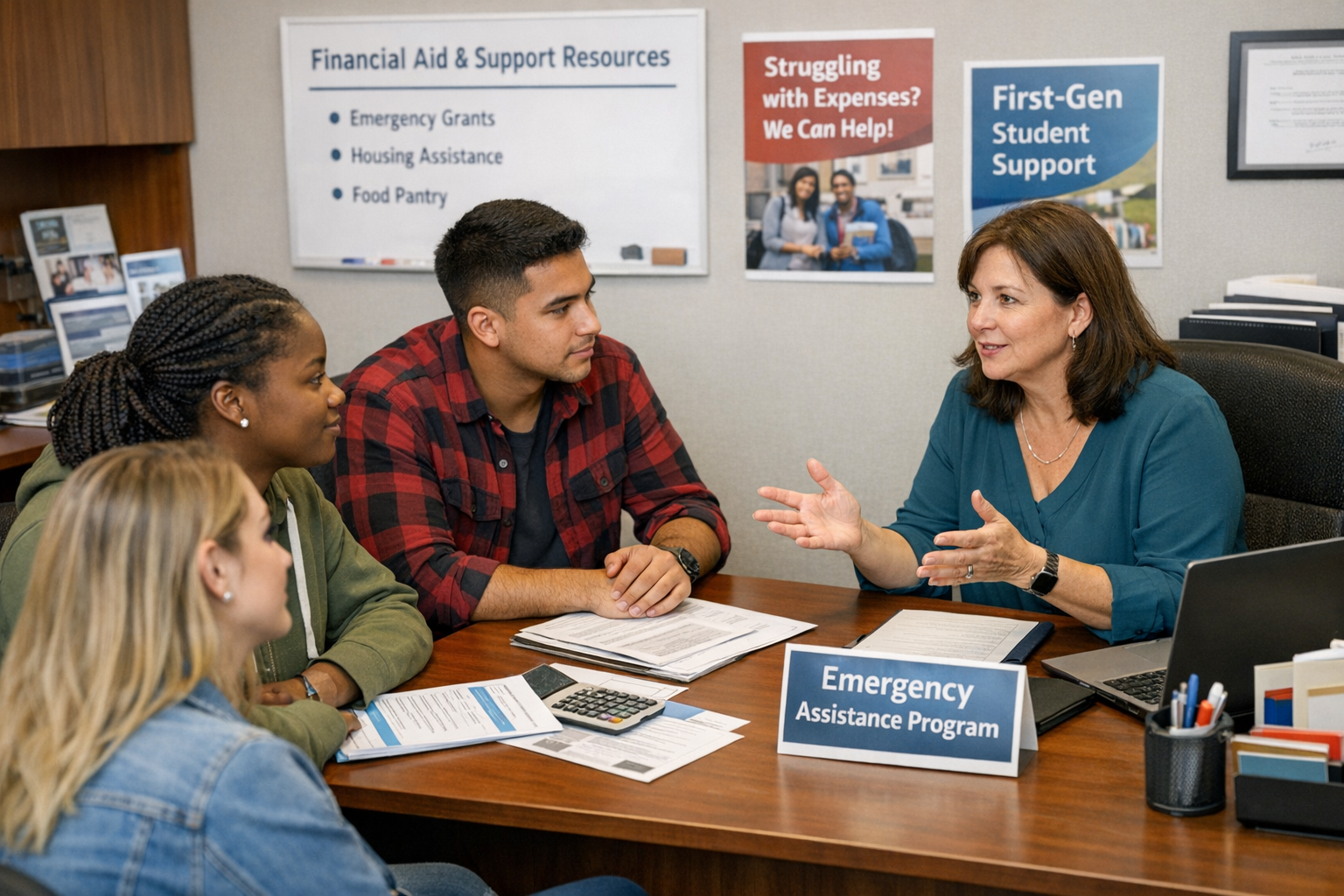
Dedicated advising and mentorship: Connecting first-gen students with advisors and peer mentors who understand their specific challenges. TRIO Student Support Services programs, federally funded to support first-gen and low-income students, have demonstrated improved retention and graduation rates among participants [7].
Summer bridge programs: Easing the transition through pre-semester programming that builds academic skills, campus familiarity, and peer connections before the stress of the first semester begins.
Financial literacy education: Teaching practical skills—budgeting, understanding financial aid, building credit—that continuing-generation students often learn at home.
Family engagement that respects boundaries: Helping families understand how to support their students without requiring them to navigate the system themselves. This means proactive, clear communication about expectations, timelines, and how to help from a distance.
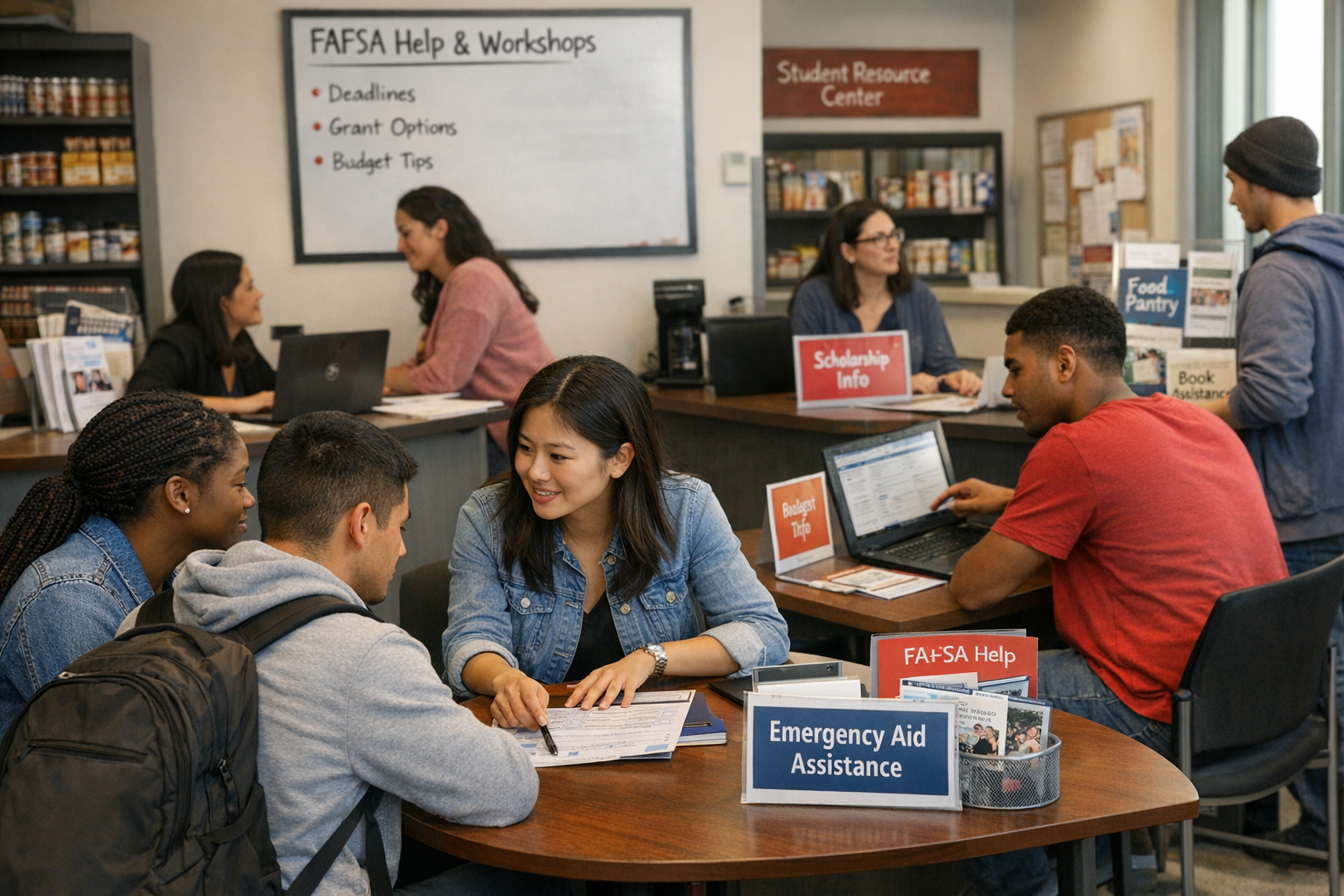
Centralized support hubs: Creating one-stop access points where students can address multiple needs—financial aid questions, food pantry access, counseling referrals, academic support—without bouncing between offices.
The Early Intervention Imperative
Financial crises don't announce themselves on a predictable schedule. A student's car breaks down. A family member gets sick. Work hours get cut. The difference between retention and dropout often comes down to whether the institution recognizes these moments and responds quickly.
Traditional approaches wait for students to self-identify by seeking help, missing a payment, or dropping a class. By then, the student may already be too deep in crisis—or too embarrassed—to engage with support.
Data-driven early intervention changes this dynamic. Institutions using engagement tracking and predictive analytics can identify students showing signs of financial stress—declining meal plan usage, reduced campus activity, incomplete FAFSA verification—and reach out proactively.
This isn't about surveillance. It's about noticing when a student quietly disengages and offering support before crisis becomes dropout.
Measuring What Matters: ROI of Financial Support Programs
Institutional leaders operating under budget constraints need evidence that financial support investments pay off. The data supports the investment case.
Retention value calculation: The average public four-year institution loses approximately $10,000–$15,000 in tuition revenue when a student drops out. Emergency aid grants averaging under $1,000 that retain even a fraction of at-risk students generate positive returns [8].
Completion rate impact: Institutions with robust financial support infrastructure consistently outperform peers on graduation rates, improving rankings, reputation, and the outcomes metrics that increasingly drive funding formulas.
Alumni engagement: Students who complete degrees—and feel supported in doing so—become engaged alumni who donate, mentor, and advocate for the institution.
The question isn't whether institutions can afford to invest in financial support. It's whether they can afford not to.
Your Next Steps (Yes, Today)
For institutional leaders:
Audit your emergency aid program's accessibility: How long does disbursement actually take? What documentation is required?
Review your first-gen student retention data separately from general population data
Evaluate whether financial aid communication is genuinely clear or just technically compliant
For student success teams:
Identify data sources that could signal financial stress before students self-report
Build relationships with financial aid to create warm referral pathways
Train staff to normalize conversations about financial challenges
For students and families:
Don't wait for crisis to explore emergency aid options—know what's available before you need it
Connect with first-gen support programs early, not after struggling alone
Ask questions when financial aid letters are confusing—they're confusing for almost everyone
Ready to Close the Gap?
Bridging the financial aid gap requires more than good intentions—it requires coordinated systems that connect students to resources before small problems become dropout decisions. Institutions that invest in proactive, data-informed financial support aren't just doing the right thing. They're building sustainable enrollment and completion outcomes.
Bring CampusMind to Your Campus to connect students with financial resources, track engagement patterns that signal emerging needs, and intervene early—before crisis hits.
Frequently Asked Questions
What is the biggest financial barrier to college completion?
Beyond tuition itself, unexpected expenses create the most acute retention risk. Students can plan for tuition, but car repairs, medical bills, or family emergencies derail students who have no financial cushion. This is why emergency aid programs show such strong retention impact—they address the unpredictable crises that force difficult choices.
How do first-generation students' financial challenges differ from other low-income students?
First-generation students often lack knowledge of available resources and the cultural familiarity to navigate financial aid systems efficiently. They may miss scholarship deadlines, fail to complete verification requirements, or avoid asking for help due to unfamiliarity with how institutions work. Support programs must address both financial need and institutional navigation skills.
Do emergency aid grants create dependency or encourage poor financial planning?
Research does not support this concern. Students receiving emergency aid are navigating genuine crises, not gaming the system. Studies show that emergency aid recipients are more likely to persist and graduate than comparable students who don't receive assistance, suggesting these grants help students through temporary hardship rather than creating ongoing dependency [5].
How can institutions identify students facing financial stress before they drop out?
Signals include declining meal plan usage, reduced campus activity, incomplete financial aid paperwork, and course withdrawal patterns. Early alert systems that integrate multiple data sources can flag students for proactive outreach. The key is responding quickly and without judgment when signals emerge.
What's the minimum viable emergency aid program for a small institution?
Even modest programs can have impact. Essential elements include: a simple application process, rapid disbursement capability (within one week), grant amounts of at least $500, and clear communication so students know the resource exists. Starting small and demonstrating results can build institutional support for program expansion.
About This Guide
This article was developed by CampusMind's content team, drawing on published research in student financial wellness, retention analytics, and first-generation student support. CampusMind works with higher education institutions to improve student engagement and retention through data-informed early intervention, connecting students to resources—including financial support—before small challenges become reasons to leave.
Works Cited
[1] Pell Institute — "Indicators of Higher Education Equity in the United States." http://pellinstitute.org/indicators/
[2] Hope Center for College, Community, and Justice — "Still Hungry and Homeless in College." https://hope.temple.edu/research/hope-center-basic-needs-survey
[3] Center for First-Generation Student Success — "First-Generation College Students: Demographic Characteristics and Postsecondary Enrollment."
https://firstgen.naspa.org/research-and-policy
[4] Georgia State University — "Panther Retention Grants." https://success.gsu.edu/initiatives/panther-retention-grants/
[5] NASPA — "Emergency Aid Programs: A Review of Effective Practices." https://www.naspa.org/report/emergency-aid
[6] National Bureau of Economic Research — "The Role of Application Assistance and Information in College Decisions."
https://www.nber.org/papers/w15361
[7] U.S. Department of Education — "A Profile of the Federal TRIO Programs." https://www2.ed.gov/about/offices/list/ope/trio/index.html
[8] Education Trust — "A Look at College Costs Across States."
https://edtrust.org/resource/a-look-at-college-costs-across-states/