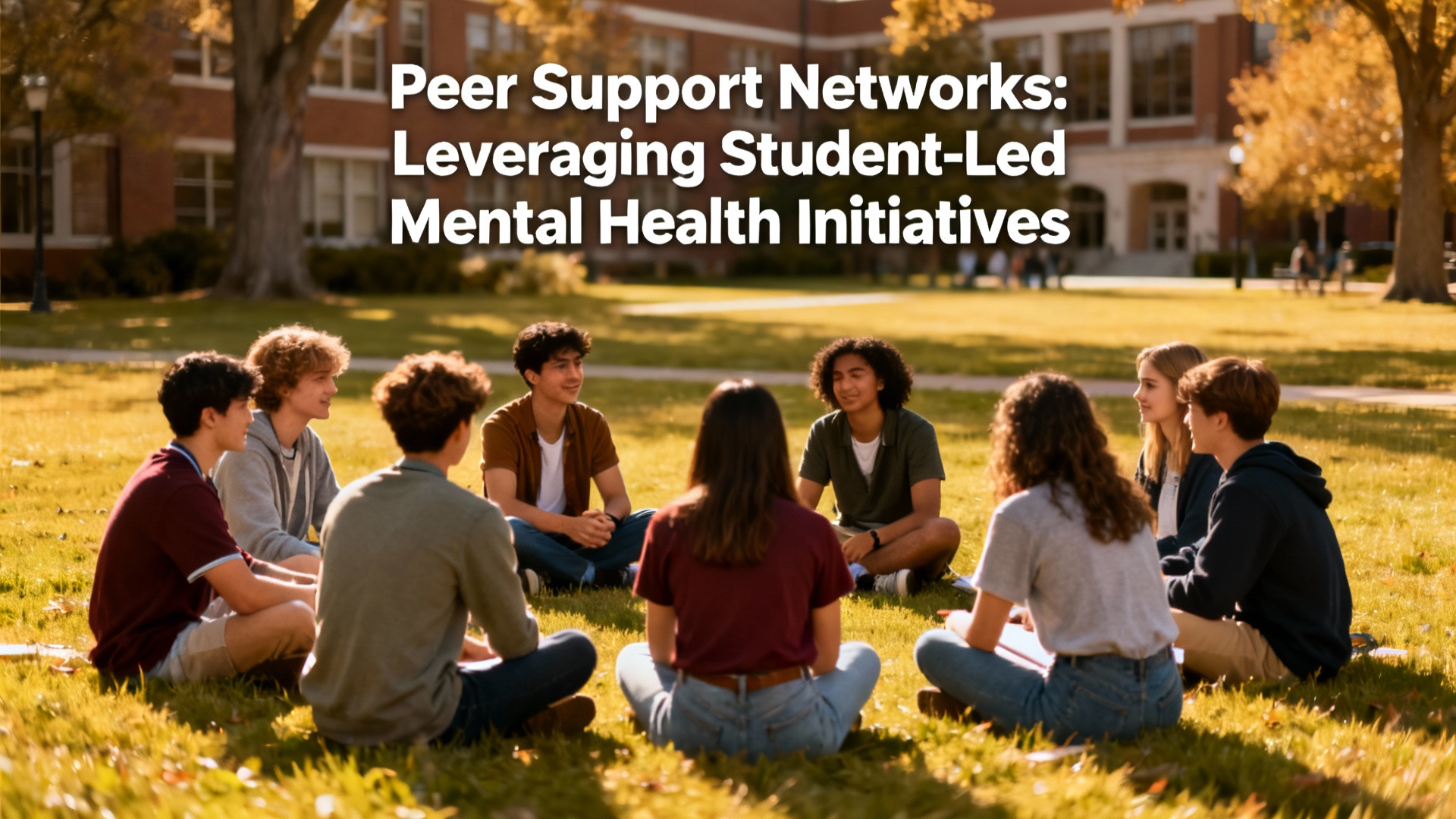
When a first-year student finally works up the courage to talk about their anxiety, they often don't reach out to a counselor. They text a friend. They confide in a roommate. They ask an older student in their major if what they're feeling is normal.
This isn't a failure of campus mental health systems. It's human nature—and increasingly, it's a strategic opportunity.
Peer support networks represent one of the most promising approaches to addressing student mental health on college campuses. These student-led initiatives tap into a simple truth: young people are more likely to seek help from someone who feels relatable, approachable, and non-judgmental. When designed thoughtfully—with proper training, supervision, and integration into broader campus systems—peer support programs can extend the reach of overburdened counseling centers while building authentic communities of care.
Professional counseling services alone cannot meet the scale of student mental health needs. But they don't have to. Peer support fills a different role—one focused on early intervention, normalization, and connection—that complements clinical services rather than replacing them.
Key Takeaways
Peer support models range from informal ambassador programs to structured mentorship initiatives—each serving distinct campus needs
Effective peer mentor training includes mental health first aid, active listening, boundary-setting, and crisis referral protocols
Research indicates peer support can increase help-seeking behavior and strengthen students' sense of belonging
Supervision and ongoing support for peer mentors is non-negotiable for program sustainability and safety
Integration with existing campus resources amplifies impact without duplicating services
Why Peer Support Networks Matter Now
The demand for mental health support on college campuses has reached unprecedented levels. The Healthy Minds Study consistently finds that more than 60% of college students meet criteria for at least one mental health problem [1]. Meanwhile, most campus counseling centers operate with limited staff and long wait times—sometimes weeks for an initial appointment.
Students aren't waiting that long. Many struggle in silence, assuming their feelings are unique or that they don't deserve professional help. Others simply don't know where to turn.
Peer support changes the equation. When a trained student leader normalizes the experience of stress, loneliness, or anxiety—and points a peer toward appropriate resources—they become a bridge between struggling students and the help they need.
This approach works because it meets students where they are, often before a situation escalates.

Understanding Peer Support Models
Not all peer support looks the same. Successful campus programs typically fall into three categories, each with distinct structures and purposes.
Ambassador Programs
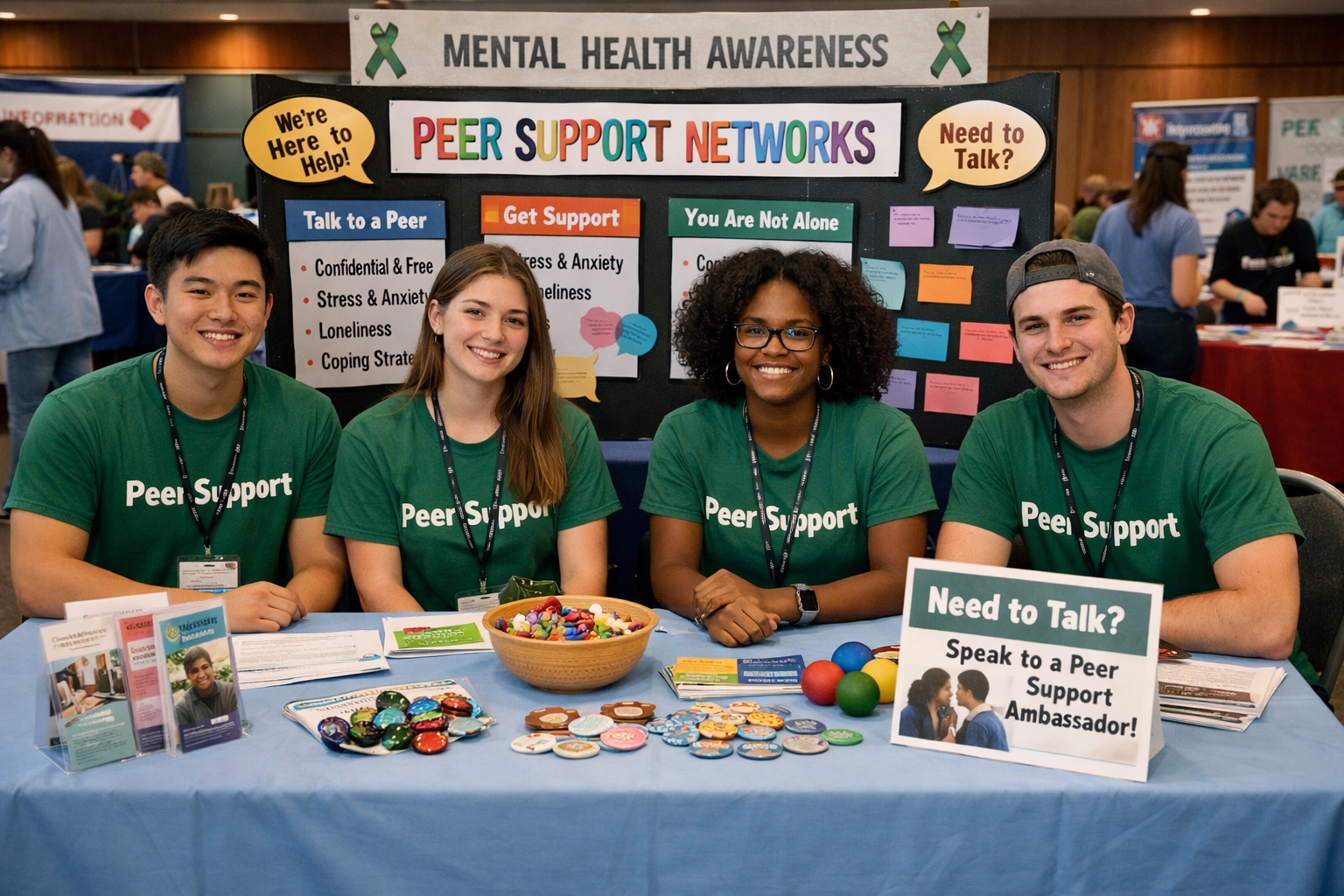
Mental health ambassador programs train student volunteers to raise awareness, reduce stigma, and share information about campus resources. Ambassadors might:
Host events during Mental Health Awareness Month
Share educational content on social media
Staff information tables at student centers
Lead classroom presentations on stress management
Example in Practice: Active Minds, a national nonprofit, supports student-led chapters at more than 1,000 campuses. These chapters organize awareness campaigns, host speakers, and create peer-to-peer conversations about mental health that help normalize help-seeking behavior [2].
Ambassador programs prioritize outreach and education over one-on-one support. They're relatively light-touch to implement and can quickly expand a campus's mental health presence.
Peer Counseling and Listening Programs
More intensive than ambassador programs, peer counseling initiatives train students to provide one-on-one or group-based emotional support. Common formats include:
Drop-in listening hours staffed by trained peers
Peer-led support groups for specific populations (first-generation students, LGBTQ+ students, students of color)
Crisis text or chat lines managed by student volunteers under professional supervision
Example in Practice: Cornell University's Empathy, Assistance and Referral Service (EARS) has operated since 1970, training student counselors to provide confidential peer support. The program demonstrates how sustained institutional investment in peer listening services can become a trusted campus resource across decades [3].
These programs require substantial training and ongoing oversight but can meaningfully extend counseling center capacity.
Peer Mentorship and Buddy Systems
Peer mentorship programs pair students—often newer students with more experienced ones—to provide social connection, practical guidance, and informal check-ins. Common models include:
Residence hall peer mentors or wellness ambassadors
Academic peer mentors embedded in high-risk courses
"Buddy" programs for transfer students, commuters, or first-generation students
Example in Practice: The University of Michigan's Wolverine Support Network trains student volunteers to recognize signs of distress and connect peers with campus resources. The program focuses specifically on building a culture where students look out for one another, integrating support into the fabric of campus life [4].
The focus here is relationship-building and belonging, with mental health support as a natural byproduct of ongoing connection.
Research published in the Journal of American College Health has found that students who participated in peer mentorship programs reported higher levels of social connectedness and were more likely to seek formal help when needed [5].
Training Peer Mentors: What's Essential
The effectiveness—and safety—of any peer support program depends on training quality. Students can be remarkably effective supporters, but only when equipped with the right skills and clear boundaries.
Core Training Components
Mental Health First Aid Fundamentals
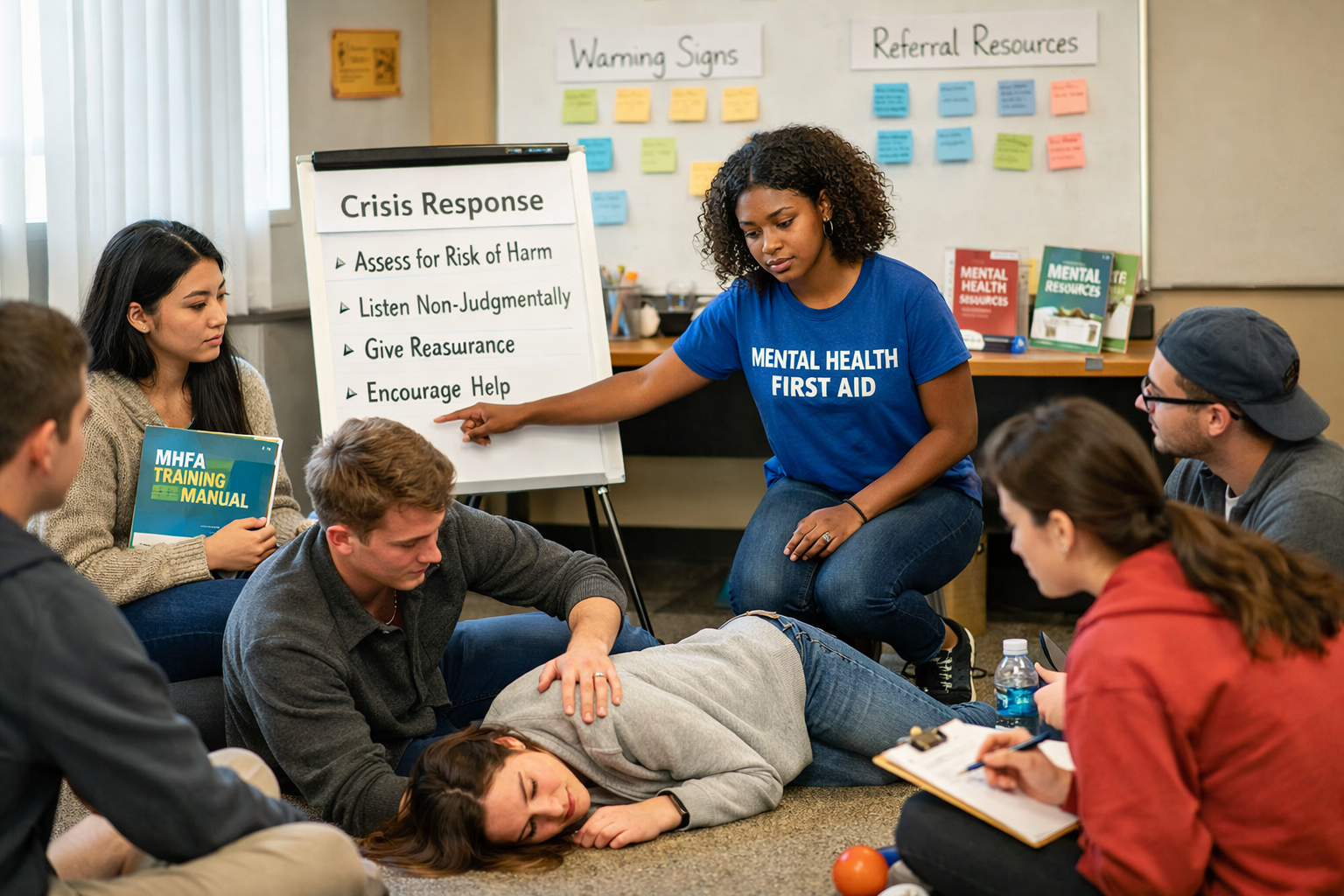
Peer mentors don't diagnose or treat. But they do need to recognize warning signs, respond supportively, and know when to escalate. Mental Health First Aid (MHFA) certification provides a solid foundation, teaching participants to:
Identify symptoms of common mental health challenges
Approach someone who may be struggling
Listen without judgment
Offer appropriate reassurance and information
Encourage professional help when needed [6]
Active Listening Skills
The most valuable thing a peer supporter can offer is genuine, undivided attention. Training should cover:
Open-ended questioning techniques
Reflective listening and paraphrasing
Nonverbal communication and body language
Avoiding the urge to "fix" or give advice
Example Scenario:A student shares: "I've been so overwhelmed lately. I don't know if I can keep doing this."Less effective response: "You should go to the counseling center. They can help you manage your time better."More effective response: "It sounds like you're carrying a lot right now. Can you tell me more about what's been weighing on you?"The difference: the second response invites the student to feel heard before being directed anywhere. Connection comes before referral.
Boundary-Setting and Self-Care
Peer mentors are students first. Without clear boundaries, the emotional weight of supporting struggling peers can lead to burnout, compassion fatigue, or vicarious trauma. Training must address:
When and how to end a conversation
Recognizing personal limits and emotional triggers
Mandatory self-care practices (debriefing, supervision, breaks)
The distinction between peer support and professional counseling
Crisis Response and Referral Protocols
Every peer mentor needs a clear, rehearsed protocol for crisis situations. This includes:
Recognizing signs of suicidal ideation or self-harm
Understanding mandatory reporting requirements
Knowing exactly who to contact and how
Staying with someone in crisis until professional help arrives
Programs without robust crisis protocols put both students and mentors at risk.
Training Duration and Format
Effective training programs typically involve 15–30 hours of initial instruction, delivered through a combination of didactic sessions, role-playing exercises, and case study discussions. Organizations like Active Minds and the JED Foundation provide evidence-based training curricula that can be adapted to campus-specific needs [2][7].
Initial training is just the beginning. Ongoing skill development—through monthly workshops, case conferences, or continuing education—keeps mentors sharp and supported.
Supervision: The Non-Negotiable Element
Many peer support programs fail because they train enthusiastic students, launch with fanfare, and then leave mentors to figure it out on their own.
This approach fails everyone.
Peer mentors need consistent access to professional supervision. This typically means:
Weekly or biweekly check-ins with a staff supervisor (often from counseling services, student affairs, or health promotion)
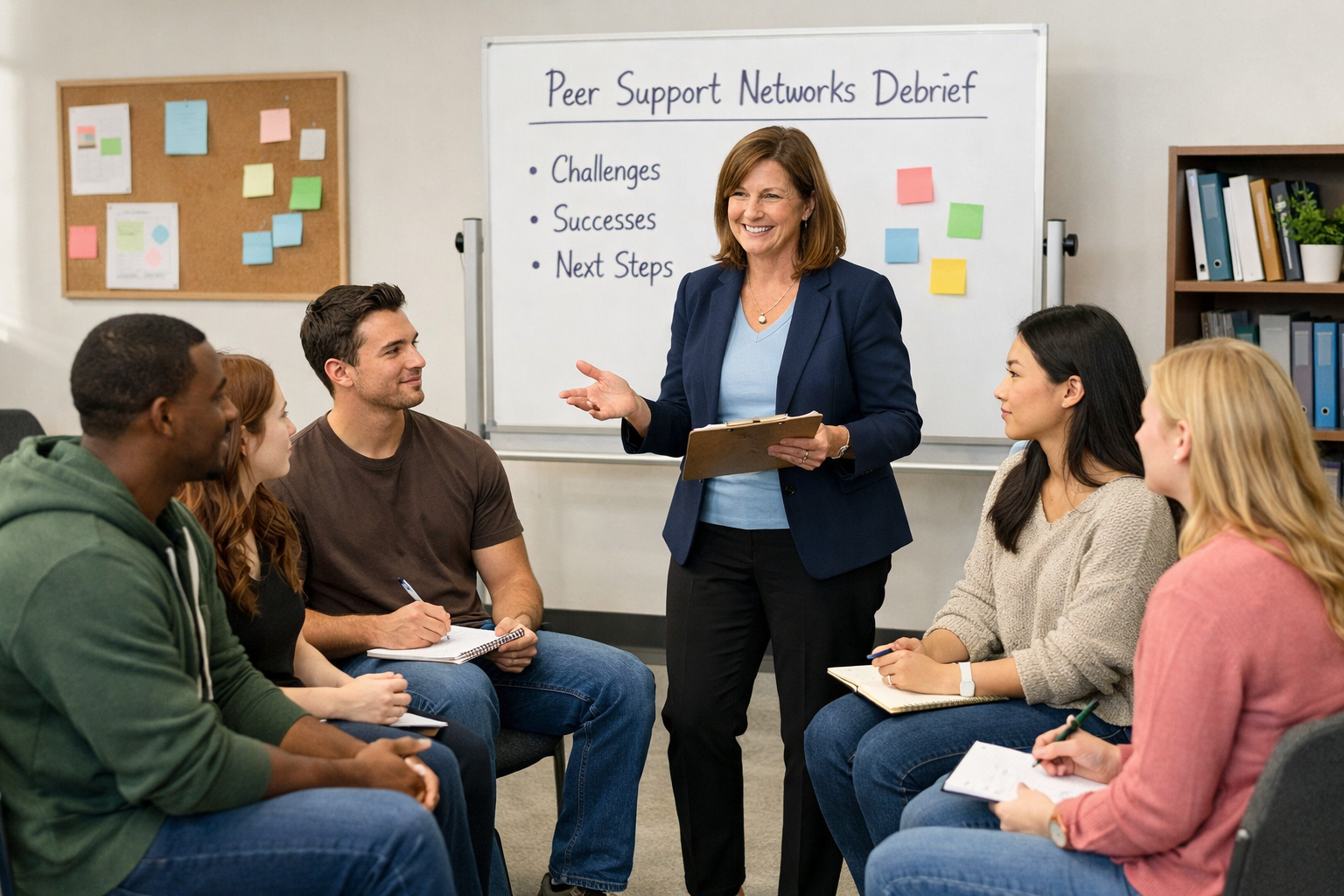
Group debriefing sessions where mentors can process difficult interactions and learn from each other
Clear escalation pathways so mentors always know where to turn when they encounter situations beyond their scope
Emotional support and validation that acknowledges the challenging nature of peer support work
Supervision serves more than risk management—it's about sustainability. Programs with strong supervision structures report lower mentor turnover and higher mentor satisfaction [8].
The supervisor role can be filled by licensed counselors, clinical social workers, or trained student affairs professionals. What matters is that someone with relevant expertise is consistently available to guide, support, and debrief with peer mentors.
Risk Management and Liability Considerations
For campus administrators, one of the primary concerns about peer support programs involves risk management. Addressing these concerns proactively strengthens program design and builds institutional confidence.
Establishing Clear Boundaries
The most important risk mitigation strategy is clarity about what peer support is—and isn't. Peer mentors provide:
Emotional support and active listening
Information about campus resources
Connection and normalization
Warm referrals to professional services
Peer mentors do not provide:
Diagnosis or treatment
Ongoing counseling relationships
Crisis intervention without professional backup
Advice on medication or clinical matters
This distinction should be explicit in training materials, program marketing, and any documentation signed by peer mentors.
Documentation and Protocols
Strong programs maintain:
Written role descriptions and scope-of-practice guidelines
Signed agreements acknowledging training completion and understanding of boundaries
Clear documentation procedures for concerning interactions
Established protocols for mandatory reporting situations
Insurance and Institutional Coverage
Most peer support programs operate under the institution's general liability coverage, but this should be confirmed with risk management. Key questions to address:
Are peer mentors considered volunteers or employees?
Does existing coverage extend to their activities?
What training documentation is required?
Working with your institution's legal counsel and risk management office early in program development prevents complications later.
Measuring Impact: What the Research Shows
Do peer support programs actually work? The evidence is encouraging—particularly around two key outcomes: help-seeking behavior and sense of belonging.
Increased Help-Seeking
One of the most consistent findings in peer support research is that students who engage with peer programs become more likely to access formal mental health services. A meta-analysis published in Prevention Science found that peer-led mental health programming was associated with increased help-seeking intentions and reduced stigma among college students [9].
Translation? Peer support doesn't replace professional help—it creates pathways to it.
This "gateway" effect is especially valuable for populations historically underrepresented in counseling centers, including men, first-generation students, and students from cultural backgrounds where mental health stigma is higher.
Strengthened Sense of Belonging
Belonging matters enormously for student success. Students who feel connected to their campus community are more likely to persist, engage academically, and maintain psychological wellbeing.
Peer support programs directly address belonging by:
Creating structured opportunities for meaningful connection
Signaling that the campus cares about student wellbeing
Building communities around shared experiences
Reducing isolation for students who might otherwise slip through the cracks
Research from the American Council on Education highlights belonging as a key predictor of student retention, with peer relationships playing a central role [10].
Additional Benefits
Beyond help-seeking and belonging, well-implemented peer support programs have been associated with:
Reduced mental health stigma among participants and the broader campus community
Improved stress management and coping skills among both mentors and mentees
Enhanced leadership and communication skills for peer mentors themselves
Greater awareness of campus resources among the student body
Building an Effective Program: Practical Considerations
For campus leaders considering peer support initiatives, several implementation factors merit attention.
Program Scope and Focus
Start with clear answers to these questions:
What population will this program serve? (All students? First-years? Specific identity groups?)
What type of support will peer mentors provide? (Education? Emotional support? Resource navigation?)
How will this complement—not duplicate—existing services?
Smaller, focused programs often outperform ambitious ones that try to serve everyone. Consider piloting with a defined cohort before scaling.
Recruitment and Selection
Not every student makes a good peer mentor. Effective selection processes typically include:
Written applications assessing motivation and relevant experience
Interviews evaluating interpersonal skills and emotional intelligence
Reference checks from faculty, staff, or previous supervisors
Clear expectations about time commitment and training requirements
Diversity in your mentor cohort matters. Students are more likely to connect with peers who share aspects of their identity or experience.
Integration with Campus Resources
Peer support works best when embedded within a broader ecosystem of care. This means:
Formal partnerships between peer programs and counseling centers
Warm referral pathways (not just handing students a phone number)
Regular communication between peer program coordinators and student affairs leadership
Data sharing (where appropriate) to identify trends and gaps
When peer programs operate in isolation, they miss opportunities to amplify impact and may inadvertently duplicate efforts.
Recognition and Incentives
Peer mentors give substantial time and emotional energy. Recognition matters—whether through:
Stipends or course credit
Professional development opportunities
Resume-building experiences
Public acknowledgment and appreciation events
Programs that treat peer mentors as valued contributors, rather than unpaid labor, tend to attract stronger candidates and retain them longer.
Common Pitfalls to Avoid
Even well-intentioned programs can stumble. Watch out for these common mistakes:
Insufficient training. A two-hour orientation doesn't prepare students for the complexities of peer support. Invest in comprehensive initial training and ongoing development.
Lack of supervision. Without professional oversight, peer mentors are left to handle difficult situations alone—which is unfair to them and potentially unsafe for students they support.
Scope creep. Peer mentors are not therapists. Programs must maintain clear boundaries about what peer support is and isn't.
Ignoring mentor wellbeing. Peer support can be emotionally taxing. Programs that don't prioritize mentor self-care risk burnout and turnover.
Operating in silos. Peer programs disconnected from counseling, advising, and other campus services miss opportunities for seamless student support.
The Role of Technology
Digital tools can enhance peer support programs when used thoughtfully. Effective platforms facilitate:
Easy scheduling of peer mentor meetings through integrated calendars
Secure communication between mentors and supervisors for case consultation
Resource sharing that gives mentors quick access to referral information
Anonymous feedback collection to continuously improve program quality
Engagement tracking that helps coordinators identify trends without compromising privacy
Mobile-first approaches are particularly effective for reaching students who prefer digital communication. Some campuses use dedicated apps that connect students with peer mentors, track wellbeing check-ins, and surface relevant resources based on individual needs.
However, technology should supplement—not replace—human connection. The power of peer support lies in authentic relationships, and no app can fully replicate that.
A Note on Sustainability
Peer support programs often launch with grant funding, champion enthusiasm, or administrative attention that fades over time. Building sustainable programs requires:
Institutional budget lines (not just soft money)
Dedicated staff coordination (even if part-time)
Integration into strategic plans for student success
Assessment infrastructure that demonstrates value to stakeholders
Programs that can articulate their contribution to retention, student satisfaction, and campus climate are better positioned for long-term support.
Your Next Steps
If you're considering launching or strengthening a peer support program on your campus, start here:
1. Assess your current landscape. What peer support already exists—formally or informally? Where are the gaps?
2. Engage stakeholders early. Counseling services, student affairs, residence life, and student government all have perspectives worth incorporating.
3. Define scope clearly. Choose a focused model that addresses a genuine need without overextending resources.
4. Invest in training and supervision. This is non-negotiable. Underprepared or unsupported peer mentors can do more harm than good.
5. Build in assessment from day one. Decide what success looks like and how you'll measure it before launching.
6. Connect to your broader support ecosystem. Peer programs work best when integrated with counseling, advising, and student success infrastructure.
Ready to explore how technology can support your student engagement and wellbeing initiatives? Book a call with CampusMind to learn how our platform helps campuses connect students to resources, peers, and support systems.
Frequently Asked Questions
What's the difference between peer support and professional counseling?
Peer support focuses on emotional connection, resource navigation, and normalization—not diagnosis or treatment. Peer mentors are trained to listen, empathize, and refer students to appropriate professional services when needed. They serve as bridges to help, not replacements for licensed counselors.
How much training do peer mentors typically need?
Effective programs provide 15–30 hours of initial training covering mental health basics, active listening, boundary-setting, and crisis protocols. Ongoing training and regular supervision are equally important for maintaining quality and supporting mentor wellbeing throughout their service.
Can peer support programs help with student retention?
Evidence suggests they can. By increasing sense of belonging and connecting struggling students to resources earlier, peer support programs contribute to improved persistence. Students who feel supported and connected are more likely to stay enrolled and succeed academically.
What qualifies a student to be a peer mentor?
Strong candidates demonstrate empathy, emotional intelligence, reliability, and genuine interest in helping others. Most programs look for students in good academic standing, with relevant experience (formal or informal), and the ability to maintain confidentiality and appropriate boundaries.
How do we prevent peer mentor burnout?
Prioritize training on self-care and boundary-setting, provide regular supervision and debriefing opportunities, limit caseloads to sustainable levels, and create a culture where asking for help is normalized. Recognizing and appreciating mentors' contributions also supports their wellbeing.
About This Resource
This article was developed by the CampusMind Insights team, drawing on published research in student mental health and engagement, best practices from peer support programs nationwide, and our ongoing work with campus leaders committed to student success. CampusMind exists to transform how colleges support students by connecting data-driven insights with human-centered approaches to wellbeing, belonging, and retention.
Works Cited
[1] Healthy Minds Network — "Healthy Minds Study 2022-2023 Data Report." https://healthymindsnetwork.org/wp-content/uploads/2023/08/HMS_National-2022-2023_full-report.pdf
[2] Active Minds — "About Active Minds: Programs and Impact." https://www.activeminds.org/about-us/
[3] Cornell Health — "EARS: Empathy, Assistance and Referral Service." https://health.cornell.edu/services/counseling-psychiatry/ears
[4] University of Michigan — "Wolverine Support Network." https://caps.umich.edu/article/wolverine-support-network
[5] Shotton, H.J., Oosahwe, E.S.L., & Cintrón, R. — "Stories of Success: Experiences of American Indian Students in a Peer-Mentoring Retention Program." Review of Higher Education, 2007. https://doi.org/10.1353/rhe.2007.0060
[6] Mental Health First Aid USA — "About Mental Health First Aid." https://www.mentalhealthfirstaid.org/about/
[7] The Jed Foundation — "JED Campus Program." https://jedfoundation.org/what-we-do/jed-campus/
[8] Barnett, J.E., Baker, E.K., Elman, N.S., & Schoener, G.R. — "In Pursuit of Wellness: The Self-Care Imperative." Professional Psychology: Research and Practice, 2007. https://doi.org/10.1037/0735-7028.38.6.603
[9] Conley, C.S., Durlak, J.A., & Kirsch, A.C. — "A Meta-Analysis of Universal Mental Health Prevention Programs for Higher Education Students." Prevention Science, 2015. https://doi.org/10.1007/s11121-015-0543-1
[10] American Council on Education — "Race and Ethnicity in Higher Education: A Status Report." https://www.acenet.edu/Research-Insights/Pages/Race-and-Ethnicity-in-Higher-Education.aspx