The pandemic forced higher education to improvise at scale. Overnight, campuses became virtual, counseling moved to screens, and student support teams scrambled to reach students who had suddenly disappeared from view.
Now, years later, many of those emergency pivots have been evaluated—and the results are instructive. Some adaptations turned out to be genuine breakthroughs. Others revealed structural cracks that had always existed in how institutions support student success.
The colleges that emerged stronger weren't necessarily the ones with the biggest budgets. They were the ones willing to honestly assess what worked, discard what didn't, and build student support strategies around flexibility, access, and early intervention.
But translating those lessons into lasting change remains a significant challenge. This guide examines what higher education learned from the pandemic disruption, which innovations are worth sustaining, the implementation obstacles institutions actually face, and how forward-thinking campuses are improving retention in the post-COVID era.
Key Takeaways
Telehealth and virtual counseling expanded access for students who previously avoided in-person services—and the data supports making these options permanent
Hybrid and flexible course models improved persistence for working students and caregivers when designed intentionally
Institutions that invested in proactive outreach—not just reactive crisis response—saw measurable retention gains
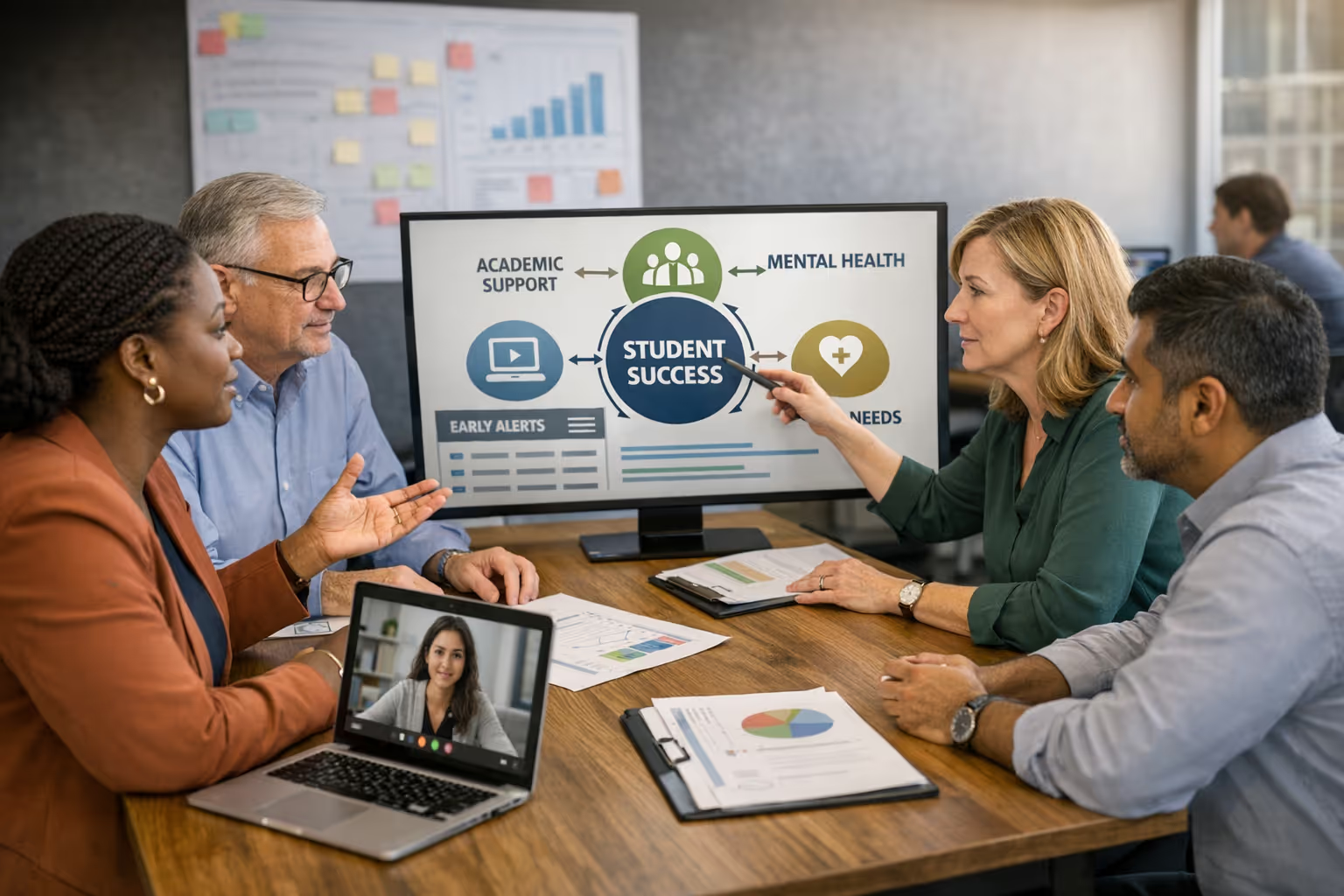
The post-pandemic era demands integration: connecting academic, wellness, and support services into coherent systems
Implementation challenges (faculty resistance, technical silos, budget constraints) require as much attention as the strategies themselves
What the Pandemic Revealed About Student Support
Before March 2020, most campus support services operated on a fundamental assumption: students would come to them. Office hours, counseling appointments, tutoring centers—all required students to physically show up during limited windows.
The pandemic shattered that model. And in doing so, it exposed several uncomfortable realities.
Students were struggling in silence. The Healthy Minds Study, a large-scale annual survey of college student mental health, found that during the 2020-2021 academic year, more than 60% of college students met criteria for at least one mental health problem [1]. Many had been struggling before the pandemic; the crisis simply made it impossible to ignore.
Access barriers were structural, not motivational. When counseling moved online, utilization often increased—suggesting that many students had wanted help but couldn't navigate the logistics of in-person appointments around work schedules, commutes, or social anxiety [2].
Early warning systems failed when traditional signals disappeared. Attendance tracking, in-person check-ins, faculty observations—all the informal ways campuses identified struggling students evaporated overnight. Institutions without robust data systems found themselves flying blind.
Fragmentation became impossible to hide. When students couldn't physically walk between offices, the gaps in institutional communication became glaringly obvious. A student struggling academically might also be dealing with food insecurity, housing instability, and financial stress—but each concern was handled by a separate office with no communication between them.

Telehealth and Virtual Counseling: What Actually Worked
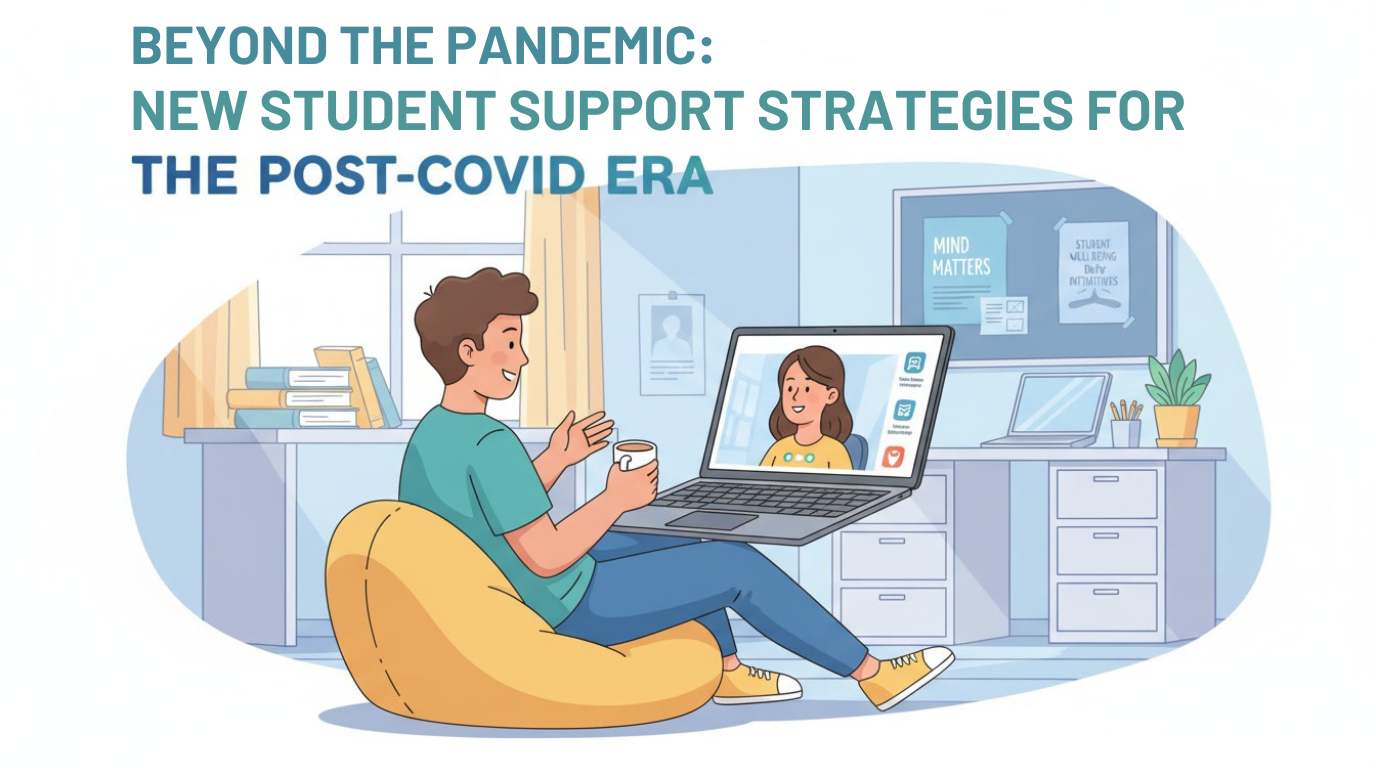
One of the pandemic's clearest success stories was the rapid adoption of telehealth for campus mental health services. What started as an emergency measure has become a permanent fixture at many institutions—and the research supports keeping it.
The Access Equation
Virtual counseling eliminates several barriers that historically kept students from seeking help:
Geographic constraints: Commuter students no longer need to make a separate trip to campus
Schedule conflicts: Evening and weekend appointments become feasible
Stigma reduction: Some students find it easier to access mental health support from a private space rather than walking into a counseling center
Wait time management: Telehealth platforms can often accommodate students faster than in-person-only systems
Research published in the Journal of American College Health has examined student experiences with telehealth counseling, finding that students reported comparable satisfaction with virtual sessions compared to in-person visits, with many citing convenience as a primary factor in their willingness to continue treatment [3].
What Institutions Are Sustaining
Colleges that have successfully integrated telehealth into their ongoing operations share several characteristics:
Hybrid options, not forced choices. The most effective models let students choose their modality. Some prefer screens; others need the structure of showing up somewhere. Forcing everyone into one model misses the point.
After-hours availability. Partnering with telehealth providers (such as TimelyCare, Uwill, or similar platforms) to extend service hours beyond the traditional 9-to-5 window has proven particularly valuable for non-traditional students juggling work and family responsibilities.
Clear triage protocols. Virtual counseling works well for many concerns, but institutions need clear pathways to escalate students who need more intensive support or crisis intervention. The goal is expanded access, not replacement of comprehensive care.
Integration with campus systems. Standalone telehealth platforms that don't communicate with academic advisors, residence life, or student success offices create new silos. The data needs to inform broader intervention strategies—while respecting student privacy and FERPA requirements.
The Distinction That Matters
It's worth noting the difference between telehealth crisis lines and ongoing therapeutic support. Many institutions have added 24/7 crisis lines (often through third-party providers), which serve an important function for acute situations. But these are distinct from scheduled teletherapy sessions for ongoing concerns like anxiety, adjustment difficulties, or stress management. Both have value; they serve different purposes.
Hybrid Learning and Flexible Course Design
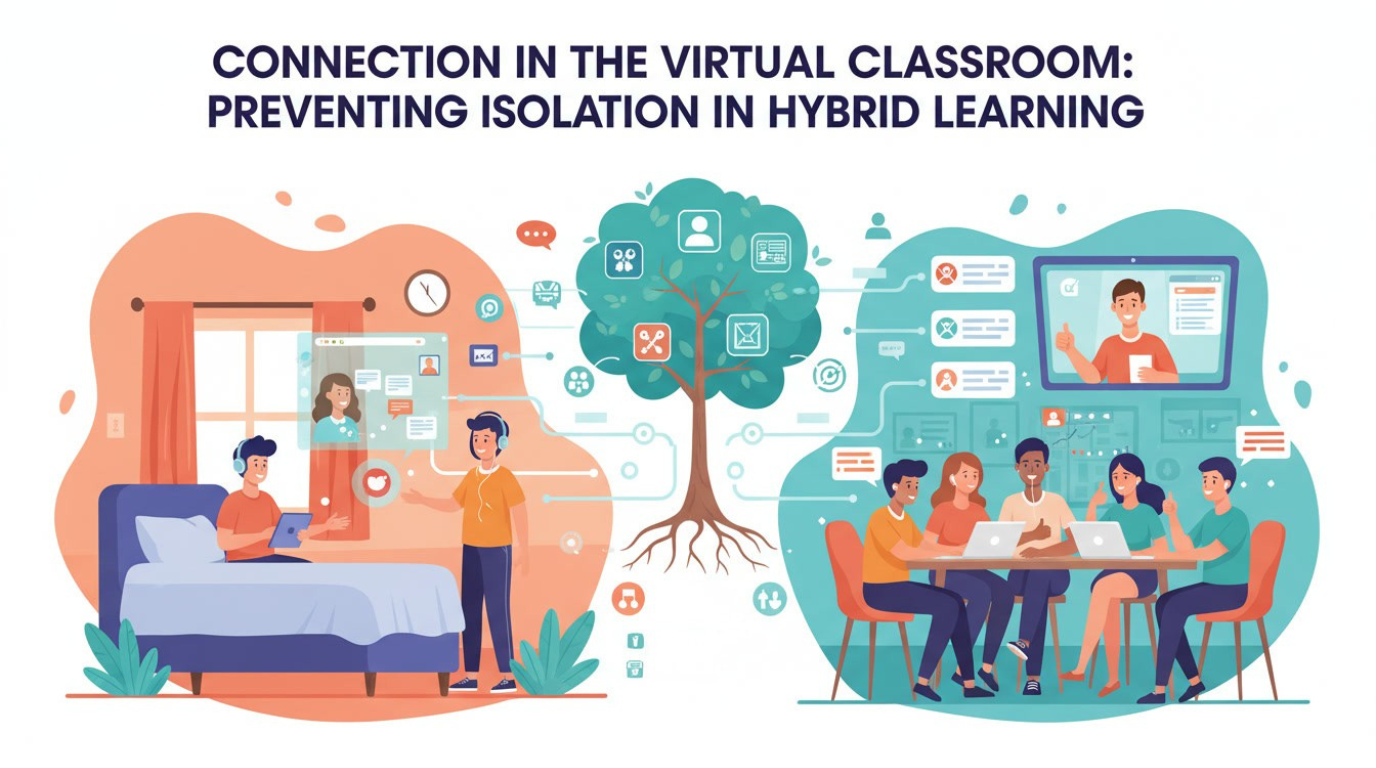
The shift to hybrid and online learning was messy. Faculty scrambled, students struggled with Zoom fatigue, and outcomes varied wildly across institutions and disciplines.
But amid the chaos, something important emerged: flexibility helped certain student populations persist when rigid schedules had previously pushed them out.
Who Benefits Most from Flexible Modalities
Research from the Community College Research Center at Columbia University suggests that well-designed hybrid courses can improve completion rates for specific student groups [4]:
Working students who need to balance employment with coursework
Student parents managing childcare responsibilities
Students with chronic health conditions or disabilities that make consistent in-person attendance challenging
Students with long commutes who face transportation barriers
The key phrase is "well-designed." Poorly implemented online components—recorded lectures with no interaction, unclear expectations, limited instructor presence—consistently produce worse outcomes than in-person instruction.
What Effective Hybrid Programs Look Like
Institutions that have successfully sustained flexible learning models share common approaches:
Intentional course design. This isn't about recording lectures and posting them online. Effective hybrid courses are built from the ground up with clear delineation of what happens synchronously versus asynchronously, and why each element requires that modality.
Robust student support infrastructure. Students taking hybrid or online courses need the same access to tutoring, advising, and wellness resources as their in-person peers. Institutions that treated online learners as an afterthought saw higher dropout rates.
Faculty development. The pandemic revealed that teaching online is a distinct skill set. Institutions investing in ongoing professional development for hybrid instruction see better student outcomes than those treating it as a temporary accommodation.
Clear communication. Students need to know exactly what's expected in a hybrid format. Ambiguity around attendance, participation, and deadlines creates unnecessary friction that disproportionately affects first-generation students who may already feel uncertain about academic norms.
Early Intervention: The Shift from Reactive to Proactive
Perhaps the most significant lesson from the pandemic was the inadequacy of reactive support models. When students disappeared from campus, institutions realized they lacked the infrastructure to identify and reach struggling students before crisis points.
This realization accelerated investment in early alert systems and proactive outreach—strategies that research consistently shows improve retention [5].
What Proactive Support Looks Like
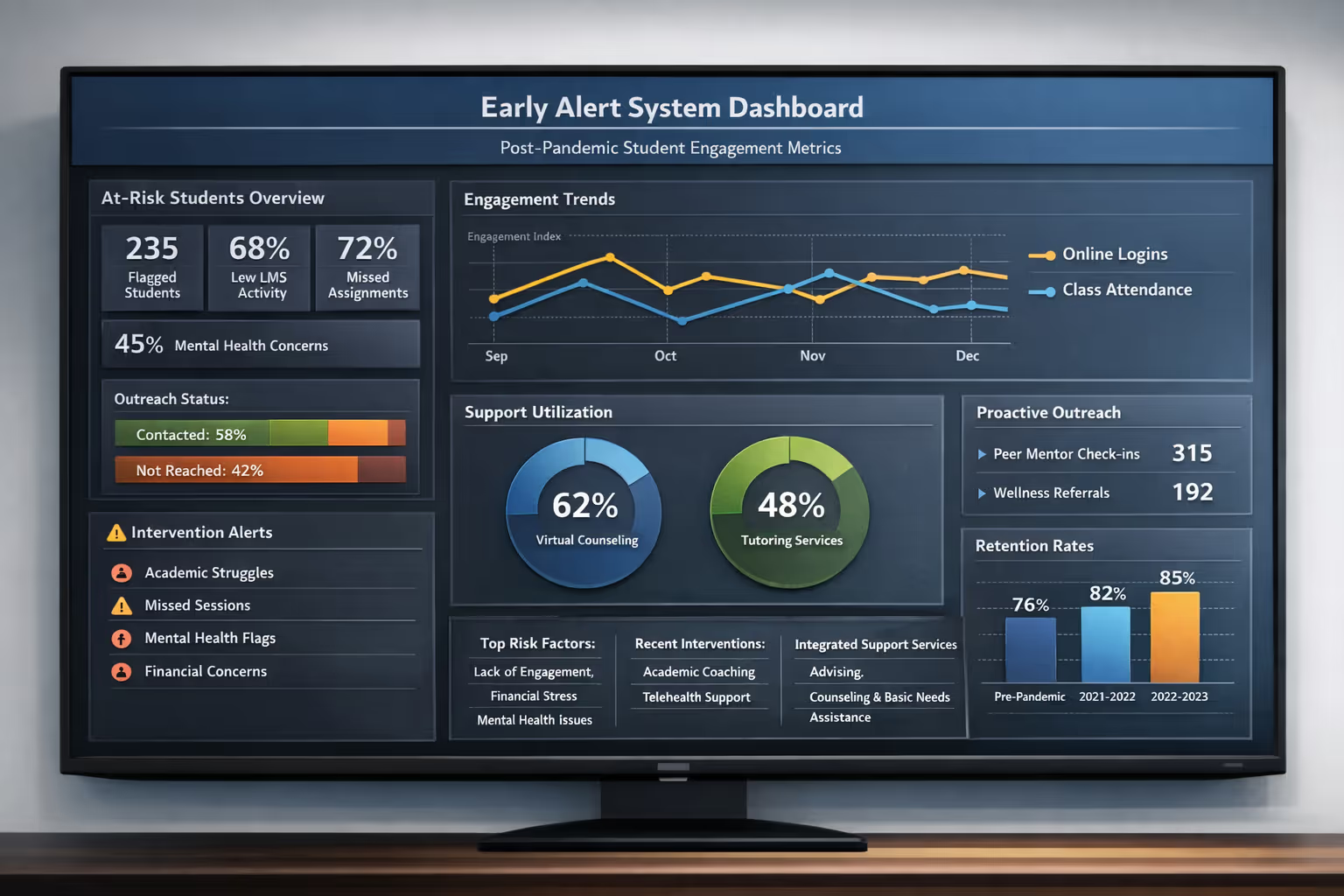
Behavioral data integration. Waiting for midterm grades to identify struggling students means intervening too late. Institutions are increasingly tracking engagement signals—LMS logins, assignment submissions, campus service utilization—to identify disengagement patterns in real time.
Coordinated outreach. A student receiving separate messages from their advisor, professor, financial aid office, and counseling center isn't being well-supported—they're being overwhelmed. Effective early intervention requires coordination across departments so students receive coherent, manageable communication.
Peer-based touchpoints. Research suggests that students are often more responsive to outreach from near-peers (orientation leaders, peer mentors, resident advisors) than from administrators [6]. Training and empowering student leaders to conduct wellness check-ins extends institutional reach while maintaining a personal touch.
Parent and family communication. With appropriate consent and FERPA compliance, keeping families appropriately informed helps create a support network that extends beyond campus. The pandemic normalized parent engagement in ways that can benefit student success when handled thoughtfully—emphasizing partnership rather than surveillance.
The Georgia State Model
One of the most cited examples of data-driven student success is Georgia State University, which has been widely recognized for using predictive analytics and proactive advising to improve graduation rates [7].
Key elements of their approach:
Hundreds of alerts trigger proactive advisor outreach based on early warning indicators
Advisors receive training in motivational interviewing and holistic support
Students receive timely information about financial aid, registration deadlines, and academic requirements before problems compound
The institution tracks outcomes rigorously and adjusts interventions based on what the data shows is working
The takeaway? Success wasn't about technology alone—it was about using data to drive human intervention at the right moments.
The Implementation Gap: Why Good Strategies Often Stall
Reading about successful interventions is one thing. Actually implementing them is another.
Many institutions recognize the value of integrated support, proactive outreach, and flexible service delivery—but struggle to translate those principles into practice. Understanding why reveals what it actually takes to make lasting change.
Faculty and Staff Resistance
Early alert systems that ask faculty to flag struggling students require faculty buy-in. And that buy-in isn't automatic.
Common friction points include:
Privacy concerns: Some faculty worry that reporting student struggles feels like surveillance or could harm students
Time burden: Adding another task to already-stretched workloads generates pushback
Skepticism about outcomes: If faculty don't see clear evidence that their alerts lead to meaningful intervention, participation drops
Pedagogical philosophy: Some instructors believe students should seek help themselves as part of learning independence
Successful implementations address these concerns directly—through clear communication about how alerts are used, demonstration of impact, and reducing friction in the reporting process.
Technical Debt and Silos
Most institutions didn't start from a blank slate. They have legacy systems—often multiple, disconnected legacy systems—for advising, financial aid, mental health, housing, and academics.
Integrating these systems to create a unified view of student engagement is technically challenging and expensive. Many institutions find themselves in one of two frustrating positions:
Vendor lock-in: Existing contracts make switching or integrating systems prohibitively expensive
Homegrown patchwork: Years of ad hoc solutions have created a tangle that no single person fully understands
There's no quick fix here. But acknowledging the reality of technical debt helps set realistic timelines and prevents disillusionment when integration takes longer than anticipated.
Budget Constraints and Competing Priorities
Student success initiatives compete for the same limited dollars as facilities maintenance, faculty salaries, athletics, and a dozen other priorities.
Administrators who champion these programs often face hard questions: What's the ROI? How do we justify this expense when we're also facing a hiring freeze?
This is where connecting student success to institutional sustainability matters. Every percentage point improvement in retention translates to tuition revenue retained, reduced recruitment costs, and improved institutional reputation. But that case has to be made clearly and repeatedly.
Political Friction Between Departments
Integration sounds good in theory. In practice, it often means asking departments to share data, coordinate messaging, and sometimes cede control over student relationships they've traditionally owned.
A financial aid office that has always handled its own student communication may bristle at being asked to coordinate with student success staff. An academic advising unit may feel territorial about student data. These dynamics are human and understandable—but they can derail implementation.
Successful integration efforts typically require visible executive sponsorship, clear articulation of shared goals, and patient relationship-building across units.
Building Integrated Student Support Systems
The pandemic exposed what many student affairs professionals had long suspected: fragmented support systems fail students.
A student struggling academically may also be dealing with food insecurity, housing instability, mental health challenges, and financial stress. When each of these concerns is handled by a separate office with no communication between them, students fall through the cracks.
The Case for Integration
Research from the Community College Research Center and other organizations has documented the benefits of integrated student support models, often called "guided pathways" or "holistic advising" approaches [8]:
Students receive consistent messaging rather than conflicting advice
Staff can identify patterns that individual offices might miss
Handoffs between services become smoother, reducing the likelihood that students get lost in transitions
Resource utilization becomes more efficient as institutions understand the full picture of student needs
What Integration Looks Like in Practice
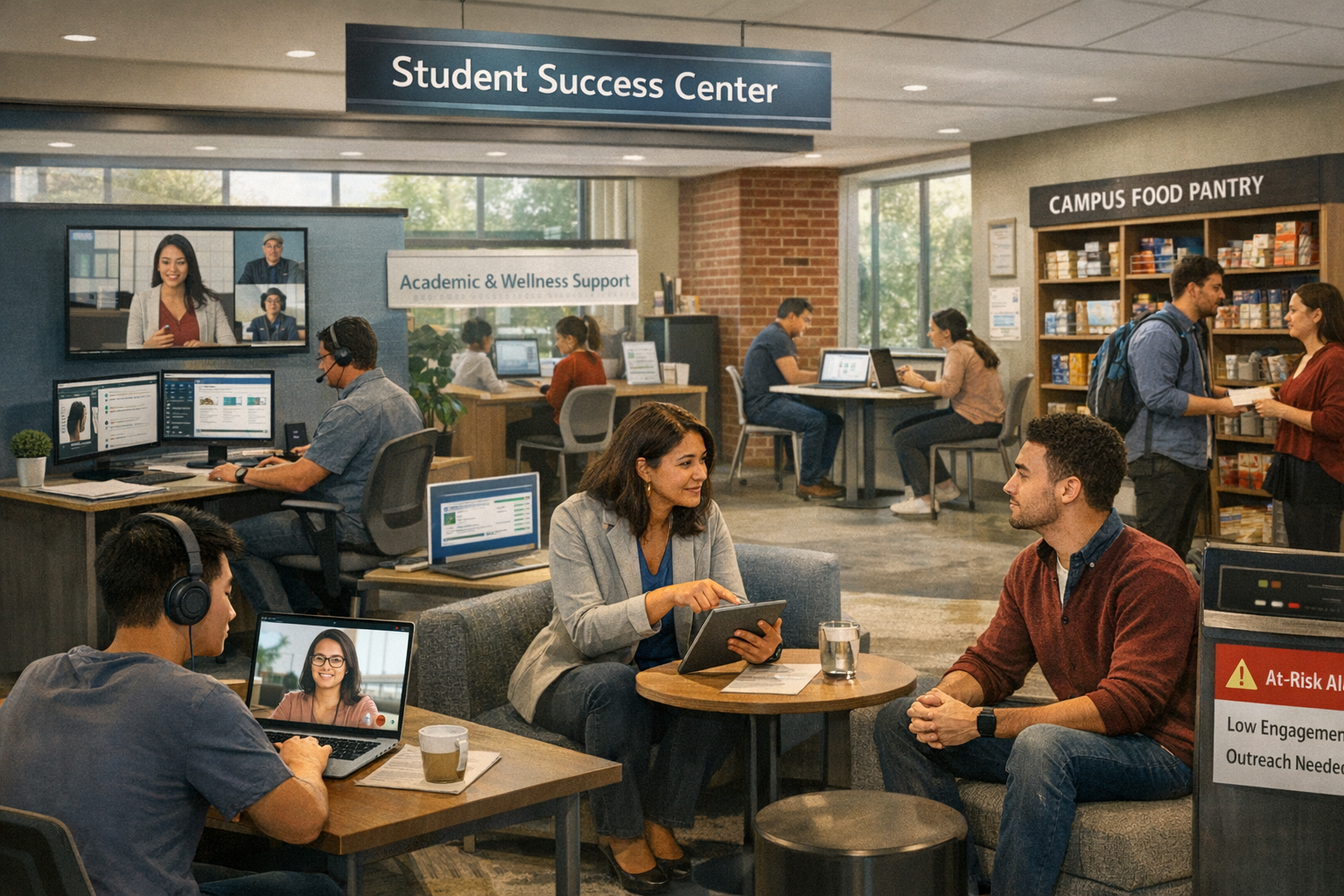
One-stop service models. Physical or virtual hubs where students can address multiple needs—academic advising, financial aid, basic needs support—without bouncing between offices. The goal isn't eliminating specialized expertise; it's eliminating the navigational burden students currently bear.
Shared case management systems. Platforms that allow advisors, counselors, and student success staff to see a holistic view of student engagement and support history (with appropriate privacy controls and student consent). This doesn't mean everyone sees everything—it means relevant information flows to people who need it to help students.
Cross-trained staff. Training front-line staff to recognize signs of broader challenges and make warm handoffs to appropriate resources. A financial aid counselor who notices signs of food insecurity can connect a student to the food pantry on the spot, rather than just saying "you should check that out."
Unified communication strategies. Reducing the volume of fragmented messages students receive by coordinating outreach across departments. When a student is struggling, they need a lifeline—not an avalanche of emails from eight different offices.
Institutions Getting It Right: Post-Pandemic Success Stories
Several institutions have emerged from the pandemic with demonstrably improved student support infrastructure.
Valencia College (Florida)
Valencia's comprehensive approach combines proactive outreach, mandatory orientation, and integrated support services. The college has consistently been recognized for its student success work, including winning the Aspen Prize for Community College Excellence. Their model emphasizes helping students navigate support systems early and providing coordinated advising throughout their enrollment [9].
Georgia State University (Georgia)
Beyond their widely cited analytics work, Georgia State expanded its approach during the pandemic to include emergency grants, expanded mental health services, and enhanced advising touchpoints. The university has maintained strong graduation rates even during campus closures and has been particularly successful at closing equity gaps in graduation rates [7].
Amarillo College (Texas)
Amarillo College's "No Excuses" poverty initiative integrated basic needs support (food pantries, childcare, transportation assistance) directly into student success advising. Rather than treating academic support and basic needs as separate domains, they recognized that students can't focus on coursework when fundamental needs aren't met. The result: measurable improvements in completion rates among low-income students [10].
The Common Thread
These institutions didn't treat pandemic adaptations as temporary patches. They asked which changes genuinely served students and built those practices into permanent operations.
They also committed to measurement. Each of these institutions tracks outcomes rigorously and adjusts strategies based on evidence rather than assumption.
A Framework for Moving Forward
Distilling the lessons of recent years into actionable principles:
1. Meet Students Where They Are
This means flexible service delivery—telehealth options, extended hours, mobile-friendly platforms—that acknowledges students' actual lives rather than idealized assumptions about campus engagement. It also means recognizing that different students need different things; the commuter student with two jobs has different constraints than the residential student on a traditional path.
2. Intervene Early and Often
Waiting for students to seek help or for grades to drop means intervening too late. Build systems that identify disengagement patterns early and trigger proactive, coordinated outreach. The first 100 days of a student's college experience are particularly critical.
3. Integrate Across Silos
Student success is not the province of any single office. Academic affairs, student affairs, financial aid, and wellness services need shared data systems and coordinated approaches. This is hard, politically fraught, and technically complex—and it's still necessary.
4. Measure What Matters
Retention and completion rates are lagging indicators. Track leading indicators—engagement, wellness check-in responses, service utilization, assignment completion patterns—to understand whether interventions are working before it's too late to adjust.
5. Center Equity
Flexible, proactive, integrated support systems disproportionately benefit students who have historically been underserved by traditional models—first-generation students, working students, students from underrepresented backgrounds. This isn't a side benefit; it's the point.
6. Be Honest About Implementation
Good ideas implemented poorly produce bad outcomes. Allocate as much attention to change management, faculty buy-in, technical integration, and cross-departmental coordination as you do to selecting strategies in the first place.
Your Next Steps
For campus leaders evaluating post-pandemic support strategies:
Audit which pandemic-era adaptations have been sustained versus abandoned—and examine why
Assess whether your early alert systems capture behavioral and engagement data, not just academic performance
Evaluate communication flow between student-facing departments: do students receive coordinated support or fragmented messages?
Survey students on their preferences for service modalities and barriers to accessing support
Be realistic about implementation timelines given your institution's technical infrastructure and political dynamics
For student affairs professionals:
Identify one integration opportunity between your office and an adjacent department
Review telehealth utilization data: who's using virtual options, and who isn't?
Build relationships with peer mentor programs that can extend proactive outreach
Document what's working and what isn't—evidence of impact builds the case for continued investment
Frequently Asked Questions
Did online learning during the pandemic hurt student outcomes?
Outcomes varied significantly based on course design, student population, and institutional support. Emergency remote instruction—thrown together in days with little planning—often produced worse outcomes than in-person learning. However, intentionally designed hybrid and flexible models have shown promise for improving persistence among working students, student parents, and others facing logistical barriers. The lesson: modality matters less than design quality and support infrastructure.
How can small institutions with limited budgets implement these strategies?
Integration doesn't require expensive technology—it starts with coordination. Small institutions can begin by convening cross-departmental meetings to identify students falling through gaps, cross-training existing staff to recognize referral opportunities, and consolidating student communications. Technology can amplify these efforts, but human coordination is the foundation. Start with what you can control.
Is telehealth counseling as effective as in-person therapy for college students?
Research suggests that for many concerns—anxiety, depression, adjustment issues, stress management—telehealth produces comparable outcomes to in-person counseling, with improved access as a significant advantage. However, telehealth isn't appropriate for all situations, particularly acute crisis intervention or complex presentations. The most effective models offer both modalities and let students choose based on their needs and preferences.
How do institutions balance proactive outreach with respecting student autonomy?
Effective proactive support is invitational, not intrusive. The goal is ensuring students know what resources exist and that someone notices when they're struggling—not micromanaging their decisions. Clear communication about what data is being tracked and how it's used helps build trust. Students generally respond positively to outreach that feels supportive rather than surveillant, especially when it's framed as "we noticed and wanted to check in" rather than "we're monitoring you."
What's the most important first step for improving post-pandemic student support?
Start by understanding your current state. Audit which pandemic adaptations were sustained, survey students on their actual barriers to support, and map the communication flow between student-facing departments. You can't improve what you haven't examined. From there, prioritize based on your institution's specific gaps—for some schools that's early intervention infrastructure; for others it's service integration or telehealth expansion.
Ready to explore how proactive, integrated student support might work on your campus? Book a call with our team to discuss your institution's specific challenges and opportunities.
About This Resource
This article reflects current research and institutional practice in higher education student success. CampusMind works with colleges and universities to implement integrated, data-informed student support systems that help institutions identify struggling students early and connect them with appropriate resources. Our approach combines behavioral science, technology, and human-centered design to improve student wellbeing, belonging, and retention.
Works Cited
[1] Healthy Minds Network — "The Healthy Minds Study: 2020-2021 Data Report." https://healthymindsnetwork.org/wp-content/uploads/2021/09/HMS-Fall-2020-National-Data-Report.pdf
[2] American Psychological Association — "Telehealth guidance by state during COVID-19." https://www.apa.org/topics/covid-19/telehealth-state-summary
[3] Henson, P., et al. — "Telemental Health and College Student Mental Health: A Systematic Review." Journal of American College Health. https://www.tandfonline.com/doi/full/10.1080/07448481.2021.1891086
[4] Community College Research Center — "What We Know About Online Course Outcomes." https://ccrc.tc.columbia.edu/publications/what-we-know-online-course-outcomes.html
[5] EAB — "Early Alert Systems: What Works." https://eab.com/insights/blogs/student-success/early-alert-systems/
[6] NASPA — "Peer Support in Higher Education." https://www.naspa.org/report/peer-leadership
[7] Georgia State University — "Student Success Programs Overview." https://success.gsu.edu/approach/
[8] Community College Research Center — "Redesigning Community Colleges for Student Success." https://ccrc.tc.columbia.edu/publications/redesigning-community-colleges-student-success.html
[9] Valencia College — "Student Success Initiatives." https://valenciacollege.edu/about/institutional-effectiveness/
[10] Amarillo College — "No Excuses Poverty Initiative." https://www.actx.edu/noexcuses/