
Nearly one in four college students will leave before their second year [1]. While the causes of attrition are complex, one factor consistently undermines academic performance, mental health, and retention—yet remains largely unaddressed in institutional strategy: sleep deprivation.
The data is striking. Approximately 70% of college students report getting insufficient sleep, with many averaging fewer than seven hours per night [2]. The American College Health Association consistently finds that sleep difficulties rank among the top factors students cite as negatively affecting their academic performance [3]. For campus leaders focused on retention metrics, this represents both a challenge and an opportunity.
The challenge: sleep deprivation isn't just an inconvenience. It directly impairs memory consolidation, emotional regulation, and cognitive function—the very capabilities students need to succeed.
The opportunity: institutions have real leverage to address this. Through policy decisions, programming, and campus culture initiatives, colleges can help students build healthier habits that support both their grades and their wellbeing.
This article examines the evidence on sleep and student success, then outlines practical strategies campus leaders can implement to create a more sleep-supportive environment.
Key Takeaways
Sleep deprivation impairs memory consolidation, attention, and cognitive function—directly undermining academic success and retention
Poor sleep significantly increases risk for anxiety and depression, contributing to the mental health challenges affecting campuses
Institutional policies, including class scheduling and awareness programs, shape the sleep culture that students experience
Evidence-based interventions—from nap-friendly spaces to strategic scheduling—can support better outcomes without major budget increases
Sleep support represents an upstream investment in retention: students who sleep well are better equipped to persist
The Science: Why Sleep Matters for Student Success
When students sleep, their brains aren't resting—they're actively consolidating memories, processing information, and preparing for new learning [4]. This isn't optional maintenance. It's essential cognitive work that simply cannot happen while awake.
Research from Harvard Medical School demonstrates that sleep plays a critical role in memory consolidation, with different sleep stages supporting different types of learning [4]. During slow-wave sleep, the brain transfers information from short-term to long-term memory. During REM sleep, it integrates new knowledge with existing understanding and supports creative problem-solving.
The practical implication for institutions: when students pull all-nighters before exams, they're actively working against their own success. The information they crammed may never make it into long-term memory, and their ability to think critically the next day will be significantly impaired.
The Cognitive Impact by the Numbers
The effects of sleep deprivation on academic performance are measurable and significant:
Attention and concentration decline sharply after even modest sleep loss
Working memory capacity decreases, making complex problem-solving more difficult
Reaction times slow, affecting everything from lab work to athletic performance
Learning efficiency drops, meaning students need more time to master the same material
One study found that students who consistently slept eight hours performed significantly better academically than their sleep-deprived peers, even when controlling for time spent studying [5]. This finding has important implications for how institutions frame student success messaging: time spent sleeping isn't time lost—it's time invested in making every other hour more productive.

Sleep Deprivation and Mental Health: A Retention Risk Factor
For campus leaders already concerned about mental health challenges, sleep deserves attention as a contributing factor. The connection between poor sleep and mental health runs deep—and it flows both ways. Sleep deprivation increases vulnerability to anxiety and depression, while mental health challenges often disrupt sleep. This creates a cycle that can quickly spiral.
Research published in Scientific Reports found that college students with irregular sleep patterns showed significantly higher rates of depression and anxiety symptoms compared to peers with consistent sleep schedules [6]. The National Alliance on Mental Illness reports that sleep problems are both a symptom and a contributing factor in most mental health conditions [7].
What This Looks Like on Campus
From an institutional perspective, the sleep-mental health connection manifests in several ways:
Students who don't sleep enough become more emotionally reactive and less resilient to academic stress
Chronic sleep deprivation increases stress hormones and inflammation
Poor sleep impairs the brain's ability to regulate emotions effectively
Sleep loss reduces motivation and increases feelings of hopelessness—factors that contribute to disengagement and dropout
Addressing sleep may be one of the most impactful upstream interventions available for improving student mental health outcomes. Rather than solely expanding crisis response capacity, institutions can invest in conditions that reduce the likelihood of crisis in the first place.
The Cultural Dimension
Sleep deprivation doesn't happen in a vacuum. Campus culture often glorifies busyness and sleep sacrifice as badges of academic commitment. Students compete over who slept less, treating exhaustion as evidence of hard work rather than a sign of unsustainable habits.
This culture normalizes behaviors that undermine student success. Changing it requires intentional effort at the institutional level—modeling healthy norms, reframing messaging, and building systems that support rather than sabotage student rest.
What Institutions Can Do: Creating a Sleep-Supportive Campus
Individual behavior change matters, but institutions shape the environment in which those behaviors happen. Several institutional approaches show promise for improving student sleep—and by extension, retention and wellbeing outcomes.
Evaluate Class Scheduling Practices
Here's a structural factor that deserves more attention: early morning classes may be working against student biology. Adolescents and young adults experience a natural shift in circadian rhythm that makes early mornings particularly challenging [8].
Research from the American Academy of Pediatrics and other organizations has documented that later school start times are associated with improved academic outcomes, better mental health, and reduced risk of accidents [9]. While most of this research comes from K-12 settings, the underlying biology applies to college-age students as well.
Practical steps for campus leaders:
Evaluate whether high-enrollment required courses need to be scheduled before 9 a.m.
Collect data on attendance and performance patterns by class time
Offer scheduling flexibility when possible, particularly for first-year students
Consider pilot programs with later start times for specific cohorts or departments
This isn't about making things easier—it's about aligning institutional schedules with biological reality to maximize learning outcomes.
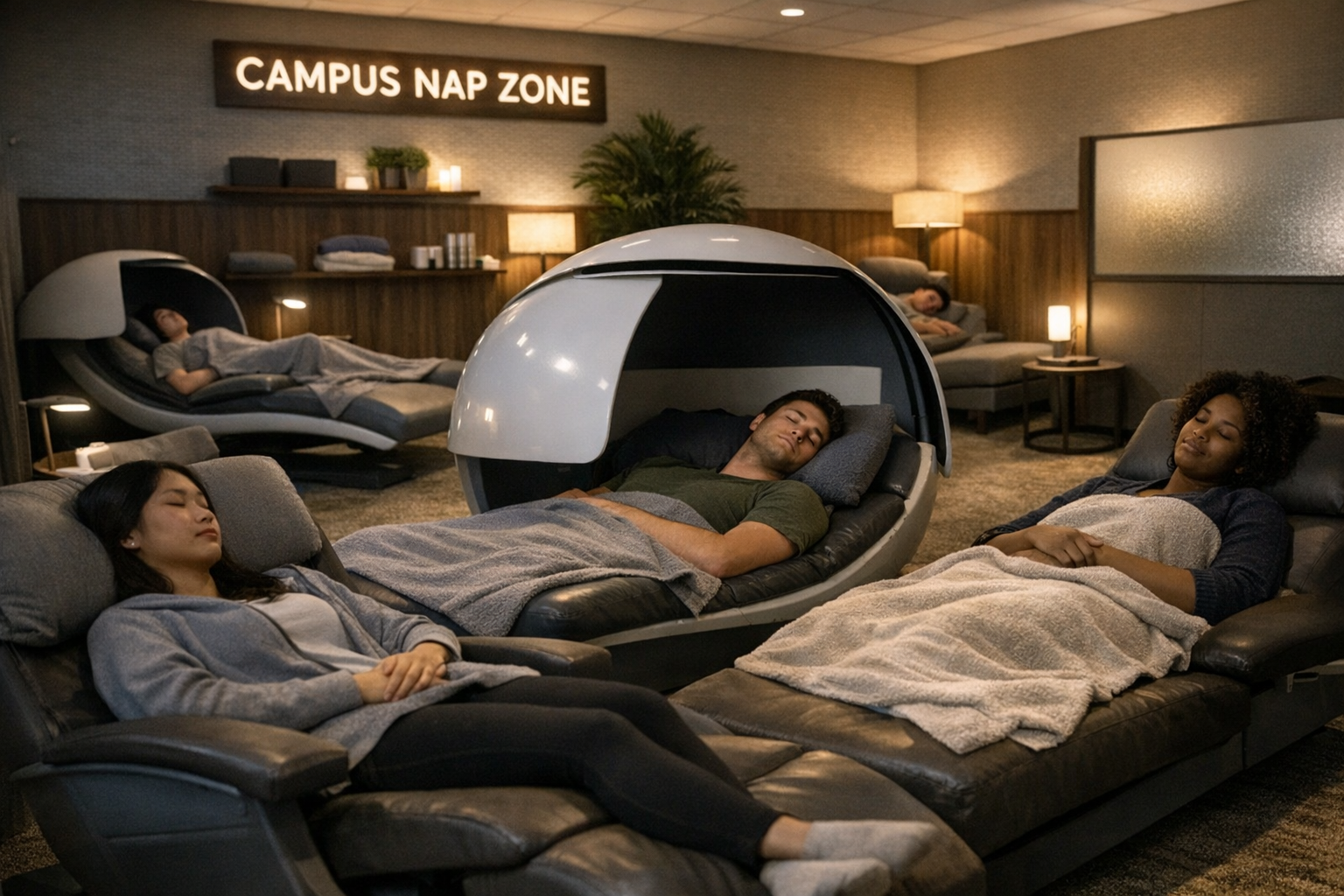
Create Nap-Friendly Spaces
Some institutions have experimented with designated nap spaces—quiet rooms with comfortable seating or cots where students can rest between classes. Early reports from campuses that have tried this approach suggest these spaces are well-utilized and appreciated.
A dedicated nap space signals that the institution takes rest seriously. It also provides a practical resource for commuter students, student-athletes, and others who may have limited options for daytime rest.
Implementation considerations:
Location should be accessible but not disruptive to other campus functions
Clear guidelines on usage duration (20-30 minutes is optimal for napping without grogginess)
Hygiene protocols for shared spaces
Hours of operation aligned with student needs
Integrate Sleep Education into Existing Programming
Education alone doesn't change behavior, but awareness is a necessary first step. Effective sleep awareness programs go beyond basic information to address:
How sleep affects academic performance specifically (connect it to grades, not just health)
The myth of "catching up" on sleep on weekends
Strategies for managing competing demands on time
When to seek help for persistent sleep problems
These programs work best when integrated into orientation, residence life programming, and academic advising—not treated as one-off wellness events.
Framework for effective sleep programming:
| Component | Purpose | Delivery Channel |
| Science of sleep and learning | Build understanding of why it matters | Orientation, first-year seminar |
| Practical sleep hygiene strategies | Provide actionable tools | Residence life programming, peer education |
| Time management integration | Address "I don't have time" objection | Academic advising, success coaching |
| Resource connection | Link to support for persistent issues | Health services, counseling referrals |
Train Staff to Recognize Sleep-Related Concerns
Resident advisors, academic advisors, and counseling staff are often the first to notice when students are struggling. Training these frontline staff to recognize signs of sleep deprivation—and know how to respond—extends the reach of sleep support efforts.
Signs that may indicate problematic sleep:
Frequent dozing in class or public spaces
Significant changes in academic performance
Increased irritability or emotional volatility
Difficulty concentrating during conversations
Self-reported exhaustion or sleep complaints
Staff don't need to become sleep experts. They need to know how to have a supportive conversation and connect students to appropriate resources.
Leverage Technology for Early Identification
Institutions increasingly use data to identify students who may be at risk for disengagement or dropout. Sleep-related signals can be incorporated into these systems.
For example, patterns of late-night activity on learning management systems, declining attendance in morning classes, or self-reported wellness indicators can help identify students who might benefit from outreach. The key is acting on these signals with supportive intervention—connecting students to resources, not penalizing them for struggling.
Engagement platforms that capture wellbeing data (with appropriate privacy protections and student consent) can help institutions move from reactive crisis response to proactive support.
Habits Your Wellness Center Should Teach Students
While institutional factors matter, students also benefit from practical strategies they can implement themselves. Campus wellness programming should equip students with evidence-based approaches to improving sleep.
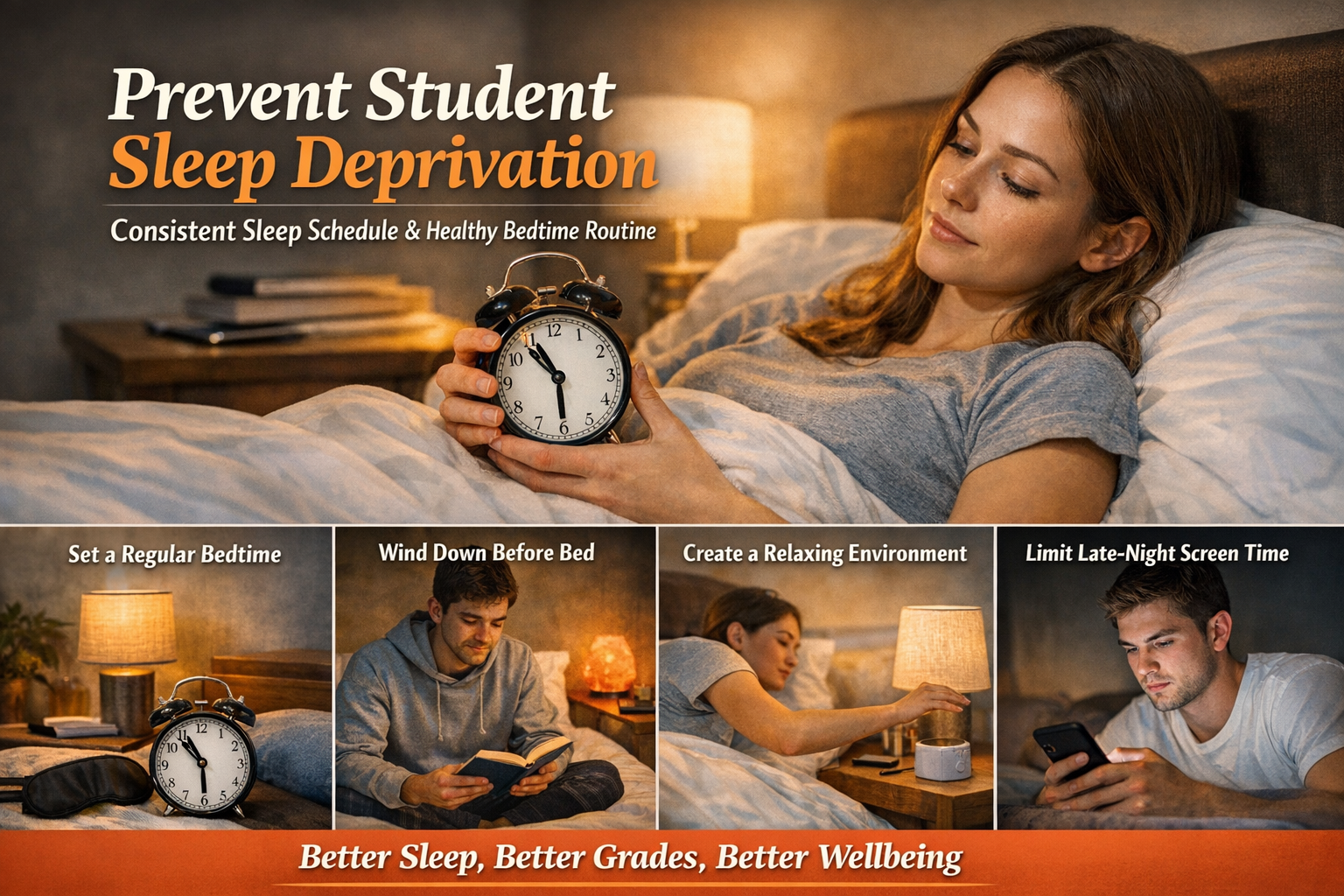
Building a Consistent Sleep Schedule
The body's circadian rhythm—its internal clock—thrives on consistency. Going to bed and waking up at roughly the same time each day, even on weekends, helps regulate this system and improves both sleep quality and daytime alertness [10].
Key messages for students:
Set a target bedtime that allows for 7-9 hours of sleep before the earliest commitment
Wake up at a consistent time, even without morning classes
Avoid sleeping in more than an hour later on weekends (this disrupts the rhythm students worked to build during the week)
Taking Strategic Study Breaks
Marathon study sessions aren't just exhausting—they're ineffective. Research supports taking regular breaks to maintain focus and prevent the mental fatigue that leads to late-night cramming [11].
Evidence-based approach to share with students:
Study in focused blocks of 50-90 minutes
Take 10-15 minute breaks between blocks
Use breaks for movement, not screens
Stop studying at least one hour before bed to allow the mind to wind down
Optimizing the Sleep Environment
Residence halls aren't always designed with sleep in mind, but students can make adjustments:
Use blackout curtains or a sleep mask to block light
Try white noise apps or earplugs to manage sound
Keep the room cool—research suggests 65-68°F is optimal for most people
Remove or cover electronic devices that emit light
Using Naps Strategically
Naps can be valuable recovery tools when used correctly. The key is timing and duration:
Keep naps under 30 minutes to avoid grogginess
Nap before 3 p.m. to avoid disrupting nighttime sleep
Use naps to supplement, not replace, regular sleep
Addressing Common Barriers
Students often cite specific barriers to better sleep. Understanding these can help institutions design more effective interventions—and equip staff to have productive conversations.
"I Don't Have Time to Sleep"
This is the most common objection. Students genuinely feel squeezed between academic demands, work responsibilities, extracurriculars, and social life.
Reframing for students and staff: Time spent sleeping isn't time lost—it's time invested in making every other hour more productive. Students who sleep adequately often find they can accomplish the same work in less time because their cognitive function is sharper. The research on sleep and learning efficiency supports this directly [5].
"I Can't Fall Asleep"
Many students struggle with racing thoughts, anxiety, or simply not feeling tired at bedtime.
Evidence-based approaches to recommend:
Cognitive behavioral therapy for insomnia (CBT-I), which has strong research support [12]
Reducing screen exposure in the hour before bed
Establishing consistent pre-sleep routines
Using relaxation techniques like progressive muscle relaxation
For persistent sleep difficulties, referral to campus health services or a sleep specialist may be appropriate.
"My Roommate Keeps Different Hours"
Shared living situations create real challenges. Encourage open communication about sleep needs and expectations, and help students develop compromise strategies. Residence life staff can facilitate these conversations when needed—and flag students who may need room reassignment if conflicts persist.
The Financial Case: Sleep as a Retention Investment
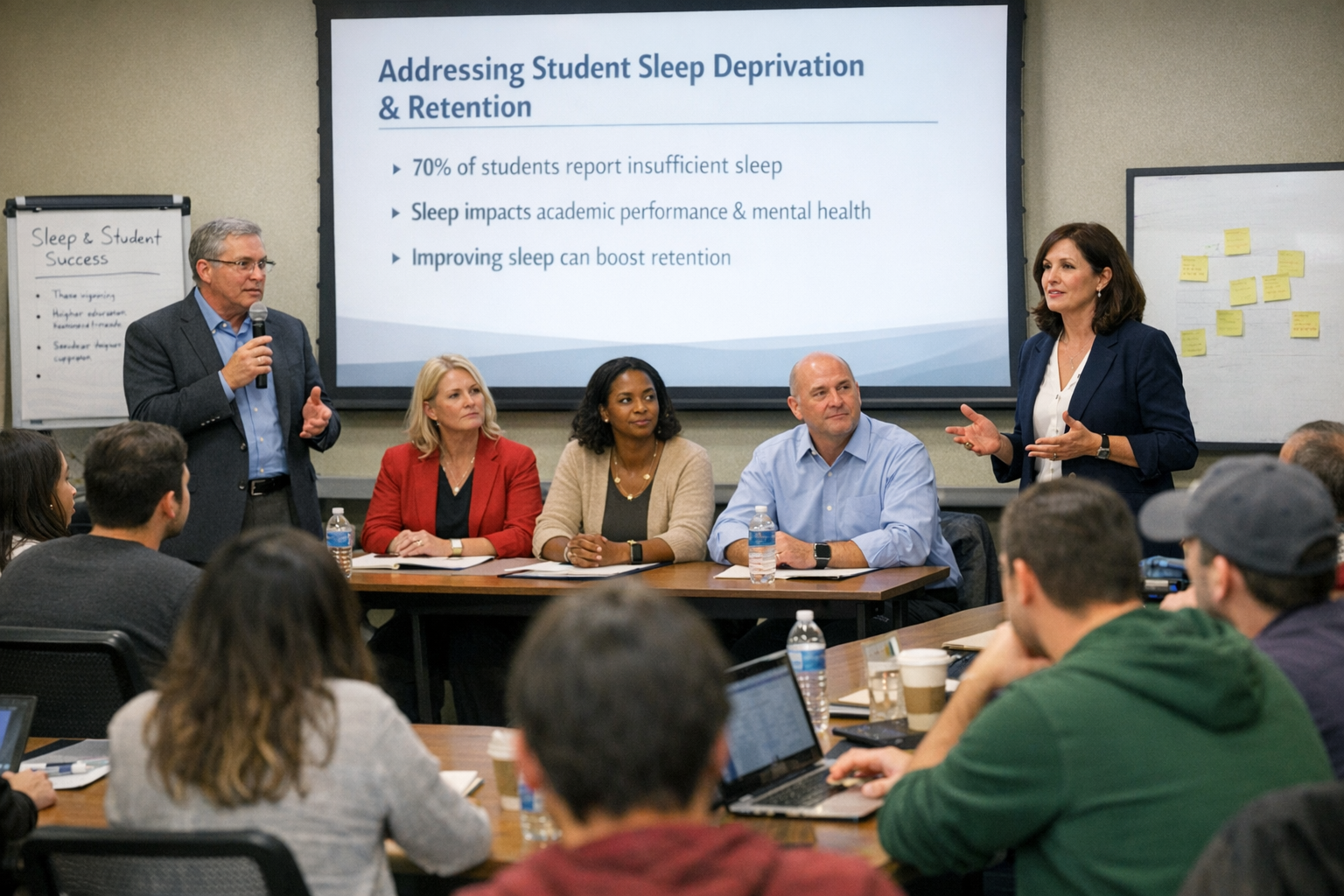
For campus leaders focused on student success metrics, sleep deserves attention as a retention factor. The financial implications are significant.
Students who are chronically exhausted are more likely to:
Struggle academically and fall behind
Experience mental health challenges that affect persistence
Disengage from campus life and support systems
Consider stopping out or transferring
Conversely, students who sleep well are better equipped to handle the challenges of college life. They learn more effectively, manage stress better, and have more capacity for engagement.
Consider the math: if a mid-sized institution retains even 1% more students through improved wellbeing support, the tuition revenue retained can reach hundreds of thousands of dollars. Sleep-supportive policies and programming represent relatively low-cost interventions with potentially significant returns.
Investing in sleep support isn't separate from the retention mission—it's central to it.
Building a Culture That Values Rest
Changing sleep culture on campus requires sustained effort and multiple touchpoints. Some approaches that can shift norms over time:
Model healthy behavior. When faculty and staff talk about pulling all-nighters as if it's admirable, they reinforce unhealthy norms. Leaders can model and discuss healthy sleep habits.
Reframe "hustle culture." Challenge the narrative that exhaustion equals dedication. Emphasize that sustainable effort produces better results than unsustainable sprints.
Celebrate recovery. Just as institutions celebrate academic achievement, they can recognize students who demonstrate balance and self-care.
Create peer support. Peer educators and student wellness ambassadors can normalize conversations about sleep and share strategies with credibility that staff messaging alone cannot achieve.
Action Steps for Campus Leaders
Immediate (This Semester):
Audit existing wellness programming for sleep content and identify gaps
Review class scheduling data for patterns that may work against student sleep
Train frontline staff (RAs, advisors) to recognize and respond to sleep concerns
Near-Term (This Academic Year):
Pilot a designated nap space in a high-traffic location
Integrate sleep education into first-year experience programming
Evaluate how student engagement data might identify sleep-related risk factors
Strategic (Ongoing):
Advocate for scheduling policies that align with student biology
Build sleep support into comprehensive wellbeing frameworks
Track outcomes to demonstrate impact and refine approaches
Ready to support student wellbeing more comprehensively? Integrated engagement platforms can help identify students who may be struggling and connect them with support—before challenges become crises. Learn how CampusMind helps institutions move from reactive to proactive student support.
Frequently Asked Questions
How much sleep do college students actually need?
Most young adults need 7-9 hours of sleep per night for optimal cognitive function and health. While individual needs vary slightly, consistently getting fewer than 7 hours impairs academic performance, emotional regulation, and physical health. The common claim "I only need five hours" rarely holds up under scrutiny—most people who believe this are simply adapted to functioning below their potential.
Can students really "catch up" on sleep over the weekend?
Not effectively. While weekend sleep can partially reduce accumulated sleep debt, it doesn't fully restore cognitive function or reverse the negative health effects of chronic sleep deprivation. Additionally, irregular sleep patterns—sleeping late on weekends and early on weekdays—disrupt circadian rhythm and can make weekday sleep even harder. Consistency matters more than occasional long sleep sessions.
What's the connection between screen time and sleep problems?
Electronic screens emit blue light that suppresses melatonin production, the hormone that signals sleepiness. Beyond the light exposure, engaging content—social media, games, streaming—activates the brain in ways that make winding down difficult. Research supports reducing screen exposure for at least 30-60 minutes before bed, though this is one of the hardest habits for students to adopt.
Should colleges really change class schedules to accommodate student sleep?
This isn't about accommodation—it's about effectiveness. Research on adolescent and young adult circadian biology shows that early morning classes conflict with natural sleep patterns for this age group [8][9]. Institutions that have piloted later start times have seen improvements in attendance, engagement, and academic outcomes. It's worth examining whether current scheduling serves institutional convenience or student success.
When should a student seek professional help for sleep problems?
Students should consider seeking help if sleep difficulties persist for more than a few weeks, significantly impair daily functioning, or are accompanied by symptoms of anxiety or depression. Campus health centers, counseling services, and primary care providers can all be starting points. Cognitive behavioral therapy for insomnia (CBT-I) has strong evidence for effectiveness and is available through many campus resources [12].
About This Resource
This article was developed by CampusMind, a purpose-driven organization dedicated to improving student wellbeing, engagement, and retention in higher education. Our approach combines behavioral science, data-driven insights, and human-centered design to help colleges support the whole student. We work with campus leaders who are committed to moving beyond reactive crisis response toward proactive, integrated support systems that help students thrive. Learn more about our work.
Works Cited
[1] National Student Clearinghouse Research Center — "Persistence and Retention." https://nscresearchcenter.org/persistence-retention/
[2] American Academy of Sleep Medicine — "College students: Getting enough sleep is vital to academic success."
https://aasm.org/college-students-getting-enough-sleep-is-vital-to-academic-success/
[3] American College Health Association — "National College Health Assessment." https://www.acha.org/NCHA
[4] Harvard Medical School Division of Sleep Medicine — "Sleep, Learning, and Memory." https://healthysleep.med.harvard.edu/healthy/matters/benefits-of-sleep/learning-memory
[5] Curcio, G., Ferrara, M., & De Gennaro, L. — "Sleep loss, learning capacity and academic performance." Sleep Medicine Reviews. https://pubmed.ncbi.nlm.nih.gov/16564189/
[6] Phillips, A.J.K., et al. — "Irregular sleep/wake patterns are associated with poorer academic performance and delayed circadian and sleep/wake timing." Scientific Reports. https://www.nature.com/articles/s41598-017-03171-4
[7] National Alliance on Mental Illness — "Sleep and Mental Health." https://www.nami.org/
[8] Crowley, S.J., et al. — "Sleep, circadian rhythms, and delayed phase in adolescence." Sleep Medicine. https://pubmed.ncbi.nlm.nih.gov/17964201/
[9] American Academy of Pediatrics — "School Start Times for Adolescents." Pediatrics. https://publications.aap.org/pediatrics/article/134/3/642/74175/School-Start-Times-for-Adolescents
[10] Centers for Disease Control and Prevention — "Tips for Better Sleep." https://www.cdc.gov/sleep/about_sleep/sleep_hygiene.html
[11] Ariga, A. & Lleras, A. — "Brief and rare mental 'breaks' keep you focused: Deactivation and reactivation of task goals preempt vigilance decrements." Cognition. https://pubmed.ncbi.nlm.nih.gov/21211793/
[12] Trauer, J.M., et al. — "Cognitive Behavioral Therapy for Chronic Insomnia: A Systematic Review and Meta-analysis." Annals of Internal Medicine.
https://pubmed.ncbi.nlm.nih.gov/26054060/